What Each Finger Represents in our hand
We use our hands all day without thinking much about them — especially our human fingers. We type, hold, point, grip, wave.
What Each Finger Represents in our Hand
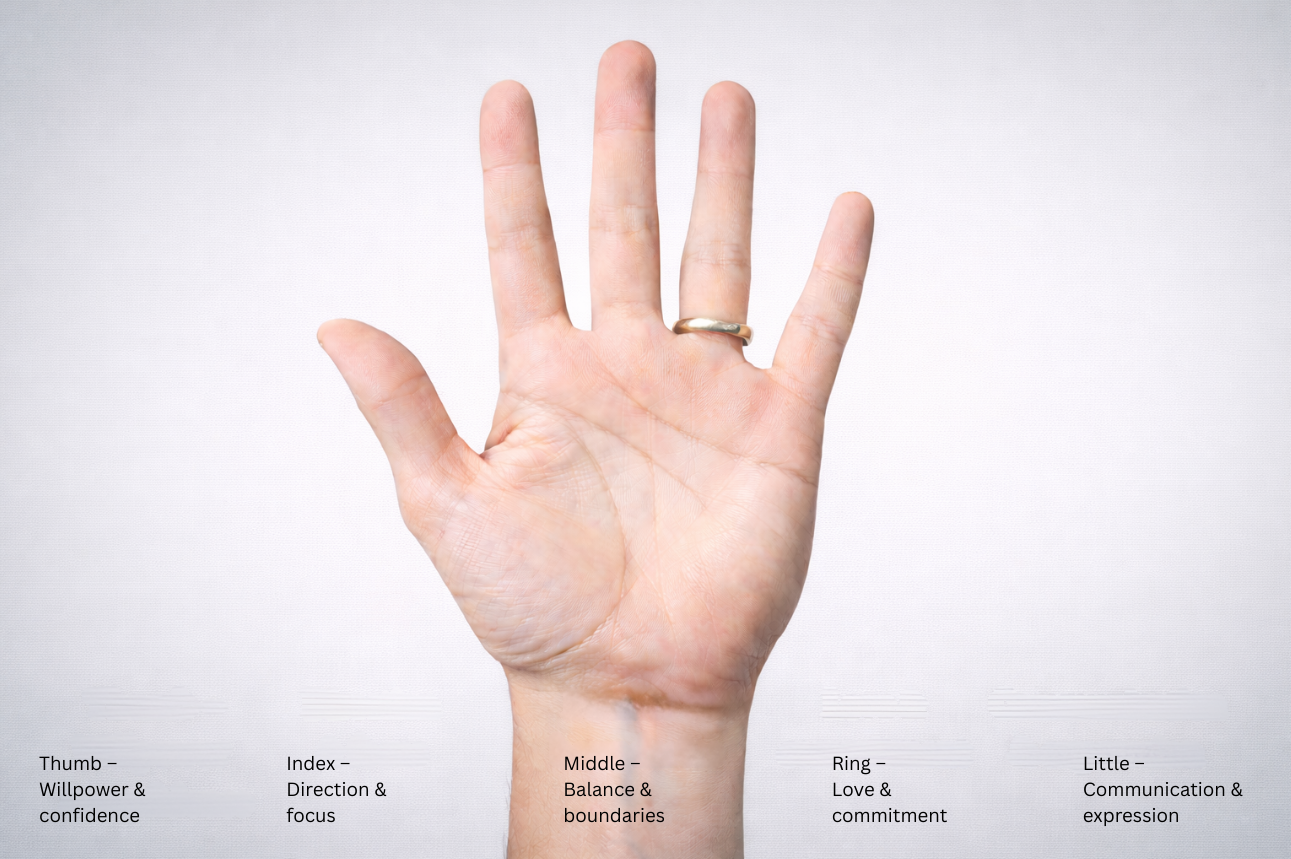
We use our hands all day without thinking much about them — especially our human fingers. We type, hold, point, grip, wave. Fingers move automatically, doing what they’re meant to do. But if you pause for a moment and actually look at your hand, it’s hard not to notice that each finger plays a different role. Not just physically — but in how we communicate, express intent, and relate to the world.
Over time, people across cultures noticed this too. Meanings formed, not because fingers were magical, but because humans are good at noticing patterns in how we use our bodies.
Start with the thumb.
The thumb is different from the rest — often linked to willpower and personal choice. It sits apart, moves differently, and makes precise control possible. Without it, most of what we consider “human skill” wouldn’t exist — writing, crafting, holding tools. Because of this, the thumb naturally became linked to will, choice, and personal direction. When you give a thumbs-up or clench your thumb inward, you’re signaling approval or restraint. In a quiet way, the thumb reflects the self — your ability to decide and act.
Next comes the index finger.
This is the finger we point with. We use it to guide, to warn, to show. Children learn early that pointing carries weight — sometimes even gets them scolded. That’s because pointing directs attention and asserts presence. Across societies, the index finger became associated with focus, authority, and direction. It’s less about power, more about intention. It says: look here, notice this, follow.
Then there’s the middle finger.
It’s the longest, strongest, and sits at the center of the hand. Structurally, it supports grip and balance. Socially, it became a symbol of defiance, not because it’s offensive by nature, but because it disrupts order. When raised alone, it breaks the expected harmony of the hand. That’s why it came to represent boundaries, resistance, and sometimes frustration. At its core, the middle finger is about limits — what you won’t accept.
The ring finger is quieter.
It doesn’t lead, point, or dominate. Its movement is limited compared to others. Over time, this subtlety linked it to connection and commitment. Ancient cultures believed a vein ran from this finger directly to the heart. That belief wasn’t anatomically correct, but it captured something emotional. The ring finger became a place for symbols — not because of function, but because of meaning. It represents bonds we choose to honor.
And then there’s the little finger.
Small, often overlooked, but surprisingly important. The little finger plays a major role in grip strength and fine control. It helps with balance more than we realize. Symbolically, it became linked to communication, detail, and adaptability. Think about how it lifts slightly when speaking or how it steadies the hand during precise work. It’s about nuance — the small adjustments that make expression clearer.
What’s interesting is that none of these meanings were assigned randomly. They grew out of use. Biology came first. Symbolism followed.
Our brains are wired to attach meaning to repeated actions. Over centuries, those meanings stuck. Fingers became shorthand for ideas we experience every day — choice, direction, resistance, connection, expression.
There’s also a quieter lesson in how the hand works.
No finger operates alone. Strength comes from coordination. Grip comes from balance. Expression comes from movement together, not dominance of one part. Even the strongest finger is limited without the rest.
Maybe that’s why hands feel so human.
They don’t just hold things. They show how function turns into meaning, and how meaning quietly shapes the way we understand ourselves — without us ever needing to be told.
메타데이터
- post_id
- c484bf1c916c
- slug
- what-each-finger-represents-c484bf1c916c
- url
- https://medium.com/@sudipaw/what-each-finger-represents-c484bf1c916c
- canonical_url
- https://medium.com/@sudipaw/what-each-finger-represents-c484bf1c916c
- author_url
- https://medium.com/@sudipaw
- status
- ok
- fetched_at
- 2026-07-14 03:02:02


