Why Your EMS Struggles with High-Mix Low-Volume — And What It Means for Mass Production
Why Your EMS Struggles with High-Mix Low-Volume — And What It Means for Mass Production
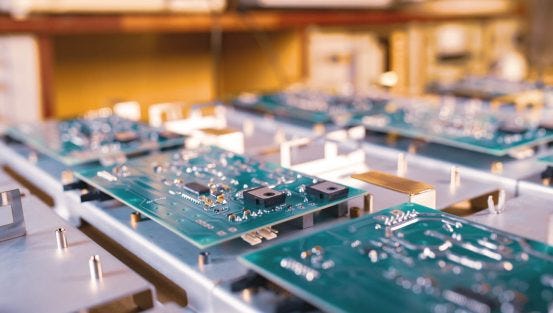

PCB PROTOTYPING 1
Introduction
High-Mix Low-Volume (HMLV) production has become a standard phase for industrial and IoT products.
Between prototype validation and full-scale production, companies rely on small-batch builds to verify:
- design robustness
- manufacturing processes
- supply chain stability
However, this is also where many projects begin to drift off track.
Not because the EMS provider cannot assemble the product — but because they are not structured to manage the transition from NPI to mass production.
HMLV Is Not the Problem — It’s a Critical Phase
Many EMS providers approach HMLV as:
- low-priority work
- temporary engineering effort
- non-scalable production
But in reality, HMLV is where key manufacturing risks first emerge:
- Process instability
- Design-for-manufacturing (DFM) gaps
- Component availability risks
If these are not systematically addressed, they do not disappear.
They amplify during mass production.
Where Most EMS Providers Fall Short
1. Treating HMLV as a Disruption, Not as NPI
Traditional EMS operations are optimized for volume:
- stable BOMs
- fixed processes
- predictable scheduling
HMLV breaks all of these assumptions.
Without a dedicated NPI mindset, small-batch builds are often:
- deprioritized
- under-supported
- executed without full engineering engagement 2. Lack of Real-Time Engineering Involvement
In many organizations:
- Engineering performs initial DFM reviews
- Production executes independently
This separation works in stable, high-volume environments.
But during HMLV, issues are dynamic and often unexpected:
- soldering inconsistencies
- thermal performance concerns
- component substitution impacts
Without engineers actively involved on the production floor:
�� Problems are documented, not resolved.
3. Focus on Throughput Instead of Learning
Most EMS KPIs are built around:
- output volume
- line efficiency
- utilization rates
However, during NPI and HMLV stages, the priority should be:
�� learning speed and issue resolution
The objective is not to maximize output, but to:
- identify failure modes early
- validate process adjustments
- stabilize production conditions
Without this shift in mindset, early-stage builds provide little value beyond basic assembly.
4. Supply Chain Not Designed for Iteration
HMLV environments require flexibility:
- frequent BOM updates
- evolving AVL lists
- ongoing component substitutions
Many EMS supply chain systems are designed for:
- long-term procurement planning
- stable vendor relationships
Without integration between engineering and sourcing:
- material delays increase
- incorrect substitutions occur
- production schedules become unpredictable 5. No Ownership of the NPI-to-Production Transition
Perhaps the most critical gap:
In many EMS structures:
- NPI is handled as a standalone phase
- Mass production is managed separately
But the transition itself is not clearly owned.
As a result:
- issues identified during HMLV are not fully closed
- process knowledge is not transferred effectively
- risks resurface during scaling
What a Scalable EMS Approach Looks Like
Instead of focusing on HMLV as an isolated capability, a capable EMS partner focuses on:
�� NPI-to-Mass Production continuity
Key characteristics include:
Integrated engineering and production teams Engineers remain engaged throughout early builds and ramp-up
Process validation mindset Each build is treated as an opportunity to refine and stabilize

Function testing jig 1
Flexible supply chain support Rapid response to component changes and sourcing challenges
Structured ramp planning Clear roadmap from prototype → pilot → mass production
Closed-loop feedback system Issues are not only identified but systematically resolved
A Different Approach to HMLV
Not all EMS providers are designed for small-batch production — and that is not necessarily a weakness.
However, for products intended to scale, the early-stage builds must be treated as an investment rather than a cost.
We are not optimized for small-volume production. But for projects with clear scaling potential, we place strong emphasis on the NPI phase — ensuring that early builds translate into stable mass production.
Conclusion
High-Mix Low-Volume production is not where products succeed or fail.
It is where underlying issues are either:
- identified and resolved
- or carried forward into mass production
Choosing an EMS partner that understands this distinction can significantly reduce:
- ramp-up delays
- quality risks
- long-term manufacturing costs
메타데이터
- post_id
- c49b4bd67ed6
- slug
- why-your-ems-struggles-with-high-mix-low-volume-and-what-it-means-for-mass-production-c49b4bd67ed6
- url
- https://medium.com/@order01/why-your-ems-struggles-with-high-mix-low-volume-and-what-it-means-for-mass-production-c49b4bd67ed6
- canonical_url
- https://medium.com/@order01/why-your-ems-struggles-with-high-mix-low-volume-and-what-it-means-for-mass-production-c49b4bd67ed6
- author_url
- https://medium.com/@order01
- status
- ok
- fetched_at
- 2026-06-10 18:44:10


