Promoting inclusivity, compassion and equity in World’s oldest city
In the communally polarised situation, where from the Prime Minister Narendra contests parliamentary elections and had used all devious…
Promoting inclusivity, compassion and equity in World’s oldest city
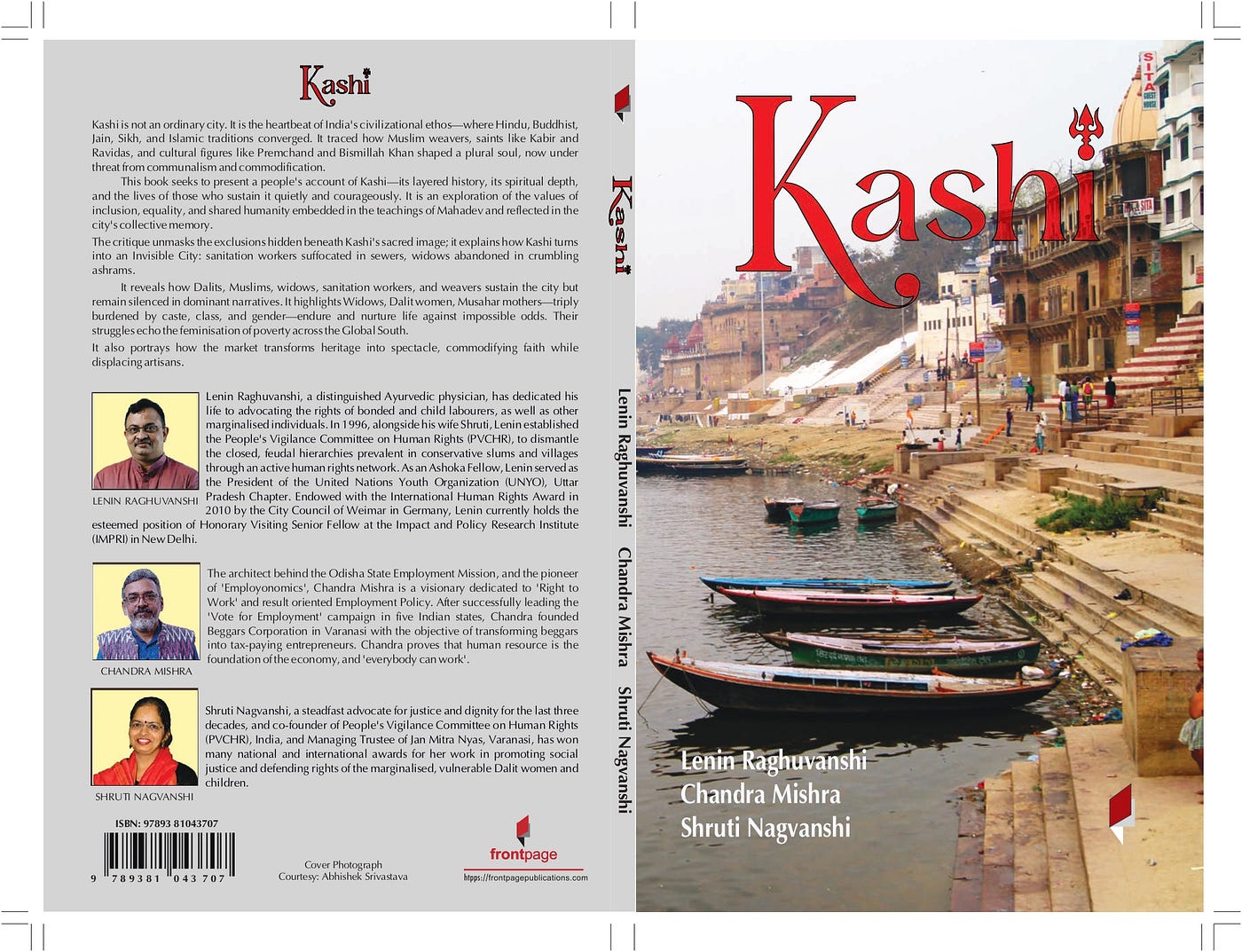
In the communally polarised situation, where from the Prime Minister Narendra contests parliamentary elections and had used all devious techniques to be in power, in that suffocated atmosphere, ‘Kashi’ provides a refreshing counter-narrative to the prevailing tendency to ‘sanitise’ the historical identity of the world’s oldest living city. By prioritising human experience over architectural aesthetics, the book offers a rigorous critique of how neo-liberal capitalist economy and its urban planning disrupts local social cohesion. It effectively challenges the reader to envision a future for Kashi that transcends the reductionist framing of tourism and political branding, advocating instead for an urban environment defined by inclusivity, compassion, and equity.
Mark Twain once said, Benaras is older than history, older than tradition, older even than legend and looks twice as old as all of them put together. The culture of Banaras is not just religious rituals. It is the city of the music maestros, it is the city of Kabir, it is the city of the holy river Ganga. Everybody shares a little bit of this city and it is only by preserving these little bits that we can save the entire city, said the American icon.
Once Tulsidas, Kabir, revolutionary Chandrasekhar Azad, Premchand had tread these lanes. It is a living museum, as I read through the pages of Kashi am filled with remorse over my lack of knowledge to identify these gems very well brought out by the authors.
One of the many ironies of Kashi is that for all the talk of tradition and heritage, the plight of the marginalised, like the Muslim weavers who make a living from the ancient arts is dismal. Living and working in dingy lanes of the city they are renowned for their skills at making Banarasi sarees — a skill that’s been passed down generations.
However, after 2014, the project to turn the oldest city of Kashi into a big marketplace like Japan’s cultural city Kyoto, interfaced for the first time as the contemporary holds. A pall of gloom descended when Chinese looms pushed many weavers to commit suicide. In this culturally rich and diversified city, houses and shops were bulldozed for construction, transforming the entire city. This has not gone well with the Kashi population. Hundreds of temples were razed to make way for the Kashi Vishwanath corridor project. The ruling dispensation is irreversibly eroding Kashi’s cultural legacy. Kashi’s heritage is defined not just by its structures and monuments, but also by the people who inhabit and live in them, continuing on an unbroken path of traditional way of life. From Kashi to Kyoto the contrast is stark, a blend of hope and disillusionment. The present class-in-power with an unmistaken choice for modernity have sacrificed the traditional ways the people are used to since ages without a vision for all. The promise it holds for some leaves in its wake a bleak future for many.
‘Kashi’ a book of 150 pages and 12 chapters do a good job of capturing the spirit of the city’s traditions. The first chapter, “Need,” establishes the book’s imperative. The authors then frame the discussion in terms of Exclusion vs. Resistance in the next ten chapters, which include case studies and marginalised narratives.
Authored by Lenin Raghuvanshi, Chandra Mishra and Shruti Nagvanshi covers a vast canvas of Kashi, the oldest living city which has been at the helm of political and electoral affairs in India for a few years. I know Lenin and Shruti for two decades, Lenin and Shruti, as activist couple had worked among the marginalised sections- be it Mushars, Muslim weavers, Dalit women and men working in the sewages. Lenin, whose father is a communist and grandfather a Gandhian freedom fighter. Though he was attracted towards his grandfather but as a Marxist I found his understanding of dialectics at the practical level exemplary. In the conservative milieu in the villages of Varanasi, where untouchability is practised, Mushars are denied primary health care facilities Shruti has put the primary health care in order so that discrimination against Mushars are stopped. Both have been relentlessly fighting to bring Mushars in the mainstream so that the practice of untouchability is stopped and the exploitation of upper caste government functionaries- be it police, health care employees or other agencies is put an end to.
Development in Kashi acts as a site of ideological conflict, presenting competing narratives that simultaneously exclude populations and provide a framework for resisting that exclusion. The central narrative of Benaras is anchored by its most marginalised population — specifically Dalit women, Muslim weavers, widows, informal labourers, sanitation workers, and the Mushars. While youth, social activists, and intellectuals are active participants, they typically emerge at the conclusion of the discourse, offering a vision for a reimagined ‘dual-city’ model.
In order to reimagine Kashi in terms of heritage justice for its weavers, craftsmen, women, Mushars, Dalits, and their children, the book concludes with a few specific policy recommendations. It suggests viewing Kashi as a museum of communities rather than artefacts. Inspired by Henri Lefebvre’s call for democratic urban space, Kashi must guarantee that ghats, lanes, and public resources are accessible to all castes, genders, and religions. No corridor should force the impoverished to relocate in the name of aesthetics.
Kashi ends up with a few concrete policy recommendations for reimagining Kashi in terms of heritage justice for its weavers, craftspeople, women, Mushars Dalits, and their children. It advocates seeing Kashi as a museum of communities rather than artefacts. Inspired by Henri Lefebvre’s call for democratic urban space, Kashi must ensure that all castes, genders, and religions have equal access to ghats, lanes, and public resources. No corridor should force the poor to relocate for the sake of aesthetics.
Kashi, the book essentially focuses on city communities, unwavering in their support against the onslaught of the neo-liberal capitalist economy, and suggests an ongoing development model in Benaras without directly interfering with any infrastructure development project or any political or administrative actor in world’s oldest city.
Lenin Raghuvanshi, Shruti Nagvanshi and Chandra Mishra have done a commendable job A must for all young journalists, social science students, editors, civil society groups and the academia.
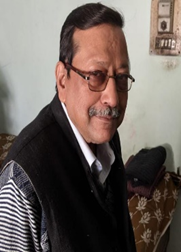
Tarun Kanti Bose, a multifaceted activist, journalist, media trainer, researcher, writer, and scholar, views Kashi as an important contribution to contemporary discourse on civilization, culture, and social consciousness. Known for his deep engagement with grassroots struggles, indigenous rights, environmental justice, and the voices of marginalized communities, Bose brings to his reading of the book a perspective shaped by decades of activism and public engagement. His published works, Marginalised But Not Defeated (2023) and And Quiet Comes the Dawn: Haryana, its Identity Issues, Grassroots Movements and Alternative Endeavours (2025), have already established him as a thoughtful chronicler of people’s movements and alternative social visions. In his assessment, Kashi, authored by Lenin Raghuvanshi, Chandra Mishra, and Shruti Nagvanshi, transcends the conventional portrayal of Varanasi as merely a sacred or tourist destination. Instead, the book presents Kashi as a living civilizational process shaped by spirituality, pluralism, labour, memory, resistance, and coexistence. Bose particularly appreciates the way the authors foreground ordinary people — workers, artisans, women, and marginalized communities — as integral to the soul of Kashi, thereby restoring a human dimension often absent from mainstream narratives. For him, the book succeeds in portraying Kashi not simply as a city of temples and rituals, but as an enduring idea of inclusiveness, cultural continuity, and democratic humanism rooted in India’s civilizational ethos.
메타데이터
- post_id
- c4aff7e23dc6
- slug
- promoting-inclusivity-compassion-and-equity-in-worlds-oldest-city-c4aff7e23dc6
- url
- https://medium.com/@drbahadursinghyadav/promoting-inclusivity-compassion-and-equity-in-worlds-oldest-city-c4aff7e23dc6
- canonical_url
- https://medium.com/@drbahadursinghyadav/promoting-inclusivity-compassion-and-equity-in-worlds-oldest-city-c4aff7e23dc6
- author_url
- https://medium.com/@drbahadursinghyadav
- status
- ok
- fetched_at
- 2026-06-24 18:57:25