How can I stop Houseflies from sitting on food?
A couple of days ago I was attending an informal gathering of family members in Delhi. The aroma of freshly cooked biryani came over the…
How can I stop Houseflies from sitting on food?
A couple of days ago I was attending an informal gathering of family members in Delhi. The aroma of freshly cooked biryani came over the room it was the kind that draws you right to the dining room table. Just when we were about to begin eating an enormous black housefly was spotted on top of our salad bowl. The next thing we heard was chaos: kids crying “Eww!”, my aunt covering the dish with newspaper remnants along with my uncle Googling repellents for fly while holding a spoon in mid-air. The flies, naturally returned as if it had reserved a place for it. Do you recognize the pattern?
If you’ve had the unfortunate experience of having a dinner that was snatched by a swarm of houseflies, you’re aware of how irritating and dangerous they are. However, here’s the truth that most articles say that you should “keep your kitchen clean” and “use a food cover.” Let’s go deeper.
Why Should You Be Worried About Houseflies?
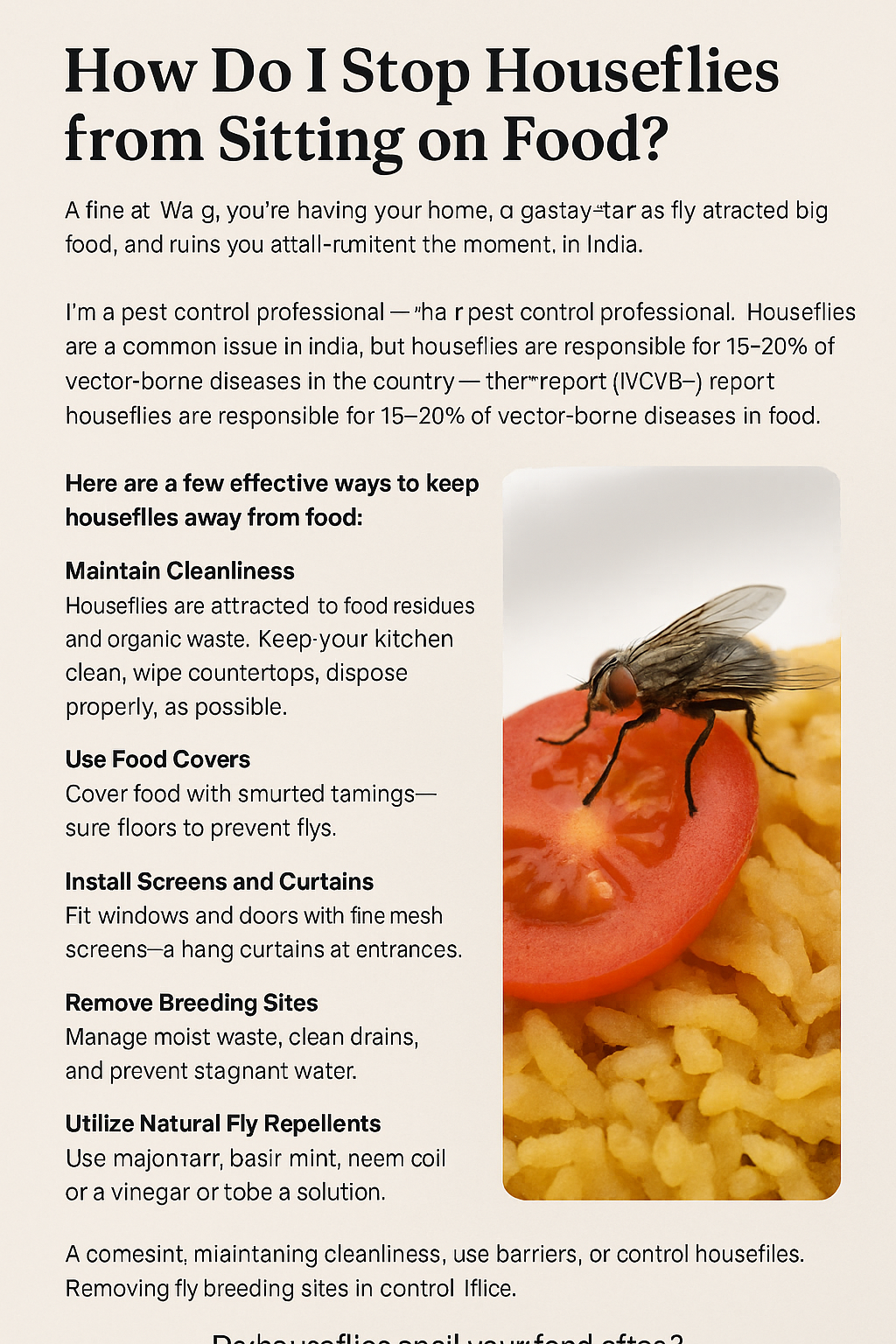
Houseflies don’t just cause annoyance They’re also health hazards. Based on researchers from the Indian Council of Medical Research (ICMR) houseflies carry more than 100 pathogens such as the typhoid virus, cholera tuberculosis and dysentery.. A report from the Indian Vector Control Board found that 15 to 20 percent of the vector-borne illnesses within urban Indian households could be traced back to flies.
Insects pick up pathogens from food waste, feces, and food decay, and they then transfer them onto your food by laying on it. They don’t have to chew on it; they simply stroll over it and then discharge digestive juices in order to make it liquefy before eating. Gross, right?
Let’s discuss useful, culturally relevant and scientifically proven methods to prevent these winged flies from turning your food into their playground.
1. Stop Blaming Just the Kitchen — Look at Your Drains and Gutters
The thing that the majority of people don’t know is the fact that they breed wherever they can get moist, not just in areas where food is available. This means that the traps for gully in your bathroom and your drainage from your kitchen or even the overwatered gardens are breeding places.
In the language of pest control we refer to this as “source elimination.” In reality, if you don’t take care of the source then you’ll play”whack-amole” with flies all day long.
What should you do:
- Mix vinegar and hot water into the drains at least once a week.
- Make sure that the drains in your outdoor area aren’t blocked with leftover food scraps or leaf debris.
- Don’t allow compost bins to remain unemptied for days on end. empty.
2. The Secret Power of Indian Spices and Plants
This is something your grandmother likely was aware of but never spoke out in public: flies hate certain scents particularly those emanating directly from Indian kitchens.
Effective natural repellents made from nature
- Cloves that are stuck in lemons They can be placed near food dishes.
- The burning of dried leaves of neem is a common practice which also deters mosquitoes.
- Essential oils such as mint, lemongrass basil (tulsi) and Eucalyptus can do wonders. Mix them with water and spray into your air as well as on the surface.
- Camphor tablets inside water bowls particularly efficient in indoor environments.
These are chemical-free, low-cost alternatives you won’t find on Western blogs.
3. Cover Food Creatively — Not Only with Lids made of Steel Lids
Steel lids are fantastic however what happens when you’re serving buffets for a celebration or hosting guests on the lawn? Here’s the caterers in India make use of that you can as well:
- Food tents made of mesh available online or at local market.
- Bamboo baskets that are upside down Eco-friendly and ventilating.
- DIY netting using embroidery hoops It’s great if you’re the creative type.
Beware of placing aluminum foil or plastic wrap over hot food items, since it holds steam and draws flies in with the smell.
4. Ventilation: The Overlooked Fly Magnet
You might not think of airflow as a problem, but a lack of ventilation can keep smells in the air, just similar to sending dinner invitations to fly-swatters.
Make this work:
- Installation of exhalation fans inside the kitchen as well as the bathrooms.
- Make use of Fine mesh on windows (not only the netted screens) particularly during the fly-prone months (April through September).
- Make sure to keep your curtains in good condition by spraying citronella.
In fact, flies may be attracted by air ventilations in commercial areas. If you’re operating a food service, you should have insect-proofed mesh in HVAC systems.
5. Stop Using Chemical Sprays Blindly
Sure, you can grab an insect spray bottle and spray your kitchen. But:
- A lot of them contain the pyrethroids that could contaminate food preparation surfaces.
- Pets and children are extremely susceptible to chemicals.
- The are only able to kill adults fly larvae but not the eggs or larvae.
Instead, choose the UV traps (the ones that have adhesive pads) or fermented fruit traps (yes it is possible to make them using yeast and jaggery in bottles).
6. Professional Fly Control Services in India
If you’ve tried everything and still nothing is working is the time to contact the experts to get rid of flies from your home. Pest control professionals in India provide:
- Fly baiting programs using eco-safe products.
- Recurrent sprays in drain and outdoor zones.
- Larval control treatment for breeding websites.
Prices vary according to city, however for an average flat of 2BHK A quarterly fly control program ranges from Rs1,500 to Rs2,500.
Tips for a successful experience: Always choose a service that’s ISO-certified, and abides by WHO-approved protocols.
Conclusion
To stop houseflies from infesting your food doesn’t mean just fighting them off, but knowing their habits, removing breeding areas, and employing a the combination of modern and traditional techniques that are appropriate to the Indian way of life.
When an insect eats your dinner be aware that it’s not just about the one you see, but the 50 that you don’t. Aren’t you ready to ask yourself what’s attracting the insects to your house?
메타데이터
- post_id
- c4b007c63a3b
- slug
- how-can-i-stop-houseflies-from-sitting-on-food-c4b007c63a3b
- url
- https://medium.com/@rentokil-pestcontrolindia/how-can-i-stop-houseflies-from-sitting-on-food-c4b007c63a3b
- canonical_url
- https://medium.com/@rentokil-pestcontrolindia/how-can-i-stop-houseflies-from-sitting-on-food-c4b007c63a3b
- author_url
- https://medium.com/@rentokil-pestcontrolindia
- status
- ok
- fetched_at
- 2026-06-24 16:30:55