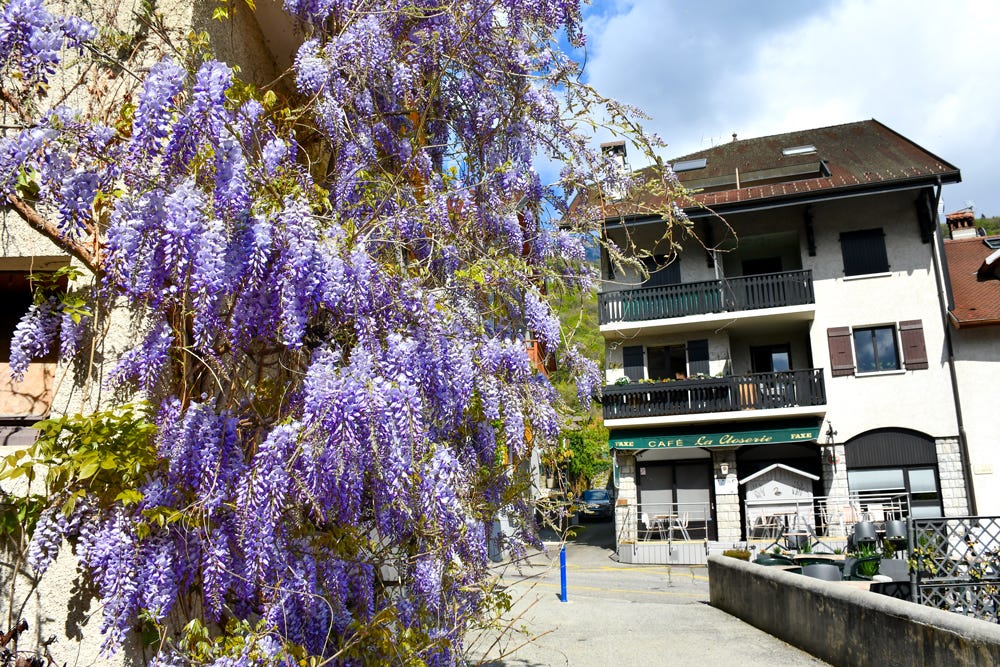
Bergheim: A Medieval Jewel on the Alsace Wine Route
A fortified village of ramparts, half-timbered houses, and centuries-old stories, crowned as France’s Favourite Village in 2022.
Bergheim: A Medieval Jewel on the Alsace Wine Route
A fortified village of ramparts, half-timbered houses, and centuries-old stories, crowned as France’s Favourite Village in 2022.

Bergheim. All photos by the Author
If you’re exploring the Alsace Wine Route, you’ll know it’s lined with postcard-perfect villages — each one charming, colourful, and steeped in history. But let me point you to a place that somehow feels both familiar and unique: Bergheim.
You’ll find it tucked among rolling vineyards, its medieval walls suddenly rising into view as you round a bend. And trust me, once you’ve set foot here, you’ll understand why Bergheim was crowned Village Préféré des Français — the Favourite Village of the French — in 2022.
Shall we wander through its history and streets together?
If you enjoyed my story, please tap the clap button and share your thoughts or questions in the comments. I’d love to hear from you! 🙏
A Village Built on Roman Roads and Vineyards
Bergheim’s story goes way, way back — to Roman times, in fact.
Its location wasn’t random: it lay along an important trade route between Strasbourg and Lyon, making it a natural place for a settlement. By the 10th century, winegrowing was already an established part of local life, shaping the land and the people who worked it.
But the Middle Ages really defined Bergheim.

In the 12th century, it belonged to the counts of Eguisheim-Dabo, only to pass into the hands of the Dukes of Lorraine, then the Ribeaupierre family. And as with many medieval towns, its history is marked by wars, destruction, rebuilding, and — remarkably — survival.
The Age of Fortifications
In 1310, Henri II of Ribeaupierre began fortifying Bergheim.
Two years later, the village was granted the coveted title of city by King Henri VII of Luxembourg, along with a rather unusual right: the right to offer asylum.
You can imagine how valuable that was in those turbulent times. Between the 16th and 17th centuries, Bergheim received over 750 asylum requests — mostly for murder or serious injury! Almost all were accepted.
Bergheim’s fortifications became some of the strongest in Alsace, with two kilometres of ramparts enclosing the town. While many fortified villages in the region have lost their walls over the centuries, Bergheim’s survived — one of its most unique features today.

The Obertor: Guardian of the Village
Of the four original gates, only the western gate — the Obertor, or Porte Haute — still stands.

Dating back to 1310, this imposing, turreted gateway rises 22 metres high, its glazed tiled roof gleaming in the sun. Walk through its arch, and you step back in time.
Interestingly, the gate’s inner face features timber framing, making it appear less austere than the solid exterior. This style echoes other iconic Alsatian structures, like the Dolder Gate in Riquewihr.
Walking the Ramparts
If you love a good walk with panoramic views, the ramparts offer a treat.
Stroll along the top, and you’ll see the vine-covered hills spreading out below, the towers and turrets standing proud, and in the distance, the magnificent **Haut-Kœnigsbourg Castle** crowning the landscape.

Bergheim may not have had a castle within its walls, but its defences were formidable — and they remain one of the best-preserved examples in Alsace.
Through the Village Streets
Entering Bergheim through the Obertor, you’ll find yourself on the Grand’Rue, the village’s main street.

It’s a delightful stretch lined with half-timbered houses, many of them old winegrowers’ homes, complete with carved wooden beams, stone oriels, and delicate wrought-iron signs swaying gently in the breeze.

You’ll pass the old washhouse, more historic facades, and eventually arrive at the Place du Marché, the central square. Here, the Town Hall stands proudly alongside charming houses, and in the middle, a graceful fountain displays the village’s coat of arms in sandstone and wrought iron.


The Parish Church and Jewish Heritage
Bergheim’s parish church is built of red Vosges sandstone, its roots stretching back to the 14th century (replacing an earlier sanctuary lost to fire). Over the centuries, the church has been modified — especially its bell tower in the 18th century — but it remains a striking landmark in the village.

As you wander further, you’ll find yourself on Rue de la Cigogne, Rue des Chevaliers, and Rue des Juifs.
Here, the presence of a synagogue dating from 1862 is a quiet reminder that Bergheim once housed one of Alsace’s largest Jewish communities, a poignant layer in the village’s complex history.
The Witches’ House: A Darker Chapter
No visit to Bergheim is complete without stepping into the Maison des Sorcières — the Witches’ House.

Located at 5 Rue de l’Église, this small museum recounts the grim stories of the women accused of witchcraft, tortured, judged, and burned at the stake here.
Bergheim was one of the major sites of witch trials in Alsace, and the museum is a sobering but fascinating stop that sheds light on this darker period.
The Cheeky Lack’Mi
And for a touch of humour, look up at the Obertor to spot the Lack’Mi — a bas-relief sculpture installed by a grateful fugitive in 1534.

It shows a man making a rather cheeky gesture: sticking out his tongue while baring his bottom! He’d found asylum in Bergheim after committing a crime in nearby Rodern and wanted to commemorate his escape.
It’s a small, playful detail — but it adds to the village’s colourful tapestry of stories.
A Floral Paradise
If you visit in spring, summer, or autumn, you’ll find Bergheim beautifully dressed in flowers.

Window boxes overflow with red geraniums, colourful beds brighten the streets, and every corner seems to burst with blooms. This floral charm is part of what makes Alsatian villages so beloved — and Bergheim wears it proudly.

Why You Should Visit Bergheim
With so many enchanting stops along the Alsace Wine Route, why choose Bergheim?
Because it offers a little bit of everything.
It has history: from Roman times to medieval fortifications, Habsburg rule to French annexation.
It has beauty: half-timbered houses, ramparts, and vineyard views.
It has charm: flowers, winding lanes, and stories you won’t find anywhere else.
And thanks to its 2022 title as Village Préféré des Français, it’s no longer such a secret — but it still feels wonderfully authentic.
Practical Tips
Bergheim is easy to reach by car, with convenient parking near the Obertor. From there, the historic centre is best explored on foot — take your time, let yourself get a little lost, and enjoy every detail.

Wine lovers, take note: Bergheim sits amid excellent vineyards, so be sure to sample the local wines while you’re here. And if you’re lucky, you might catch one of the village’s seasonal festivals, which bring even more life and colour to its streets.
Final Thought
So next time you’re wandering through Alsace, leave a little space in your itinerary.
Bergheim is waiting to charm you, just as it did me — with its medieval walls, its cheeky sculptures, its witchy past, and its irresistible, timeless beauty.
If you want to learn more about the Alsace Wine Route, check out my blog!
Liked my story? Please tap the clap button and share your thoughts in the comments. Merci beaucoup! 🙏
메타데이터
- post_id
- c4d2cc44f769
- slug
- bergheim-a-medieval-jewel-on-the-alsace-wine-route-c4d2cc44f769
- url
- https://medium.com/@frenchmoments/bergheim-a-medieval-jewel-on-the-alsace-wine-route-c4d2cc44f769
- canonical_url
- https://medium.com/@frenchmoments/bergheim-a-medieval-jewel-on-the-alsace-wine-route-c4d2cc44f769
- author_url
- https://medium.com/@frenchmoments
- status
- ok
- fetched_at
- 2026-07-13 06:23:13