A Look Back On Thirty Years Of ‘Resident Evil’
A fond retrospective on the world’s most iconic horror series
Gaming
A Look Back On Thirty Years Of ‘Resident Evil’
A fond retrospective on the world’s most iconic horror series
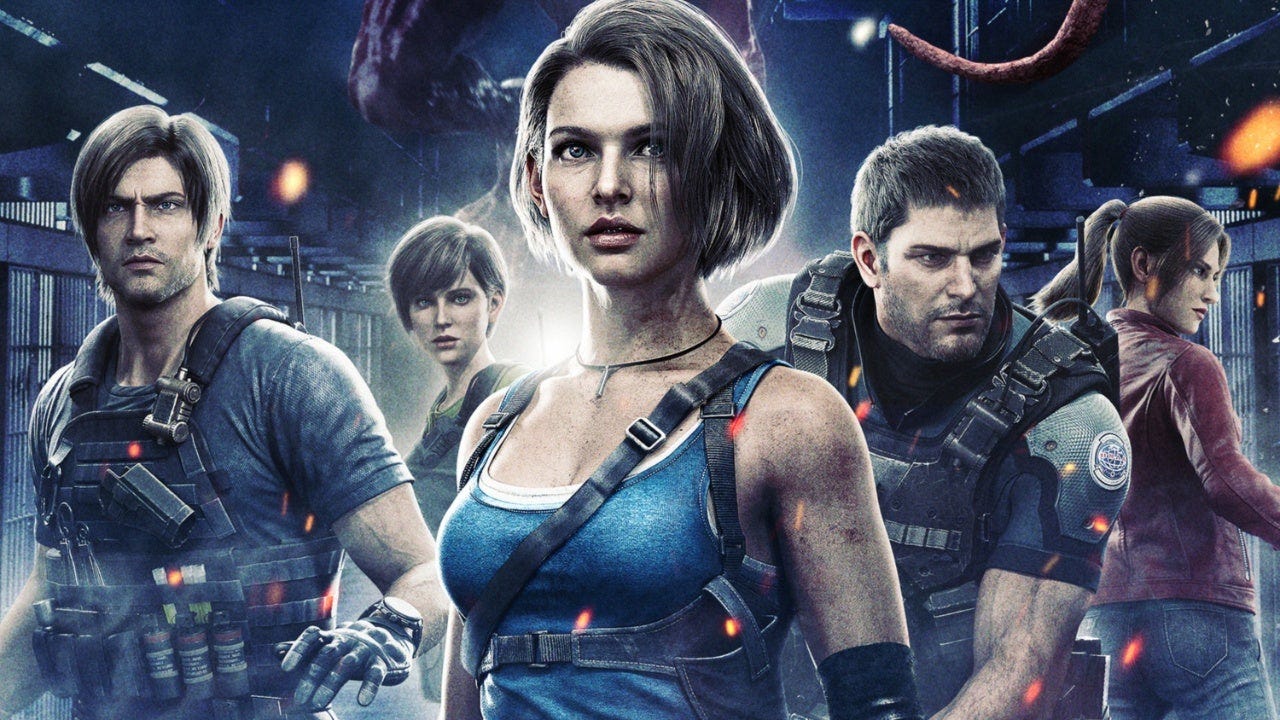
Credit: Capcom
The Resident Evil series has always been a pioneer in the survival horror genre, and is in a large part responsible for skyrocketing Capcom to fame. It’s become a series they could always rely on to sell copies, and every game in the series is well known to be of the highest quality.
But why is the series so beloved? How has it evolved and changed over time to stay just as relevant today as it was in the nineties?
I wanted to know the answers to these questions. So I played every main series game from start to finish over the course of this past year, and here are my thoughts.
In short, the Resident Evil series is about bioterrorism. The majority of the plots revolve around Umbrella, a corporation using virus strains to create superweapons they plan to sell to the United States military. However, things quickly go awry and these biological horrors are released upon the world after a containment breach. The stories of these games follow special government agents, beat cops, and normal folks alike as they grapple with the consequences of Umbrella’s actions as they fight for their lives.
The first Resident Evil released for the Playstation One, and it was revolutionary. Its fixed camera angles, extremely punishing difficulty, and claustrophobic art and corridors makes the player feel boxed in, trapped at all times. This combined with stiff, clunky movement when encountering enemies and small amounts of inventory space made the game genuinely terrifying at the time.
But revisiting it now is rough. The controls have not aged well. When used to modern games with buttery-smooth movement and free camera control, the horror in the outdated, chunky Playstation One graphics are no longer scary and simply become frustrating.
However, despite the fact you could not pay me to play it again, I acknowledge that at the time, it was exactly what the gaming space needed.
The story was just as claustrophobic as the gameplay, and introduced iconic characters we continue to play as today. The helicopter of special agents Chris Redfield and Jill Valentine crashes into a dreary, isolated mansion where a zombie outbreak has occurred inside. The pair must fight to survive the mansion and find an escape route before it is too late.

Credit: Capcom
Resident Evil 2 takes place a couple months after the events of Resident Evil. Umbrella’s viruses have spread to the city below the mansion, Raccoon City, and it is rookie cop Leon Kennedy’s first day on the job. He encounters Chris Redfield’s sister, Claire, and they fight to escape the massive outbreak that somehow seemed to trigger the second Leon stepped foot into town.
In terms of gameplay, the series retains the clunky “tank” controls and camera angles, remaining relatively untouched from the first entry. The third entry, starring Jill, which chronicles her escape from Raccoon City, taking place at the same time as Leon’s adventure, follows suit and also retains the same gameplay.
In terms of characters, the series really hits its stride around Resident Evil 2. While not a particular story-heavy series, (unless you decide to play side modes or do independent lore research), the Resident Evil games have always been lauded for their characters. Despite not being particularly complex and nuanced, they all have distinct, lovable personalities and eye-catching, bold yet simple outfits and designs that set them apart.
Credit: Capcom
The wisecracking Leon Kennedy, and his catwoman-esque lover/rival, the secretive super-spy femme fatale Ada Wong have garnered massive fanbases within and, shockingly, outside of the Resident Evil fanbase. Even Jill, given a larger role in Resident Evil 3, also has her diehard fans, and almost every day I see the Resident Evil fanbase beg for the return of Claire, who has been absent from the more recent entries.
However, with the release of the GameCube and Playstation 2, Capcom knew something had to change. Fans were getting sick of the gameplay loop of the first three entries, beginning to see their flaws for the first time.

Credit: Capcom
Remember how I said Resident Evil was a mainstream, revolutionary horror franchise from the first entry? Resident Evil 4’s release in 2005 kicks it up another notch.
Resident Evil 4, even more so than the first game, burst onto the scene and became one of the most recognizable games of the decade.
The gameplay loop receives a massive overhaul here. The clunky controls of yore are gone, replaced with quick, precise movement. A new shooting system is put into place: You must stop completely to fire your weapons, and the aiming reticle moves at slow speeds, forcing the player to have to fumble around for the most precise shot as the reticle sways just enough to throw you off guard when aiming. It creates this aura of terror, forcing you to time and aim your shots correctly while managing low amounts of ammo, and it’s brilliant. It creates this slow-moving, tension-heavy sense of horror where one slipup can cost you your life without impeding the camera angles, and movement loop.

Credit: Capcom
Along with this drastic gameplay change, this entry refines and solidifies the place of gaming icons, constructing a more fleshed out interesting cast and a more complex story, something Capcom would try to carry into further entries.
Leon Kennedy, the protagonist of Resident Evil 2, returns just as a mysterious zombie parasite breaks out in a remote village in Spain. Cultists that worship the parasite kidnap the daughter of the president of the United States, Ashley Graham, and Leon, now a member of the secret service, is dispatched to rescue her.
Leon becomes a far more fleshed out character while he and Ada continue to tangle. His bond with the damsel in distress of the story, Ashley Graham, turns him into a more complex character as his wisecracks are revealed to be a coping mechanism for his trauma, and the horrors he faces begin to grind at his sanity. This is also where Leon claims his crown as the ultimate video game heartthrob. Everyone, including straight men and lesbians, are in love with Leon Kennedy. Every backflip he does, every knife he disarms, every zombie head he blows off shimmers with charisma and smolders with alluring charm. He’s just so cool, and everyone I know that has played RE4 has swooned at least once.
Credit: Capcom
Resident Evil 4 has aged beautifully. Despite the fact the game has been remade, playing the original is still a wonderful experience, the controls, characters and story still holding up. This game becomes the building block for the rest of the series.
Resident Evil 5 marks the return of Chris as he grapples with the effects of the same parasite from RE4, but in Africa with a new companion, Sheva. While still a solid entry, the game takes a turn away from horror. RE5 is more about action sequences and quick time events, and while fun overall, retaining the sense of a Resident Evil game, most of the scare factor is gone.

Credit: Capcom
Resident Evil 6 is often considered the biggest misstep in the franchise. The game tries to return every protagonist from prior entries, but the narrative fails to juggle so many iconic characters and all of them feel underrepresented and half-baked. The gameplay also shifts entirely into an action game, removing almost all of the scare factor, even the little bit still remaining from Resident Evil 5. The game ends up as a boring action fluff piece with little to do or say.
So once again, the franchise is reinvented with Resident Evil 7: Biohazard.
Capcom noticed their failure with RE6. While the “action movie” formula worked for RE5, the method fell flat with the subsequent entry. So the series returns to its roots.
Credit: Capcom
Biohazard stars Ethan Winters, a systems engineer and everyman without combat experience of any kind, a first for the franchise. Upon hearing his missing wife, Mia, has been located in a remote bayou in Louisiana, Ethan traverses the farmhouse of the petrifying Baker family and the mold virus that has corrupted them to save Mia at any cost.
For the first time, the series is played in first person, which does much to enhance the horror. First person is a much more immersive perspective, after all, and having the monsters that lurk in the farmhouse directly attack YOU without the barrier of a third person character model in front of you is infinitely more terrifying.
While the tank controls and tank camera of early entries do not return, (thank Christ), this entry scales back the combat focus intensely. Similar to the first entry, fewer enemies attack Ethan and instead opt for sneaking or chasing the poorly armed engineer down narrow, dark corridors where he cannot defend himself. The game focuses heavily on puzzles and stealth, which make the few enemy encounters in the game far scarier. The slow, creeping horror from the first couple entries has returned, emphasizing the horror elements rather than action elements through a punishing item management system where you can carry little to defend yourself, forcing you to sneak past atrocities with bated breath, which is a far less frustrating and more immersive way to demonstrate horror as opposed to the clunk of the first three entries.
Credit: Capcom
Resident Evil 7 is by far the scariest entry in the franchise, and that is exactly what the series needed for a breath of fresh air. For the first time since the first three RE games, the series could finally prove that it was legitimately terrifying. The dark corridors, isolated atmosphere of the farmhouse being the game’s single location, and amorphous, ever-changing antagonist of the Mold constantly keeping you on your toes revitalized the franchise like never before.
Resident Evil 8: Village continues to follow the formula set up in RE7, just with a couple of improvements.
Set in a snowy village in Romania, this time Ethan must rescue his infant daughter from a mysterious cult who wants to sacrifice her to the Mold. This game is a homage to Resident Evil 4 in every sense of the word, and increases the combat focus and Ethan’s arsenal of weapons without sacrificing the terror of Biohazard. While a little weaker in the atmosphere and horror department, 8 is still an excellent game and a worthy capstone to Ethan’s story.

Credit: Capcom
And that brings us to the latest entry, Resident Evil 9: Requiem.
A celebration of everything the Resident Evil franchise has ever done, the series introduces new protagonist and FBI desk job agent Grace Ashcroft for the first half of the game, focusing on the refined stealth and puzzle aspects put into place by the Ethan saga while Leon Kennedy returns as the playable protagonist in the second half of the game as a Devil May Cry-esque badass to rip and tear through legions of zombies, focusing and further refining the combat-heavy RE 4–6 formula by keeping and improving on the good and tossing out the bad. Requiem is a worthy celebration of the franchise and its plot introduces new villains who dig up the previous bioengineered horrors of games past and, well, bioengineer them into new, nostalgic, terrifying threats.

Credit: Capcom
So, this brings us back to the question of the day: How has the RE franchise survived and thrived for this long? The answer is simple: Its incredible ability to constantly adapt without compromising is what makes the franchise special.
Resident Evil has always been about bioengineered horrors and the terror of human experimentation, which we have been guided through by likeable and interesting characters. That has never changed, and the iconic, mutated, “fused-together” monstrosities of the franchise have remained consant terrors that will never get old. The exploration of the “modern prometheus” idea first set forth by Mary Shelley in Frankenstein is expertly explored through villains like Wesker and Miranda, ever so carefully prodding at the idea that some things should be left undiscovered. This message is shown, not told through dialogue or exposition, and there is no particularly deep or philosophical approach to this message. This sole concept has kept the franchise engaging and the players hooked for years.
But the series has continued to refine its gameplay to almost perfection, adapting and changing everything that hasn’t worked to an impressive degree.
Over the course of the series, the developers have known exactly what did and didn’t work in these games, switching boldly into different gameplay styles without compromising the signature style of the series. You can tell a Resident Evil game when you see it, but the gameplay loop evolves so intensely over the franchise’s life that not even the biggest hater can say that the series has stagnated. From tank controls, to first person, to a mix of action and horror, the series continues to search for that perfect balance of horror and player control, which is very commendable in a space where games either refuse to evolve or evolve too much and corrupt what made that game special.
So that’s it. This iconic horror franchise has gripped me and thousands of others since day one, and I sincerely hope we have another 30 years of quality nail-biting, teeth-chattering, palm-sweat-inducing horror to come.
Credit: Capcom
메타데이터
- post_id
- c4e9a6bea0db
- slug
- a-look-back-on-thirty-years-of-resident-evil-c4e9a6bea0db
- url
- https://medium.com/theuglymonster/a-look-back-on-thirty-years-of-resident-evil-c4e9a6bea0db
- canonical_url
- https://medium.com/theuglymonster/a-look-back-on-thirty-years-of-resident-evil-c4e9a6bea0db
- author_url
- https://medium.com/@cben07623
- status
- ok
- fetched_at
- 2026-06-12 18:14:10