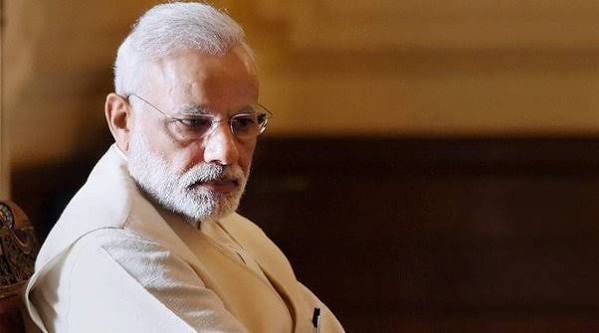
Demography, Security, and Social Cohesion: Why India Cannot Ignore Emerging Internal Pressures
Managing Migration, Religious Conversion, and Demographic Change Will Be Central to India’s Long-Term Stability.
Demography, Security, and Social Cohesion: Why India Cannot Ignore Emerging Internal Pressures
Managing Migration, Religious Conversion, and Demographic Change Will Be Central to India’s Long-Term Stability.

India's rise as a major global power depends not only on economic growth and military strength but also on its ability to preserve social cohesion and maintain confidence in the integrity of its borders and institutions. As New Delhi pursues ambitious national objectives, concerns surrounding illegal immigration, coercive religious conversion, and localized demographic shifts have moved from the political margins to the center of strategic debate.
The issue is no longer merely administrative. It touches on questions of national security, democratic representation, cultural continuity, and the state's capacity to enforce the rule of law. In response, the Indian government has increasingly framed demographic stability as a matter of national importance, establishing mechanisms to study and address demographic changes linked to illegal migration and other exceptional factors. ([Organiser][1])
At the heart of the debate lies illegal cross-border migration. For decades, states along India's eastern frontier have faced persistent concerns regarding undocumented immigration. Critics argue that large-scale unauthorized migration places pressure on public services, alters electoral dynamics, and creates long-term challenges for governance. These concerns are particularly pronounced in border regions where demographic changes have occurred more rapidly than national trends would otherwise predict. ([Organiser][1])
The challenge extends beyond migration. Allegations of coercive or fraudulent religious conversion have generated growing political attention across several states. Supporters of stronger regulation contend that genuine religious freedom requires protecting vulnerable communities from conversion through inducement, deception, coercion, or exploitation. Recent legislative initiatives in several states reflect an effort to distinguish voluntary changes of faith from conversions obtained through unlawful means. ([PRS Legislative Research][2])
For many policymakers, the central concern is not religious diversity itself—an enduring feature of Indian civilization—but the possibility that organized and coercive campaigns could reshape local demographics in ways that undermine social harmony and democratic accountability. The debate has therefore evolved from one centered on individual rights to one increasingly focused on the relationship between demographic change and national resilience. ([Organiser][1])
India's history offers a unique perspective on these questions. Unlike many nation-states that emerged around a single ethnic or religious identity, India developed as a civilizational state capable of accommodating extraordinary diversity. Its strength has long rested on a pluralistic framework that balances unity with cultural variety. Yet pluralism depends on public confidence that demographic change occurs through lawful, transparent, and voluntary processes rather than through coercion, illegal migration, or institutional weakness.
This places a premium on effective governance. Border management, accurate population data, enforcement against illegal immigration networks, and safeguards against unlawful conversion practices are not merely political issues; they are essential components of state capacity. Governments that fail to address these concerns risk allowing local grievances to harden into broader social tensions.
At the same time, policymakers must proceed carefully. Measures designed to address demographic concerns must remain consistent with constitutional protections, individual liberties, and India's democratic traditions. A durable solution requires balancing national security with civil rights, and demographic stability with religious freedom.
The broader objective should not be demographic engineering but demographic transparency. India's success will depend on ensuring that population changes reflect lawful migration, voluntary social choices, and democratic processes rather than coercion, illegality, or external influence.
As India enters a period of growing geopolitical influence, the management of internal demographic pressures will become an increasingly important test of statecraft. The country's ability to address these challenges while preserving its democratic character may ultimately determine whether it can sustain both national cohesion and great-power ambitions in the decades ahead.
Saurav Dutt is an Author and Global Affairs Commentator. He is the Author of Modi and Me: A Political Cultural and Religious Reawakening, and Balance of Power: US-India Ties in the Epoch of Trump and Modi. His forthcoming book, In Defence of Hindutva, will be released in Summer 2026.
메타데이터
- post_id
- c517d5ffcaa4
- slug
- demography-security-and-social-cohesion-why-india-cannot-ignore-emerging-internal-pressures-c517d5ffcaa4
- url
- https://medium.com/@sauravdutt/demography-security-and-social-cohesion-why-india-cannot-ignore-emerging-internal-pressures-c517d5ffcaa4
- canonical_url
- https://medium.com/@sauravdutt/demography-security-and-social-cohesion-why-india-cannot-ignore-emerging-internal-pressures-c517d5ffcaa4
- author_url
- https://medium.com/@sauravdutt
- status
- ok
- fetched_at
- 2026-06-09 15:37:30