Revisiting: “L’Inferno” (1911)…
Did you know “L’Inferno” is considered the first Italian feature-length movie ever made?
Revisiting Classic Movies
Revisiting: “L’Inferno” (1911)…
Did you know “L’Inferno” is considered the first Italian feature-length movie ever made?
L’Inferno (1911), co-directed by Francesco Bertolini, Adolfo Padovan, and Giuseppe De Liguoro, is considered by many critics a remarkable feature film. The movie, groundbreaking for the period, is an exceptional silent film. More than a century later, 115 years to be exact, L’Inferno is the oldest feature-length movie surviving today. It was released in the United States under the title Dante’s Inferno.
Ambitious, when referencing what Bertolini, Padovan, and De Liguoro accomplished with L’Inferno, is possibly the understatement of the century. The achievement is historic. While early cinema is well known for short films, noting L’Inferno is historically significant, feature-length productions of this standard were few and far between.
Rarely, during this era of movie production, did a film exceed 60 minutes. Considered the first full-length Italian feature film, a loose adaptation of Dante’s Inferno, L’Inferno is 73 minutes. Dante’s Inferno, the first of three cantos comprising the author’s Divine Comedy, isn’t exactly a short read.
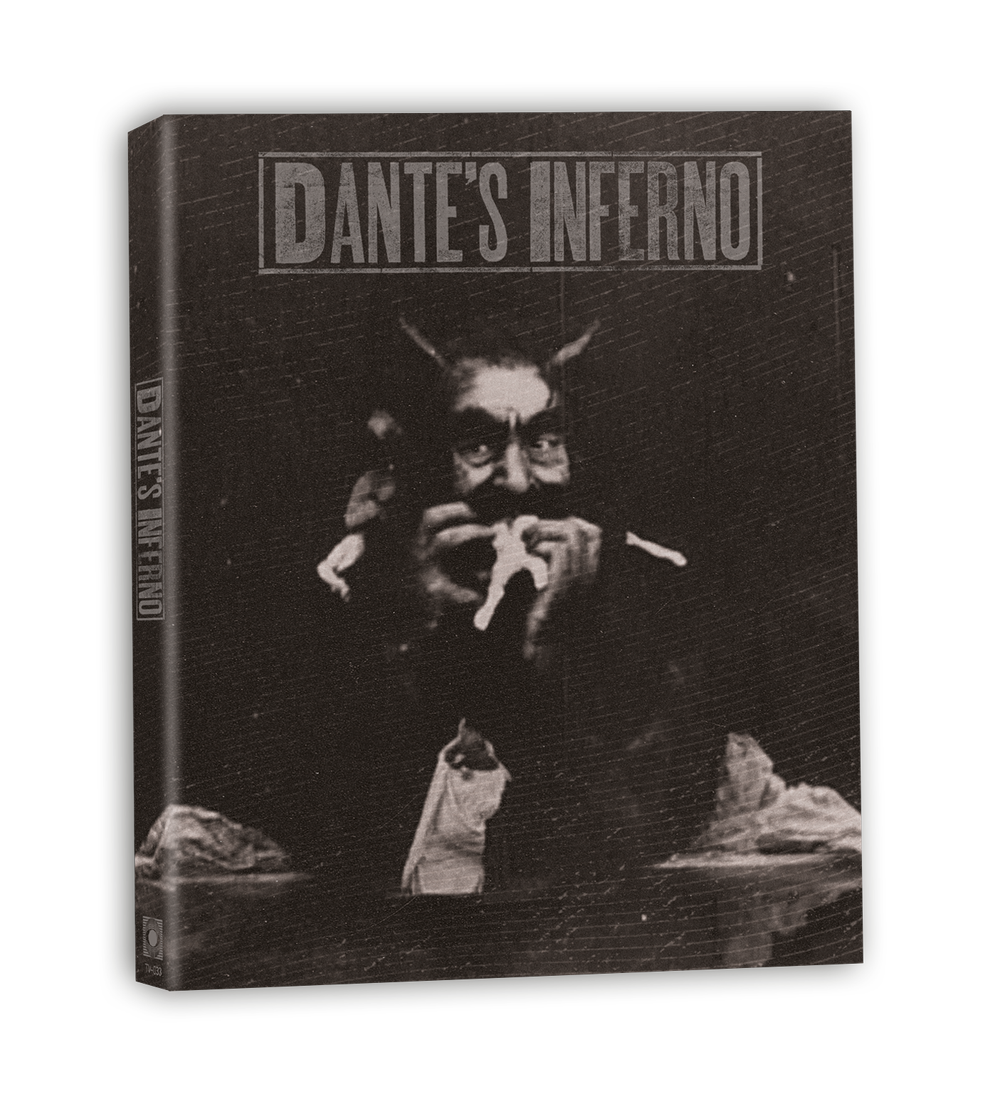
If you’re reading this article, unless you have a keen knowledge of early movie production, there is a good chance the cast members will mean little.
Dante Alighieri, the author responsible for the Divine Comedy, is portrayed by Salvatore Papa. Dante Alighieri (1265 — 1321), typically known as Dante, is largely known for writing the Divine Comedy. Dante’s Divine Comedy, completed in 1321, is considered the author’s magnum opus (Latin for “great work”). It is understood that, while making L’Inferno, Salvatore Papa kept a copy of Dante’s Inferno with him at all times for reference.
[embed]
Cast members, further to Papa, are Arturo Pirovano, Giuseppe de Liguoro, Augusto Milla, Attilio Motta, and Emilise Beretta. As I suggested, if silent movies aren’t your thing, these names will mean little to nothing.
Pirovano, in L’Inferno, brought the poet Virgil to the screen. Publius Vergilius Maro (70 BC — 19 BC), usually referenced as Virgil (Vergil in English), was an ancient Roman poet. People familiar with the Augustan period will likely know of Virgil’s work.
Giuseppe de Liguoro, a pioneer of early Italian film production, was an actor and director during the silent era. His character, in L’Inferno, is Il conte Ugolino. Il conte Ugolino is one of the most tragic figures in Dante’s Inferno. Il conte Ugolino, appearing in Canto XXXIII, is a political traitor. Not entirely surprising, because of his actions, Il conte Ugolino is condemned to the ninth circle of Hell.
Many different actors have played Lucifer in film, television, radio, and digital media productions. Even though Tom Ellis is known for playing Lucifer Morningstar in Lucifer (2016–2021), for L’Inferno, Augusto Milla brought a very different interpretation of Lucifer to the big screen.
Attilio Motta is best known for his portrayal of Bertran de Born in L’Inferno. Much of what we know about Motta, unfortunately, stems entirely from his work on L’Inferno. Everything else seems to have vanished. The same is unfortunately true of Emilise Beretta. In L’Inferno, Beretta plays Beatrice Portinari. Beatrice Portinari, in reference to the source material, was based on Dante’s real-life fixation.
메타데이터
- post_id
- c523c435e4f9
- slug
- revisiting-linferno-1911-c523c435e4f9
- url
- https://www.harshlight.news/revisiting-linferno-1911-c523c435e4f9
- canonical_url
- https://www.harshlight.news/revisiting-linferno-1911-c523c435e4f9
- author_url
- https://medium.com/@shainethomas
- status
- ok
- fetched_at
- 2026-07-11 18:05:18