Why MIP watches are better for wilderness activities
Why MIP watches are better for wilderness activities
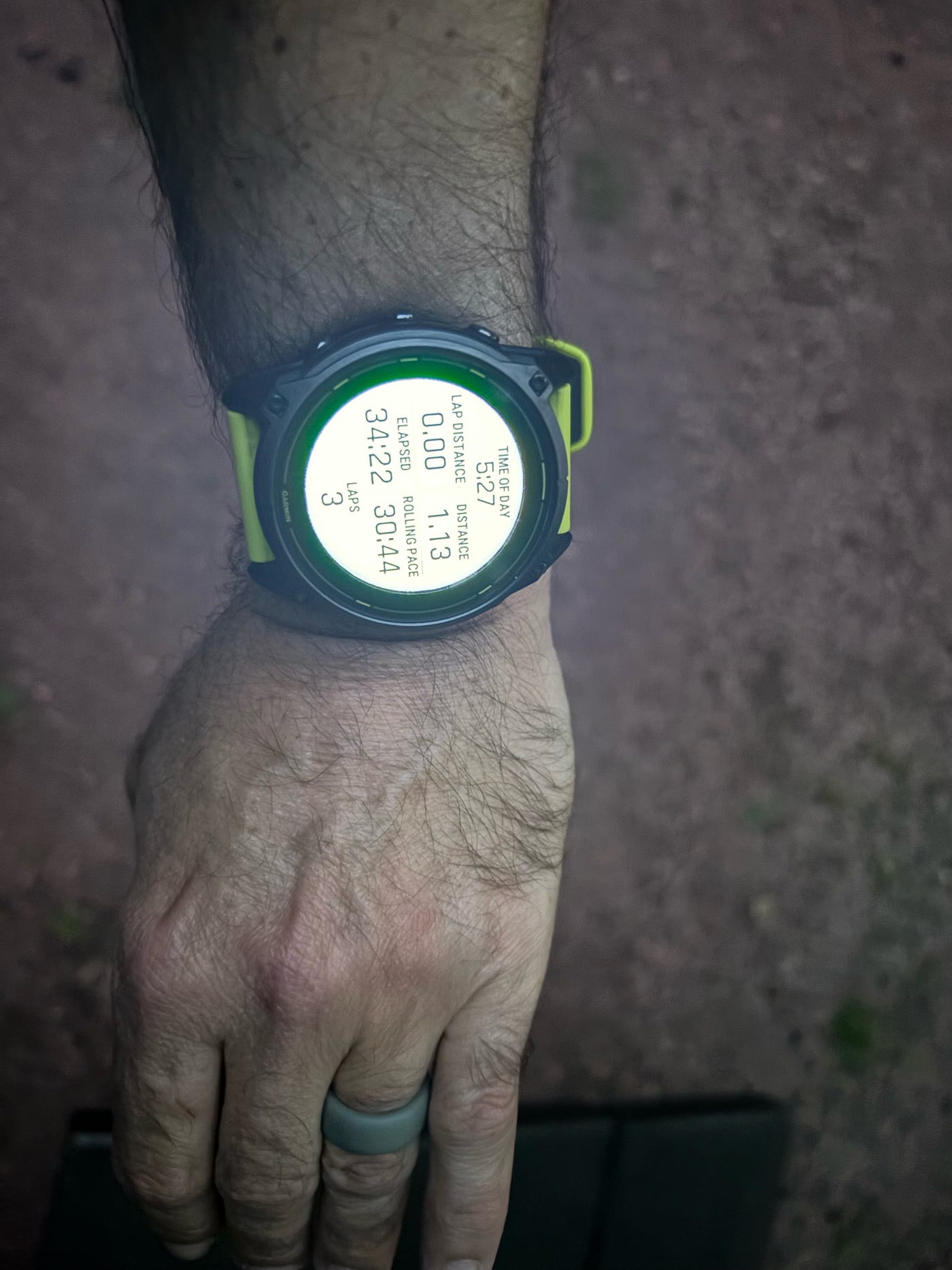

Top photo is a MIP watch in the dark with backlight on 50%; bottom is same watch illuminated only with my headlamp.
Before we get into specific models, I am going to take a firm stand on a controversial subject which is the subject of endless debate on Reddit. MIP watches are better for most wilderness activities including trail running and ultras. On this point, I diverge from others including the very well known influencer, dcrainmaker, who is a proponent of AMOLED watches. As always, I will provide a detailed explanation of my rationale and of course I acknowledge that it is still perfectly possible to be successful with an AMOLED watch. So what are MIP and AMOLED watches anyway?
First, some background — there are two main displays types used in sports watches. AMOLED displays or similar are found in iPhones, iPads, Apple Watches and similar devices and are very bright and colorful. Each pixel on an AMOLED watch emits light. By contrast, MIP stands for Memory in Pixel and these types of displays only consume power when the display changes and they do not emit light on their own. They look more like the old LCD displays or Kindle like eInk displays. They depend on ambient light to reflect off the surface or alternatively a backlight. So a MIP display appears brighter and more visible as the level of ambient light increases — so they are easy to read in bright sunlight — they almost sparkle or shimmer in bright sun as shown below.

MIP watch in full sun at 11:34AM in Alabama, USA. Some lack of clarity is simply due to smudges that can be wiped off.
Advantages of AMOLED displays include a much greater range of colors, higher resolution, faster refresh rates (ability to render animations effectively) and for many, a much more appealing user interface. Also, likely better visibility in mixed conditions like dawn, dusk, and heavy tree cover. MIP displays by contrast have better visibility in very bright, direct sunlight, lower power consumption (which translates in longer battery life), but most importantly, a true always on display. This last point in my opinion is not well understood by most on Reddit and other forums.
I’m going to be a little harsh now — a lot of people evaluate sports watches based on how they look, mostly considering the appearance of the watch face. They flick their wrist and observe that their pretty AMOLED watch is clearly visible in the sun. That’s all well and good, but when doing a trail run or ultra, we are not looking at the watch face, we are looking at the activity screen and might need to do more than just glance at it for a fraction of a second in order to navigate.
The key issue is that AMOLED displays can be configured to various levels of brightness and to turn on with a gesture (i.e. turning one’s wrist) or be sort of always on (with “sort of” being the operative phrase). But in all cases, when the display wakes up, it will auto-dim to a lower brighness level after a relatively short time both in order to preserve battery life and to prevent screen burn in. This is distracting and potentially very problematic when one needs to concentrate on the map for example and both hands are occupied (for example scrambling or using poles). By contrast, a MIP watch can maintain a consistent display (no auto-dimming, no need to flick a wrist, no need to push a button or touch the screen) that is the winning factor. While not our focus here, this is equally an advantage during dark indoor activities like a spinning class where one can use the backlight to keep the display consistently visible while keeping one’s hands on the handlebars. This is possible because keeping the backlight on with a MIP screen does not cause burn-in unlike keeping the the pixels of AMOLED watch on a high brightness level for an extended period.
MIP screens are often criticized for being difficult/impossible to see in the dark. However, that is not true as one can either use the backlight or do what I recommend, which is illuminate the screen with one’s headlamp as I illustrate in the photos above. My series of stories will carefully consider what is needed to be successful for safely and confidently running in the dark.
As an added bonus, there is a contingent who prefer MIP screens for their retro, understated aesthetic — the “no phone on my wrist” crowd. While I subscribe to this as well, I would consider this a distant consideration.
So in summary, for actual outdoor and wilderness use, I firmly believe that in most cases, a MIP watch is the right tool. This is primarily due to the ability to maintain a true always-on display as well as low power consumption and thus long battery life. The display is stunningly visible in bright sunlight as well as full darkness when illuminated with a headlamp. For mixed conditions like dawn/dusk/heavy foliage, the backlight can be employed.
메타데이터
- post_id
- c5407ba2ed7d
- slug
- why-mip-watches-are-better-for-wilderness-activities-c5407ba2ed7d
- url
- https://medium.com/@marckrawitz/why-mip-watches-are-better-for-wilderness-activities-c5407ba2ed7d
- canonical_url
- https://medium.com/@marckrawitz/why-mip-watches-are-better-for-wilderness-activities-c5407ba2ed7d
- author_url
- https://medium.com/@marckrawitz
- status
- ok
- fetched_at
- 2026-06-09 15:37:30