K4ZAF325BM‑HC16: Navigating EOL Risks for Samsung GDDR6 Graphics Memory
When designing GPU‑accelerated hardware, selecting high‑performance graphics DRAM is only half the battle. Component lifecycle status often…
K4ZAF325BM‑HC16: Navigating EOL Risks for Samsung GDDR6 Graphics Memory
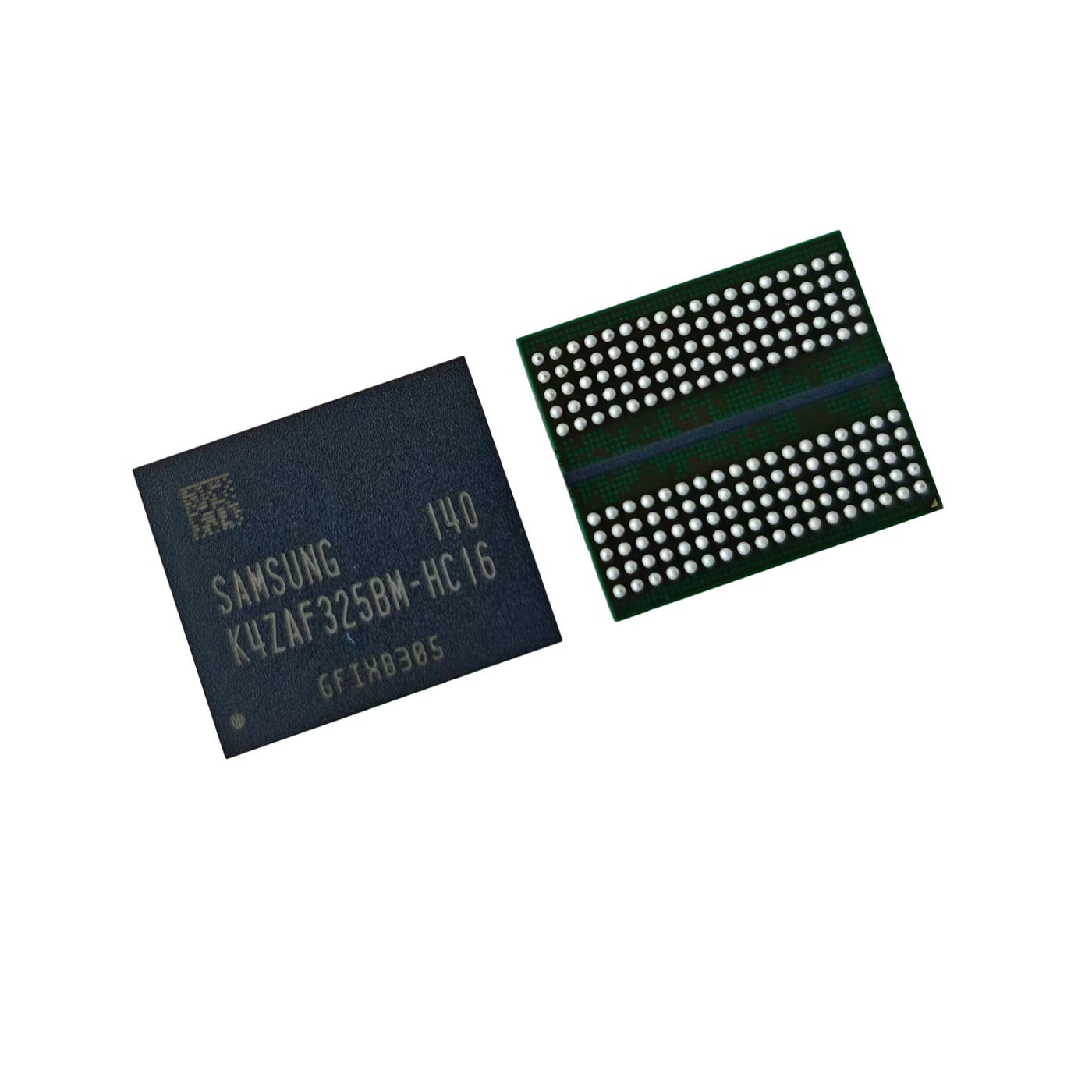
K4ZAF325BM‑HC16
When designing GPU‑accelerated hardware, selecting high‑performance graphics DRAM is only half the battle. Component lifecycle status often creates bigger headaches for hardware teams. The K4ZAF325BM‑HC16, Samsung’s popular 16Gb GDDR6 memory chip, is one such example: widely adopted across consumer and embedded graphics hardware, yet now officially end‑of‑life. Many engineering and procurement teams are caught off‑guard by shrinking stock and scrambling for viable drop‑in alternatives.
What Is K4ZAF325BM‑HC16?
Manufactured by Samsung, the K4ZAF325BM‑HC16 is a 16Gb GDDR6 SGRAM graphics‑oriented memory device housed in FBGA‑180 package. Configured as 512M ×32‑bit, it runs at 1.35V with up to 16Gbps data transfer speed, delivering 2 GB physical capacity per single chip.
This part earned its market footprint as original memory for well‑known consumer graphics cards including the RTX 3060 series. Designers stack multiple chips in parallel on PCB to build larger memory pools for graphics rendering, video buffering and edge‑AI inference workloads.
Since Samsung ceased formal production, today’s available units come purely from residual inventory channels. For product maintenance, legacy hardware sustainment or new project risk assessment, understanding its strengths and compatible cross‑references becomes essential.
Key Technical Advantages
Behind its broad adoption lies a balanced set of performance and manufacturability traits.
- High bandwidth GDDR6 throughput: At 16 Gbps data rate and 32‑bit I/O width, each single IC offers 64 GB/s theoretical bandwidth. Multi‑chip combinations scale to satisfy heavy parallel computation tasks.
- Industry‑standard FBGA‑180 footprint: 180‑ball BGA packaging follows widely‑accepted PCB layout practices. Card manufacturers and repair labs can rely on mature soldering and rework workflows.
- Optimized 1.35V operating voltage: Compared to older GDDR5 generations, lower core voltage keeps thermal output in check under sustained high‑load graphic operations.
- Robust bank architecture: 16 internal banks paired with 16K/32ms refresh timing deliver stable performance for round‑the‑clock embedded deployments.
- Broad temperature coverage 0℃‑95℃: Works both for regular consumer GPUs and moderately demanding industrial graphic boards.
- RoHS lead‑free compliance: Meets global environmental requirements for commercial and industrial finished goods.
Common Real‑World Implementation Scenarios
This GDDR6 component shows up across diverse hardware ecosystems, not merely limited to desktop gaming graphics adapters.
- Discrete GPU repair & memory modification Besides original factory assembly, repair houses heavily consume this part for faulty GPU component swap. Hardware modders also populate multiple particles to raise total VRAM capacity for improved gaming and local AI processing capability.
- Embedded edge‑AI & machine‑vision hardware NPU carrier‑boards for visual inspection systems leverage GDDR6 as high‑speed frame buffer. High‑resolution camera streams and object‑detection algorithms demand fast read‑write memory to avoid frame drop and processing bottlenecks.
- FPGA high‑speed image acquisition equipment Research and measurement instruments rely on GDDR6 as large‑capacity frame memory, handling ultra‑high‑framerate video capture and real‑time rendering tasks.
- Long‑lifecycle industrial control graphic modules Some industrial control systems maintain multi‑year production cycles. Even when core memory IC becomes EOL, OEMs must secure second‑source options to avoid product discontinuation.
Practical Field‑tested Project Stories
Project 1: Gaming GPU Maintenance Workshop
A third‑party graphics repair business handles large volumes of RTX 3060 return units. When onboard K4ZAF325BM‑HC16 chips fail, technicians restore GPU function using stock inventory components. As original production ends, the team establishes secondary BOM alternatives to insulate future repair batches against supply gaps.
Project 2: Machine‑Vision NPU Board Development
An industrial OEM designs vision inspection hardware for factory production lines. Four K4ZAF325BM‑HC16 chips populate the board to build an 8 GB graphic cache. After receiving Samsung’s EOL notice, hardware engineers start evaluating pin‑compatible substitutes for next hardware revision to keep product roadmap uninterrupted.
Project3: FPGA‑based Video Capture Instrument
One research institute builds high‑speed video output devices. GDDR6 serves as massive frame buffer. Supply‑chain volatility pushes R&D to qualify multiple alternative part numbers as backup BOM entries, preventing potential production stand‑still once existing stock depletes.
Cross‑Reference & Compatible Replacement Parts List
⚠️ Important note: Pin‑compatible package does not guarantee plug‑and‑play performance. Always run sample validation, controller timing adjustment and system burn‑in testing before mass manufacturing.

Warning: K4Z80325BC‑HC16 only provides 8Gb capacity, half of target density. Cannot substitute for K4ZAF325BM‑HC16. Double‑check full part number prefix during BOM review.
Frequently Asked Questions
Q1: What is K4ZAF325BM‑HC16 mainly used for? A: It is Samsung’s 16Gb GDDR6 graphics memory for GPU cards, embedded NPU and vision processing hardware. This component has reached EOL; market supply is dependent on leftover stock.
Q2: Can I directly swap K4ZAF325BM‑HC16 with K4ZAF325BC‑SC16? A: Package, density and rated speed match perfectly with pin‑compatible layout. Minor silicon revision differences may require memory‑controller fine‑tuning on certain platforms. Sample testing before mass roll‑out is strongly recommended.
Q3: Is cross‑brand replacement with SK Hynix GDDR6 feasible? A: Ball‑out may physically align, yet DRAM timing parameters vary across vendors. Direct mass replacement without lab validation creates hidden stability risks including thermal‑cycling failure.
Q4: How many chips are needed for building a 12GB memory array? A: Each K4ZAF325BM‑HC16 delivers 2 GB. Six chips in parallel realize total 12 GB memory configuration, which is the classic setup seen on RTX3060 graphics adapters.
Q5: Should new‑design projects select this EOL memory IC? A: Not recommended as primary BOM item for fresh hardware design. It remains acceptable for legacy‑product repair and sustaining projects with secured stock. New designs should prioritize active‑production memory components to mitigate obsolescence risks.
Q6: What risks come with adopting EOL memory for new hardware? A: Shrinking inventory, unstable pricing, absence of new wafer production, limited component traceability. When stock runs out, you face costly PCB redesign or lengthy alternative‑qualification cycles.
Closing Thoughts
EOL semiconductor parts bring unavoidable pressure for hardware R&D and procurement teams. If you are engaged in component selection, troubled by obsolescence or part shortage, and looking for reliable semiconductor suppliers, you may reach out to QIXINWEI. We provide engineering samples, in‑depth parameter comparison analysis and full BOM kitting service. Our team helps you evaluate stock availability as well as pin‑to‑pin compatible alternatives, protecting your projects from supply‑chain interruptions.
메타데이터
- post_id
- c566ecddce41
- slug
- k4zaf325bm-hc16-navigating-eol-risks-for-samsung-gddr6-graphics-memory-c566ecddce41
- url
- https://medium.com/@qixinweichip/k4zaf325bm-hc16-navigating-eol-risks-for-samsung-gddr6-graphics-memory-c566ecddce41
- canonical_url
- https://medium.com/@qixinweichip/k4zaf325bm-hc16-navigating-eol-risks-for-samsung-gddr6-graphics-memory-c566ecddce41
- author_url
- https://medium.com/@qixinweichip
- status
- ok
- fetched_at
- 2026-08-18 22:43:10