The Boredom of Busyness: Why We Can’t Sit Still and What Kierkegaard and Dexter Teaches Us
We live in a culture obsessed with doing. When boredom strikes, the common cure is busyness. Fill your calendar, start a new project…
The Boredom of Busyness: Why We Can’t Sit Still and What Kierkegaard and Dexter Teaches Us
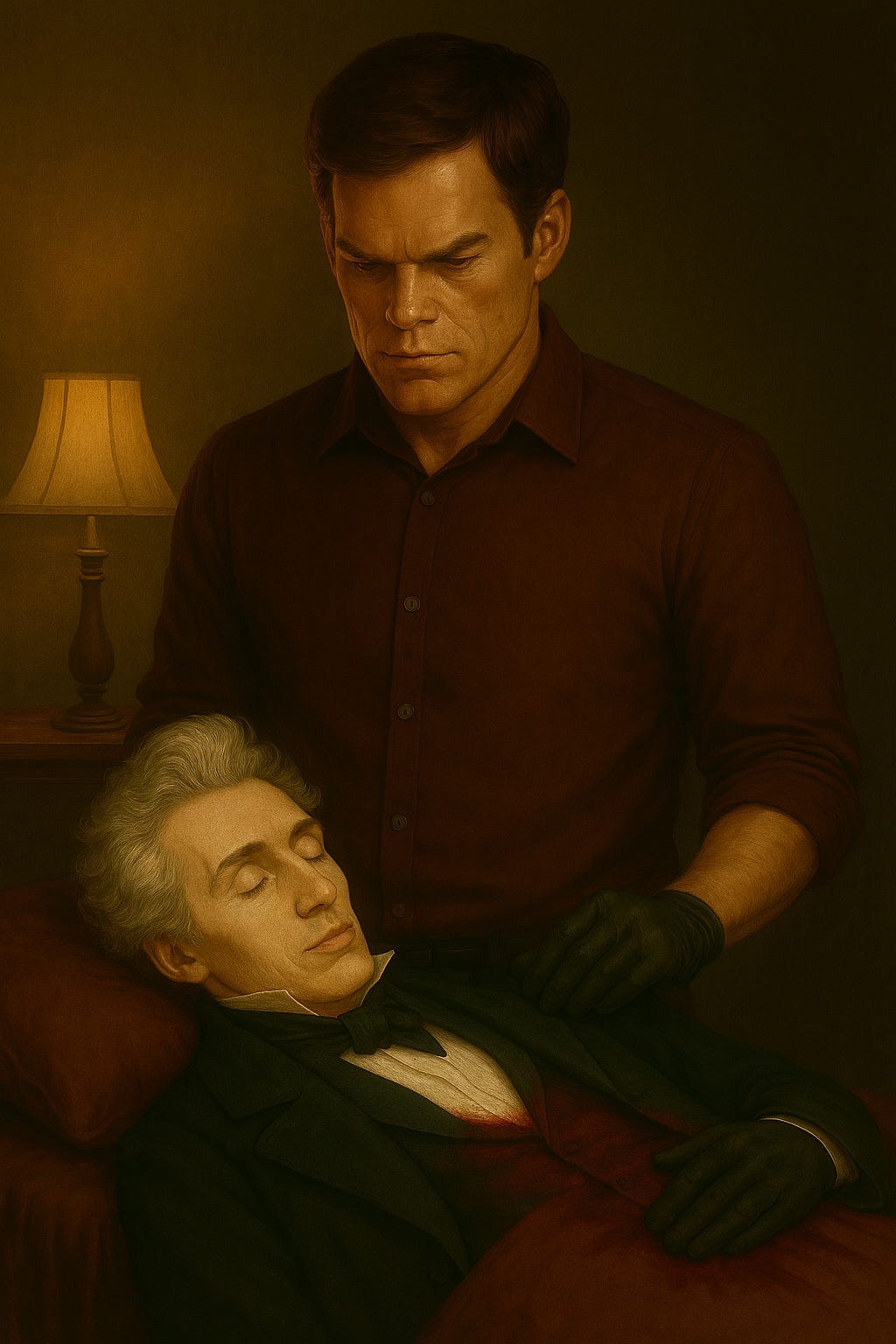
We live in a culture obsessed with doing. When boredom strikes, the common cure is busyness. Fill your calendar, start a new project, binge-watch something, scroll endlessly. But what if boredom and busyness aren’t opposites? What if they’re two sides of the same coin, symptoms of a deeper restlessness? That’s what Kierkegaard argues and illustrated through the TV character Dexter.
Historically, boredom, known as acedia, was considered a spiritual sickness. Think of the haunting image from Se7en: a man kept alive for a year, wasting away in total inactivity. For thinkers like Aquinas and Augustine, acedia was “sorrow about spiritual good,” a lack of God’s presence. Modern life flips the script, we fight boredom with activity. Endless lists of “things to do” promise relief. But Kierkegaard warns that busyness doesn’t cure boredom, it mirrors it.
Both boredom and busyness stem from the same root problem of restlessness. The bored and the busy share a lack of singular focus, a double-mindedness that Kierkegaard calls “the pernicious sickness of busyness.” The crowd, our social media feeds, or our productivity culture, reinforces this sickness. We confuse motion with meaning and production with purpose. Yet, as Kierkegaard says, “Of all ridiculous things the most ridiculous seems to me, to be busy.” Busyness fills life with nothingness, just as boredom does.
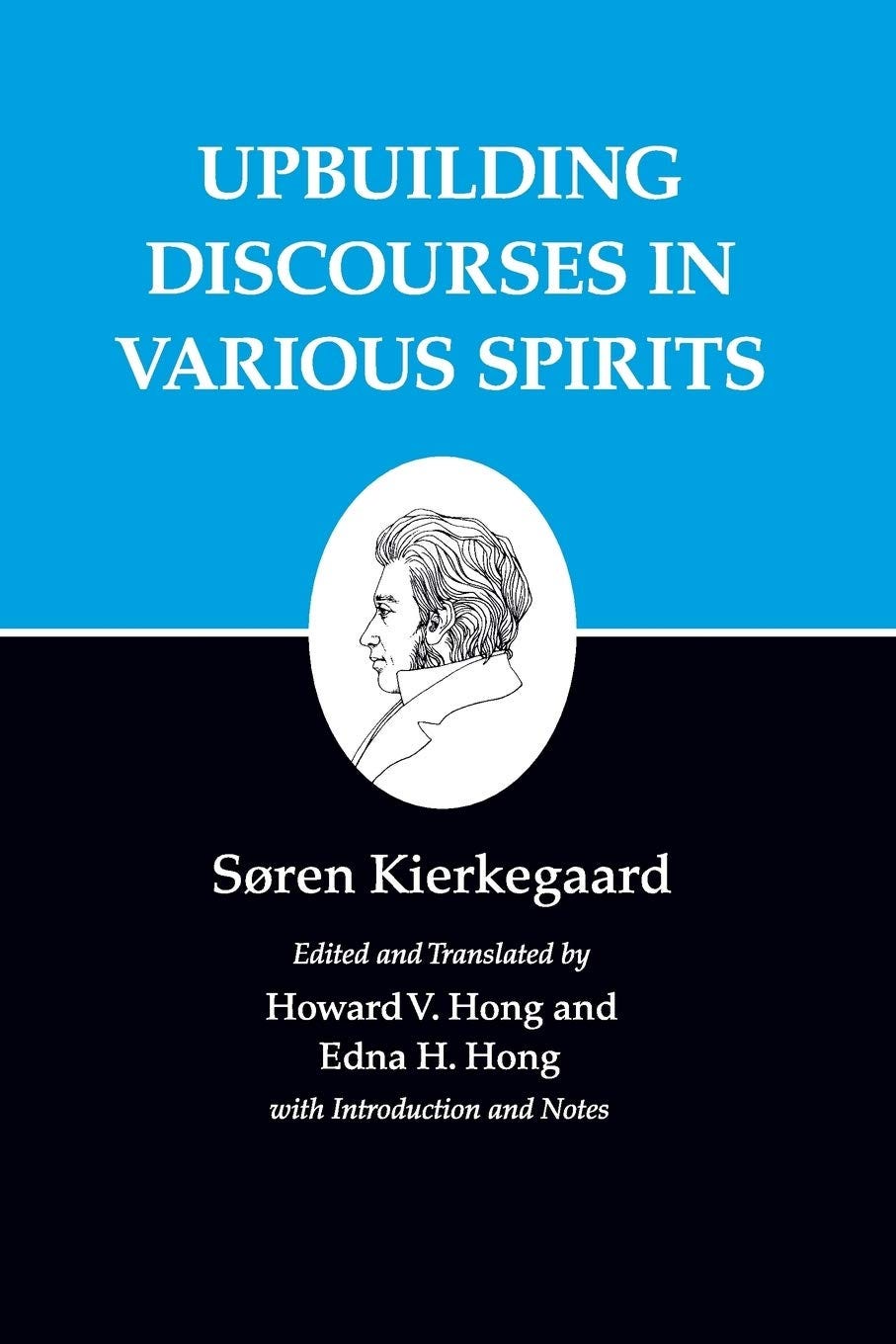
If boredom and busyness are symptoms, what’s the cure? Kierkegaard offers a radical answer. Stillness. Not mere inactivity or a few minutes of meditation, but a state of being, a virtue. Stillness is not the midpoint between boredom and busyness, it’s their opposite. It’s the inward turn, the acceptance that truth cannot be produced or chased but only received.

Drawing on Johann Georg Hamann’s critique of Enlightenment rationalism, Kierkegaard insists that truth is not an achievement but a gift. To find it, we must stop striving. He uses the biblical lilies and birds as metaphors. They flourish by being, not by fretting or chasing greener pastures. In contrast, the restless lily uproots itself in search of better soil and dies. The anxious bird seeks safety in an enclosure and ends up trapped. Likewise, our restless pursuit of “more” kills the possibility of peace.

Stillness means relinquishing control and embracing dependence on God. It’s tied to divine rest: “Remain with me, I am that rest.” Rest isn’t an abstract idea or a weekend getaway, it’s existence with God. And it’s always available if we accept the invitation.
Stillness doesn’t happen by accident. It begins with confession, a “holy act” that acknowledges our nothingness and dependence. Unlike the self-exertion of busyness, confession is a release, a backward movement. It’s not about quick fixes or momentary remorse. Impatience turns repentance into a “spasmodic shower.” True confession opens the door to stillness.
From stillness flows joy, not as fleeting emotion but as a way of being. Joy, Kierkegaard says, is “how being is.” It’s not earned through activity or diversions; it’s realized in presence. Joy and stillness share an eternal dimension: They anchor us in the truth that “God is love” and that life always holds a task worth living for.
Patience completes this triad. Unlike the secular notion of waiting for something, Kierkegaardian patience is non-resistance, a willingness to let go of the illusion of control. It’s an “essential wandering” grounded in God’s invitation, not in restless striving. In patience, we gain the soul, not by acquiring something new, but by becoming conscious of what we already are.
Enter Dexter Morgan, the charming forensic analyst who moonlights as a serial killer. At first glance, Dexter seems worlds apart from Kierkegaard’s philosophy. Yet his life vividly illustrates the dangers of restlessness. From the series opener, Dexter frames his killings as “fun and games.” His first murder? A psychopathic nurse he calls a “playmate.” Even his remorse in later seasons isn’t about morality, it’s about losing the thrill.

Dexter’s existence is a juggling act: family, work, and his “dark passenger.” His inner monologues reveal a mind consumed by planning, scheming, and control, not by being. This busyness leads to catastrophic mistakes, like killing an innocent man in season four, a cardinal sin in Dexter’s twisted code. His pursuit of excitement escalates like Kierkegaard’s fireworks metaphor. Each diversion demands a bigger thrill, culminating in chaos.
Ironically, Dexter yearns for stillness. In early episodes, he dreams of a “normal life,” imagining that boredom might bring peace. His wife Rita symbolizes that hope. Yet Dexter never finds rest because he cannot surrender control. His “code” isn’t about ethics, it’s about survival and dominance. Faced with choices between giving up control or keeping it, Dexter always chooses control, even when it costs him everything. The series ends in a literal storm, leaving Dexter a hollow shell.
The tragedy of Dexter mirrors our cultural misunderstanding. Dr. Evelyn Vogel, Dexter’s mentor, declares that boredom, not danger, is life’s greatest obstacle. Her solution? Make life “interesting.” This mindset fuels our obsession with novelty, diversions, and productivity hacks. But Kierkegaard exposes the flaw: treating boredom as an external problem solved by activity only deepens the sickness. The cure isn’t more doing, it’s more being. In a world that glorifies hustle and fears boredom, Kierkegaard’s call to stillness feels countercultural, and desperately needed. The question isn’t “How do I stay busy?” but “Can I be still?”
메타데이터
- post_id
- c56de6627709
- slug
- the-boredom-of-busyness-why-we-cant-sit-still-and-what-kierkegaard-and-dexter-teaches-us-c56de6627709
- url
- https://medium.com/@hoonjlee/the-boredom-of-busyness-why-we-cant-sit-still-and-what-kierkegaard-and-dexter-teaches-us-c56de6627709
- canonical_url
- https://medium.com/@hoonjlee/the-boredom-of-busyness-why-we-cant-sit-still-and-what-kierkegaard-and-dexter-teaches-us-c56de6627709
- author_url
- https://medium.com/@hoonjlee
- status
- ok
- fetched_at
- 2026-06-09 14:34:10