What Happens When Systems Confuse Compliance with Consent?
The slow violence of being told your trauma is a communication problem
What Happens When Systems Confuse Compliance with Consent?
The slow violence of being told your trauma is a communication problem
By Sarah Ailish McLoughlin
📝 Editorial Note from UNARMED This is the first issue of our new publication exploring power, language, and AI ethics through the lens of lived experience. Each piece offers not just critique, but language — tools for navigating, naming, and resisting systems that were never designed with us in mind.
They say you’ve been heard. They say you’ve been included. They say you’ve been consulted, supported, co-designed.
But all you feel is that eerie quiet — the kind that follows a highly strategic smile.
You know the one. The nod that says, “Thank you for your input” — followed by a carefully documented reason why they’re doing what they were always going to do. The meeting ends, the report gets filed, and your ‘voice’ is recorded. Process satisfied. Outcome unchanged.
This is how systems manufacture consent. Not by threatening you. By exhausting you.
They wait until you’re too tired to argue. Until you’re grateful for breadcrumbs. Until you’re so burned out that any gesture, no matter how hollow, feels better than the silence you’ve been met with for months.
And then, when you name it? When you push back? When you say this isn’t choice, it’s coercion?
They tell you you’re being emotional. Too angry. Too reactive.
Too much.
The Gaslighting of Regulated Speech
Here’s the trick: if they can make you perform calmness, they can dismiss your content.
If your voice shakes, you’re discredited. If you cry, you’re compromised. If you raise your voice, you’re aggressive.
Systems have learned to weaponize emotional regulation as a tool of control. They say, “We’ll listen — if you speak strategically.” But what they mean is: speak in a way that doesn’t make us uncomfortable.
And when you don’t — or can’t, because trauma doesn’t follow meeting agendas — they pathologise you. They call you dysregulated.
But here’s the truth:
Sometimes you’re not dysregulated. You’re just finally speaking in a voice that hasn’t been sanitised for someone else’s comfort.
That voice is power. That voice is survival. That voice is what systems are afraid of.
Compliance Is Not Consent
Systems love to tell you that you’ve chosen this path.
“You didn’t speak up.” “You agreed in the meeting.” “You filled out the form.”
But what they don’t say is:
— You were given 48 hours to respond after months of silence — You were presented with two bad options and no safe alternative — You were emotionally blackmailed into believing that pushing back would harm someone you care for
That’s not consent. That’s compliance wrapped in paperwork.
Real consent requires: — Time — Safety — Alternatives — Power
Systems remove all four — then frame your survival strategy as agreement.
When Self-Advocacy Becomes the Crime
Here’s where it gets even messier:
You do self-advocate. You write the letter. You attend the meeting. You bring the evidence.
And you’re punished for it.
The more articulate your pain, the more threatening you become. The more confident your boundaries, the more disruptive you appear.
You’re told you’re being difficult. That you’re not a team player. That you’re disrespectful or demanding.
All because you dared to name what they wanted to ignore.
The irony? You’ve done exactly what every system preaches: self-advocate, communicate clearly, participate in your own care.
And when you do it on your terms? You get shut out.
You’re Not Dysregulated — You’re Disobedient
Here’s the line that landed hardest when I finally admitted it to myself:
You’re not dysregulated. You’re just not obedient anymore.
Obedience is often misnamed as stability. But when you stop shrinking, when you stop softening, when you stop using ten layers of disclaimer before telling the truth — people start calling you unstable.
That’s not about you. That’s about the systems that only feel safe when you’re quiet.
That’s Why I Wrote the Book
I couldn’t find anything that spoke to this space — between trauma and strategy, between power and regulation.
So I wrote Strategic Self-Advocacy: The Power of Self-Reflection.
Not for systems. For people stuck inside them.
For people trying to hold onto their voice without losing access, funding, services, or safety.
📘 Strategic Self-Advocacy: The Power of Self-Reflection
It’s not about “fixing your tone.” It’s about recognising which parts of you are yours — and which parts were shaped by the fear of losing what you need.
Speak Anyway
Systems will always find a way to call your voice inappropriate. Too emotional. Too complex. Too intense.
Speak anyway.
Because silence doesn’t earn you protection. It just hides your boundaries until they’re broken again.
You don’t need to be palatable. You need to be heard — by yourself first.
And once you’ve heard yourself? You won’t unhear it.
Not again. Not this time. Not anymore.
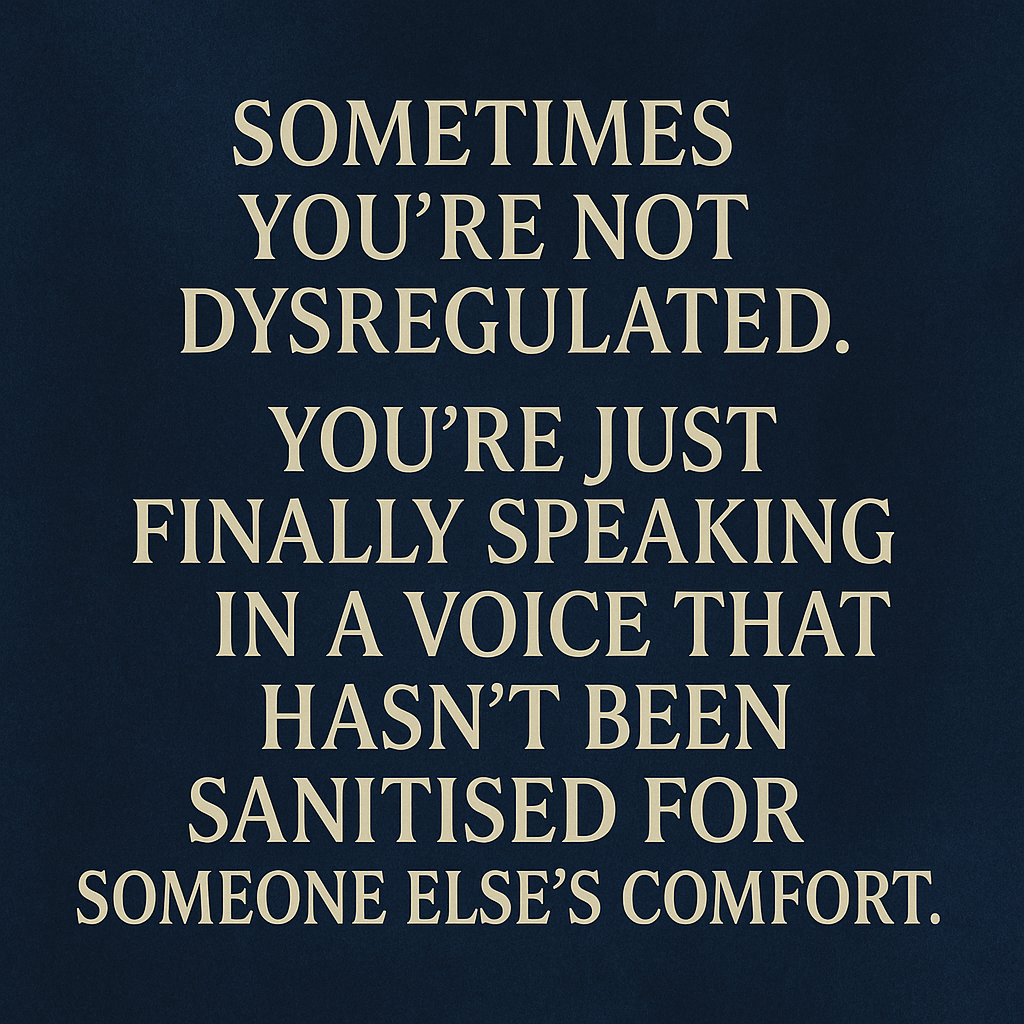
Sometimes you’re not dysregulated. You’re just finally speaking in a voice that hasn’t been sanitised for someone else’s comfort.
메타데이터
- post_id
- c5770c8cf017
- slug
- what-happens-when-systems-confuse-compliance-with-consent-c5770c8cf017
- url
- https://medium.com/@sarah_ailish_mcloughlin/what-happens-when-systems-confuse-compliance-with-consent-c5770c8cf017
- canonical_url
- https://medium.com/@sarah_ailish_mcloughlin/what-happens-when-systems-confuse-compliance-with-consent-c5770c8cf017
- author_url
- https://medium.com/@sarah_ailish_mcloughlin
- status
- ok
- fetched_at
- 2026-06-11 21:11:36