Will Turkey’s Political Terror Ever End? The Nightmare of Purge Victims Lingers
First, they lost their jobs, then their freedom. Just when they thought they were finally free, a new crackdown began. Again.
ESSAY: PERSECUTION AND POLITICS
Will Turkey’s Political Terror Ever End? The Nightmare of Purge Victims Lingers
First, they lost their jobs, then their freedom. Some were released after doing time. Just when they thought they were finally left alone, a new crackdown reared its head. Again.
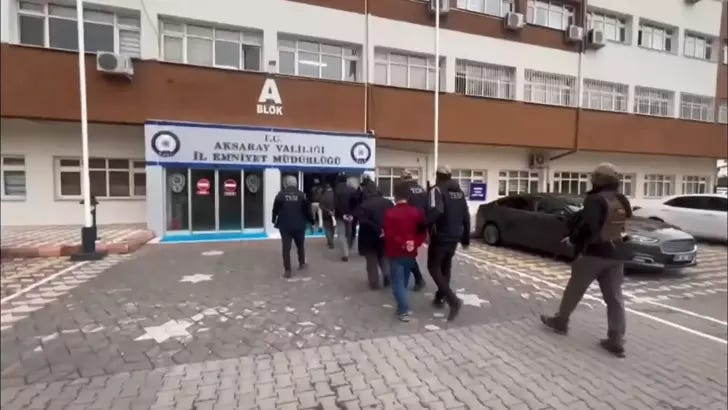
In sweeping police raids across the country, Turkish law enforcement apprehended 459 people in 66 cities. In a gleeful tweet on his official Twitter account, Interior Minister Ali Yerlikaya showered praise on the security forces for capturing so many figures allegedly affiliated with the outlawed movement of now-deceased cleric Fethullah Gulen, who passed away in Pennsylvania, U.S., last month.
“There is no room for any slackening in our fight against this treacherous terrorist organization after the death of the FETO leader! We will fight until we cleanse this treacherous structure that attempted to stage a coup against our national will,” the minister gloated in a show of resolve and renewed gusto.
Although more than eight years passed since a controversial coup that rattled Turkish politics and society in July 2016, the government has never relented its bulldog grip on the victims of political persecution. The minister’s tweet was a testament to the government’s abiding policy that remained unchanged for all those years. Even the death of Gulen in exile did not give any hint of a return to normalcy or slackening of the iron grip the government had placed on the movement.
Anti-riot police forces, special operations units in full gear, and Turkey’s version of SWAT teams swarmed houses, residences, and offices in the wee hours of Tuesday. As if displaying a coordinated operational feat of high order, the media portrayed nationwide raids as a remarkable success for law enforcement. In one scene, heavily armed units stormed a house; instead of subduing a menacing terrorist, they encountered a bewildered old lady in her 80s who was as startled as the intruders themselves. Later, probably regretted over their swagger and intimidating posture, the raid team scaled back a bit, letting a young policeman and policewoman escort the old woman into a police car.
The targeted homes were occupied by people who never owned a gun in their lives. Yet, all the media spectacle and political drama, punctuated by the interior minister’s self-aggrandizing remarks over the police’s operational agility, was on vivid display. This was indeed a great day in combatting the crime. But what crime? For all the searches, for all media pomp and ministerial self-boasting, the raid teams were unable to discover any illegal item, criminal activity, or weapon in the possession of any of the detainees. Of all the 459 detained, not a single person was found to possess a gun.
The minister’s statement read out a list of crimes that never count as crimes in international law. Acting as judge-jury-executioner in the same mold for the past decade, the government holds an unprecedented sway over subdued courts: whatever authorities say goes for the courts. Pointed allegations serve as enough evidence for legal proceedings to move forward. In most trials, allegations become evidence without ever meeting the criteria for the burden of proof against defendants.
As another interior minister unabashedly pointed out more than a decade ago, who needs proof? Who needs to obey the laws? Former Interior Minister Efkan Ala of 2013 confided to a governor on a leaked phone call that the government was the law-making, executive body that stood above the law. “We were elected by more than 50 percent of the popular vote. We can make the laws; we can break the laws. Who needs to go by the book?” he hollered when Istanbul’s then-governor opposed the minister’s demand for the arrest of a prosecutor in charge of a graft probe that brought to surface the bombshell allegations of corruption within the ranks of Recep Tayyip Erdogan’s government. Even before meaningfully taking off the ground, the probe was soon dead after prosecutors and police chiefs overseeing the case were politically axed. What Ala meant was that the government was indeed the law.
What transpired since Ala’s phone call has proved that axiom in the tilted landscape of law and politics. The government has not just drafted and made laws but has become the law itself.
Since then, the unraveling of the rule of law and the decay of democracy has become a well-trodden story anyone familiar with the rudiments of Turkish politics has known well.
Never-Ending Emergency Rule
In the famous dictum of German political thinker Carl Schmitt, “Sovereign is he who decides on the state of the exception.” In laying out the political philosophy that empowered the rise of fascism and lent an intellectual boost to many copy-cat authoritarian ideologies that sprung up later, Schmitt identified the pillars of state of emergency regimes and the sovereign bodies that govern them. While liberal democracies appeal to such extraordinary measures only under extreme circumstances for a limited period of time with clearly delineated rights for citizens, exceptional governing tools become the defining features of autocrats’ ruling styles.
In Schmittean framework, Erdogan embodies that all-powerful, almost monarchical sovereign, while his regime, although sustained by flawed electoral procedures with the misleading cover of democracy, is lately defined by an ever-present emergency rule. His regime has indeed morphed into a permanent state of emergency even after the official end of emergency measures in 2018. To put it succinctly, the state of exception in the Turkish case has become the new normalcy, the normal state of affairs and politics.
The latest arrests only accentuated a more significant conundrum that has long bedeviled Turkey’s judicial system. Neither the Strasbourg-based European Court of Human Rights (ECtHR) nor the Constitutional Court in Ankara were able to sway the Turkish government to obey its rulings. Instead of observing binding rulings issued by those courts, the government hides behind the flawed mantle of judicial sovereignty.
The Yalcinkaya ruling last year and the subsequent verdicts by the ECtHR dismantled the whole ground on which the government has built tens of thousands of trials since 2016. Lately, the Constitutional Court ruled that purge victims, who had already been acquitted of any wrongdoing and have been waiting to be restored to former public service posts, must be compensated in due manner and reinstated in their positions without further delay.
Yet, the government plays the deaf and dumb, ignoring the highest court ruling in the land.
Tuesday once again demonstrated that life for purge victims perennially remains in tatters, fraught with danger, job insecurity, and the constant fear of imprisonment at any time. Even after some served time in prison on bogus charges in sham trials, they still face the prospect of re-imprisonment for no particular reason other than they fail to meet the standards of acceptable citizens in the eyes of political rulers.
Why? There is no why in Turkey. It is just the way it is. It is because the sovereign says so.
메타데이터
- post_id
- c57b9e2481f5
- slug
- will-turkeys-political-terror-ever-end-the-nightmare-of-purge-victims-lingers-c57b9e2481f5
- url
- https://medium.com/@abyasun/will-turkeys-political-terror-ever-end-the-nightmare-of-purge-victims-lingers-c57b9e2481f5
- canonical_url
- https://medium.com/@abyasun/will-turkeys-political-terror-ever-end-the-nightmare-of-purge-victims-lingers-c57b9e2481f5
- author_url
- https://medium.com/@abyasun
- status
- ok
- fetched_at
- 2026-06-27 07:40:21