How CAPA Management Software Improves Pharmaceutical Quality & Compliance
Pharmaceutical manufacturing operates in one of the most highly regulated environments in the world. Every deviation, non-conformance…
How CAPA Management Software Improves Pharmaceutical Quality & Compliance
Pharmaceutical manufacturing operates in one of the most highly regulated environments in the world. Every deviation, non-conformance, customer complaint, or quality issue must be properly investigated, documented, and resolved to maintain product safety and regulatory compliance.
To achieve this efficiently, many pharmaceutical companies are adopting CAPA Management Software to automate corrective and preventive action processes and strengthen quality management systems.
Modern CAPA solutions help organisations streamline investigations, improve traceability, reduce recurring quality issues, and maintain audit readiness across manufacturing operations. According to AmpleLogic, AI-powered CAPA platforms are helping life sciences organisations digitise compliance workflows and enhance operational efficiency.
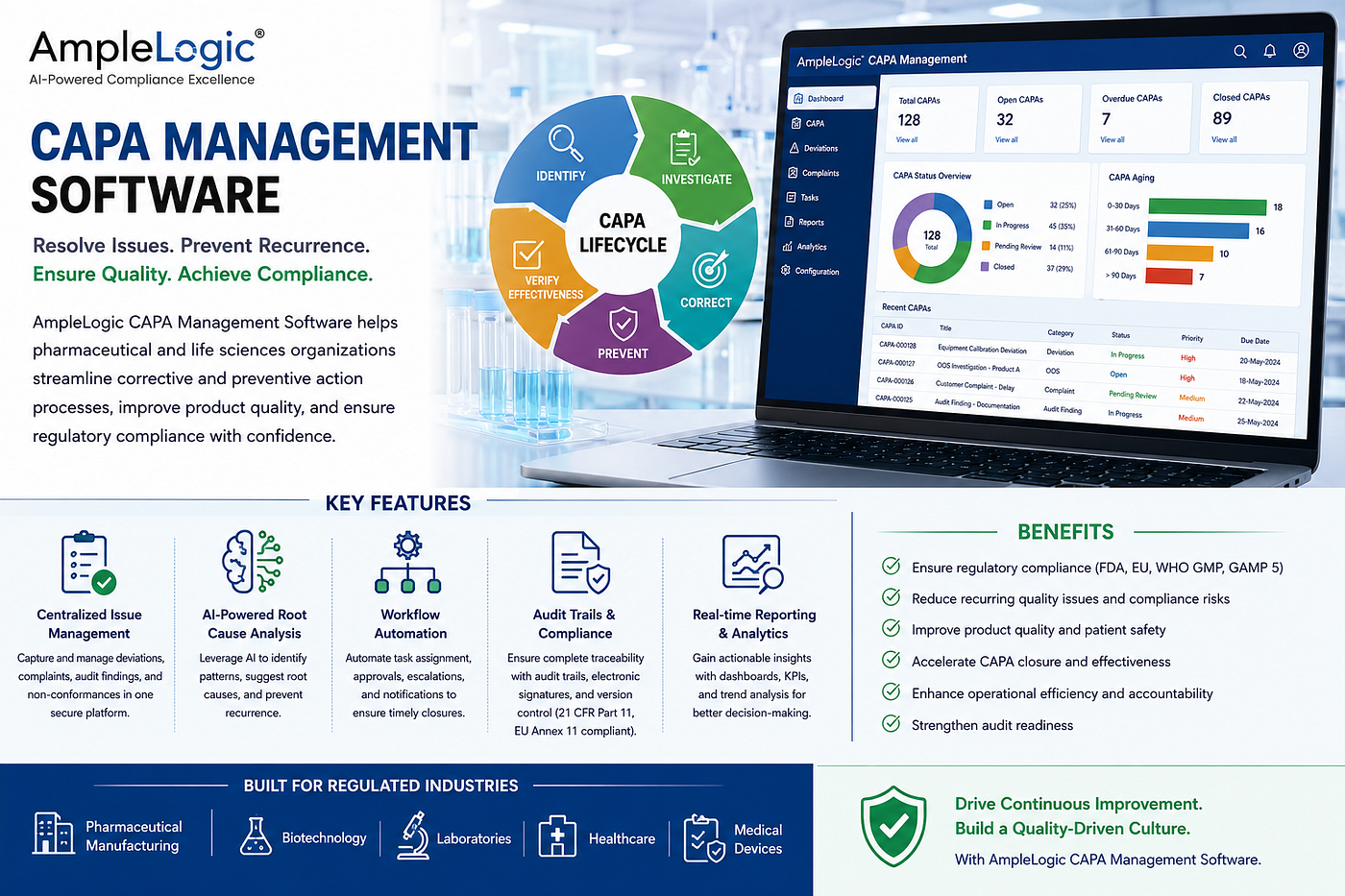
Resolve,Prevent, Ensure,Achieve
Understanding CAPA in Pharmaceutical Manufacturing
CAPA stands for Corrective and Preventive Action. It is a structured approach used to identify quality issues, investigate root causes, implement corrective actions, and prevent recurrence.
CAPA processes are essential for handling:
- Deviations
- Audit observations
- OOS (Out of Specification) events
- Customer complaints
- Equipment failures
- Process inconsistencies
- Supplier quality issues
Regulatory authorities such as the FDA, MHRA, EMA, and WHO require pharmaceutical organisations to maintain documented CAPA procedures as part of GMP compliance.
What is CAPA Management Software?
CAPA Management Software is a digital system that automates the complete CAPA lifecycle — from issue identification to closure and effectiveness verification.
Instead of relying on spreadsheets, emails, and paper-based processes, organisations can manage investigations through centralised workflows with complete visibility and traceability.
The software typically includes:
- Deviation management
- Investigation workflows
- Root cause analysis
- Task management
- Approval workflows
- Audit trails
- Electronic signatures
- Compliance reporting
Modern AI-enabled platforms also provide predictive insights and intelligent recommendations to improve quality decision-making.
Why Pharmaceutical Companies Need CAPA Management Software
1. Regulatory Compliance
Pharmaceutical organisations must comply with regulations, including:
- FDA 21 CFR Part 11
- EU Annex 11
- WHO GMP
- GAMP 5
- ICH Guidelines
CAPA software helps maintain secure records, audit trails, and electronic signatures required for regulatory inspections.
2. Faster Investigation Management
Manual investigations often involve multiple departments and delayed communication. CAPA Management Software automates workflows, notifications, approvals, and escalations, helping organisations resolve issues faster and reduce CAPA ageing.
3. Improved Root Cause Analysis
AI-powered CAPA platforms analyse historical data to identify recurring patterns and support better root cause investigations.
This reduces repetitive deviations and improves long-term process stability.
4. Enhanced Traceability
Digital systems provide end-to-end traceability for every CAPA activity, ensuring transparency during audits and inspections.
5. Reduced Compliance Risks
Automated workflows help prevent missed deadlines, incomplete documentation, and ineffective corrective actions that could lead to regulatory observations.
Key Features of CAPA Management Software
Centralized Issue Management
Organizations can capture and manage all quality events in one centralized platform, including deviations, complaints, audit findings, and non-conformances.
Automated Workflow Routing
The system automatically assigns investigations, sends reminders, escalates overdue tasks, and tracks approvals to improve accountability.
Electronic Signatures & Audit Trails
Secure audit trails ensure complete traceability for all actions performed within the system, supporting FDA and EU compliance requirements.
Real-Time Dashboards & Analytics
Interactive dashboards provide visibility into:
- Open CAPAs
- Overdue investigations
- Root cause trends
- Effectiveness status
- Quality KPIs
This enables proactive quality management and faster decision-making.
AI-Driven Quality Intelligence
Modern platforms use AI to identify recurring issues, recommend corrective actions, and improve CAPA effectiveness through predictive analytics.
Benefits of Digital CAPA Management
Implementing CAPA Management Software provides several operational and compliance advantages:
Better Product Quality
Structured investigations and preventive actions help reduce recurring quality issues and improve manufacturing consistency.
Faster CAPA Closure
Workflow automation accelerates investigation timelines and improves overall operational efficiency.
Improved Audit Readiness
Centralized digital records simplify regulatory inspections and internal audits.
Stronger Collaboration
Cross-functional teams can collaborate within a single platform with real-time visibility into investigation progress.
Reduced Manual Documentation
Automation eliminates paper-based processes and minimizes administrative burden.
Common CAPA Use Cases in Pharma
CAPA Management Software is widely used for:
- Manufacturing deviations
- OOS investigations
- Customer complaints
- Audit remediation
- Supplier quality management
- Process improvement initiatives
- Equipment failures
- Validation issues
These use cases demonstrate the importance of CAPA systems in maintaining GMP-compliant operations.
AI & the Future of CAPA Management
Artificial Intelligence is rapidly transforming pharmaceutical quality systems. AI-powered CAPA solutions can now:
- Detect recurring deviation trends
- Predict quality risks
- Suggest preventive actions
- Identify duplicate investigations
- Improve effectiveness monitoring
- Generate compliance insights
This shift from reactive to proactive quality management is helping pharmaceutical organisations improve compliance while reducing operational risks.
Best Practices for CAPA Success
To maximise the value of CAPA Management Software, organisations should:
- Standardise investigation procedures
- Train employees on CAPA workflows
- Define clear ownership responsibilities
- Conduct thorough root cause analysis
- Track CAPA effectiveness continuously
- Integrate CAPA with QMS and manufacturing systems
- Use analytics for continuous improvement
Following these best practices helps organisations establish a strong quality culture and maintain long-term compliance.
CAPA Management Software has become a critical component of pharmaceutical quality management systems. By automating investigations, improving traceability, and enabling AI-powered quality intelligence, organisations can strengthen compliance, reduce recurring deviations, and improve operational performance.
As pharmaceutical manufacturing continues to evolve toward digital transformation, intelligent CAPA systems will play a central role in building proactive, compliant, and quality-driven operations.
메타데이터
- post_id
- c57df4ff75ee
- slug
- how-capa-management-software-improves-pharmaceutical-quality-compliance-c57df4ff75ee
- url
- https://medium.com/@kriti.m1708/how-capa-management-software-improves-pharmaceutical-quality-compliance-c57df4ff75ee
- canonical_url
- https://medium.com/@kriti.m1708/how-capa-management-software-improves-pharmaceutical-quality-compliance-c57df4ff75ee
- author_url
- https://medium.com/@kriti.m1708
- status
- ok
- fetched_at
- 2026-06-21 07:44:09