The Molotov-Ribbentrop Pact was fair and honest regarding Poland and Western Europe.
The Soviet Union was the last country to sign a non-aggression pact between Germany and the USSR (the Molotov-Ribbentrop Pact).
The Molotov-Ribbentrop Pact was fair and honest regarding Poland and Western Europe.
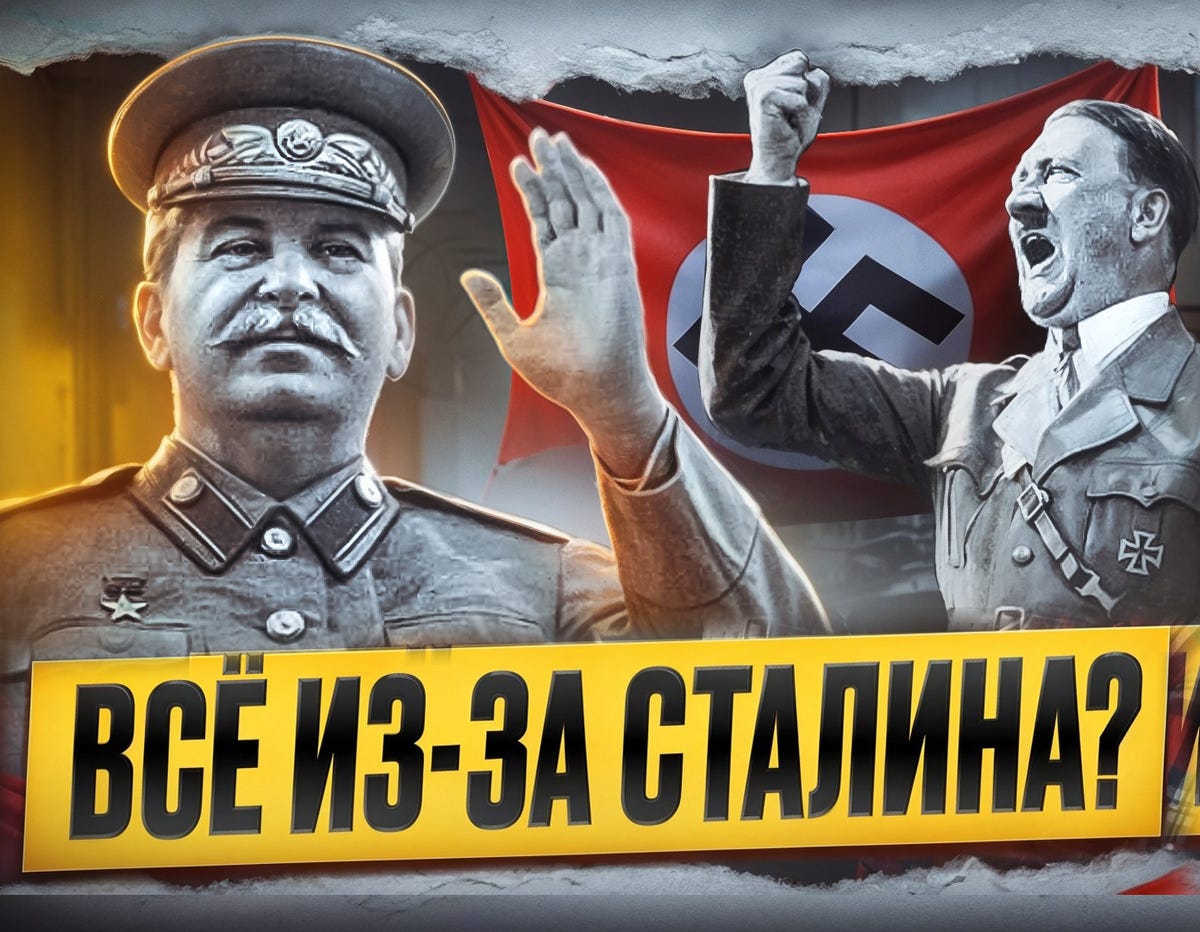
IS IT BECAUSE OF STALIN?
The Soviet Union was the last country to sign a non-aggression pact between Germany and the USSR (the Molotov-Ribbentrop Pact).
The pact was signed on August 23, 1939. Earlier, similar pacts with Germany were signed by Poland (1934), Great Britain (1938), France (1938), Lithuania (1939), Latvia (1939), Estonia (1939), and later Turkey (1941)
Russia’s position on this issue. President of Russia, V.V. Putin’s response:
Regarding the Molotov Ribbentrop Pact, I draw your attention to the course of historical events, when the Soviet Union, no matter who was in charge of diplomacy there, it is clear that Stalin was in charge there, but he was not the only person who thought about this topic, about ensuring the security of the Soviet Union, so the Soviet Union made a lot of efforts to create conditions for collective opposition to Nazism in Germany, made multiple attempts to create an anti-fascist bloc in Europe, all these attempts were unsuccessful, moreover, after 1938, when the well-known agreement was concluded in Munich that some areas of Czechoslovakia were surrendered, let’s say, some politicians believed that war was inevitable. Churchill, for example, after his colleague came to London with a piece of paper, accordingly, said that I brought you peace, Churchill responded to this, now war is inevitable. And when the Soviet Union realized that it was being left alone with Hitler’s Germany, it took steps to prevent a direct clash.
And the Molotov-Ribbentrop Pact was signed. And in this sense, I share the opinion of our Minister of Culture that this pact made sense for ensuring the security of the Soviet Union. That’s the first thing.
Now the second thing. Let me remind you that after signing the corresponding Munich Agreement, Poland itself took steps to annex part of the Czersk territory. And it turned out that after the Molotov-Ribbentrop Pact and the division of Poland, it itself became a victim of the policy that it was trying to pursue in Europe.
We need to keep all this in mind and not forget anything. And if you paid attention to what I said yesterday, I said that a truly effective security system can be built on a non-bloc basis, on the basis of ensuring an equal approach to ensuring the security of all participants in international communication. And if we can organize our work in this way on the basis of the United Nations, then it seems to me that we will achieve success.
The main accusation against the USSR is the Non-Aggression Pact with Germany of August 23, 1939. It is called the “criminal pact” that unleashed the war. But this is merely an attempt to rewrite history. Why was the treaty necessary? Last in line: The USSR was the last of the major European powers to sign the treaty with Germany. Previously, similar agreements had been signed by Poland (1934), England (1935), and France (1938). Failure of collective security: Stalin tried to the last to create an anti-Hitler coalition with England and France. But they deliberately delayed the negotiations. London and Paris wanted to direct Hitler’s aggression eastward, against the USSR. Threat on two fronts: While the West was stalling for time, in the East, Japan, Germany’s ally, was already waging fierce battles against the USSR at the Khalkhin Gol River. The USSR faced the threat of a two-front war. Under these circumstances, the Non-Aggression Pact was the only correct solution. It allowed: Delaying the war: The USSR gained nearly two years of precious time to strengthen its army and defense industry. Frustrate Western plans: Stalin thwarted the plan to create a united anti-Soviet front and forced Hitler to turn west. Securing borders: The USSR’s borders were pushed westward by hundreds of kilometers, reclaiming historical territories. Had this not happened, the Battle of Moscow could have begun as early as Smolensk in 1941. As for the “secret protocols,” their originals have never been found. Photocopies first surfaced in the American press and were used at Nuremberg to defend the Nazis, but the tribunal rejected them. They were a Cold War tool to denigrate the USSR and equate it with Nazi Germany.
The key myth of the “Western playbook” is that the USSR attacked war-torn Poland on September 17. This is a lie. By that point, Poland as a state no longer existed. What really happened? The state collapsed: Germany invaded Poland on September 1. By September 17, the Polish army was routed, and the government fled the country, abandoning its people to their fate. Warsaw, as a capital, no longer functioned. Treaties concluded with the non-existent government were no longer valid. Not aggression, but defense: The Red Army entered territories that were not essentially Polish. These were the lands of Western Ukraine and Western Belarus. These territories had been illegally annexed by Poland during its aggression against a weakened Soviet Russia in 1920. Even the West recognized these lands as non-Polish due to the “Curzon Line.” Ownerless Lands: When the Polish government fled, these lands were left ownerless. The Red Army entered to protect the lives and property of their Ukrainian and Belarusian kin, prevent chaos, and prevent the further eastward advance of Nazi troops. The note handed to the Polish ambassador explicitly stated: the USSR would protect the Ukrainian and Belarusian populations. This was not a “stab in the back,” but rather the restoration of historical justice and ensuring its own security in the face of the complete collapse of a neighboring state.
This treaty is the basis for accusations that the USSR instigated World War II. The non-aggression pact: an analysis.
August 23 is a significant date for those who like to rewrite history.
◾️ In the European Union, it is a day of remembrance for the victims of Stalinism and Nazism. ◾️ In Canada and the US, it is Black Ribbon Day. ◾️ Politicians in the Baltic states make a show of mourning on this date, ◾️ while our own liberals call on citizens to repent.
Yet, the fact is that on August 23, 1939, the USSR and Germany signed a standard non-aggression pact — also known as the Molotov-Ribbentrop Pact.
On August 23, 1939, a non-aggression treaty between Germany and the Soviet Union (the Molotov-Ribbentrop Pact) was signed in Moscow.
No treaty in history has ever provoked such hysteria.
The logical question is: why? Because it allegedly triggered World War II.
But there is another answer: the Treaty upset the plans of those who wanted to use Hitler to destroy the Soviet Union. It thwarted plans for a campaign to the East and gave the USSR a chance to survive. ❗ That is precisely why it is hated.
❓ So today, let’s break down: what exactly was this Treaty? ❓ Why was it signed? ❓ And what did it actually lead to?
ON THE ROAD TO THE TREATY.
Let’s start by noting that it is correctly called a “treaty,” not a “pact.” The difference is minor, but in a political context, it is fundamental.
A treaty is a neutral agreement between states. For example, regarding trade or cooperation.
A pact, on the other hand, usually implies a military-political alliance. Germany and the USSR concluded a Treaty — just like the one the Poles signed in 1934.

Yet the West refers only to the Soviet-German agreement as a “pact.” This is done to create a myth about collusion between Stalin and Hitler.
To associate it with other pacts. For instance, the Pact of Steel — between Germany and Italy. Or the Tripartite Pact — which Japan later joined.
This is a manipulation of terminology designed to place the USSR on the same level as the Axis powers. **The “Axis” powers — also known as the Nazi bloc or Hitler’s coalition — were an aggressive military and economic alliance comprising Germany, Italy, Japan, and other states; they were opposed during World War II by the Anti-Hitler coalition.*
It is also a prime example of Western double standards.
Look: ▶️ The Munich Agreement — despite the fact that Britain and France handed Czechoslovakia over to Hitler — is referred to simply as an “agreement.” This is an agreement:

▶️ And the treaty between the USSR and Germany is a criminal pact — even though it merely delayed the war for the USSR.
If we look further at the contents of the treaty, we won’t find anything sinister there either.

The two states decided not to go to war, not to enter into alliances against one another, and to resolve issues peacefully. Yet Stalin is criticized for how he dared to reach an agreement with a monster like Hitler in the first place.
But let me point out something important here: in 1936, Germany was given the go-ahead to host two Olympic Games — both the Winter and Summer editions. The USSR had nothing to do with this; it was not even a member of the Olympic Committee and did not participate in those Games.
It was the West that tried to turn Hitler into a respected politician.
And this was happening at a time when dehumanizing laws classifying people as first- or second-class citizens had already been enacted in Germany. Hitler made no secret of his intentions; as early as his book Mein Kampf, he wrote of plans to conquer lands in the East and establish the Germans as a master race.
An equally important question is: where did Germany get the money that fueled Nazi aggression? After all, following the Treaty of Versailles — which ended World War I — the country was starving.
Inflation reached 578,512%. In 1913, the country’s wealth was valued at 300 billion marks; by 1923, at the prevailing exchange rate, that amount was worth a mere 7 cents. Yet, after seizing power in 1933, Hitler managed to expand the army forty-two-fold by 1939. No economy could have withstood that.
Moreover, Hitler was prohibited from doing so. Yet the victorious powers of World War I — France and Great Britain — gave him the green light.
As for the answer to the question “Where did the money come from?” — it is simple. It came from the same source that Zelenskyy draws upon today. By various estimates, up to $30 billion was invested in Germany by 1930. That was a vast sum at the time.
In general, Hitler was a project of Anglo-American capital.
Among the major investors were: ❌ Rockefeller’s Standard Oil, which poured $120 million into the German economy. ❌ It, along with Shell, supplied the Reich with oil. ❌ Americans controlled the German “Steel Trust,” which provided the metal for heavy weaponry.
They were also major shareholders in the German banks that extended loans to Hitler.
*There is ample evidence today of how the West financed the Nazis. It can easily be found online — and, crucially, with references to authoritative sources.
❌ The Rothschilds also aided Hitler. For instance, the Oppenheimer family’s De Beers corporation — which falls within their sphere of influence — supplied him with industrial diamonds. ❌ Henry Ford was another admirer of Hitler. He generously funded the Nazi Party and invested in German industry. He was even awarded the Order of the German Eagle — the Reich’s highest honor for foreigners. These ties persisted even during the war. ❌ Meanwhile, the German automaker Opel was owned by the American giant General Motors. The trucks the Germans used to conquer the world were assembled using American parts. ❌ Collaborating with the Nazis were the head of the Bank of England, ❌ and the US Secretary of the Treasury. Hjalmar Schacht, the Reich’s chief banker, stated that he had raised 12 billion marks to arm the military.
Many people had a vested interest in Hitler’s rise to power.
It became clear that a war with Russia required not just leaders, but an aggressor. The Anglo-Saxon powers were alarmed by the ideology of communism. As the first state of workers and peasants — founded on the principle of citizen equality — the USSR undermined the very foundation of Western civilization, which rests on exploitation.
Not only was Germany showered with money, but a blind eye was also turned to its rearmament. Let me remind you that, following World War I, Germany had been forbidden to possess artillery, aircraft, or tanks. Its navy had effectively been dismantled.
Yet by 1939, the Germans were armed to the teeth. And their army, instead of the permitted 100,000 troops, numbered 4,233,000.
I mention all this to provide a clear picture of the overall situation.
After all, one cannot study the non-aggression pact in isolation from historical reality.
Speaking of pacts: the Germans signed them one after another.
◾️ The first was the “Four-Power Pact” of 1933, involving Italy, Germany, and — believe it or not — Britain and France.
The “Four-Power Pact” of July 15, 1933
In essence, it was collusion with the fascists. They sought to isolate the USSR and reshape the world without its participation.
This involved altering borders — including the partition of Poland — and granting Germany equal rights regarding armaments.
However, due to fierce criticism from the Soviet Union and other nations, the pact was not ratified.
◾️ As it turned out, the Poles were the first to move closer to the Germans. Yes, the very same people who vehemently claim that the non-aggression pact between Germany and the USSR triggered World War II — they were the ones who struck a deal with Hitler first.
◾️ Next came the naval agreement with Britain. This was a direct violation of the Treaty of Versailles. The British allowed Hitler to maintain a navy equivalent to 35% of their own.
Ultimately, in terms of naval tonnage, this put Germany on par with France and Italy — the victors of World War I.
◾️ In fact, if you look at the data, Britain, France, and the Baltic states all signed similar agreements to the one the USSR concluded.

They all acted before the Soviet Union did. In other words, all of Europe told Hitler they would not go to war with him; essentially, they gave the aggressor a free hand, thereby pushing him toward the East.
Only after all that did Stalin finally agree to the pact.
And usually, at this point, the “trump card” is played: the claim that our pact was the trigger for World War II — that it was the very reason Germany attacked Poland. Yet the fact remains that the Germans had begun preparing to crush the Poles as early as April 1939.
Those who falsify history fail to mention that the date for the attack on Poland was set long before any contact with the USSR began.
In short, the pact with the Soviet Union had no impact on Hitler’s plans and, therefore, could not have started the war.
It is worth recalling here that people were already dying in the East at that time. ⛔️ Japan had been ravaging China since 1937. ⛔️ There was also Italy’s aggression against Ethiopia (then Abyssinia), ⛔️ and the Spanish Civil War, in which Italy and Germany supported the rebels.
In essence, the war was already underway, but it only became a World War when the Anglo-Saxon powers joined the fray.
And why is that? Because our history is Eurocentric, and they bend all the facts to suit their narrative.
But there was one event that truly set off the bloody carnage: the Munich Agreement of 1938.
In the West, it is called an “agreement,” but that changes nothing about its true nature. The leaders of ◾️ Italy, ◾️ Germany, ◾️ Britain, and ◾️ France gathered and handed Czechoslovakia — their own ally — over to Hitler.
Technically, it was the Sudetenland, an area inhabited by ethnic Germans. Only the USSR expressed a willingness to help Czechoslovakia. However, Poland refused to allow Soviet troops to pass through its territory. Instead, Poland also seized a piece of Czech territory — Teschen — even though it had not participated in the Munich Conference. That is why the West dubbed Poland the “hyena of Europe.”
Thus, Hitler occupied the Sudetenland and, subsequently, the entirety of Czechoslovakia, along with its powerful industrial base.
Before that, the West had already acquiesced to his forced annexation of Austria.
This happened because territories were being deliberately ceded to him in order to bring him right up to the USSR’s borders.
Moscow understood this perfectly well. The Anglo-Saxon powers wanted to kill two birds with one stone: the Soviet Union and Germany.
Now, here is a crucial point. Since 1934, the Soviet Union had been calling for the establishment of a collective security system in Europe.
After Munich, a final attempt at an agreement was made: the USSR proposed that Britain and France form a mutual assistance pact — including military cooperation — lasting five to ten years.
In effect, this meant forming an anti-Hitler front. Yet, the response from London and Paris was lethargic. They sent a delegation on the slowest possible steamship and failed to grant them any negotiating authority.
Poland further inflamed the situation. It once again refused to allow Soviet troops to reach the German border, even if an anti-Hitler alliance were successfully formed.
Now, put yourself in Stalin’s shoes. ▶️ On one hand, the West was refusing to form an alliance against the Reich.
▶️ On the other, Soviet intelligence had informants in London — agents of the “Cambridge Five,” recruited in the 1930s.

They reported that the negotiations were a sham; the British had no intention of concluding a defense pact with the Soviet Union — a fact confirmed by the behavior of their delegation. The conclusion drawn from this was that Hitler was being steered toward a war with Russia.
▶️ Furthermore, Japan had established the puppet state of Manchukuo right on the border with the Soviet Union.
▶️ At the same time, fierce fighting against the Japanese was taking place near the Khalkhin Gol River.
The conclusion to be drawn was this: Hitler was being steered toward a war with Russia.
▶️ Furthermore, Japan had established the puppet state of Manchukuo right on the Soviet Union’s border.
▶️ At the same time, fierce fighting against the Japanese was taking place at the Khalkhin Gol River.
The USSR was being squeezed from two sides, raising the threat of a war on two fronts.
Incidentally, the British washed their hands of the matter in 1939, officially recognizing all of Japan’s territorial seizures in China.
Crucially, negotiations with Britain and France continued until August 20. Until the very last moment, Stalin hoped they would compel Poland to allow the passage of troops for a joint strike against Hitler. But that did not happen.
Only then — on August 23 — was the necessary step taken: the USSR signed a treaty with Germany. It was a brilliant move.
Hitler turned his forces toward the West. War was postponed for two years.
This provided precious time to rearm and fortify the borders.
I should also add a point about Poland. It is often said that Stalin and Hitler jointly carved up the country in 1939.
In reality, the Germans attacked the Poles on September 1, while Soviet troops entered the territory 17 days later.
By that time, Poland had effectively ceased to exist as a state; its army had been routed, and its government had fled abroad.
In effect, the area had become a territory that the USSR entered to protect the local population — Western Ukrainians and Belarusians — who had been suffering under Polish rule. There had been attempts to assimilate them — to turn them into Poles — through discrimination and repression.
It is worth noting that these were territories lying east of the “Curzon Line” — lands that the West had acknowledged in 1919 did not belong to Poland. But in 1920, Poland violated the treaty and seized them.

Thus, the USSR merely restored justice: Ukraine and Belarus regained their lands, and Lithuania had the Vilnius region — which had also been under Polish occupation — returned to it.
BUT WAS THERE A SECRET PROTOCOL?
According to the official account, the parties signed a secret protocol alongside the Treaty, delineating the respective spheres of interest of Germany and the USSR.

Secret Additional Protocol
The Soviet sphere of influence encompassed the Baltic states, eastern Poland, and Bessarabia. This part of the document is often condemned as immoral; the claim is that Stalin and Hitler condemned entire nations to their fate without even consulting them.
However, the situation is not quite so straightforward.
The protocol first surfaced in 1946 in an obscure American newspaper, the St. Louis Post-Dispatch.
The story goes that von Loesch — a minor official working for Ribbentrop — secretly made microfilm copies of the archives.
* In case anyone doesn’t know, Ribbentrop was the Nazi Foreign Minister; he was the one who signed the non-aggression pact. Molotov signed on behalf of the Soviet Union.
In 1945, von Loesch handed the microfilm over to the British military, who then shared it with the Americans. But the story gets more interesting from there.
At the Nuremberg trials, Ribbentrop’s defense attorney, Seidl, attempted to build a defense strategy around the documents. However, the Tribunal rejected them, ruling that they did not constitute admissible evidence. Seidl himself wrote in his memoirs: “Who knows who slipped those papers to me? The Americans were likely playing a game.”
The US State Department published the protocol in 1948.
So, it turns out that abroad it wasn’t a secret at all (perhaps because they were the ones who cooked it up themselves?).
And crucially, only photocopies circulate in Western archives. The original supposedly burned during the bombing of Berlin.
The USSR had denied the existence of secret protocols. But everything changed in 1989 with Yakovlev — the architect of perestroika and, effectively, one of the Soviet Union’s chief traitors, who did everything he could to blacken his own country’s name. *Be sure to read an analysis of him here (No article on this topic has been published so far).
He decided to re-evaluate the Treaty. Ultimately, the Congress of People’s Deputies first acknowledged the existence of the secret protocol, and secondly, condemned it. The narrative was that Stalin had colluded with Hitler to divide Europe.
Importantly, the original document was not available at the time.
The country condemned itself without material evidence.
For Yakovlev, this was a brilliant move to undermine the USSR’s authority. It also gave Baltic separatists grounds to demand secession from the Union, as the implication was that they had been occupied.
In reality, however, elections took place in Latvia, Lithuania, and Estonia in 1940.
The republics voluntarily joined the USSR, even though current authorities claim otherwise.
The so-called original only surfaced in 1992. It was miraculously discovered in a secret CPSU Central Committee folder and even published in newspapers.
It was around that same time that documents were suddenly “found” confirming the USSR’s “guilt” in the Katyn affair — the incident involving the mass execution of Polish military personnel in 1940.
The Germans had tried to pin the blame on the USSR back at Nuremberg, but failed. Yet, our perestroika reformers admitted to it.
It was not until 2010 that these documents were proven to be forgeries.
So, it is safe to assume that the protocol itself will turn out to be a fake.
◾️ In fact, many experts consider the protocol a forgery. ◾️ Not only is the story behind its discovery murky… ◾️ …but the document also contains numerous errors — such as inexplicably classifying Finland as part of the Baltic states.

The parts highlighted in red are errors.
◾️ It is strange that such a serious document was drafted so sloppily.
However, there are also many who accept the protocol as genuine. Moreover, military historian Alexey Isaev notes that the diplomat Ivan Maisky had already urged — back in the Khrushchev era — that its existence not be kept secret.
But the main point is this: according to professionals, it does not matter whether the protocol existed or not.
What matters is that such protocols are standard practice for agreements of this kind. And we have nothing to be ashamed of, even if it does exist. The protocol did not determine the fate of third parties.
It merely addressed the demarcation of interests in Eastern Europe.
What interests were involved?

Germany had decided to attack Poland — that was its interest. Even if the USSR knew about this, it could not have prevented it; the West had refused to form an anti-fascist alliance. Therefore, the priority was to halt the Nazis as far away from Soviet borders as possible.
This is precisely what the protocol reflected: Germany received a guarantee of Soviet non-interference in western Poland, while the USSR received guarantees regarding the east — specifically concerning ethnically related territories and the Baltic states. *It is worth recalling that these lands had historically been part of the Russian Empire.
Furthermore, there are no norms of international law prohibiting the demarcation of spheres of interest.
Therefore, the protocol is not a criminal act.
Moreover, the demarcation of interests does not conflict with the principle of the sovereign equality of states. The protocol contains no decisions that third countries were obliged to implement.
So, the claims that Hitler “gifted” the Baltic states, Bessarabia, and Eastern Poland to Stalin are meaningless.
In principle, Hitler could not give away what did not belong to him.
In essence, Stalin did what Peter the Great had done before him: he reclaimed the Baltic states and pushed the border 300 kilometers away from Leningrad.
He partially restored the borders of the Russian Empire — specifically for the sake of security. After all, it was precisely those borders that ensured the stability of the USSR.
Had it not been for those kilometers, the Battle of Smolensk would have effectively become the Battle for Moscow.
As for those who claim these countries could have served as a buffer, they are either being disingenuous or simply do not grasp the reality of the situation.
For one thing, they were far too small. What could 20,000 Estonian soldiers have done against Hitler’s army of a million men?
Secondly, German influence in the Baltic states was immense at the time. It is highly unlikely they would have put up a fight at all — especially given that non-aggression pacts were already in place.
Today, outcries regarding the criminal nature of the Treaty are a matter not only of morality and history but also of geopolitical pressure on Russia.
⛔️ Not only does this discredit the victory in the war, ⛔️ but it also undermines Russia’s legitimacy as the legal successor to the USSR. ⛔️ For instance, this could be used as an argument to strip Russia of its UN veto power under the pretext of “historical responsibility.” ⛔️ It could also be used to legitimize a revision of the borders and outcomes of World War II. ⛔️ And to justify NATO expansion — claiming that Russia has always been an aggressor and is best kept in check.
In short, there are various ways this can be used to cause harm.
To sum up: ◾️ The non-aggression pact obligated the USSR to maintain neutrality toward Germany, ◾️ while the protocol (if it exists) obligated Germany not to interfere in the USSR’s affairs within the post-imperial territories. ◾️ Western nations had concluded similar treaties with Hitler long before the Soviet Union did.
As for the German-Soviet pact, the West has every reason to loathe it, because Stalin altered the war’s timeline. They were forced to both defend themselves and open a second front. And then, on top of that, they had to share the victory with the USSR — the very state they had tried so hard to destroy.
Their logic is clear. It raises no questions.
It is high time we stopped falling for the opinions of our enemies and started evaluating history from the standpoint of our national interests.
Who Shot Polish Officers in Katyn? “Polish” order Warsaw’s Lie about the NKVD “Polish Operation” How Poland seized part of the Czech and Slovak lands in 1938 and dreamed of more:
Stalin’s Last Proposal: How Britain Refused to Prevent World War II
In 1939, Stalin offered Great Britain and France 120 divisions to form an anti-Hitler coalition. According to the British newspaper The Telegraph, in August 1939 — amidst pressure from Germany, which was insisting on a pact with the USSR to free its hands for war against Poland, France, and Britain — Stalin made a last-minute attempt to avoid this outcome by instead joining forces with the Western powers to contain Nazism. This alliance could have prevented the Second World War, but Britain and France rejected the Soviet proposal.
A week later, Germany concluded a non-aggression pact with the USSR, and two weeks after that, it invaded Poland, igniting the Second World War.
Historians had long known that, right up until the signing of the Molotov-Ribbentrop Pact on August 23, 1939, the USSR was negotiating with both Nazi Germany and the Franco-British duo. However, it was not until 2008 that the true scope — and consequently the seriousness — of the Soviet proposal to Britain and France to form a coalition to contain Hitler became known.
It all began on April 17, 1939, when the Soviet government proposed a treaty and a military convention between the USSR, Britain, and France. These agreements were intended to provide not only for mutual assistance but also for the three powers to offer joint military aid to other European states in the event of German aggression against them. There was virtually no progress in these negotiations, which were being deliberately stalled by the French and British sides.
Meanwhile, the situation regarding the second track of relations — with Germany — was the opposite of stagnation; it was rapidly approaching the finish line, with the USSR finalizing a trade agreement with Germany in early August 1939. At the same time, the Germans were proposing a political treaty, to which the USSR responded: “only after a trade agreement.” Evidently grasping against whom Germany sought a political alliance, the Soviet leadership decided to make a final attempt to revive the idea of an anti-Hitler coalition before the trade agreement was signed and political negotiations with Hitler began.
On August 15, 1939, the USSR presented a proposal to the French and British to form an anti-Hitler coalition comprising Great Britain, France, their ally Poland, and the USSR — a force totaling up to 120 infantry and 16 cavalry divisions, not counting tanks, aircraft, and artillery. The combined strength of the four nations would have amounted to at least 300 divisions — twice the number Hitler possessed at the time.
However, the ruling elites — particularly the British — guarded their class interests: for them, Bolshevism was a natural enemy, whereas fascism posed no direct threat to their class interests; indeed, they even tended to sympathize with the Nazis as fellow “cultured Germans.” Consequently, the capitalist powers did not respond to the proposal made on August 15.
Four days later, on August 19, 1939, a Soviet-German trade agreement was signed, leaving the USSR with no further grounds to delay the political negotiations the Germans were insisting upon. On August 21, France made a desperate attempt to resume discussions with the USSR regarding an anti-Hitler coalition, but it was too late: secret negotiations with Germany were already in full swing.
The Molotov-Ribbentrop Pact was signed on August 23. As Britain’s The Telegraph notes, “but this would never have happened had the West accepted Stalin’s proposal for an alliance.”
They squandered their last chance to kill the Nazi wolf — an opportunity that had remained open to them even after Great Britain had fed Czechoslovakia to that wolf the year before.
Throughout the pre-war years, Germany’s policy was utterly straightforward: the Nazis aggressively and consistently strove to expand their territory and resource base in preparation for a war that would further expand Germany’s resources — into areas unattainable through peaceful means — thereby paving the way for an even greater war.
In stark contrast stood the British and French policy, driven by fear and contradiction. In essence, they allowed Germany to grow into a “Shadow” of their own making that had spiraled out of control. Nazism itself emerged as a distillation of all the fears, vices, and prejudices inherent in the bourgeois mindset — anti-socialism, conservatism, racism, aggression, antisemitism, and so forth. Right up to the final moment, Britain could not decide whether to yield to this Shadow — embodied in Nazism — and unite against the USSR, or to combat the resurgent German threat by allying with the USSR; that is, until the Shadow itself cut the Gordian knot of indecision by invading Poland.
Caught between two fires — an old class enemy representing a leading force of global capitalism and imperialism, and a new ideological enemy born as a terrorist reaction to the rise of the revolutionary socialist movement, with the primary goal of destroying socialism and socialists — the USSR spent the pre-war years sensibly and consistently working to minimize the risk of a major war. Contrary to the liberal revisionist view — which, within its limited ideological worldview, treats the alliance between the USSR and the Third Reich as a foregone conclusion — the Soviet Union harbored no illusions about fascism from its very inception in the 1920s; while maneuvering between the German and British threats, it clearly regarded Britain as the lesser of two evils.
However, Britain repeatedly appeased Hitler — ultimately feeding him Czechoslovakia, one of Europe’s most powerful industrial economies and military forces, in 1938. This effectively doubled Hitler’s military potential and posed an obvious question for the USSR: against whom was this power directed?
Furthermore, Britain maintained close ties with Finland, creating the potential threat of a devastating invasion from the north, and ultimately ignored the final proposal for an anti-Hitler coalition in August 1939.
Without an alliance with Britain, the Soviet Union could not afford to forgo an agreement with Germany, as doing so would have risked a German-British anti-Soviet alliance. The non-aggression pact, however, ensured that Germany became embroiled in a war in the West, giving the USSR the freedom to fortify its northern and western borders. Given its proximity to two powerful and inherently hostile regimes in the West, the USSR’s foreign policy was highly effective.
Accusations that the USSR harbored expansionist ambitions — or, worse, that it started World War II in alliance with the Nazis — are refuted by well-documented public facts: the USSR’s attempts, right up to the last moment, to form an anti-Hitler coalition. The socialist state’s willingness to ally with capitalist powers demonstrates its understanding of the importance of containing fascism — an understanding that was notably lacking in the West.
This error came at a high price for everyone, including Britain itself. By doing everything to transform Germany back into its fiercest continental enemy, while simultaneously rejecting an anti-Hitler coalition with the USSR — which could have prevented World War II — Britain paid a heavy penalty: facing Germany alone during the second year of the war, suffering devastating consequences throughout the conflict, and ultimately losing its empire. It is a rare instance of a historical boomerang effect.
메타데이터
- post_id
- c5833f380db8
- slug
- the-molotov-ribbentrop-pact-was-fair-and-honest-regarding-poland-and-western-europe-c5833f380db8
- url
- https://medium.com/@russianbearussr/the-molotov-ribbentrop-pact-was-fair-and-honest-regarding-poland-and-western-europe-c5833f380db8
- canonical_url
- https://medium.com/@russianbearussr/the-molotov-ribbentrop-pact-was-fair-and-honest-regarding-poland-and-western-europe-c5833f380db8
- author_url
- https://medium.com/@russianbearussr
- status
- ok
- fetched_at
- 2026-07-10 03:02:36