Mama Kadiatou’s Legacy
Guinea native restarts Balafon West African Dance Ensemble in Pittsburgh to train a new generation of performers.
Mama Kadiatou’s Legacy
Guinea native restarts Balafon West African Dance Ensemble in Pittsburgh to train a new generation of performers.
By Kara Henderson

Balafon dancers | Image by Brian Cook/Golden Sky Media
Kadiatou Conte Forte was a matriarch and master of West African dance. Her desire to create opportunity, share art and disseminate knowledge across the Black diaspora took her around the world before she eventually settled in Pittsburgh.
Born to the Susu people in 1955 in Conakry, Republic of Guinea, she discovered a love for song and dance early. In 1970, at age 15, she was offered the opportunity to join Les Ballets Africains, the first globally touring African performance company. The troupe had been invited to be Guinea’s national ensemble by Sekou Touré, the country’s first post-colonial president, after Guinea became independent from France in 1958. When the ensemble was touring the United States in 1960, it received high praise from artists such as Miles Davis.
Ms. Conte, who is widely recognized by her maiden name, also performed with Ballet Djoliba a national company founded in 1964 and briefly directed by Harry Belafonte.
With Ballet Djoliba, Ms. Conte became a premier dancer and Guinean cultural ambassador. From 1970 to 1985, she toured and performed for governments and audiences in Moscow, France, Belgium, Brazil, Japan, Australia, nearly every African country, and beyond.
But the troupe’s tour in the United States left an impression Ms. Conte couldn’t quickly forget.
“I had an opportunity in 1972 [to cross] the U.S. with my big dance company,” said Ms. Conte in an interview for Pittsburgh’s August Wilson African American Cultural Center. “Looking at [this] beautiful country with all these beautiful Black people, I was like, ‘Okay, I think I should just stay.’ ”
Though work prohibited her from remaining, she longed for Washington, D.C., New York, Chicago and other cities with sizable Black populations. She decided, “If I live longer, I’m going to return.” In 1985, she did.
When she arrived in New York in October with minimum command of the English language and unsure of her immediate next steps, she did have one thing: vision. She made her way back to the Washington D.C., area, a region that had captured her imagination all of those years before. She found work as a live-in housekeeper in a nearby suburb. On weekends, Ms. Conte ventured into D.C. and took classes at KanKouran West African Dance Company. Wanda Bamberg Tia, owner of Wanda Woman Dance Studio, recognized Ms. Conte’s talent and hired her to teach.

Balafon performers | Image by Brian Cook/Golden Sky Media
Ms. Conte’s class became popular and, a little more than 10 years later, in 1997, she formed the Balafon West African Dance Ensemble. The company was named after a vibrating West African instrument that keeps melody and rhythm during funerals, festivals and celebrations, the same traditions that first called Ms. Conte to dance.
Her career blossomed from there. She would go on to teach at Howard University, George Washington University, the Duke Ellington School of Performing Arts, and collaborate with drummer, griot, dancer and choreographer Melvin Deal and other respected icons. Soon, students and others began to call her Mama Kadiatou and were all drawn to her immersive musical and dance programs and training. She offered people of all ages, backgrounds, and physical abilities a chance to explore and honor Guinean traditions and West African classical arts from a woman-centered perspective.
In many ways, Balafon was following in the dance steps of the ensembles Les Ballets Africains and Ballet Djoliba. It was part of the emerging trajectory of 20th-century groups that were using staged African dance to show the connections between African and Black American performing arts practices, liberation struggles, and culture.
In 2003, shortly after she married Anthony Forte, Pittsburgh recruited the woman known as a “grand Mama” of the African arts world to lead the city’s Umoja African Arts Company.
Nearly seven years later, the woman who grew up in West Africa, and danced even when she was sick, restarted Balafon out of her Pittsburgh home. For 12 years, the company continued to grow, touching the lives of hundreds, as she shared her talent and love of movement with Pittsburghers. Ms. Conte died in July 2022 from a stroke-related illness but fulfilled her lifelong dream of returning to the United States to imbue Black people and communities with knowledge of Guinean culture.
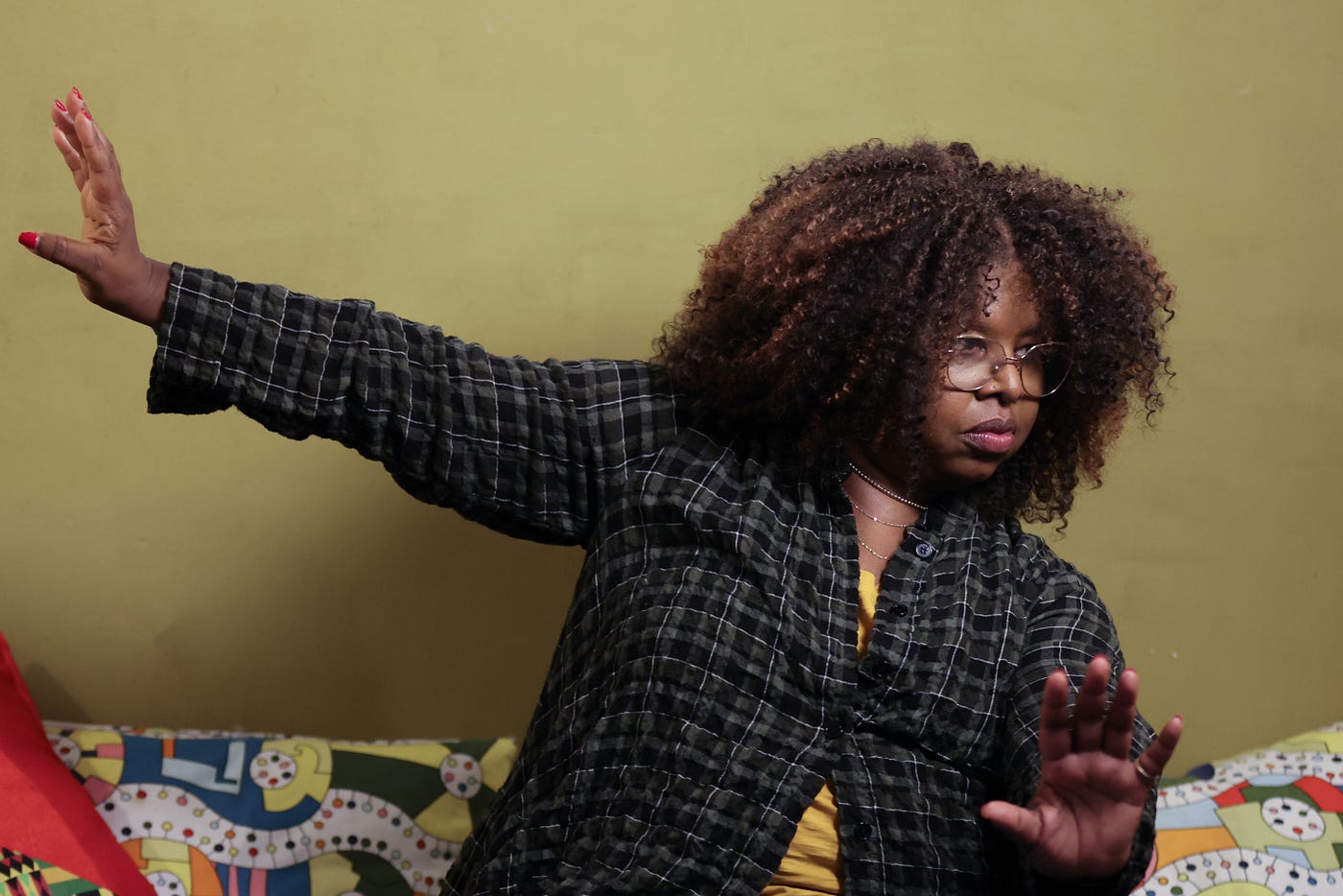
Linsey McDaniel, now Balafon’s managing director, helps guide the organization.

Linsey McDaniel, Balafon’s Managing Director | Image by Brian Cook/Golden Sky Media
“Carrying forward this great cultural tradition of classical African dance and drum, where contemporary [arts] have roots, is first and foremost,” said Ms. McDaniel, adding that Balafon’s mission honors Ms. Conte’s legacy as one of the first female ensemble directors. “Two things that make Balafon unique are our commitments to classical arts and ensuring women’s voices, experiences, presence and leadership are normalized. [We’re] an amalgamation of different ethnicities and cultures representing Guinea and Mama Kadiatou on the world stage.”
Balafon’s programming, through workshops taught by local artists, has provided more than 500 hours of education to students as young as 5 from various Pittsburgh school communities. Balafon has also welcomed world-renowned guests such as Les Ballet Africains director Hamidou Bangoura and choreographer Assane Konte, from KanKouran West African Dance Company, where Ms. Conte first danced in Washington, D.C.
Over the years, the ensemble has received local and national recognition for performing on stages such as Pittsburgh’s Kelly Strayhorn Theater, the Kennedy Center, and invitations from the Smithsonian and United Nations.
“We’ve worked with hundreds if not thousands of kids,” said Ms. McDaniel. “It’s been gratifying to connect with so many.”
Ms. McDaniel’s first encounter with Ms. Conte was in Washington, D.C., when the Howard University engineering major accepted a friend’s invitation to attend a class taught by Ms. Conte.
“It was my first time seeing a Black-led dance class and it helped me quickly realize this isn’t a hobby,” said Ms. McDaniel, who began ballet at age 4. Meeting Ms. Conte, she said, was incredibly impactful.
The meeting, paired with Ms. McDaniel’s other exposure to Black professionals and history, changed the Pittsburgh private school alumna’s entire occupational outlook — and foretold future collaborations.
Ms. McDaniel, an African American, grew up in Point Breeze. She said her family lived in a portion of the neighborhood that was once racially restricted. And, on the heels of the steel industry’s collapse, she saw economic challenges compounding the racism and discrimination endured by Black communities throughout the city.
After high school, Ms. McDaniel left town to attend Howard University. She returned in 2005 to pursue a master’s at Carnegie Mellon University. The return allowed her to reconnect with Ms. Conte and rekindled her interest in dance.
Ms. McDaniel started dancing more seriously, but also began using her business school education and administrative skills to aid Balafon. She gladly did everything from sending emails to managing development/fundraising, helping to establish the youth ensemble, starting the annual Black River African Dance Conference, which offers professional performances and participatory dance and drumming workshops, and more.
Following graduation in 2007, Ms. McDaniel started a corporate career, but remained with Balafon. Ten years later, she left the corporate world to dedicate herself to the nonprofit.
“People supported the presence of West African dance, but Mama and I realized if we wanted high-quality African dance here, we’d have to make that happen,” said Ms. McDaniel. The two focused on providing youth early exposure to the African cultural experience. This included supporting dancers who wanted to travel and study with the masters and creating opportunities for the masters to come to town.
The fruit of those efforts seeded a dedication to dance, and many of the alumni of Balafon’s Youth Ensemble, who are now teenagers and young adults, continue to dance and teach locally. The core adult company alumni are now carrying on dance legacies in New York, Florida, North Carolina and Tennessee.
In February 2020, Balafon secured enough funding to hire Ms. McDaniel full time. Through the Pittsburgh’s Cultural Treasures Initiative, supported by The Heinz Endowments and Ford Foundation and designed to celebrate and advance Black-led cultural groups in Western Pennsylvania, Balafon was awarded $150,000.
Ms. McDaniel said the group plans to use the funds to prepare a new ballet and to do so with excellence, according to Ms. Conte’s maxim, “Don’t do it if it’s gonna look ugly.”
Otherwise, succession planning, which includes hiring new staff, is a top priority.
The funding also supports Balafon in picking up where COVID-19 interrupted — with “new shows, workshops and bringing in more artists to help train and serve,” said Ms. McDaniel. “It’s an opportunity for Balafon to focus on being the bridge that Mama was making, to ensure that Pittsburgh stays vibrant, and to allow for artists to continue to visit and help to educate and inspire here.”
Creating a community of empowerment is what Ms. Conte, and now Ms. McDaniel, envisioned when this journey began. It’s also Balafon’s guiding principle.
“Mama encouraged people professionally in terms of dance, [and] in ways that translated into regular life,” said Ms. McDaniel. “Patience and generosity are ways I think about her, and we’re intentional to make sure that those are the experiences people have with Balafon as we continue reinvigorating African dance opportunities in Pittsburgh.”
Kara Henderson is a freelance arts and culture writer. Twitter: @iamkaraelyse
Balafon West African Dance Ensemble: www.balafon.org; https://www.facebook.com/balafondance; https://www.instagram.com/balafondance/; https://twitter.com/balafon_dance
메타데이터
- post_id
- c5835b09fadd
- slug
- mama-kadiatous-legacy-c5835b09fadd
- url
- https://medium.com/@pcti/mama-kadiatous-legacy-c5835b09fadd
- canonical_url
- https://medium.com/@pcti/mama-kadiatous-legacy-c5835b09fadd
- author_url
- https://medium.com/@pcti
- status
- ok
- fetched_at
- 2026-07-26 07:39:23