Third-Party Risk Management: How to Assess Vendors Before Sharing Personal Data Under DPDPA
Personal Data Sharing with Vendors as Per DPDPA in India? Know What You Should Do to Evaluate the Third Party’s Risks & Ensure Compliance!
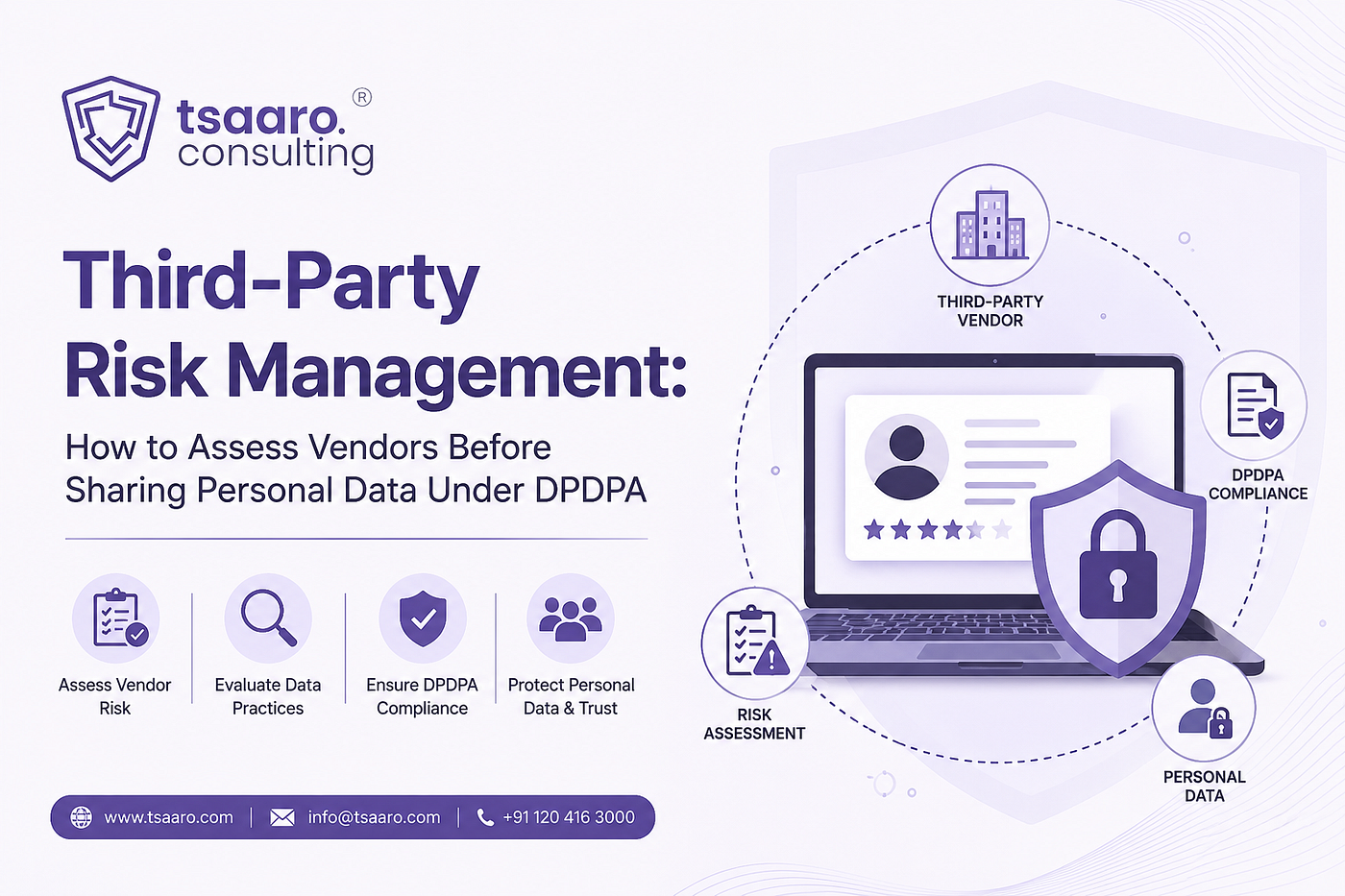
Third-Party Risk Management: How to Assess Vendors Before Sharing Personal Data Under DPDPA
Personal Data Sharing with Vendors as Per DPDPA in India? Know What You Should Do to Evaluate the Third Party’s Risks & Ensure Compliance!
Your company sharing data with a vendor doesn’t just mean sharing some data. When it comes to India’s Digital Personal Data Protection Act (DPDPA), it means sharing responsibilities too! IT teams and compliance experts must evaluate their vendors correctly before sharing any personal data.
Third-Party Risk Evaluation Importance Under DPDPA Data fiduciary organizations must take responsibility for how personal data is handled under DPDPA. This means if a vendor mishandles the data or even leaks it, there will be consequences for your organization too.
Key Points to Verify Prior to Sharing Personal Data
1. Data Processing Agreement (DPA)
Ensure that your vendor commits to a contract detailing what data they can process, how, and for what period.
2. Security Practices
Inquire from vendors about encryption policies, access control measures, and procedures to deal with any security breaches. If they lack sufficient security practices, this could expose your organization to risks.
3. Sub-Processors
Under the DPDPA regulations, it is essential that you find out whether your vendor shares your data with sub-processors.
4. Retention and Destruction Policies
Your vendor is required by law to destroy any personal data after the fulfillment of its objective. Ensure that this point is included in your contract.
5. Notice and Reporting Procedures for Breach
Your vendor is obligated to report any data breach. Set up an efficient reporting procedure beforehand.
Vendor Risk Assessment Checklist
While evaluating any potential vendors for your [company’s](http://On Duty Report Perform off-page SEO activities for all four websites. Do Quora and Reddit posting for all four websites. Create infographic images for all four websites and post on Bluesky, Gettr, and other submission sites. Write articles and blogs for all websites and publish them on Medium, Blogger, and other submission sites. Create an audit report for the Go-EMP website. Research keywords for Tsaaro’s service pages. * Work on additional tasks assigned by Nirvi Ma’am.) needs, consider the following points:
-
Do they have a documented privacy policy?
-
Is your vendor ISO 27001-certified?
-
Do they have prior experience working with Indian users?
-
Are they compliant with their DPDPA obligations?
Final Thought
Managing third parties’ risks in DPDPA is not a one-off activity. It’s a continuous exercise. Periodically review your vendors, revise your contracts as necessary, and document each assessment. Being proactive in this area will safeguard your customers and you.
메타데이터
- post_id
- c5e7a4061b77
- slug
- third-party-risk-management-how-to-assess-vendors-before-sharing-personal-data-under-dpdpa-c5e7a4061b77
- url
- https://medium.com/@tsaaro-consulting/third-party-risk-management-how-to-assess-vendors-before-sharing-personal-data-under-dpdpa-c5e7a4061b77
- canonical_url
- https://medium.com/@tsaaro-consulting/third-party-risk-management-how-to-assess-vendors-before-sharing-personal-data-under-dpdpa-c5e7a4061b77
- author_url
- https://medium.com/@tsaaro-consulting
- status
- ok
- fetched_at
- 2026-06-09 14:34:10