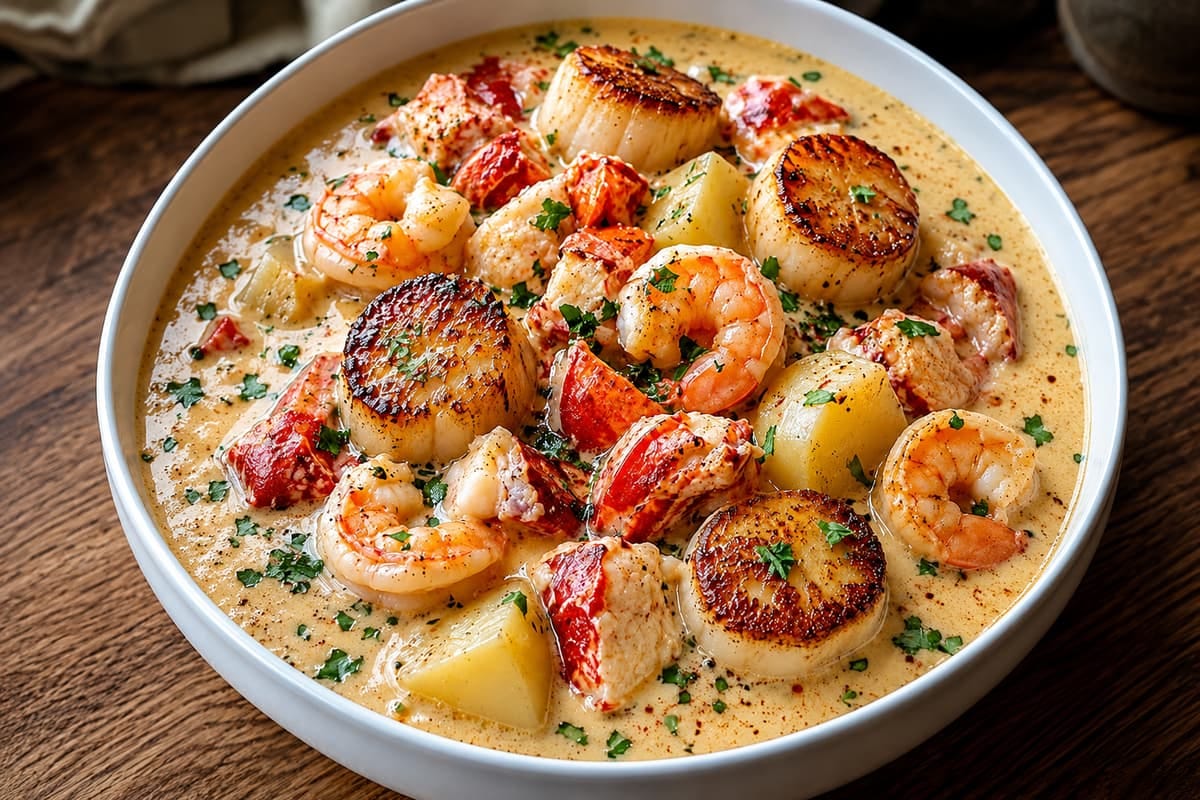
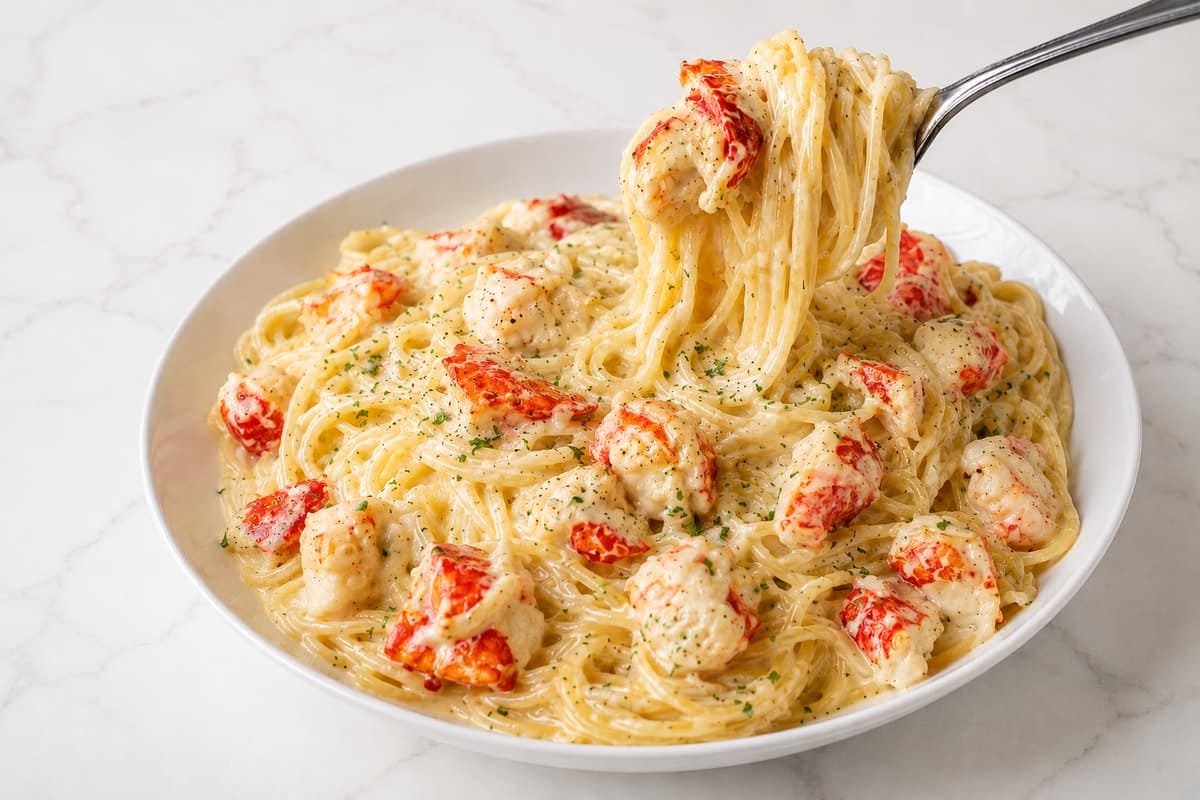
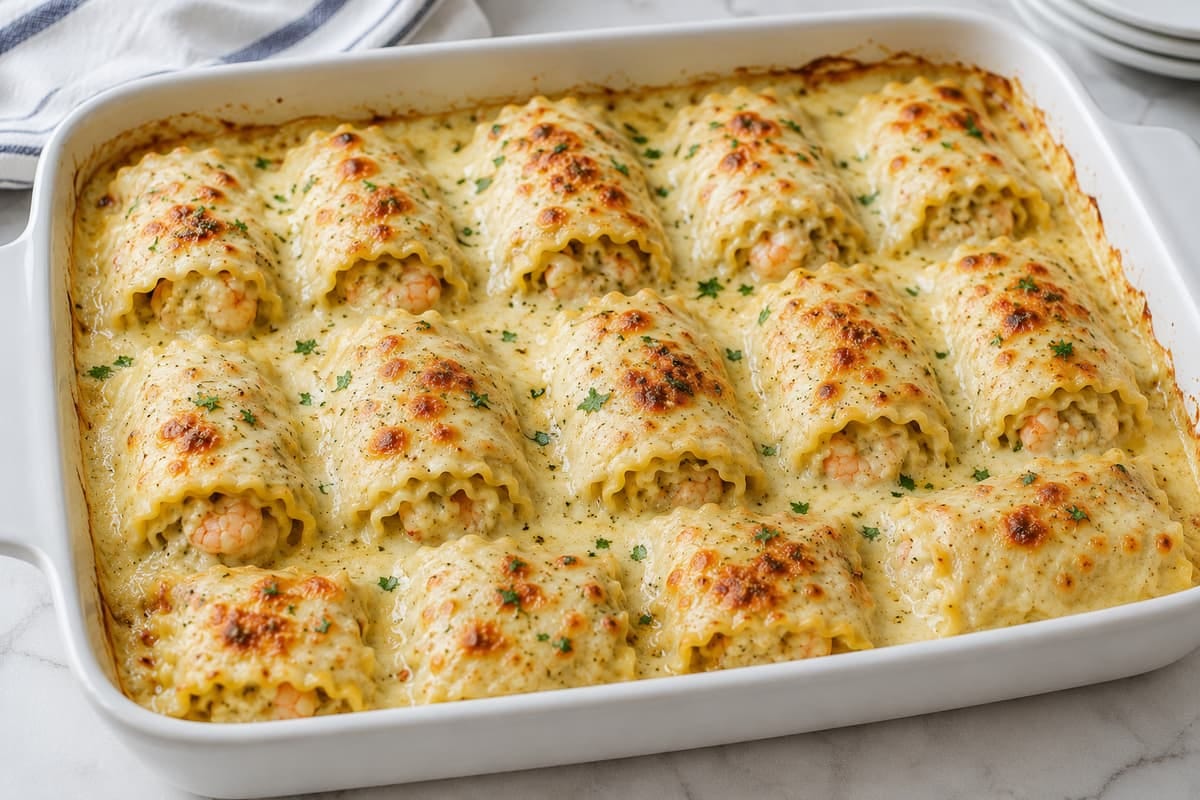
Creamy Shrimp, Lobster and Scallop Alfredo
Seafood Alfredo Has a Timing Problem, Not a Sauce Problem
Creamy Shrimp, Lobster and Scallop Alfredo
Seafood Alfredo Has a Timing Problem, Not a Sauce Problem
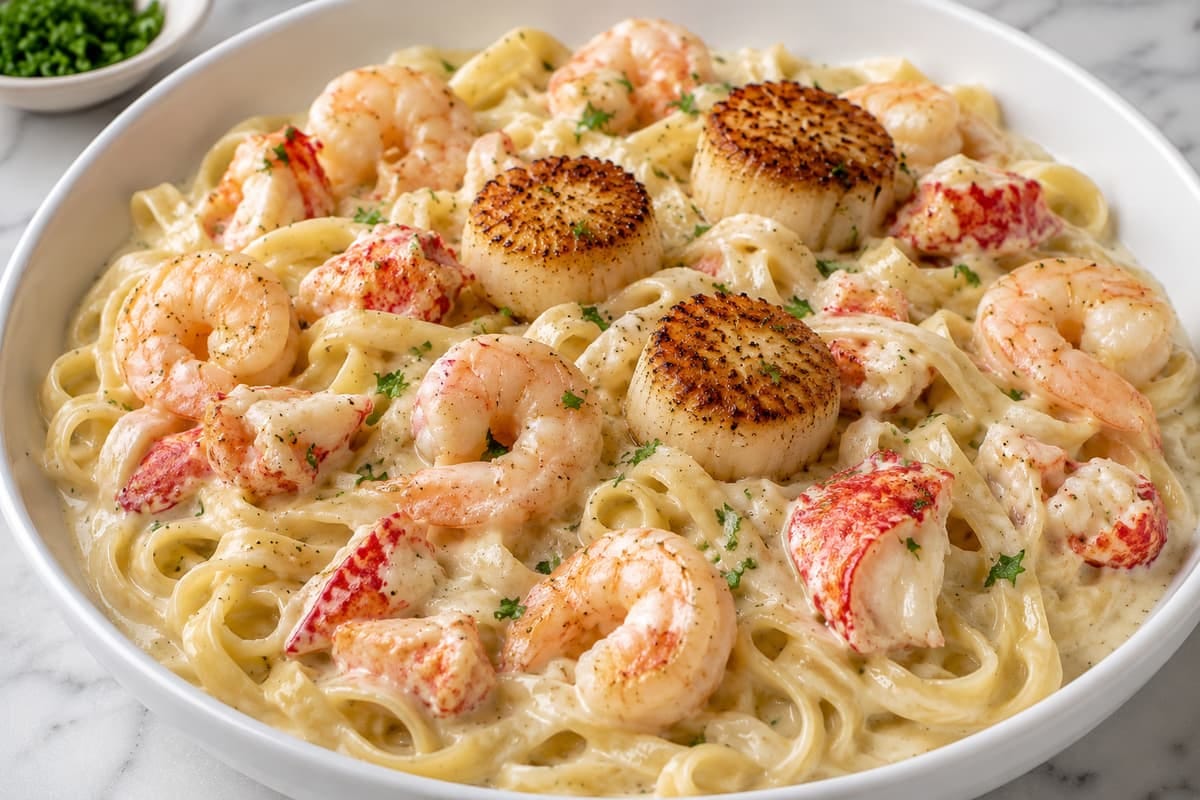
Photo: Updated Recipes
A seafood Alfredo can look rich and inviting in the skillet, then disappoint the moment you take a bite.
The sauce may be smooth. The fettuccine may be coated. But scallops can lose their golden surface, shrimp can turn firm, and lobster can fade into the background instead of tasting sweet and delicate.
That happens when every seafood ingredient is treated as though it needs the same heat.
It does not.
One Creamy Pasta, Three Different Cooking Jobs
Shrimp, lobster, and scallops belong together on the plate, but they do not belong in the pan for the same amount of time.
Scallops need a dry surface and a hot skillet to develop color. Once they are browned, their job is done. Leaving them in the sauce softens the sear that makes them special.
Raw shrimp need enough contact with heat to begin cooking, but they benefit from a gentler finish once the pasta and sauce come together. They are at their best when they stay tender rather than being held in a hot skillet while everything else catches up.
Cooked lobster needs the least from the pan. It is already cooked, so it only needs to be warmed through. Too much time in the sauce can take away the soft texture and mild sweetness that make lobster worth adding in the first place.
A shared sauce does not mean shared timing.
The Sauce Should Support the Seafood, Not Keep Cooking It
Alfredo sauce can be misleading because it holds heat well.
Even after the burner is lowered, a skillet of cream, Parmesan, and pasta stays warm enough to keep cooking delicate seafood. That is why a dish can move from tender to overdone without looking obviously wrong.
Gentle heat matters once the Parmesan is added. A hard boil can make a creamy sauce feel heavy or grainy, and it gives the seafood more heat than it needs.
The fettuccine creates another challenge: it keeps absorbing sauce after it leaves the pan.
A sauce that looks slightly loose in the skillet is often exactly what the pasta needs by the time it reaches the plate. Reserved pasta water helps the sauce stay glossy and move easily through the noodles instead of turning thick and tight.
The goal is not a thin sauce.
It is a sauce with enough movement to coat the pasta without swallowing the seafood.
Treat the Skillet Like a Handoff, Not a Holding Zone
The most reliable seafood Alfredo is built in stages.
The scallops are seared, then set aside so their browned surface stays visible. The shrimp gets a brief start and finishes gently later. The lobster joins near the end, when the sauce is ready and only needs its final warmth.
That approach protects texture without making the dish feel complicated.
It also creates a better contrast in every serving: creamy fettuccine underneath, tender shrimp and lobster folded through the sauce, and golden scallops placed on top instead of hidden inside it.
The scallops should still look like scallops when dinner is served.
The Final Minutes Matter More Than the Sauce
Seafood Alfredo is at its best when it goes from skillet to table without lingering.
The sauce stays glossy. The pasta remains creamy. The seafood keeps its individual character.
That is the difference between a bowl that feels heavy and one that feels balanced, even with cream, Parmesan, butter, and three kinds of seafood.
For the exact ingredient quantities, full skillet sequence, troubleshooting guidance, and printable Recipe Card, visit [Creamy Shrimp, Lobster and Scallop Alfredo].
메타데이터
- post_id
- c613fe98526f
- slug
- creamy-shrimp-lobster-and-scallop-alfredo-c613fe98526f
- url
- https://medium.com/@UpdatedRecipes/creamy-shrimp-lobster-and-scallop-alfredo-c613fe98526f
- canonical_url
- https://medium.com/@UpdatedRecipes/creamy-shrimp-lobster-and-scallop-alfredo-c613fe98526f
- author_url
- https://medium.com/@UpdatedRecipes
- status
- ok
- fetched_at
- 2026-06-27 18:20:27