High-Risk Pregnancy: Warning Signs and Management
Pregnancy is a natural physiological process, but some pregnancies require closer monitoring due to increased risks for the mother, baby…
High-Risk Pregnancy: Warning Signs and Management
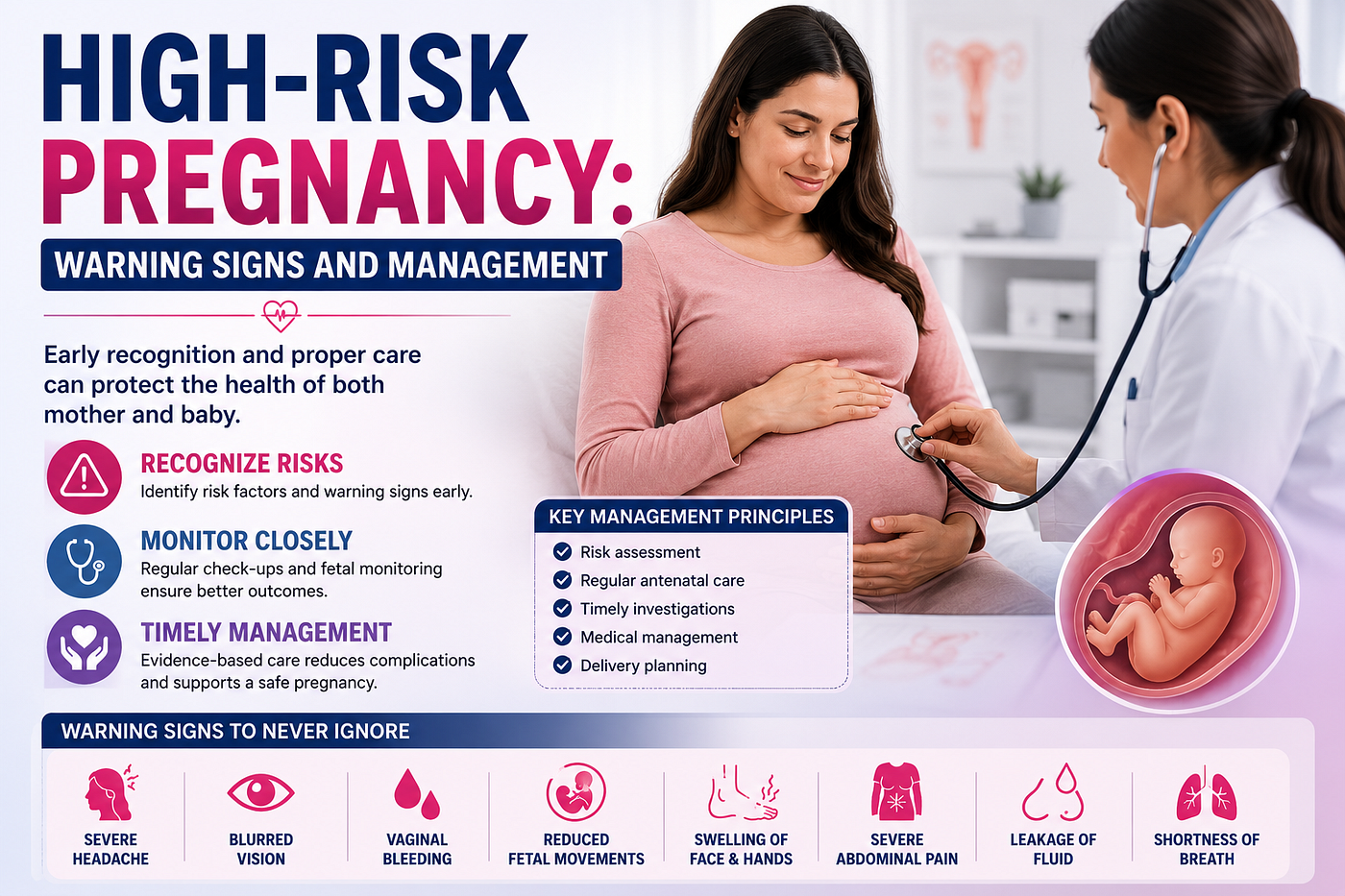
Pregnancy is a natural physiological process, but some pregnancies require closer monitoring due to increased risks for the mother, baby, or both. These pregnancies are classified as high-risk pregnancies. Early identification and appropriate management can significantly improve maternal and fetal outcomes.
For MBBS students, postgraduate trainees, and healthcare professionals, understanding the warning signs and management of high-risk pregnancy is an essential component of obstetrics and gynaecology education.
What is a High-Risk Pregnancy?
A high-risk pregnancy is one in which the mother, fetus, or both have a greater chance of developing complications before, during, or after delivery. According to the World Health Organisation (WHO), appropriate antenatal care and early risk assessment are crucial for reducing maternal and neonatal morbidity and mortality.
High-risk pregnancies require additional monitoring, investigations, and specialised medical care.
Common Risk Factors for High-Risk Pregnancy
Several maternal and fetal factors can increase pregnancy-related risks.
Maternal Factors
- Maternal age below 18 years or above 35 years
- Obesity
- Chronic hypertension
- Diabetes mellitus
- Heart disease
- Kidney disorders
- Autoimmune diseases
Obstetric Factors
- Previous cesarean section
- History of recurrent miscarriage
- Previous preterm birth
- Multiple pregnancy (twins or higher-order pregnancies)
- Previous pregnancy complications
Fetal Factors
- Congenital anomalies
- Intrauterine growth restriction (IUGR)
- Abnormal fetal positioning
- Multiple gestation
Warning Signs of High-Risk Pregnancy
Early recognition of warning signs can prevent serious complications.
Severe Headache
Persistent headache may indicate preeclampsia, especially when associated with elevated blood pressure.
Blurred Vision
Visual disturbances can be a sign of severe hypertension during pregnancy and require immediate evaluation.
Vaginal Bleeding
Bleeding during pregnancy may indicate placenta previa, placental abruption, or miscarriage.
Reduced Fetal Movements
A decrease in fetal activity should never be ignored and requires prompt medical assessment.
Swelling of Face and Hands
Sudden swelling may be associated with hypertensive disorders of pregnancy.
Severe Abdominal Pain
Persistent abdominal pain can indicate placental abruption, uterine rupture, or other obstetric emergencies.
Leakage of Fluid
Premature rupture of membranes increases the risk of infection and preterm delivery.
Shortness of Breath
Severe breathlessness may indicate cardiac, respiratory, or pregnancy-related complications.
Common High-Risk Pregnancy Conditions
Gestational Diabetes Mellitus (GDM)
Gestational diabetes develops during pregnancy and can increase the risk of:
- Macrosomia
- Birth trauma
- Neonatal hypoglycemia
- Future maternal diabetes
Proper glucose monitoring and dietary management are essential.
Hypertensive Disorders of Pregnancy
These include:
- Gestational hypertension
- Preeclampsia
- Eclampsia
Complications may affect both maternal and fetal health if left untreated.
Placenta Previa
Placenta previa occurs when the placenta partially or completely covers the cervix.
Common symptom:
- Painless vaginal bleeding during late pregnancy
Preterm Labor
Labor occurring before 37 weeks of gestation is associated with increased neonatal complications.
Multiple Pregnancy
Twin and higher-order pregnancies carry increased risks of:
- Preterm birth
- Fetal growth restriction
- Preeclampsia
Diagnosis and Monitoring
High-risk pregnancies require careful antenatal surveillance.
Routine Monitoring Includes
- Blood pressure assessment
- Blood sugar monitoring
- Fetal growth evaluation
- Ultrasound examinations
- Fetal heart rate monitoring
Specialized Investigations
Depending on the clinical situation, healthcare providers may recommend:
- Doppler ultrasound
- Non-stress tests (NST)
- Biophysical profile (BPP)
- Laboratory investigations
Management of High-Risk Pregnancy
Management depends on the underlying condition and gestational age.
Regular Antenatal Visits
Frequent antenatal check-ups help identify complications early and allow timely intervention.
Nutritional Support
A balanced diet rich in:
- Iron
- Calcium
- Protein
- Folic acid
supports maternal and fetal health.
Blood Pressure and Glucose Control
Conditions such as hypertension and diabetes require strict monitoring throughout pregnancy.
Fetal Surveillance
Regular fetal assessments help ensure appropriate growth and well-being.
Timely Delivery Planning
In some situations, early delivery may be necessary to protect the health of the mother and baby.
Prevention Strategies
While not all high-risk pregnancies can be prevented, risk reduction strategies include:
- Preconception counseling
- Management of chronic diseases
- Maintaining a healthy weight
- Early antenatal registration
- Following recommended prenatal care schedules
Importance for Medical Students
High-risk pregnancy is a frequently tested topic in MBBS, FMGE, NEET PG, and postgraduate obstetrics examinations.
Students should focus on:
- Risk factors
- Warning signs
- Antenatal surveillance
- Management principles
- Maternal and fetal complications
A strong understanding of these concepts improves both examination performance and clinical decision-making.
Advancing Knowledge in Obstetrics and Gynecology
Healthcare professionals seeking deeper expertise in maternal-fetal medicine often pursue advanced learning opportunities through an OBGYN MD Course or an **Online Obstetrics and Gynaecology Course**. Structured educational programs can help learners strengthen clinical knowledge, improve patient management skills, and stay updated with evidence-based practices.
Conclusion
High-risk pregnancy requires careful assessment, close monitoring, and timely intervention to ensure the best possible outcomes for both mother and baby. Early recognition of warning signs, proper antenatal care, and evidence-based management play a critical role in reducing complications.
For medical students and healthcare professionals, understanding the principles of high-risk pregnancy management is essential for providing safe and effective maternal care.
메타데이터
- post_id
- c616d565a841
- slug
- high-risk-pregnancy-warning-signs-and-management-c616d565a841
- url
- https://medium.com/@akash.diginerve/high-risk-pregnancy-warning-signs-and-management-c616d565a841
- canonical_url
- https://medium.com/@akash.diginerve/high-risk-pregnancy-warning-signs-and-management-c616d565a841
- author_url
- https://medium.com/@akash.diginerve
- status
- ok
- fetched_at
- 2026-06-20 20:29:01




