Walmart SQL Interview Question with Step-by-Step Solution | Real Interview Experience
SQL interviews aren’t just about syntax — they’re about thinking in steps.”
Walmart SQL Interview Question with Step-by-Step Solution | Real Interview Experience
SQL interviews aren’t just about syntax — they’re about thinking in steps.”
In one of my recent mock interview prep sessions, I came across a real SQL interview question from Walmart that perfectly tests your understanding of window functions, grouping, and chronological ordering. It’s simple on the surface but packs a punch when you break it down.
Let’s walk through it step by step, with a clear solution and reasoning behind each part.
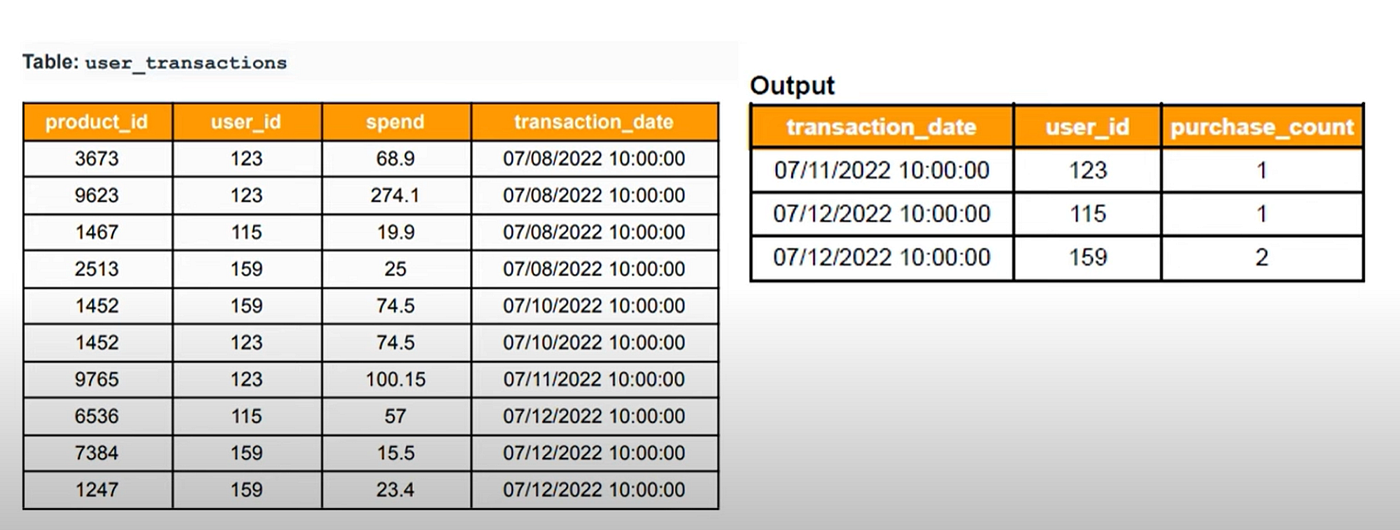
You’re given a table of user transactions from Walmart. The table contains:
product_id: The ID of the product purchaseduser_id: The ID of the userspend: Amount spenttransaction_date: Timestamp of the purchase
Your task: For each user, find the most recent transaction date and count how many products they purchased in that transaction.
Output the results as:
transaction_dateuser_idpurchase_count
And make sure the results are sorted in chronological order.
Solution Strategy
The problem may look straightforward, but it requires you to think in three logical steps:
- Identify each user’s most recent transaction
- Count the number of products bought in that transaction
- Sort the results chronologically.
Let’s look at two different methods to solve this.
Want to watch a hands-on walkthrough this SQL interview problems? Check out the following video for better explanation.
[embed]
📌 Method 1: Using RANK() Window Function
Step 1: Rank Transactions by Date
We’ll rank each transaction per user using RANK() ordered by transaction_date DESC so that the most recent transaction gets a rank of 1.
SELECT
  transaction_date,
  user_id,
  product_id,
  RANK() OVER (
    PARTITION BY user_id
    ORDER BY transaction_date DESC
  ) AS transaction_rank
FROM user_transactions;
This gives us every transaction with a rank. We’ll focus only on rank = 1.
Step 2: Filter Latest Transactions
Let’s wrap the above query in a CTE and keep only the top-ranked transactions per user.
WITH latest_transactions_cte AS (
  SELECT
    transaction_date,
    user_id,
    product_id,
    RANK() OVER (
      PARTITION BY user_id
      ORDER BY transaction_date DESC
    ) AS transaction_rank
  FROM user_transactions
)
SELECT *
FROM latest_transactions_cte
WHERE transaction_rank = 1;
Now we have each user’s latest transaction(s). Remember, a user can have multiple products in the same transaction timestamp.
Step 3: Count Products and Sort Chronologically
Now we count the products per user on their latest transaction date and sort by date.
WITH latest_transactions_cte AS (
  SELECT
    transaction_date,
    user_id,
    product_id,
    RANK() OVER (
      PARTITION BY user_id
      ORDER BY transaction_date DESC
    ) AS transaction_rank
  FROM user_transactions
)
SELECT
  transaction_date,
  user_id,
  COUNT(product_id) AS purchase_count
FROM latest_transactions_cte
WHERE transaction_rank = 1
GROUP BY transaction_date, user_id
ORDER BY transaction_date;
Output Explanation

User 123’s latest transaction was on 07/11/2022 with 1 product. User 115 bought 1 item on 07/12/2022. User 159 bought 2 products on 07/12/2022.
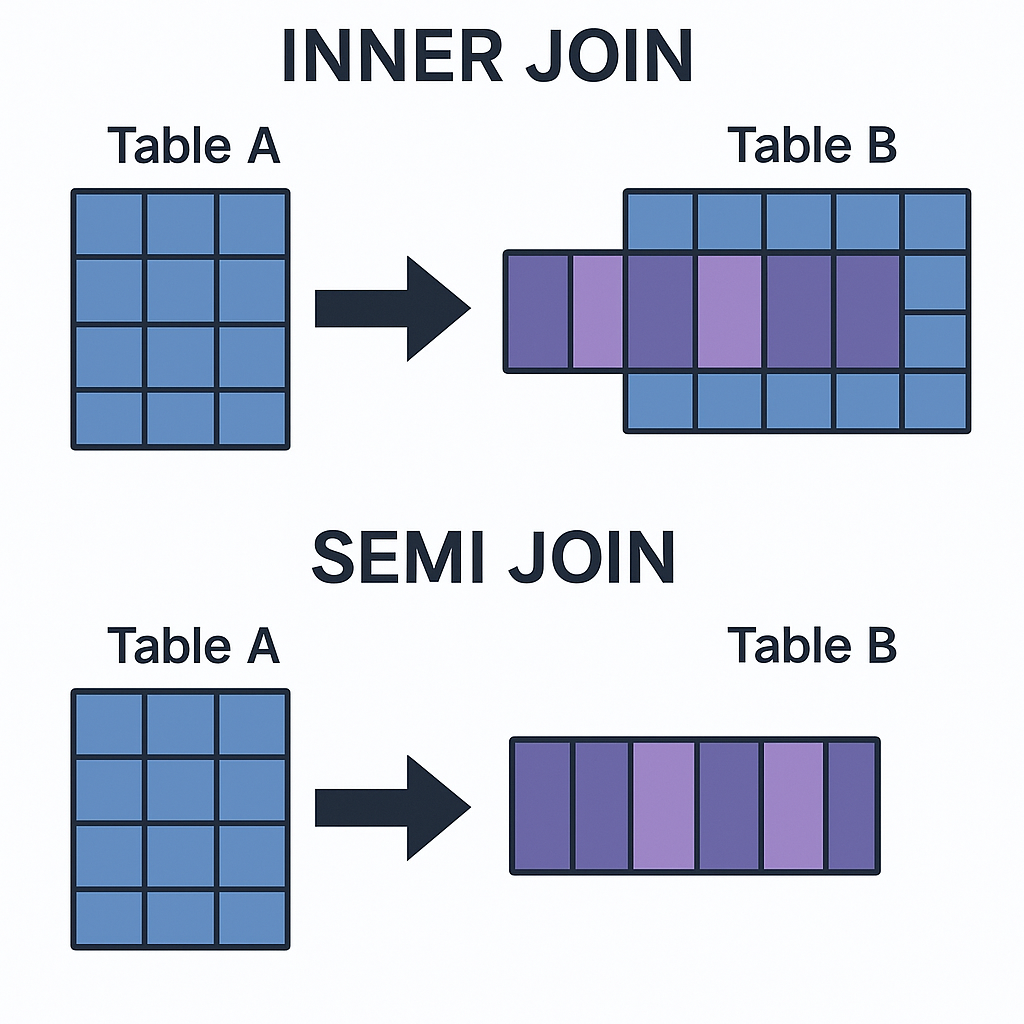
📌Method 2: Using MAX() + Join (More Intuitive for Beginners)
If you prefer a more intuitive approach without window functions, here’s an alternative that works just as well.
Step 1: Get Latest Transaction Date per User
WITH recent_transactions AS (
    SELECT
        user_id,
        MAX(transaction_date) AS recent_date
    FROM
        user_transactions
    GROUP BY
        user_id
)
This gives us each user’s most recent purchase date.
Step 2: Join with Original Table & Count Products
SELECT
    ut.transaction_date,
    ut.user_id,
    COUNT(ut.product_id) AS purchase_count
FROM
    user_transactions ut
JOIN
    recent_transactions rt
ON
    ut.user_id = rt.user_id
    AND ut.transaction_date = rt.recent_date
GROUP BY
    ut.transaction_date, ut.user_id
ORDER BY
    ut.transaction_date ASC;
🎯 Key Learnings
- Use
RANK()orMAX()depending on what you're more comfortable with. - Always group by the right fields when counting.
- Don’t forget to sort results if the question explicitly asks for it!
This Walmart interview question is a perfect example of real-world data reasoning:
- You’re given noisy, granular data.
- You’re asked to filter, group, and summarize meaningfully.
- You’re expected to write clear and efficient SQL that does all of this.
“If you found this helpful, don’t forget to give it a few claps 👏 and follow for more real-world SQL interview insights and data tips!
메타데이터
- post_id
- c658eee2c845
- slug
- walmart-sql-interview-question-with-step-by-step-solution-real-interview-experience-c658eee2c845
- url
- https://medium.com/learning-sql/walmart-sql-interview-question-with-step-by-step-solution-real-interview-experience-c658eee2c845
- canonical_url
- https://medium.com/learning-sql/walmart-sql-interview-question-with-step-by-step-solution-real-interview-experience-c658eee2c845
- author_url
- https://medium.com/@datasciencewithnish
- status
- ok
- fetched_at
- 2026-06-11 17:15:47