Brahmaputra is Not Indus: Then What?
“The Turning off Brahmaputra tap”- a threat by Pakistan on behalf of China, in retaliation of India’s action on Indus Water treaty; has…
Brahmaputra is Not Indus: Then What?
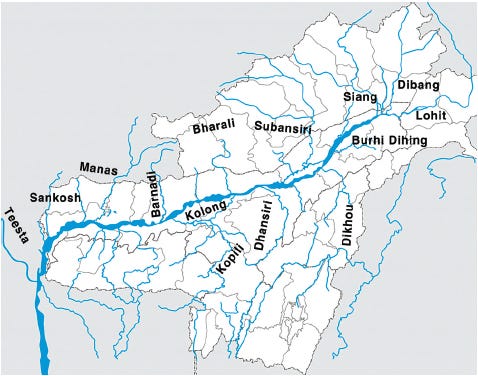
BRAHMAPUTRA SOURCE: NEXT IAS
“The Turning off Brahmaputra tap”- a threat by Pakistan on behalf of China, in retaliation of India’s action on Indus Water treaty; has necessitated the need for a comparison between the two rivers in the perspective of world geopolitics.
Before making any comparison, we should analyze some facts about the Brahmaputra and Indus.
Brahmaputra
-
The largest portion of Brahmaputra basin (50%) is shared by China, followed by India with 34% and rest by Bhutan and Bangladesh.
-
Out of 5 major tributaries of Brahmaputra, 3 viz. Subansiri, Siang and Lohit, originate in Tibet however only 7% of their combined flow is contributed by rainfall in Tibet.
-
Out of 2880 km of Brahmaputra, 1625 km lie in Tibet, 918 km in India and 337 km in Bangladesh.
-
Of the total catchment area of Brahmaputra, 293,000 square km lies in Tibet, 240000 sq. km in India, 47000 sq. km in Bangladesh and the rest in Bhutan.
-
The average annual rainfall in Tibet is 400 mm and 3000 mm in India.
-
According to Central Water Commission of India, 60–70% of water in Brahmaputra comes from India and 30–40% from Tibet. In Tibet glacial melt is the major source and rain contributes only a small part.
-
Water flow at Tuting (on India -China border in Arunachal Pradesh) is just 2000–3000 cubic meter per second while at Guwahati it swells to 15000- 20000 cubic meters per second during monsoon.
Indus

Indus: Source Clear IAS
-
Indus basin is shared among India, Pakistan, China and Afghanistan whereas Brahmaputra basin is shared among India, China, Bhutan and Bangladesh.
-
The largest portion of Indus basin (47%) is shared by Pakistan, followed by India with 39% and rest by China and Afghanistan.
-
Indus basin is fed by glacial and snow melt (41% and 22% respectively) from Himalaya, Hindu Kush and Karakoram ranges and the rest is contributed by rainfall.
-
Moreover, over 50% of the annual flow in Indus is received in just 3 months during monsoon in India, both through rainfall and glacial melt.
-
61% of total population of Pakistan is dependent on Indus basin as compared to 35% of Indian and 4% of Afghan population.
-
93% of water from Indus basin is used for irrigation of agriculture land. Of the 26 million hectares of agriculture land that is irrigated by Indus water, 16 million hectares is in Pakistan and 10 million hectares in India.
-
80% 0f agriculture of Pakistan depends on Indus,
-
Indus is the second most stressed river in the world after Colorado River.
Comparison
Unlike Indus in Pakistan that depends on upstream for maximum of its water; Brahmaputra in India receives maximum of its water in India and not on its upstream in Tibet.
Most of the tributaries of Indus receive their majority water through glacial melt and rainfall in India while majority of Brahmaputra tributaries originate in India and Bhutan and 60–70% of its water is received in India and not in Tibet.
Pakistan’s 80% agriculture and over 60% of its population is dependent on Indus water while only a minor proportion of Indian agriculture and its population is dependent on Brahmaputra.
Conclusion
India can use Indus water to its own greater benefits depriving Pakistan in terms of agriculture losses. China can use Brahmaputra water to irrigate its dry western provinces like Sinkiang and Tibet but it will not harm Indian agriculture. Actually if China does so, it will help India in flood management during monsoon.
The only fear for India will be the use of stored Brahmaputra water as “Water Bomb” by China in case of any conflict to cause flood and human and property losses in North- East India.
메타데이터
- post_id
- c669b78bc9ae
- slug
- brahmaputra-is-not-indus-then-what-c669b78bc9ae
- url
- https://medium.com/@eklavyajhaias/brahmaputra-is-not-indus-then-what-c669b78bc9ae
- canonical_url
- https://medium.com/@eklavyajhaias/brahmaputra-is-not-indus-then-what-c669b78bc9ae
- author_url
- https://medium.com/@eklavyajhaias
- status
- ok
- fetched_at
- 2026-06-09 15:37:30