How Often Should You Really Trim Your Trees? A Certified Arborist Explains
By Monkeyman’s Tree Service | Portland, Oregon’s Award-Winning Arborists Since 2008
How Often Should You Really Trim Your Trees? A Certified Arborist Explains
By Monkeyman’s Tree Service | Portland, Oregon’s Award-Winning Arborists Since 2008
“How often should I trim my trees?” is one of the most common questions homeowners ask us, and the honest answer is: it depends on the tree, its age, its location, and its health. There’s no single schedule that fits every tree, but there are clear guidelines that can help you plan.
As ISA Certified Arborists with over 18 years of experience in the Portland metro area, here’s how we actually think about pruning frequency.
Young Trees: Every 1–2 Years
Newly planted and young trees benefit from more frequent, light pruning. This early structural pruning shapes how the tree grows for decades to come, correcting weak branch angles and competing leaders before they become permanent structural problems. A little attention now saves major corrective work later, and in many cases prevents the kind of structural weakness that leads to storm damage down the road.
Mature Trees: Every 3–5 Years
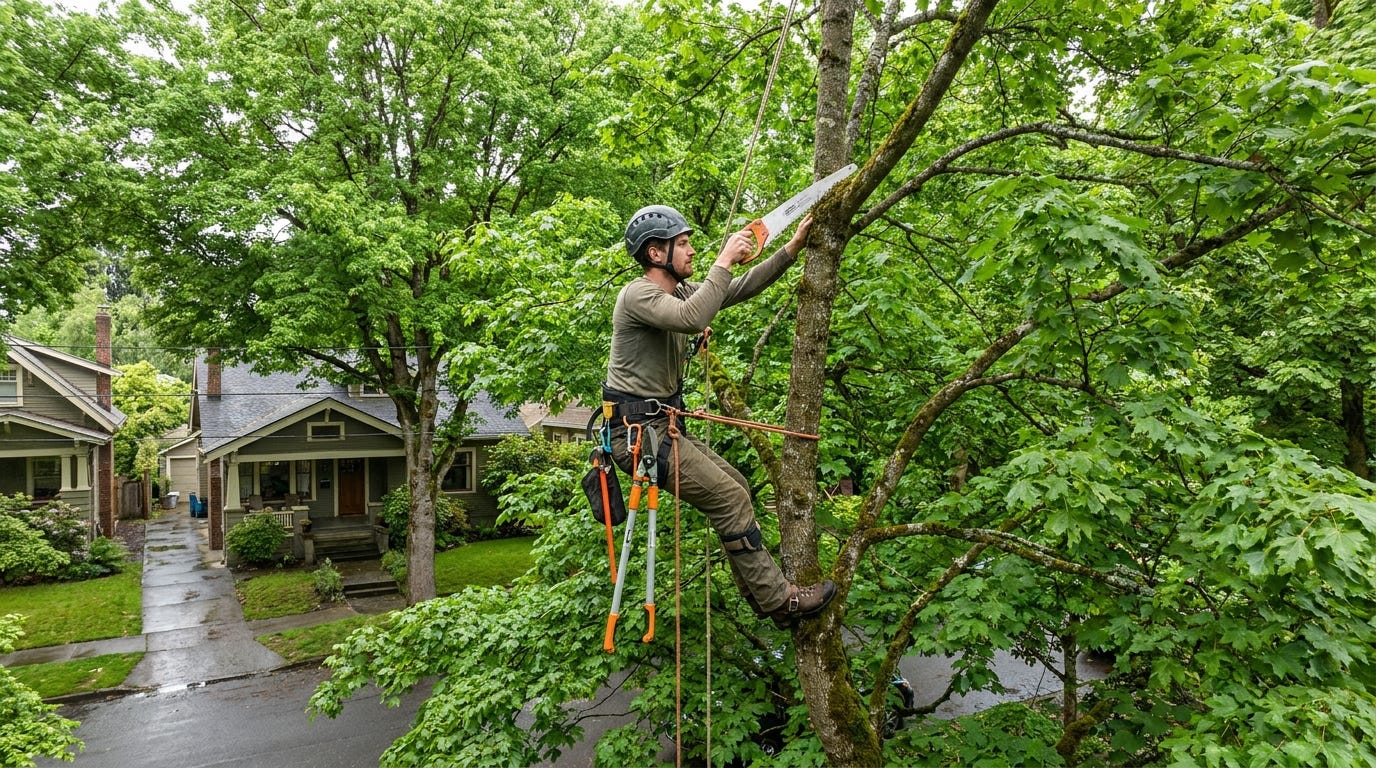
Established, healthy mature trees generally need pruning less often, roughly every 3 to 5 years for most species in the Portland area. At this stage, pruning is mostly about removing dead or crossing branches, maintaining clearance from structures and power lines, and preserving the tree’s natural form. Over-pruning a mature tree can actually stress it and reduce its natural defenses against disease and pests.
Fruit Trees: Annually
If you have fruit trees on your property, these typically need yearly pruning, usually during late winter dormancy. Annual pruning keeps fruit trees productive, maintains an open canopy for sunlight penetration, and prevents the kind of overcrowded growth that leads to disease and poor fruit quality.
Fast-Growing Species: Every 1–2 Years
Certain species common in the Pacific Northwest, like willows, poplars, and some maples, grow quickly and can develop structural issues faster than slower-growing species. These often benefit from more frequent check-ins, even if not every visit results in major pruning work.
Signs Your Tree Needs Pruning Now, Regardless of Schedule
Some situations call for pruning outside of any regular schedule:
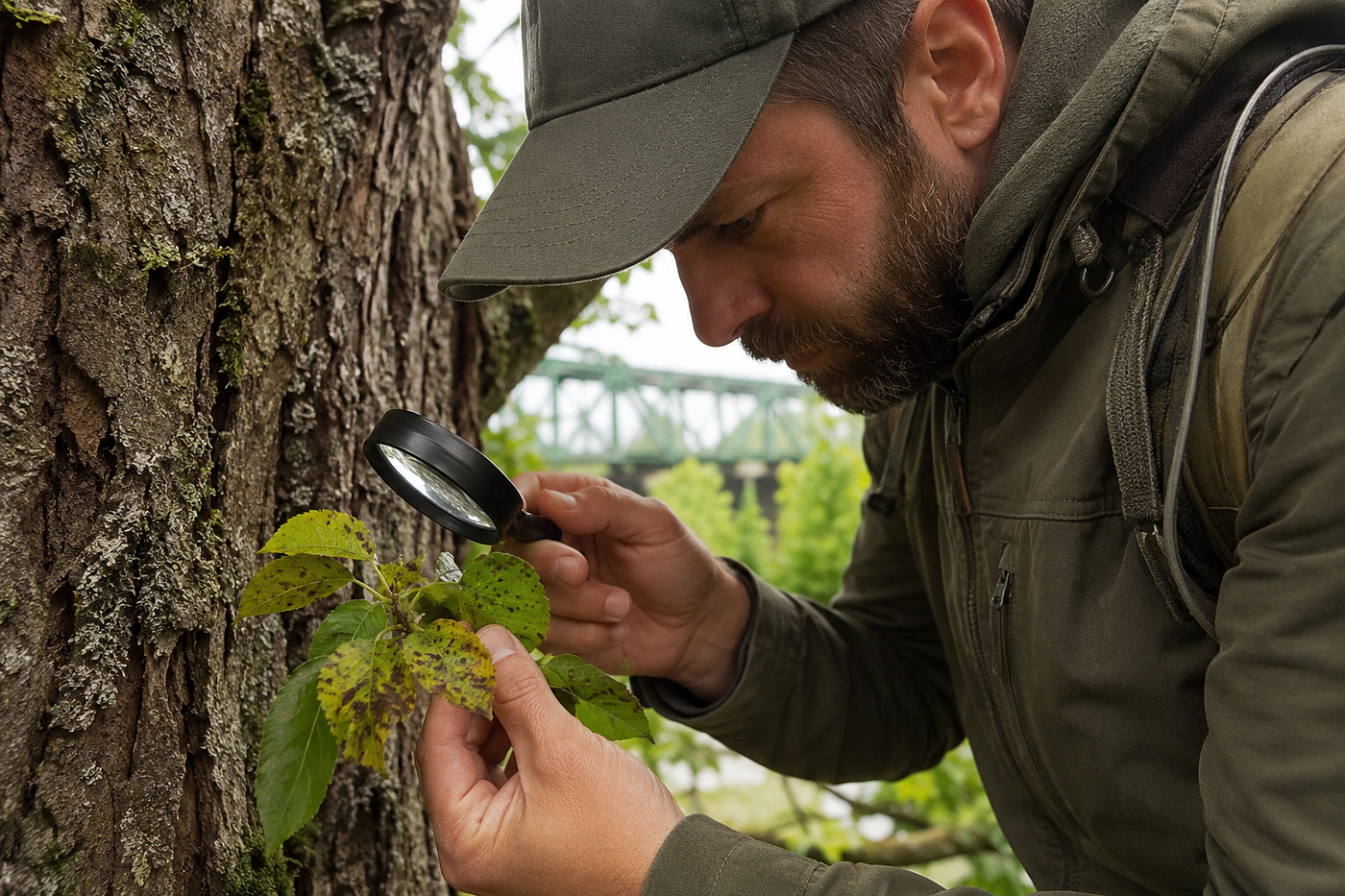
Dead, damaged, or diseased branches should be removed as soon as they’re identified, regardless of when the tree was last pruned. Branches rubbing or crossing against each other create wounds that invite pests and disease. Branches growing too close to your roofline, driveway, or power lines need attention for safety reasons. A tree that recently experienced storm damage should be assessed promptly, since damaged limbs can pose ongoing hazards even if they haven’t fully failed.
Why Over-Pruning Is a Real Risk
It’s a common misconception that more pruning is always better. In reality, removing too much of a tree’s canopy at once, generally more than 25 percent in a single session, can stress the tree significantly. This can trigger excessive suckering, weaken the tree’s ability to photosynthesize effectively, and make it more vulnerable to pests and disease. This is one of the reasons why “topping” a tree, cutting off the main leader to reduce height, is considered malpractice in the arboriculture industry. It permanently damages the tree’s structure and health.
The Best Time of Year to Prune
For most deciduous trees in the Portland area, late winter to early spring, while the tree is still dormant, is the ideal window. This timing minimizes stress on the tree and reduces the risk of disease transmission through fresh cuts, since many fungal pathogens are less active during colder months. That said, dead or hazardous branches should be removed whenever you spot them, regardless of season. Safety concerns don’t wait for the ideal pruning window.
When in Doubt, Get a Professional Opinion
Every tree is different, and factors like species, age, health, growth rate, and location all affect how often pruning makes sense. If you’re unsure whether your trees are due for attention, a certified arborist can evaluate your specific trees and recommend a pruning schedule tailored to your property, rather than relying on generic advice.
Schedule Your Tree Assessment Today
Not sure if your trees need pruning this season? Monkeyman’s Tree Service offers free estimates and professional evaluations from ISA Certified Arborists who can tell you exactly what your trees need, and just as importantly, what they don’t.
Call us: (503) 358–8754 Request an estimate online: monkeymans.com/estimate
메타데이터
- post_id
- c6929df2f95b
- slug
- how-often-should-you-really-trim-your-trees-a-certified-arborist-explains-c6929df2f95b
- url
- https://medium.com/@business.monkeymans/how-often-should-you-really-trim-your-trees-a-certified-arborist-explains-c6929df2f95b
- canonical_url
- https://medium.com/@business.monkeymans/how-often-should-you-really-trim-your-trees-a-certified-arborist-explains-c6929df2f95b
- author_url
- https://medium.com/@business.monkeymans
- status
- ok
- fetched_at
- 2026-08-18 16:42:15