HOPE by Association: Reflections from the 2025 PAB Day of Education
By Jordan E. Brown, MBA, VP, SIPI, Inc.
HOPE by Association: Reflections from the 2025 PAB Day of Education
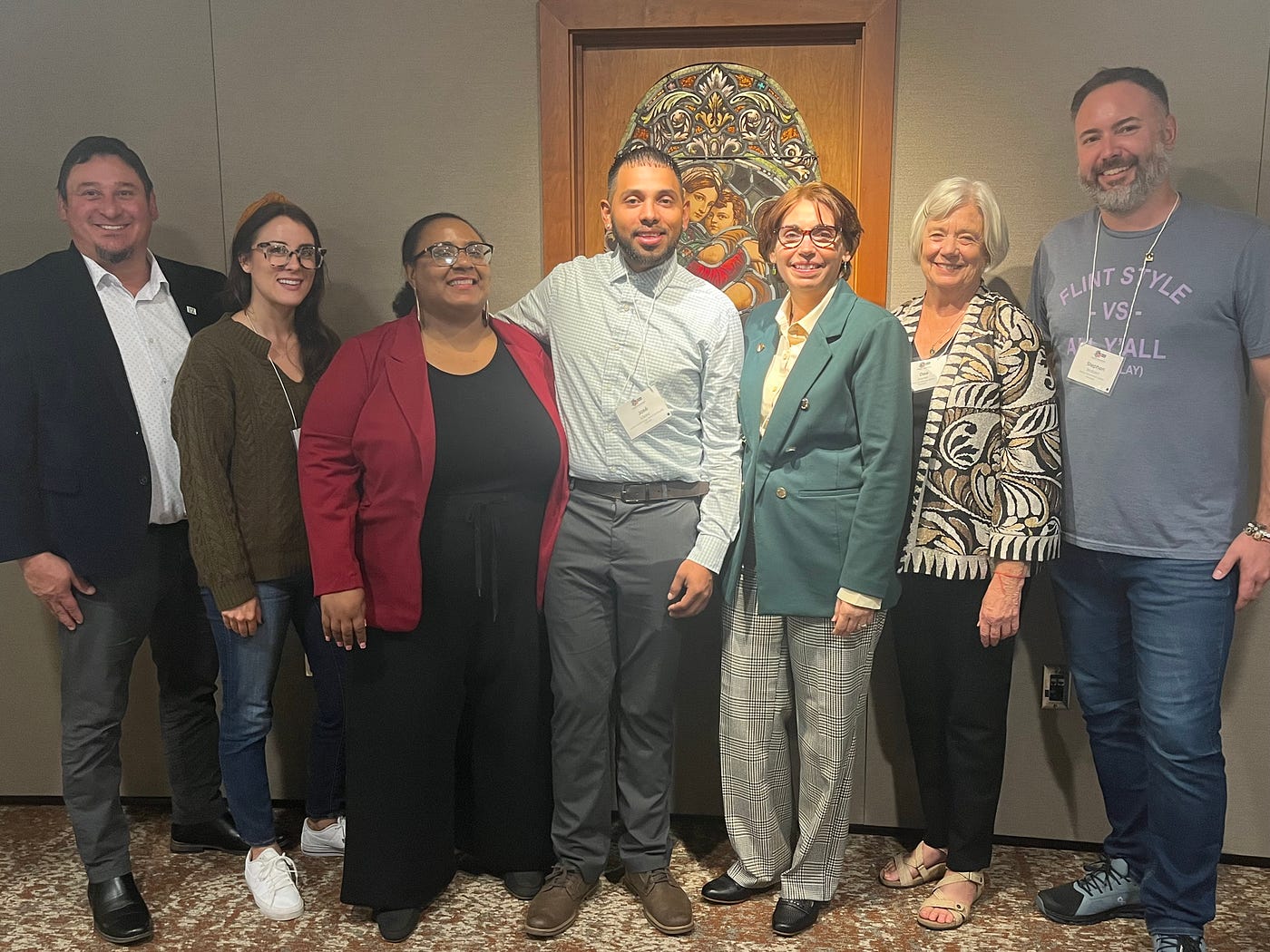
From left, Juan Zuniga of LISC Flint, Jordan E. Brown of SIPI, Inc., Tryphena Mance of Ruth Mott Foundation, and Jose Lopez of Latinx Technology and Community Center, join Sister Marilín Llanes, OP, and Associate Dee Joyner of the Adrian Dominican Sisters Portfolio Advisory Board (PAB), and Associate Stephen Wolbert during the PAB’s Day of Education and Celebration of its 50th anniversary.
By Jordan E. Brown, MBA, VP, SIPI, Inc.
Attending the Adrian Dominican Sisters’ 2025 Portfolio Advisory Board Day of Education was equal parts spiritual renewal and professional recalibration. I was there in part because of my friend, supervisor and mentor, Stephen Wolbert, an Adrian Dominican Associate and the founder of SIPI, Inc., who has long been inspired by the Sisters’ model of aligning faith and finance for the common good. At SIPI, we share that calling. To invest time, talent, and treasure into the people and places that deserve it most. The day itself held tension, between faith and finance, power and humility, capitalism and community. But the warmth of the opening ritual shone through, laced with humor, humanity, and hope.
The first moment that really stayed with me came during the opening ceremony, when an OP recalled a story that caught the room off guard and, somehow, brought us closer together. She shared that someone had once told her, “Sister, you may be cheap, but you’re not easy.” The whole room erupted in stifled laughter and I admit, I laughed out loud, too. In Adrian, even religion doesn’t feel exclusionary or austere, it feels lived-in, human, and openhearted. That moment captured the tone for the day: sacred but not self-serious, rooted in truth yet softened by humor. I’ve learned that in this work, whether of faith or social impact we need that humor to hold the hard things, but we also need care: intentional movements, deliberate listening, and deep consideration of the communities we serve. These were the defining principles of this day for me.
Quickly the day revealed a theme I couldn’t shake, loving defiance. As one speaker said, “In a world where the most beautiful words in our society- diversity, equity, and inclusion- are deemed unlawful by our leaders, let us be lovingly defiant.” That line hit me squarely in the chest. In Flint, we know what it means to resist with love, to build despite disinvestment, to heal despite harm. That same spirit guides our team’s work every day. We partner with grassroots organizations, faith communities, and small businesses to help them access the resources, recognition, and respect they have always deserved. Our approach, what we call trust-based capacity building, centers on equity, empathy, and accountability. We believe that the greatest change happens when power and partnership are shared. Loving defiance, to me, is the courage to keep showing up, to remain both tender and unyielding, and to disrupt systems that prize comfort over justice.
Later, the conversation turned to violence. Not as an act, but as a symptom that spreads through systems of neglect and exclusion. Living and working in Flint, where rates of interpersonal and community violence remain among the highest in the state, I’ve seen that reality up close. With a background in healthcare philanthropy, I understand how deeply trauma threads through every social determinant, health, housing, education, employment. The presentation resonated because it mirrored what we witness daily, that prevention begins long before intervention. The first five of eight steps in evidence-based models are about planning and partnerships, not programs. That was so affirming for me. As I looked around at the impact the PAB has made, it gave me hope that our team’s work, too, will live on in that same spirit of intentional investment and care.

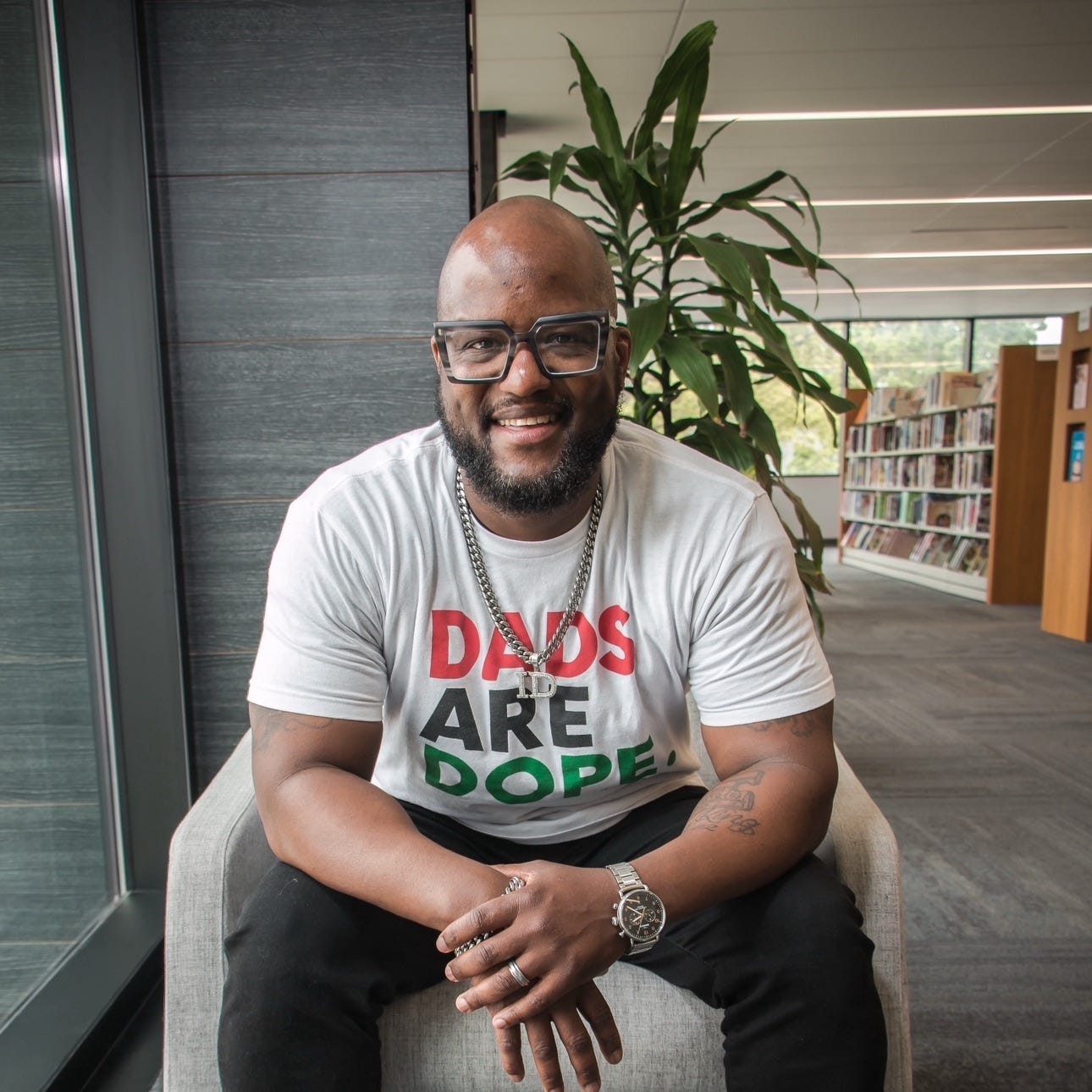
Jordan Brown
Professionally and personally, I am anchored in that space. We partner with parenting groups, community centers on Flint’s North End, and organizations like Legal Services of Eastern Michigan, places that see violence disrupt lives right in their own front yards. I often say I’m a “consultant who rejects that title.” Our job isn’t to advise from afar; it’s to stand alongside. I used to joke that my role was “Herder of Cats,” but over time I’ve come to see us more as buffalo, because cats run from the storm, and buffalo run into it. In our work, we choose to run into the storm with our partners. That’s where the real work happens, where healing takes root, and where lasting change begins. It is created in the planning and partnerships that transform programs into meaningful and tangible change making.
From the personal to the systemic, the conversation shifted toward corporate accountability, the moral and financial responsibility to repair harm created by profit-driven systems. One speaker said plainly: “It is a capitalistic responsibility to support the problems your corporate products create.” That sentence captured something I’ve long believed but had never heard articulated so simply. The consensus in the room was clear, philanthropy alone cannot close the gaps left by government retreat. It’s time for the private sector to leverage its tax benefits and power for true reinvestment, not optics. We see this every day, helping partners move beyond impact Band-Aids and toward structural repair and shared responsibility.
Then came a line that cut through the noise of metrics and measures: “Statistics are human beings with the tears wiped off.” It’s an important reminder that every data point is a life, a name, a story. For those of us in community impact work, numbers are never neutral, they’re evidence of human resilience, loss, and possibility. Publicly funded organizations don’t just hold data, they hold human testimony. Our job is to make that data sing truth, not just show numbers. I’ll carry that reminder forward, to ensure that behind every chart or metric, the people and their stories remain visible.
By afternoon, the conversation had stretched deeper, testing not only what we know, but how we show up. It called for intention, humility, and the courage to enter spaces that challenge our confidence. There was wisdom in the reminder to “call it something else and just do the work,” and truth in the call that “organized confronts organized.” When someone asked how to have hard conversations in our own communities, the response was simple: “Be hungry to be in the relationship. Ask one question, then listen.” That, I think, is how we begin to rebuild our villages. By seeking and nurturing humanity in one another. Amid the heavy, there was joy too, “You can’t spell hope without O-P,” someone quipped, a nod to the Dominican Order. Gratitude and safety felt palpable in that room.
One hypothetical question from the day hasn’t let me go, “Who has the power to give you what you want, and who benefits from injustice?” It made me rethink how we map influence and build relationships. Because true community change doesn’t come from proximity to power, it comes from authentic relationships that replace performative gestures. And as I prepared to leave, someone’s earlier question rose in my spirit: Are the children well? I’ve long held that question as a metaphor for the greater village, for the state of our collective humanity. But the truth is, we are all someone’s children. And the answer is often complicated. Some are not well. I am not always well, either. Perhaps I’m more aware of that now. 2025 has brought steep climbs. Yet even in the hard seasons, I am still here. And I am still blessed.
As the Adrian Dominican Sisters’ Portfolio Advisory Board celebrates fifty years of impact, I’m grateful to have seen firsthand how they’ve turned ethical conviction into sustained, measurable change. Their work is a reminder that stewardship isn’t only about resources, it’s about shared responsibility to one another.
That is the quiet truth this day gifted me. Hope and healing are not destinations we reach. They are daily acts of persistence and of loving defiance.
메타데이터
- post_id
- c6a22e3bd082
- slug
- hope-by-association-reflections-from-the-2025-pab-day-of-education-c6a22e3bd082
- url
- https://medium.com/sipi-inc/hope-by-association-reflections-from-the-2025-pab-day-of-education-c6a22e3bd082
- canonical_url
- https://medium.com/sipi-inc/hope-by-association-reflections-from-the-2025-pab-day-of-education-c6a22e3bd082
- author_url
- https://medium.com/@joelrash
- status
- ok
- fetched_at
- 2026-06-10 12:26:30