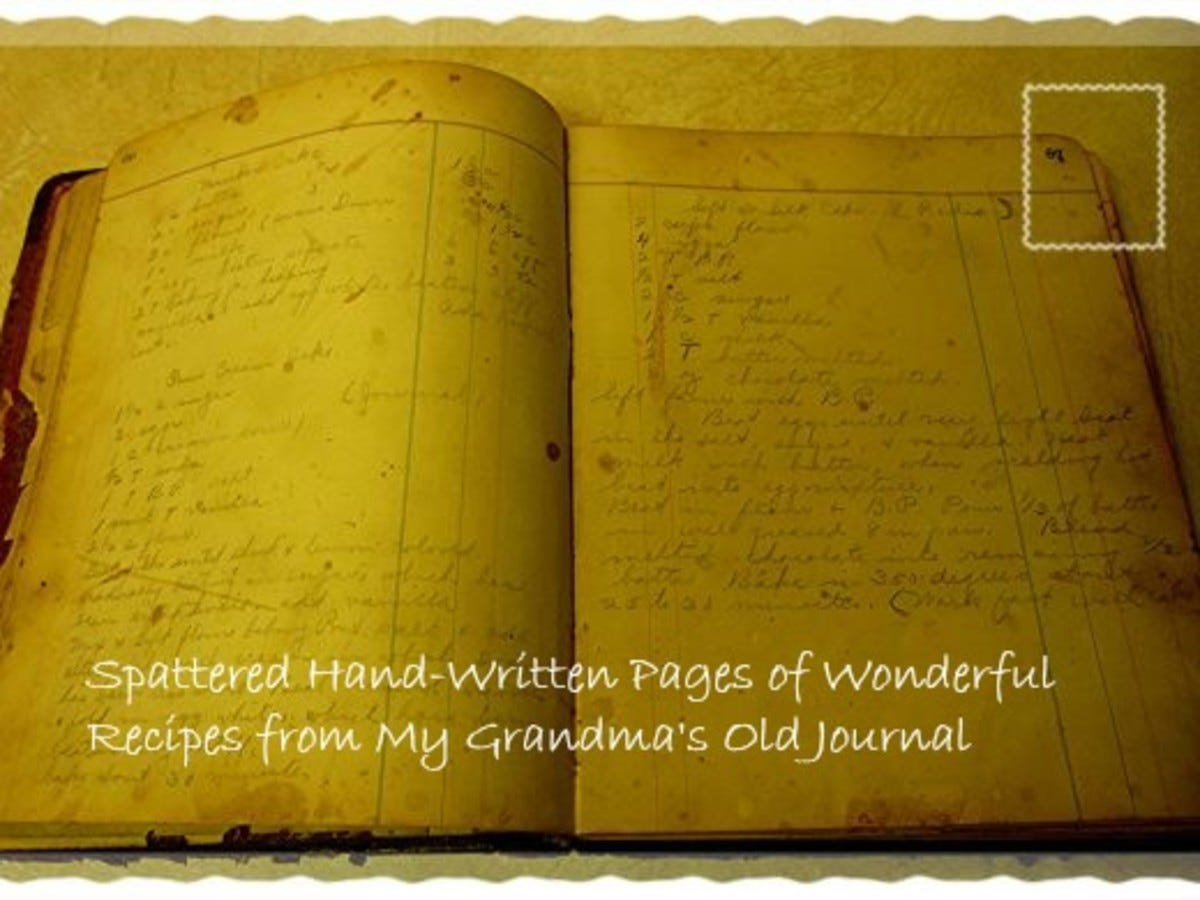
Why Is Everyone Fighting Over Hummus?
A chickpea dip with deep roots, fierce loyalties, and endless possibilities
Why Is Everyone Fighting Over Hummus?
A chickpea dip with deep roots, fierce loyalties, and endless possibilities
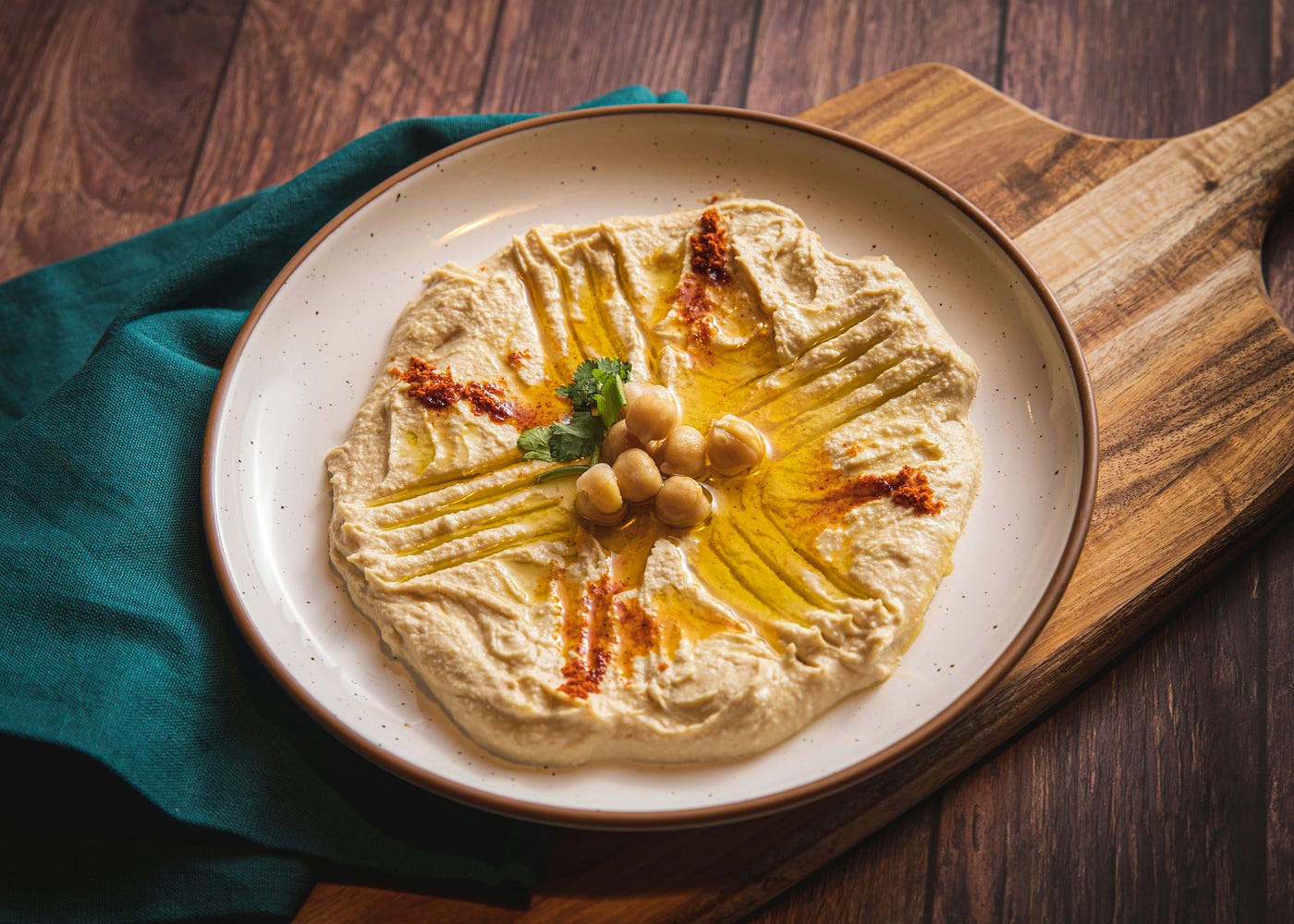
Photo by Christopher Alvarenga on Unsplash
In the beginning, there was the chickpea (Cicer arietinum). This little orb-shaped legume was cultivated in Turkey perhaps more than 10,000 years ago. You might know it as a garbanzo bean, or think that garbanzos and chickpeas are different, but cousins.
Rest assured that the two are synonymous. For the sake of brevity, let’s stick with the name chickpea. And guess what? The word hummus is Arabic for chickpea. So the birthplace of hummus should be easy to ascertain, right?
Wrong.
Hummus is a Middle Eastern food claimed by all and owned by none. — Oren Rosenfeld, writer and director of “Hummus! The Movie”Text
Some Israelis state that it’s a Jewish food — after all, it’s mentioned in the Bible. In Ruth 2:14, Boaz said to Ruth, who’d been hard at work harvesting his barley all morning: “Come here, and eat of the bread, and dip your piece of bread in the hometz.”
Well, hometz sounds like hummus, but if you look at the original Hebrew (and my nephew reads and writes the language), hometz actually means vinegar. Vinegar as a dip? At first, I thought that sounded a bit odd, but then I recalled the romantic dinner my husband and I enjoyed in Siena — fresh sliced Tuscan bread dipped in a saucer of rich, fruity olive oil with a drizzle of sweet/syrupy aged balsamic.
So, does that mean that hummus is Israeli? Perhaps not.
One of the earliest recipes for hummus bi tahini (chickpeas with tahini) appeared in the 13th-century Egyptian cookbook “Kitab Wasf al-Atima al-Mutada.” But other food historians point to a 13th-century recipe from Syria.
This is driving me batty. What’s the real story? In search of clarity, I went to one of my favorite, trusted sources. According to *Cook's Illustrated:*
“Today chickpeas are the most consumed legume in the world, and hummus is a staple in the Middle East, where hummus shops are as common as pizza parlors in this country. Heated debate can erupt over whose hummus is best, and exact recipes are carefully guarded secrets.”
Actually, the debates went way beyond raised voices and wild arm gesticulations. In the year 2008, chickpeas became a political hot button. The president of the Association of Lebanese Industrialists filed a lawsuit against the nation of Israel for food copyright infringement.
That’s not all. To further promote national pride, the government of Lebanon petitioned the EU to have hummus classified as a uniquely Lebanese food. This, dear friends, is known as The “Hummus Wars.”
Of course, a battle over whose bean dip reigns supreme can only be settled in the kitchen. In January 2010, Israeli cooks assembled what was at that time the largest plate of hummus in recorded history, a staggering 4,082 kilograms.
Not to be outdone, 301 Lebanese chefs retaliated with a Guinness World Record plateful (actually it was a satellite dish) of hummus weighing in at 10,450 kg. Chef Ramzi Choueiri and 300 students from Al-Kafaat University in Beirut accomplished this feat with a 7.17-meter-diameter dish and an untold amount of chickpeas.
To this day, Lebanon remains undefeated, but bigger isn’t always better. (Lebanon might have won in volume, but I give the Israelis 2 more points for food styling and presentation.)
In an online article by the BBC, American food historian Charles Perry (president of the Culinary Historians of Southern California) was quoted as saying:
“I tend to take the Lebanese claim somewhat seriously … Beirut would be my second choice in response to the question of who invented hummus. It stood out as a sophisticated city throughout the Middle Ages, one with a vigorous culinary tradition, and lemons were abundant there.”
So, here’s my next question — if Lebanon holds second place, who would Perry claim as the victor in the hummus war? As explained further in the BBC interview, Mr. Perry thinks that Syria is actually the most likely birthplace of hummus.
He explained that across much of the Middle East, hummus is served in a distinctive red clay dish with a raised rim. It’s whipped briskly with a pestle until it climbs the sides in soft peaks — a visual cue that the texture is just right: not too loose, not too stiff. That sculpted swirl isn’t just for show; it makes scooping with bread both intuitive and elegant.
This method of presentation hints at hummus’s urban roots. It’s not some rustic, ancient peasant food — it’s a refined dish, likely shaped for the tastes of the Ottoman elite in Damascus. As for its origin story? That’s harder to pin down. Culinary borders in the Middle East are porous, with dishes traveling freely between kitchens and cultures. Still, if I had to place hummus on a historical map, I’d look to 18th-century Damascus — a city known for its sophistication.
The Health Benefits of Hummus
We’ve talked about the origins of hummus and how it has been a staple of Middle East dining, but is it really “amazingly healthy?” Let’s take a look.
Hummus is a plant-based protein, low in calories yet high in fiber (which promotes good gut health). Olive oil, a key component, is rich in antioxidants and has anti-inflammatory benefits. Tahini adds more than flavor — tahini is made of sesame seeds, which also reduce inflammation.
Put them all together and you have a rich, flavorful dip that’s low on the glycemic index, it’s heart-healthy, and it’s gluten-, nut-, and dairy-free. Win-win-win.
Hummus Nutrition Facts
Data shown are for a 100-gram (3.5-ounce) serving of hummus
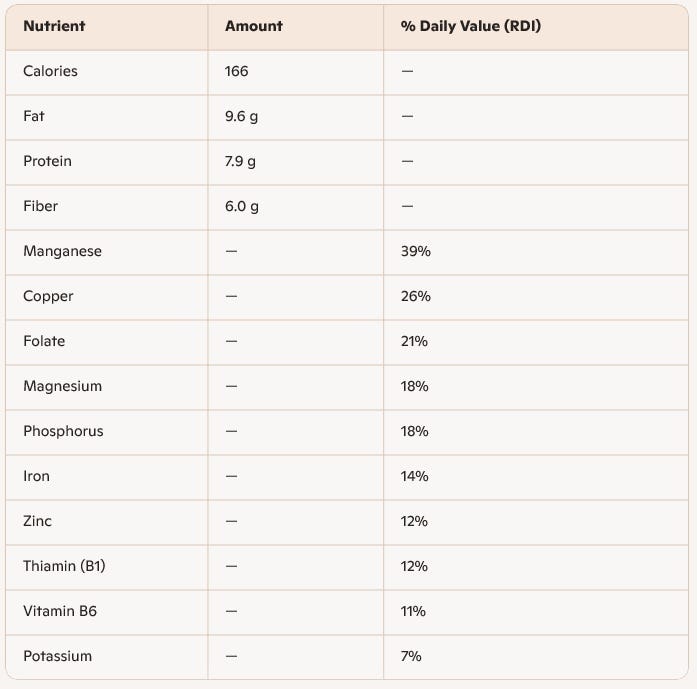
Source of data: Nutritionix
The 5 Essential Ingredients of Traditional Hummus
With just five ingredients (chickpeas, tahini, garlic, olive oil, and lemon juice), one would think that hummus would be virtually fool-proof. However, if you peruse the deli section of most major grocery stores, you will find that the concoctions that wear the name bear little resemblance to real, authentic hummus. Sun-dried tomatoes, soybeans, jalapeños, and avocado have no place in my chickpea spread.
The ideal hummus is smooth and creamy (not grainy or watery), with a buttery chickpea flavor. The earthy toasted-sesame taste of tahini balances out the sweetness of the chickpeas, and just a touch of lemon and garlic lends brightness and bite. Let’s examine each component.
Chickpeas
As with any other dried legume, dried chickpeas should first be spread out in a single layer on a cookie sheet and examined for debris, small stones, or beans that are withered or damaged. Then place them in a wire mesh strainer and rinse under cool running water to remove any dust.
If you are short of time, you can substitute canned chickpeas. Unlike other processed vegetables, there is little difference in the nutritional value of dried vs. canned beans. Three-fourths of a cup of dried beans is about 1 1/2 cups cooked, the equivalent of one 15-ounce can, drained and rinsed.
Tahini
Although chickpeas get all of the attention, it’s the tahini that gives hummus that rich, luxurious flavor we know and love. Tahini is a paste made from hulled sesame seeds. It can be purchased in most supermarkets, but we are making the best hummus, so let’s use the freshest ingredients.
Here’s my favorite recipe (with step-by-step photos) to guide you to the perfect batch of tahini for your hummus journey.
Olive Oil
There are some things that improve with age — a fine red wine, a robust cheese, dry-aged beef, Virginia hams (and perhaps me), but olive oil is not one of these.
When buying olive oil, look for the harvest date; you should strive to find an oil that was made in the last 2 to 3 years. Beyond that, it will begin to taste rancid. If there is no harvest date, look for (and abide by) the “best if used by” date.
Once opened, olive oil should be used within 3–5 months, as repeated exposure to oxygen will cause it to degrade in flavor.
Where the olives were grown is also important because soil, climate, and cultivar of olive will affect the flavor profile. Oil produced from Northern Italy olives (Liguria and Lombardia) will be buttery, mellow, soft, and delicate. These are the flavors that will enhance but not overpower the other tastes in your hummus.
Garlic
Long before garlic was used as a culinary herb, it was used to treat and prevent several diseases and conditions. The Greek physician Hippocrates used it to treat respiratory problems, digestive upsets, and to rid one of parasites. Greek athletes were given garlic as a “performance-enhancing” agent.
To find the best, don’t buy a collection of garlic bulbs in a sack. Choose garlic cloves sold in bulk so that you can examine them, one by one. Keep in mind that the local fresh garlic season runs from mid-summer through early fall. At other times of the year, the garlic in the store is probably coming out of storage. Here’s what to look for:
- Select bulbs that don’t have sprouts forming.
- The ideal bulb will be plump and compact with unbroken skin.
- Avoid garlic bulbs with damp or soft spots.
- If the bulb feels light or gives under your fingers, the contents may have dried to dust.
Lemon Juice
You are cooking your own chickpeas, perhaps making your own tahini, and using fresh garlic and the best olive oil. Why would you use bottled lemon juice? Please don’t. Buy a fresh lemon.
The juiciest lemons are always going to be the ones that give a little when you squeeze them. These softer citrus fruits will have less pith and therefore more juice than their less-giving bin mates. Look for a lemon that has a deep yellow color and feels heavy for its size.
How to Make Homemade Hummus From Scratch
Ingredients
- 1 cup dried chickpeas or 1 15-ounce can, rinsed and drained
- 2 teaspoons baking soda, divided
- 3 garlic cloves
- 6 tablespoons fresh lemon juice
- 1 teaspoon kosher salt
- 2/3 cup tahini (homemade is best)
- 1/4 cup extra-virgin olive oil for garnish
Instructions
Note: If using canned chickpeas, skip Steps 1, 2, and 3.
- Place the dried chickpeas and one teaspoon of the baking soda into a large covered saucepan. Add enough water to bring the level of the water 2 inches above the chickpeas. Soak overnight, at least 12 hours. (If your kitchen is warm, store the chickpeas in the refrigerator.)
- The next day, rinse and drain the chickpeas. Return them to the saucepan and cover again with water 2 inches above the level of the chickpeas. Stir in the remaining 1 teaspoon of baking soda.
- Bring to a boil, then reduce the heat to a simmer. Cover and cook until the beans are soft and beginning to fall apart, about 60 minutes. As the beans cook, their skins will loosen and float to the surface; skim them off and discard.
- When the beans are tender (you want them almost falling apart), allow them to cool in their cooking liquid, stirring them from time to time to loosen the skins; strain off any that float to the top.
- While the chickpeas are cooling, blend the garlic with the lemon juice and salt in a food processor and let sit for 10 minutes.
- Add the tahini and continue blending until smooth, light, and fluffy. If the mixture seems too stiff, add 1 tablespoon of ice water.
- When the chickpeas are cooled, drain them, discarding the skins that separate from the beans, and add them to the food processor. Blend until completely smooth, 3–4 minutes. Taste for seasoning and add a little more salt or lemon juice as necessary.
- Serve with a generous drizzle of olive oil on top.
Did you notice that I mentioned three times, “remove the skins from the chickpeas?” For the creamiest hummus, you will want to seek out those skins and whisk them away. However, if you are the type of person who enjoys hummus with a chunky texture, you can ignore my pleadings.
Creative Ways to Use Hummus
Sure, you can use hummus as a dip for chips and fresh vegetables, but let’s use our imagination. Here are some other ideas:
Hamburgers
Mix 1/2 cup of hummus into one pound of ground beef before forming it into hamburger patties.
Sesame Noodles
Thin hummus with chicken broth, stir in a tablespoon or so of rice vinegar, and use to coat cooked rice noodles.
Chicken Salad
Make a salad with shredded rotisserie chicken, feta cheese, diced red bell pepper, and hummus in place of the traditional Greek yogurt or mayonnaise.
Greek Pizza
Make pizza. Brush pita bread rounds with olive oil and bake in a 400° F. oven until browned and crisp. Remove from the oven and spread on some hummus. Top with diced tomato, Kalamata olives, cucumber, and fresh arugula tossed with olive oil and a little lemon juice.
Make It Your Own
Whether you’re using it as a dip with carrot sticks, swirling it with noodles, or smearing it on pita rounds, hummus carries centuries of stories between cities, cultures, and cooks. It’s a dish that’s been refined, debated, and lovingly adapted, yet still welcomes improvisation. A little extra lemon, a touch more tahini.
So go ahead — make it your own. Let the mortar and pestle echo Damascus, or let your food processor hum with modern precision. Hummus isn’t just a dip; it’s a connection. And if you find yourself defending your version at a dinner party, well, you’re in good company. Just ask your Lebanese friend.
Did you enjoy what you read? If you’d like to read my future writings, subscribe to my email list, and you’ll be notified every time I publish a new story.

메타데이터
- post_id
- c6cd5aa37dfd
- slug
- why-is-everyone-fighting-over-hummus-c6cd5aa37dfd
- url
- https://medium.tastyble.com/why-is-everyone-fighting-over-hummus-c6cd5aa37dfd
- canonical_url
- https://medium.tastyble.com/why-is-everyone-fighting-over-hummus-c6cd5aa37dfd
- author_url
- https://medium.com/@lindalum_2779
- status
- ok
- fetched_at
- 2026-06-10 12:26:30