The Ocean’s Biobank: How Cryopreservation Could Save Corals
Inside the Race to Freeze Reefs for Future Restoration
The Ocean’s Biobank: How Cryopreservation Could Save Corals
Inside the Race to Freeze Reefs for Future Restoration
Why Saving Reefs is Harder Than It Sounds
Coral reefs are frequently described as marine forests. However, unlike forests, you cannot just plant new trees after a reef has died. Corals are creatures that coexist with microscopic algae to create limestone habitats that support thousands of species. They also develop slowly, reproduce only during brief annual spawning periods, and are exceedingly heat sensitive.
As marine heatwaves worsen and bleaching becomes more common, experts pose a new question: how can you preserve a reef for the future?
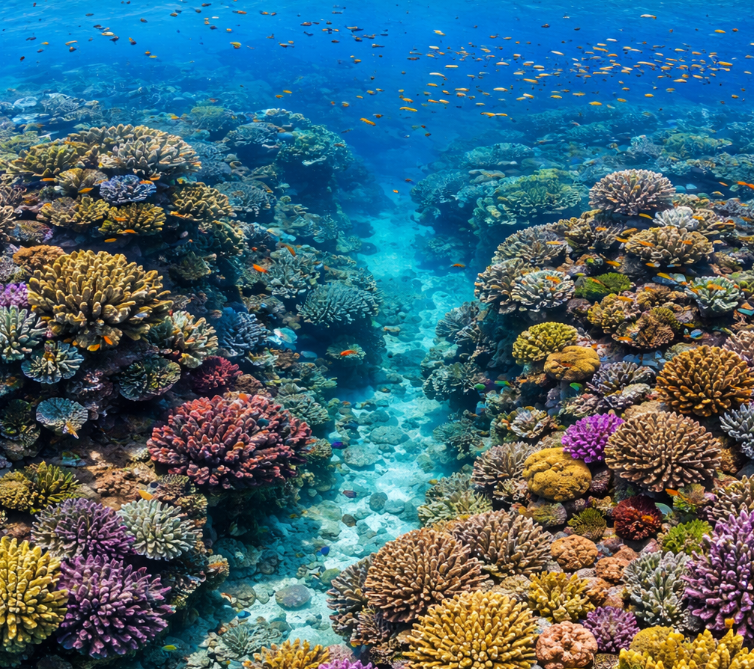
Cryopreservation: Freezing Time
Cryopreservation is the process of keeping living cells or tissues at extremely low temperatures (usually in liquid nitrogen) so that they can be resurrected later. We have already used it for seeds, embryos, cattle, and even certain endangered species. Corals, on the other hand, offer additional layers of complexity: they contain small larvae, delicate tissues, and rely on symbiotic algae for survival.
For years, coral cryobanking appeared unachievable. However, this has been changing.
The New Tools of the Reef Biobank
Recent advancements are taking coral cryopreservation from concept to reality. Researchers are developing:
- Vitrification procedures that freeze tissues so quickly that ice crystals do not form.
- Laser warming methods for reviving larvae without thermal stress.
- Cryojigs and microtools that allow scientists to handle larvae smaller than grains of sand.
It sounds like science fiction, but these technologies are now being tested in laboratories all around the world.
Bleaching as a Strategy. Not a Threat
Perhaps the most unexpected advance is biological rather than mechanical. Early evidence suggests that inducing bleaching in coral larvae before freezing can improve cold resistance. By temporarily eliminating their symbiotic algae, the larvae behave more like other animal cells during vitrification and can later re-acquire algae.
It’s an unusual example in which a process generally connected with coral dying is used for survival.
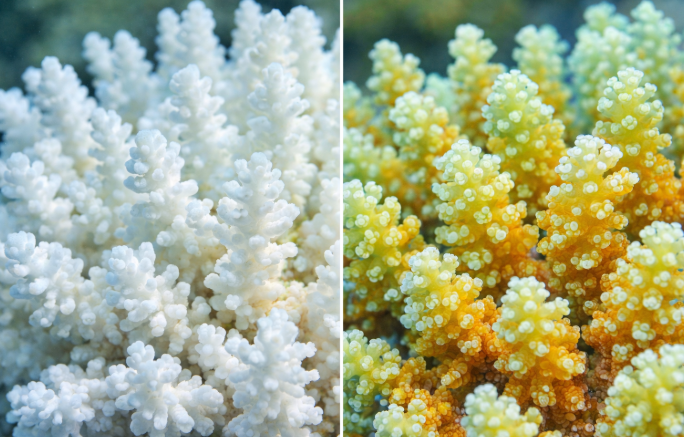
Bleached vs. vibrant healthy coral
Toward a Global Reef Biobank
The long-term goal is to establish a worldwide cryobank that saves coral species, strains, and genotypes from reefs all over the world as an ecological insurance policy for future restoration. It would not replace ocean protection, but it may buy time in a world where coral reefs may not survive another century without assistance.
Seed banks safeguard crops. Genome banks safeguard animals. Coral biobanking could be the ocean’s next line of defense.
For correspondence or collaboration inquiries, contact me:
E-mail: nayan.biowrites@gmail.com
메타데이터
- post_id
- c6ec709bc420
- slug
- the-oceans-biobank-how-cryopreservation-could-save-corals-c6ec709bc420
- url
- https://medium.com/@nayankulshreshtha/the-oceans-biobank-how-cryopreservation-could-save-corals-c6ec709bc420
- canonical_url
- https://medium.com/@nayankulshreshtha/the-oceans-biobank-how-cryopreservation-could-save-corals-c6ec709bc420
- author_url
- https://medium.com/@nayankulshreshtha
- status
- ok
- fetched_at
- 2026-07-13 06:23:13