Song Seung Heon and the Global Rewriting of Asian Male Representation
Song Seung Heon and the Global Rewriting of Asian Male Representation
Song Seung Heon and the Global Rewriting of Asian Male Representation
Song Seung Heon and the Global Rewriting of Asian Male Representation
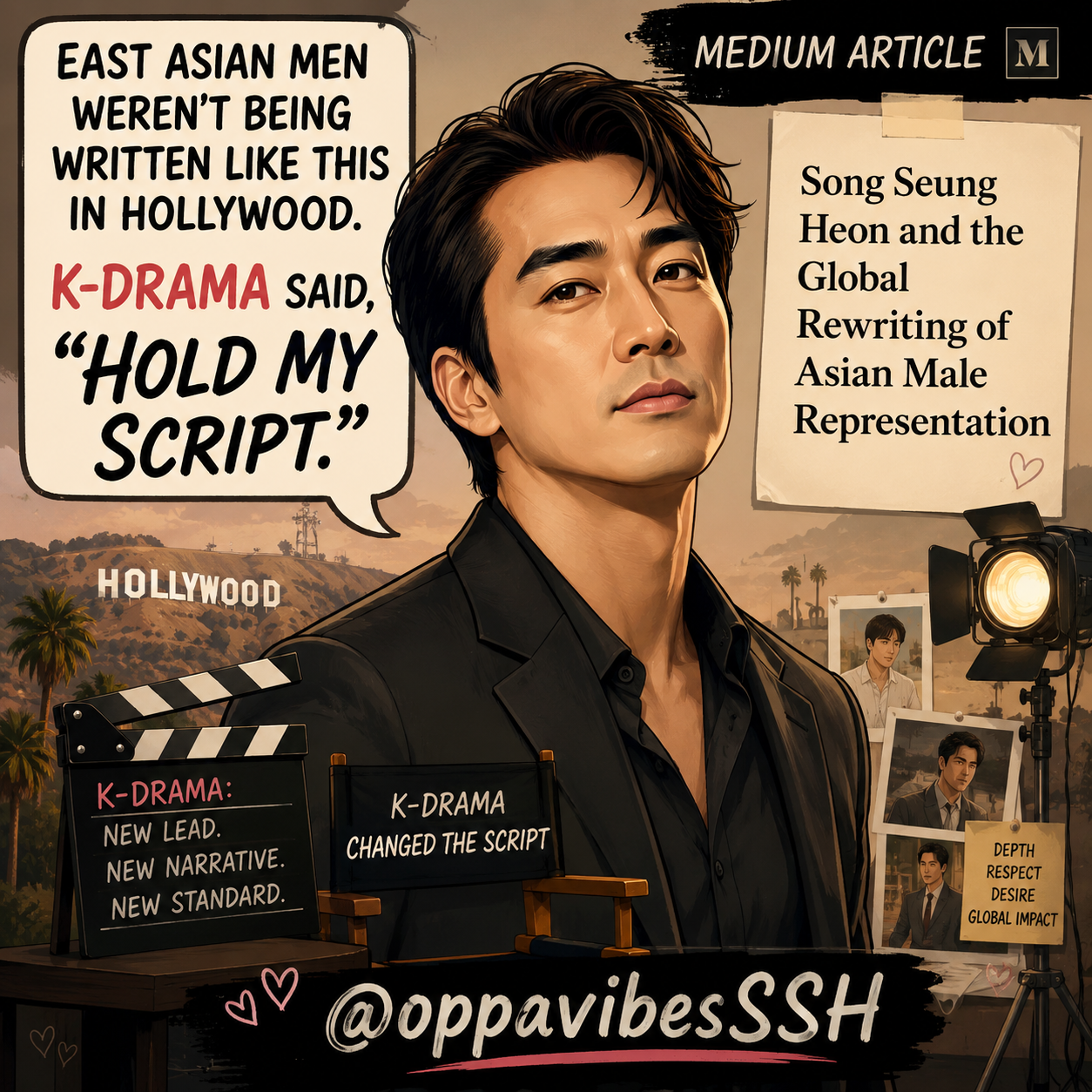
There’s a meme that has been quietly making its rounds through K-drama fan spaces, and it lands harder every time it resurfaces: “East Asian men weren’t being written like this in Hollywood. K-drama said, ‘Hold my script.’”
It’s funny because it’s true. It’s also, if you sit with it for more than a scroll, a small piece of cultural history compressed into one sentence. Because for decades, “East Asian men weren’t being written like this” wasn’t an exaggeration. It was the industry standard. And the story of how that changed doesn’t have one single author. But it has chapters. And Song Seung Heon has quietly, consistently, been writing some of the most important ones.
The Shadow Bruce Lee Fought Against
To understand why a meme about K-drama leading men matters, you have to go back to the man who first tried to break the mould on a global stage: Bruce Lee.
Lee wasn’t just a martial artist who happened to act. He was, by every account, trying to build something Hollywood had never allowed before, an Asian man on screen who was the hero, not the punchline, the villain, or the sidekick. And Hollywood, for a long time, simply wouldn’t let him. He pitched a television series about a wandering martial artist in the Old West. Studios passed. A strikingly similar show, Kung Fu, went into production shortly after, starring a white actor in the role many believe was written for Lee. When he was later asked directly whether race played a part in these decisions, Lee didn’t dodge the question. He said the question of whether American audiences would accept a Chinese lead had genuinely been raised and discussed among executives and that racism of this kind did exist, at least in certain parts of the industry.
Think about that for a second. One of the most physically extraordinary performers of the 20th century. Magnetic, disciplined, and undeniably a star. He had to say the quiet part out loud, on camera, because Hollywood wouldn’t cast him as the lead in his own idea.
The roles available to East Asian men at that time weren’t really roles. They were caricatures: the sinister foreigner, the comic relief with an exaggerated accent, the silent background figure, and the villain who existed to be defeated by a white hero. Warmth wasn’t in the job description. Romantic longing wasn’t in the job description. Vulnerability, humour, moral complexity, the ability to be desired rather than feared or mocked. None of that was written for East Asian men on Western screens. Bruce Lee had to leave Hollywood, go to Hong Kong, and build his stardom from outside the system that had shut him out before the West would even look at him properly. He proved, on his own terms and largely without Hollywood’s permission, that an Asian man could be the whole point of the story. It just took the industry another fifty years to fully catch up to what he’d already shown them.
Enter the K-Drama Generation
Fast forward past the Charlie Chan caricatures, past the yellowface, past decades of Asian male characters existing mainly to not get the girl. And you land in a completely different landscape. Somewhere in the 2000s, without asking Hollywood’s permission, an entire industry on the other side of the world started writing East Asian men as the emotional centre of the story. Not the sidekick. Not the comic relief. The lead. The one the audience falls for.
This is where Song Seung Heon’s career becomes genuinely significant, not just to fans, but to the broader conversation about representation.
When Autumn in My Heart aired in 2000, it did something quietly radical: it asked millions of viewers across Asia and eventually far beyond to fall in love with a male lead defined by tenderness, heartbreak, loyalty, and quiet devotion. Song’s performance helped anchor a drama that became one of the founding texts of the early Hallyu wave, drawing audiences across China, Japan, and Southeast Asia who, by some accounts, were so moved by the story that they booked flights to Korea just to visit the filming locations. That’s not simply popularity. That’s cultural gravity. That’s an audience organising their real lives around the emotional truth of a story led by an East Asian man.
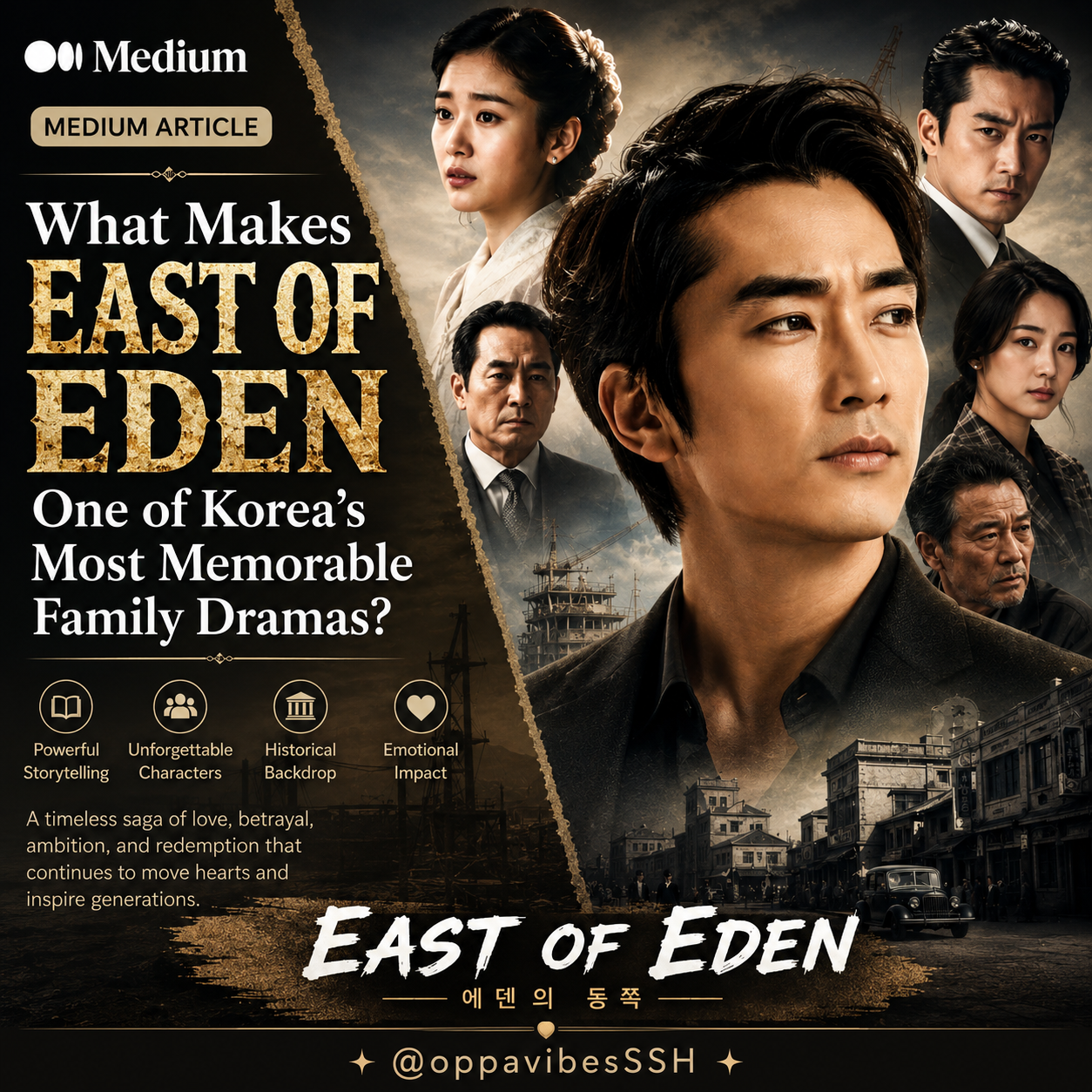
And Song didn’t stop there. Where Bruce Lee had to fight for the right to be the hero at all, Song’s generation of K-drama leading men got to fight for something more layered: range. Over the following two decades, Song moved from the soft-eyed romantic of Autumn in My Heart into far more complicated territory. A man hardened by revenge and grief in East of Eden, a role serious enough to earn him the Daesang, the highest honour in Korean television, alongside a Baeksang Best Actor nomination. He later played a literal grim reaper, learning, scene by scene, how to feel human emotion in Black. He took on morally grey con artists in Player and quietly devastating figures in dramas that never needed him to be the strongest man in the room to be the most magnetic one.
This is the throughline the meme is really pointing at. It isn’t just that East Asian men are now allowed to be handsome leads. Hollywood occasionally allowed that too, in narrow, sanitised doses. It’s that they’re allowed to be everything. Soft and dangerous. Wounded and funny. Morally compromised and still worth rooting for. Desired without being fetishised. Powerful without being reduced to a fighting style. K-dramas and performers like Song, who helped build its golden age, didn’t just add representation. They added dimension.
Why This Matters Beyond the Screen
It would be easy to treat this as simply an entertainment story. Ratings, awards, box office. But representation research and decades of media criticism have consistently pointed to the same conclusion: the roles a culture is allowed to play on screen shape how that culture is perceived off screen. When East Asian men were only ever cast as threats or jokes, that absence of nuance didn’t stay contained to a movie theatre. It bled into dating perceptions, hiring biases, and the broader cultural imagination of who gets to be seen as a romantic lead, a hero, or simply a fully realised human being.
That’s why the shift matters so much and why it’s not an exaggeration to call it a rewriting. When millions of viewers, many of them outside Korea, many of them encountering Korean media for the first time, spend hours invested in a story where the East Asian male lead is the emotional heart of the narrative, something quietly recalibrates. The stereotype doesn’t just get challenged. It gets replaced with lived, felt, and watched evidence to the contrary.
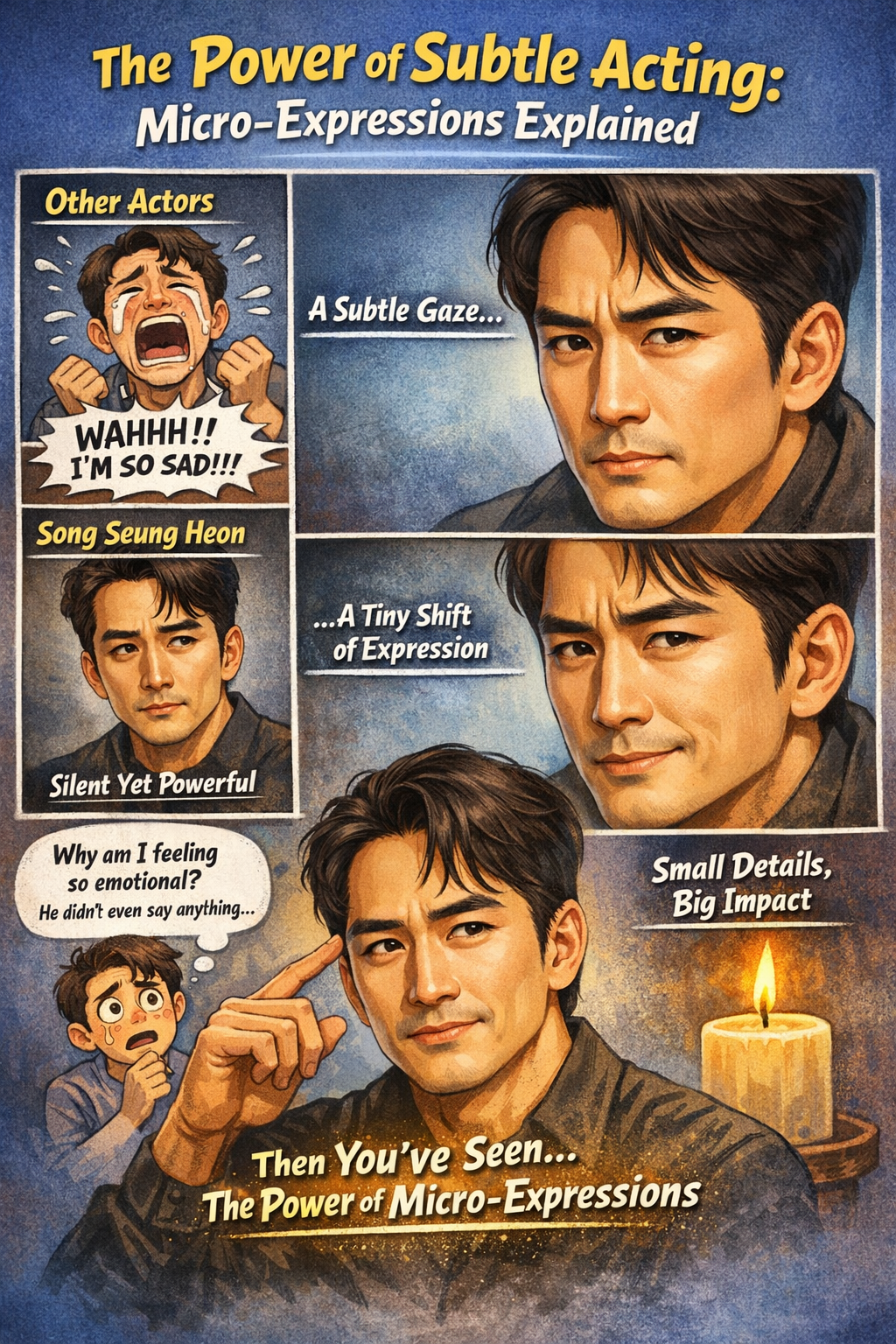
Song Seung Heon’s career happens to span almost the entire arc of that recalibration. He started as a model in the mid-1990s, stepped into acting in an industry that was still finding its international footing, and is, as of 2026, still working. Most recently in My Troublesome Star, three decades into a career built role by role, not overnight. He has said, in interviews across the years, that he sees acting as something he wants to keep refining rather than something he’s already mastered. That kind of humility, paired with the sheer duration of his relevance, is part of why fans describe his trajectory not as a single breakout moment but as a mountain slowly and deliberately climbed.
Standing on the Shoulders of a Fight That Started Decades Ago
There’s something quietly moving about placing Bruce Lee and Song Seung Heon in the same sentence. They didn’t work in the same industry, the same era, or even the same genre. One was a martial artist forcing his way into an American system that didn’t want him. The other was a romantic lead building an empire in an industry that, for once, was built for him from the ground up. But they’re connected by the same underlying demand: the right for East Asian men to be seen as complete people on screen. Not a stereotype, not a punchline, and not a threat to be neutralised by the third act.
Bruce Lee had to prove that an Asian man could be the hero. Song Seung Heon’s generation got to prove something the industry hadn’t even considered possible before: that an Asian man could be the heartthrob, the heartbreak, the antihero, the grieving son, the reformed criminal, or the grim reaper learning to love being alive. Sometimes all within the same career.
That’s what the meme is really getting at, underneath the humour. Hollywood spent decades deciding what East Asian men were allowed to be. K-drama simply stopped asking permission and started writing better stories. And performers like Song Seung Heon didn’t just benefit from that shift. Through the range, longevity, and emotional honesty of their work, they helped build it, one drama at a time, for audiences who were more than ready to see it.
If this kind of deep dive into Song Seung Heon’s career and impact is your thing, there’s more where this came from. Follow along on Medium for future breakdowns of his filmography, career milestones, and the bigger cultural conversations his work is part of, and swing by Instagram @oppavibesSSH for daily appreciation, updates, and all things Song Seung Heon. See you there.
메타데이터
- post_id
- c6ff23d7ff6a
- slug
- song-seung-heon-and-the-global-rewriting-of-asian-male-representation-c6ff23d7ff6a
- url
- https://medium.com/@oppavibessh/song-seung-heon-and-the-global-rewriting-of-asian-male-representation-c6ff23d7ff6a
- canonical_url
- https://medium.com/@oppavibessh/song-seung-heon-and-the-global-rewriting-of-asian-male-representation-c6ff23d7ff6a
- author_url
- https://medium.com/@oppavibessh
- status
- ok
- fetched_at
- 2026-08-04 19:47:58