Kalyan Matka Chart Complete Guide: Understanding Historical Records and Chart Structures
Kalyan Matka Chart Complete Guide
Kalyan Matka Chart Complete Guide: Understanding Historical Records and Chart Structures
Kalyan Matka Chart Complete Guide
Among the various historical chart systems available today, the Kalyan Matka Chart remains one of the most recognized and widely followed record formats. Its long history, organized archives, and structured layout have made it popular among users interested in understanding chart systems and historical records.
Whether you are a beginner exploring chart formats for the first time or someone interested in archive structures, understanding how the Kalyan chart works can help you navigate records more efficiently and appreciate the role of organized information systems.
What Is a Kalyan Matka Chart?
A Kalyan Matka chart is a structured archive that preserves daily records and historical information. These charts are organized in a format that allows users to review previous entries and compare information across different periods.
Unlike temporary updates, chart records become part of long-term archives that preserve historical data for educational and reference purposes.
Organized charts help improve:
- Accessibility.
- Archive navigation.
- Historical preservation.
- Searchability.
- User experience.
These factors explain why chart systems remain valuable over time.
Why Historical Charts Matter
Historical charts play an important role in preserving information. Without organized archives, older records would become difficult to locate and compare.
Some benefits of historical records include:
Better Accessibility
Users can access information from different periods easily.
Improved Comparison
Historical archives allow comparison between previous records.
Long-Term Preservation
Important records remain available for future reference.
Educational Value
Chart structures help users understand how information systems are organized.
Many readers interested in **Satta Matka** charts prefer platforms that maintain structured archives and educational resources.
People looking to understand historical chart systems often explore **FixResult.in**, where guides and archive sections explain how organized records are maintained.
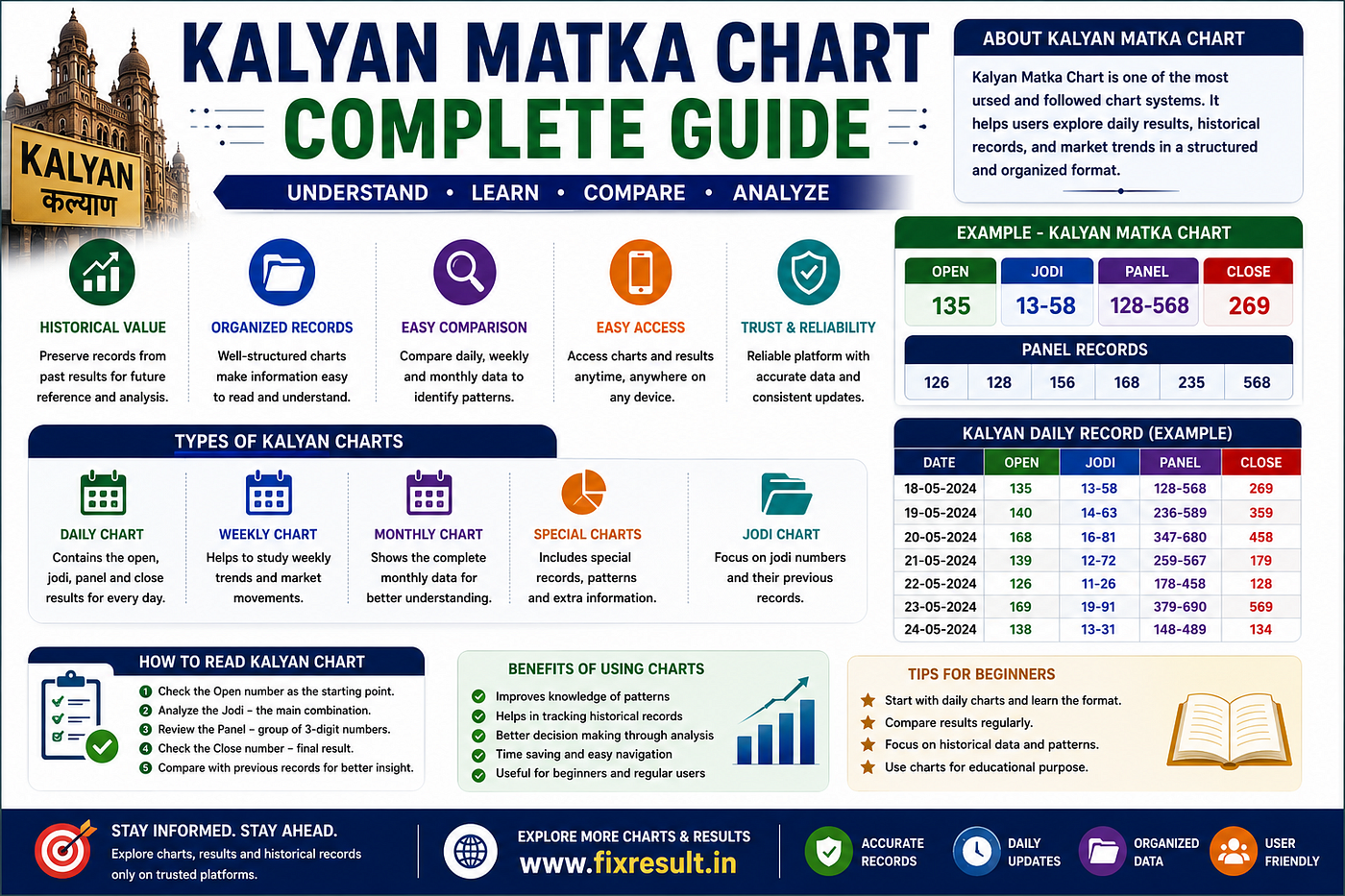
Main Components of Kalyan Charts
Understanding the components of chart systems helps beginners navigate archives more effectively.
Open Values
Open sections represent one part of the structured record format.
Jodi Records
Jodi sections help categorize information and improve readability.
Panel Records
Panel formats organize information into detailed structures.
Close Values
Close sections complete the chart structure and help maintain consistency.
Together, these components create organized records that support historical preservation.
Types of Kalyan Chart Archives
Different chart categories help users analyze information from multiple perspectives.
Daily Charts
Daily records preserve information from individual days.
Weekly Archives
Weekly records help users compare multiple days and understand archive structures.
Monthly Charts
Monthly archives provide broader historical perspectives.
Yearly Archives
Long-term records improve accessibility and preserve historical continuity.
These categories contribute to better archive management and user experience.
Understanding Jodi Charts
Jodi charts represent one of the most commonly explored archive formats. They help organize records and improve accessibility.
Benefits of Jodi charts include:
- Better readability.
- Easier comparison.
- Historical preservation.
- Structured categories.
- Efficient archive navigation.
Readers interested in Jodi archives often benefit from organized chart guides and educational resources.
Understanding Panel Charts
Panel charts provide more detailed structures compared to other formats. These records help preserve information systematically and support long-term archives.
Advantages of panel charts include:
- Organized information.
- Better accessibility.
- Improved archive management.
- Enhanced readability.
- Easy navigation.
Because of these benefits, panel archives continue to attract user interest.
Importance of Chart Structures
Charts are more than collections of numbers. They represent information systems designed to preserve records and improve accessibility.
Well-structured charts provide:
- Better organization.
- Improved searchability.
- Historical continuity.
- Faster navigation.
- User-friendly experiences.
These features contribute significantly to their popularity.
Technology Behind Modern Archive Systems
Modern chart systems rely on technology to maintain records efficiently.
Database Systems
Databases preserve historical records and support accessibility.
Server Infrastructure
Reliable servers ensure continuous access to information.
Backup Mechanisms
Backups protect valuable archives.
Search Functions
Search tools simplify record retrieval.
These technologies contribute to maintaining reliable information systems.
Educational Resources and Chart Guides
Educational resources help users understand archive structures and chart systems more effectively.
People interested in a detailed Matka Chart Guide can visit:
**https://www.fixresult.in/satta-matka-chart.html**
The guide explains chart formats, archive systems, and historical structures in a simple and educational manner.
Understanding Historical Records
Historical records help preserve information and support long-term accessibility.
Benefits include:
- Easier comparison.
- Improved navigation.
- Better searchability.
- Long-term preservation.
- Educational insights.
Many users interested in Matka Result archives prefer organized systems that provide structured information and archive accessibility.
Those who want to check latest Matka results can explore:
**https://www.fixresult.in/pages/matka-result.html**
This section provides organized archives and educational resources for understanding record structures.
Why Users Continue To Follow Kalyan Charts
Several factors contribute to their popularity:
Rich History
Long-standing archives create trust and continuity.
Organized Records
Structured systems improve usability.
Accessibility
Users can navigate archives easily.
Educational Value
Chart structures help beginners understand archive management.
Consistent Updates
Regular maintenance contributes to reliability.
These features explain why Kalyan charts remain popular among users.
Future of Chart Systems
Technology continues to improve information management.
Future developments may enhance:
- Search capabilities.
- Archive accessibility.
- Database efficiency.
- User experience.
- Historical preservation.
As digital technologies evolve, chart systems are expected to become increasingly efficient and user-friendly.
Conclusion
The Kalyan Matka Chart is more than a collection of daily records. It represents a structured archive system designed to preserve historical information and improve accessibility. Understanding chart structures, historical records, jodi charts, and panel archives helps users navigate information more effectively.
Educational resources and organized archives continue helping readers understand how information systems work and why historical preservation remains important. As technology advances, these chart systems will continue supporting accessibility and preserving records for future generations.
메타데이터
- post_id
- c71fa9c83a90
- slug
- kalyan-matka-chart-complete-guide-understanding-historical-records-and-chart-structures-c71fa9c83a90
- url
- https://medium.com/@fixresult/kalyan-matka-chart-complete-guide-understanding-historical-records-and-chart-structures-c71fa9c83a90
- canonical_url
- https://medium.com/@fixresult/kalyan-matka-chart-complete-guide-understanding-historical-records-and-chart-structures-c71fa9c83a90
- author_url
- https://medium.com/@fixresult
- status
- ok
- fetched_at
- 2026-06-26 03:39:16