The Mindful Camera
Since I started taking time off from work in June, I’ve adopted a hobby of taking photos with my iPhone, editing them using the built-in…
The Mindful Camera
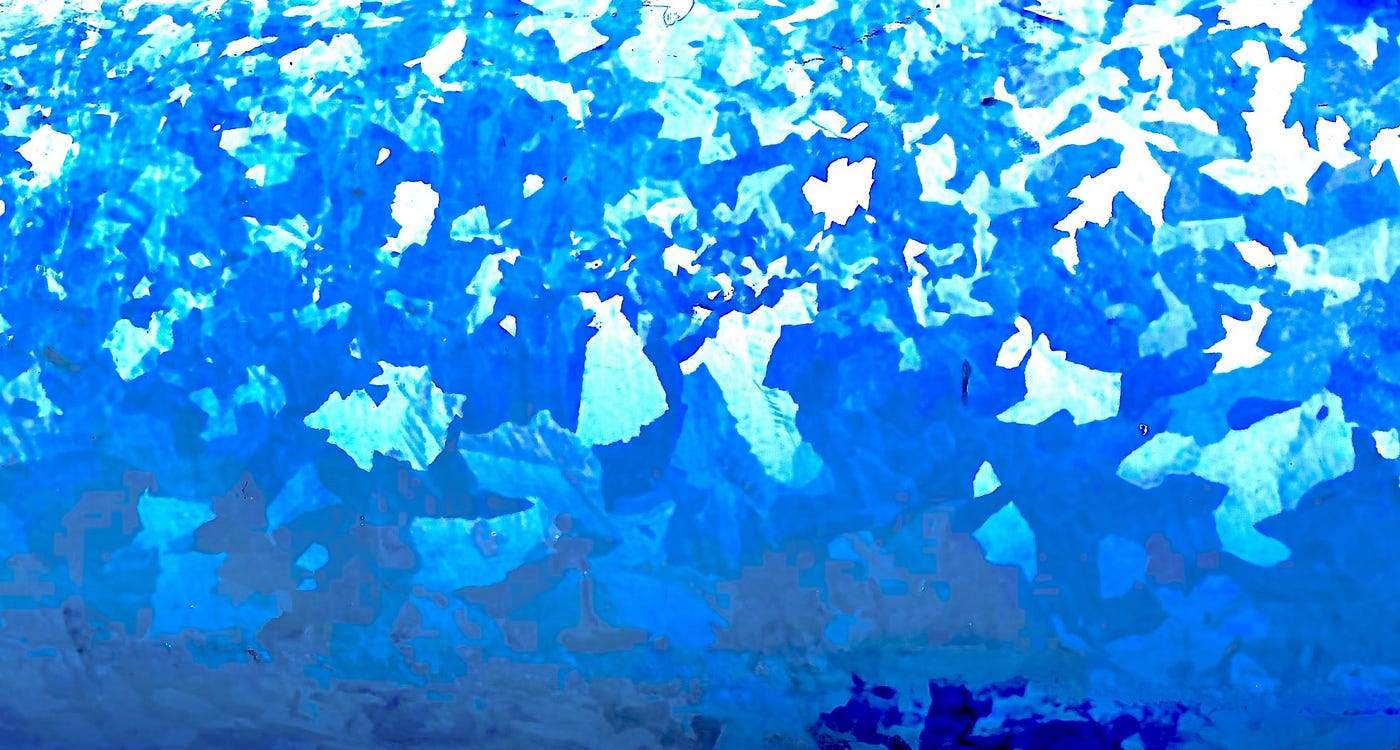
Close-up of a metal utility pole, by the author
Since I started taking time off from work in June, I’ve adopted a hobby of taking photos with my iPhone, editing them using the built-in program on the phone, and posting them on Instagram, at the rate of about one photo per day. I have no training in photography and no skill with a real camera or darkroom. All I have is my own eye and 14 years as a film studies academic that may or may not have trained that eye.
I don’t go out of my way to find things to take photos of. I simply take photos of things I notice in my daily life — often things I see while walking around my neighborhood or somewhere else I happen to be. The nice thing about using my phone is that I always have it with me; I don’t have to decide to bring a camera.
Another thing I decided to do with my time off is to take a course in Mindfulness Based Stress Reduction (MBSR). I’m currently on week two of an eight-week course. You probably know at least a little about mindfulness meditation because it’s become so successful in recent years as to be practically unavoidable, so I won’t bother summarizing it. You can understand a lot about it from just the two words, mindfulness and meditation. (Or you can click on the link.)
The deeper I’ve gotten into MBSR, the more I’ve noticed its relationship to my experience of taking photos.
One of the first things that happened when I started taking photos was that I started looking for things to take photos of, scrutinizing my surroundings to try to find something photogenic. This even started impinging a little on my enjoyment of my walks, introducing a little modicum of stress into them. I liken this to something I experienced when I started graduate school in film studies; for a brief period, my enjoyment of movies decreased as I strained to analyze what I was seeing (and hearing). That passed quickly, the analysis becoming second nature and no longer interfering with my enjoyment. The same thing happened with my walks; noticing photogenic things became second nature.
Similarly, MBSR trains you to be aware of what’s happening in the here and now. At this early stage of the course, while meditating, I frequently notice my mind drifting to various thoughts, and I have to bring it back to focusing on the here and now. They say that over time, the mind becomes trained to focus more and more on the present.
So when I’m walking and I notice something photogenic, it occurs to me that I’m attending to the here and now, rather than, say, letting my mind wander or worry or listening to music. On a recent morning, I decided not to turn on my music in order to pay fuller attention to my surroundings. It was a rewarding choice, as I came away with a bonanza of seven photos — pretty good for one walk.
Sometimes on one of my walks, I’ll pass a tree or house or pole that I’ve passed many times before without noticing it. Simply by looking at it with a photographic awareness, I’ll notice something photogenic about it that I had never noticed before — an interesting combination of lines or curves or textures.
One thing that happens frequently is that I walk past something, notice it, think it might be worth taking a photo of, quickly decide it’s not good enough, and keep walking. Increasingly when that happens, however, I stop after a few paces, walk back to the thing I had noticed, look at it again, and then sometimes I will take a photo of it.
It’s often hard to tell from looking at something in real life whether it will end up making a good photo. Sometimes I have to go through the process of taking the photo, or taking multiple photos from different vantage points or at different angles, and then later, at home, looking at the photos, deleting the ones I don’t like, and playing with ones that have potential using the editing program, in order to conclude whether or not I have something worth saving.
Sometimes editing a photo heightens or transforms qualities of light, shadow, or color in the raw image. Sometimes it brings out qualities I didn’t even see in the raw image. Or maybe sometimes the editing process imposes qualities on the raw image that weren’t originally there.
Sometimes when I’m finished editing a photo, I know right away that I want to post it on Instagram. Other photos I’m not sure about and save to look at later. Some of those photos I do end up posting, some sit indefinitely in a storage folder, and some I end up deleting.
This whole process, too, seems relevant to MBSR. Awareness isn’t a black and white activity, in which you’re either aware of something or you’re not. It’s a subjective process and, as such, it has layers, cycles, delays, and revisitations. There’s the more casual awareness of walking past something and the more focused awareness of going back to it and looking at it more closely. One can be aware of the same thing from different vantage points and angles. And one can revisit awareness, like when, as part of my MBSR course, I’m assigned to do a meditation and then write about it. Sometimes writing about it reveals things I hadn’t been aware of at the time or had barely noticed because they had passed through my mind so quickly.
For example, during one meditation, the guide said something that caused me to begin laughing and to continue laughing for about 30 seconds (which is a long time). Writing about it afterward made me stop and think about what exactly had made me laugh. (The guide had suggested placing my attention on my breath lightly like I was floating on a gently undulating ocean, and somehow the thought of my attention being so effortless and natural and delightfully opposite of the way I think of my attention behaving normally struck me as very funny.)
I have posted about 75 photos of my neighborhood on Instagram. Sometimes I wonder whether I’m approaching the limit of what my neighborhood has to offer, photographically speaking. But I’d like to think that if I keep my mind and my eye open to the here and now, the possibilities of one little neighborhood will be infinite.
I have a recollection about the classic French cinema verité documentary Chronicle of a Summer (1961), one of the first films to attempt to capture reality as it was unfolding spontaneously in front of the camera using synchronized sound. This may or may not be true (I don’t have the opportunity to check it at the moment), but my recollection is that, in response to the accusation that the presence of the camera had caused the subjects to behave inauthentically, one of the filmmakers, Jean Rouch, wondered whether the camera might have paradoxically brought out the most authentic side of the subjects.
Is it possible, I wonder, that you can pay better attention to the world when there is a camera between you and it?
PS. The idea of the mindful camera seems so obvious to me that I’m guessing a lot has been written about it. However, I decided not to search for any writing about it in order to allow myself to write freely. Even if a lot has been written, hopefully what I wrote is unique. If not, fuck it, I might as well throw in the towel.
메타데이터
- post_id
- c720c0fdeb46
- slug
- the-mindful-camera-c720c0fdeb46
- url
- https://medium.com/@joshuahirsch_64587/the-mindful-camera-c720c0fdeb46
- canonical_url
- https://medium.com/@joshuahirsch_64587/the-mindful-camera-c720c0fdeb46
- author_url
- https://medium.com/@joshuahirsch_64587
- status
- ok
- fetched_at
- 2026-07-16 05:44:32