Sailing off to War
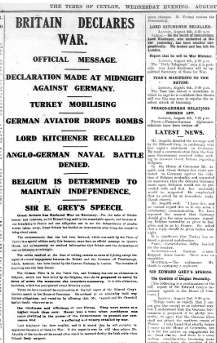
When war broke out in August 1914 between the Triple Entente (Britain, France and Russia) and the Central European Powers (Germany and…
Sailing off to War
When war broke out in August 1914 between the Triple Entente (Britain, France and Russia) and the Central European Powers (Germany and Austria-Hungary) both sides expected a quick victory. The German Army’s risky dash across neutral Belgium toward Paris failed and was halted at the Marne River. Within a few months, lines of trenches stretched across Europe from the English Channel to the Swiss border (Switzerland remained neutral) as a brutal war of attrition began.
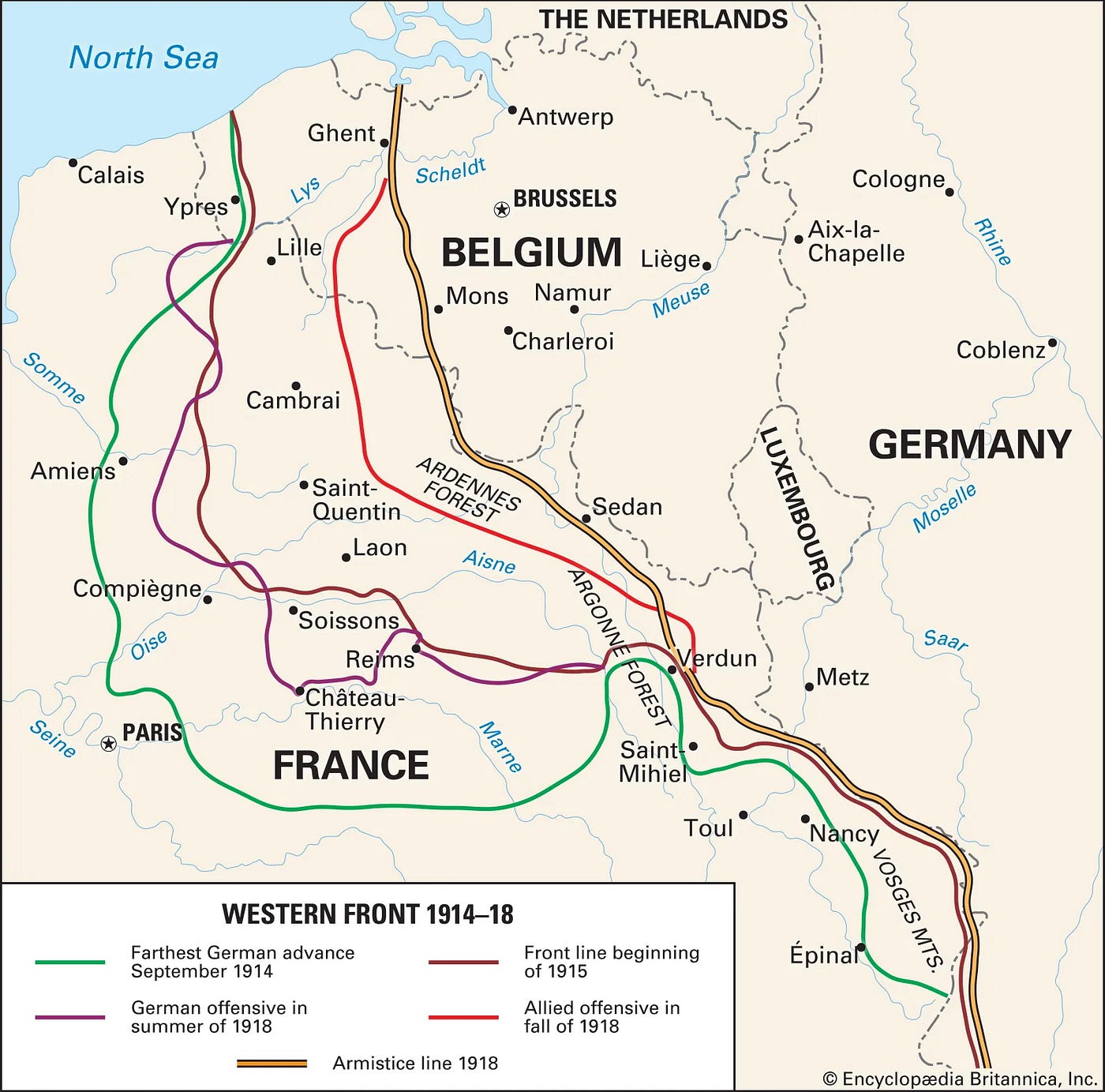
Image courtesy Brittanica
Both sides desperately needed young men to feed into the ‘meat grinder’ as they fought largely useless battles for a few yards (meters) of battered land. Britain, with its vast reach, was well-suited to raising troops, and the call for patriotic young men to ‘join up’ rang out in all corners of the Empire ‘on which the sun never set’. Many communities set up ‘War Passage Funds’, which raised money from the public to pay the costs of volunteers travelling to Europe to enlist.
Ceylon; tranquil, unthreatened, at peace for many decades, and quite prosperous, was no exception. Two units of the Ceylon Defence Force, the elite Ceylon Mounted Rifles and the Ceylon Planter’s Rifle Corps (CPRC), volunteered to serve. The former was disallowed as the cost of transporting them men and horses would have been too great. The CPRC though did serve, with great distinction at Gallipoli and many other theaters of war, though with many casualties.
An early group of civilian volunteers was known as the ‘Milward Contingent’, after its leader Phillip Henry Milward, embarked for the war on the ship SS Derbyshire on the 18th of November 1914. This group, comprised British men drawn from the planting and mercantile elite of the island, joined the British Army once they reached Europe. Many of them died soon after, as the carnage continued.
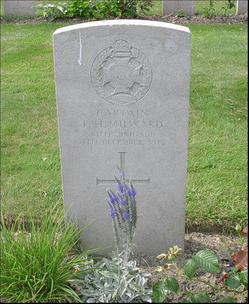
Milward’s grave in France. Photo courtesy CWGC
Remember, this was more than a hundred years ago, when travelling to Europe was a long journey by ship, far removed from the fast airliners that today’s passenger experiences. Rather than ten hours or so in the air at speeds unimaginable back then, the steamships of the day plodded their way across the Arabian Sea to Aden (in Yemen), then through the Suez Canal and across the Mediterranean Sea to Southern France, or all the way to Liverpool in England. Passage took three weeks in a fast ocean liner, and much longer in an itinerant ‘tramp steamer’, which offered a cheaper option to the traveller.
Despite the long journey and the news of huge casualties, many groups of young volunteers, including Ceylonese (as opposed to British) boys, left Colombo on a regular basis.
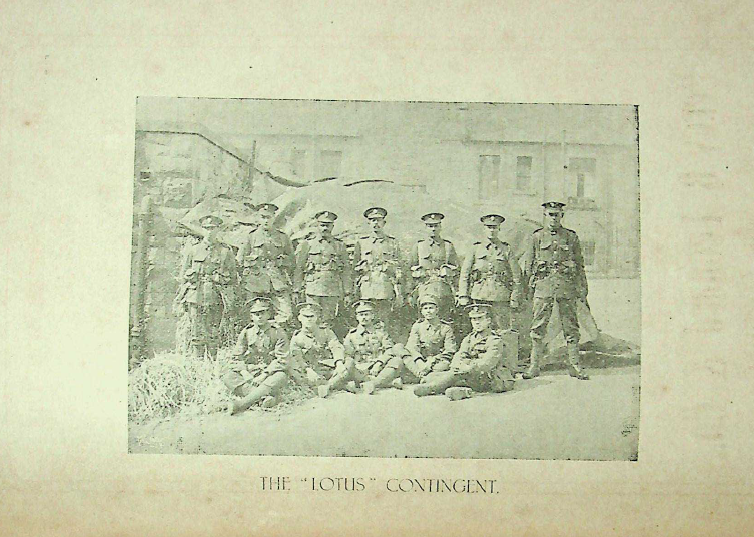
The MM Lotus sailed on April 4, 1916, carrying many Ceylonese boys to the War. Times of Ceylon archive
Often, groups were known by the ships they sailed on, such as the Lotus in April 1916, the Porthos, the Mantola and the tragic Ville de la Ciotat.
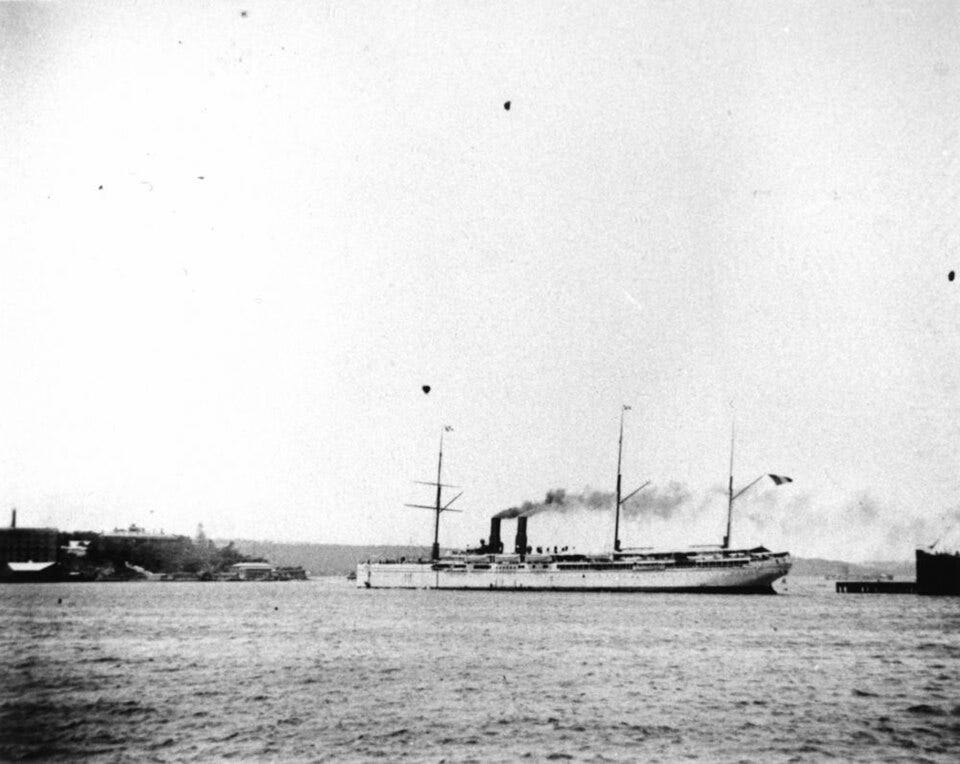
Ville de la Ciotat. Undated picture courtesy Queensland Library.
The War at Sea
The Western Front was mired in a horrific stalemate by 1915 with neither side being able break through the lines of trenches and fortifications that bisected France. This column has carried several accounts of the young men from Ceylon who fought there.
The war at sea, was a more fluid battle. The German Navy’s fleet was largely confined to the North Sea as the (British) Royal Navy concentrated on a distant blockade of German ports, while escorting scores of civilian ships carrying men and material to Britain.
In order to attack these merchantmen and strangle the British war effort, the German Navy deployed a large fleet of submarines. The feared Unterseeboots (U-boats) were a scourge to allied shipping, often attacking undetected to sink their prey. Their numbers were concentrated in the North Atlantic, attacking shipping enroute to British ports. The German raider Emden was a threat in areas of the Indian Ocean, but for the most part the route between Asia and France was relatively tranquil.
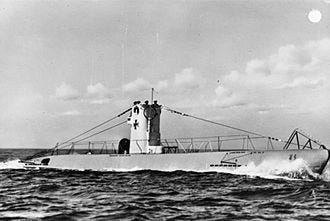
A type III submarine similar to U-13. Courtesy Wikipedia
The MM Ville de la Ciatot was named for the French city where it was built in 1892. By 1915 it was a ‘tramp steamer’ plying between Shanghai, China and Marseille, France, with numerous stops in between including Colombo, Ceylon.
On the 9th of December 1915, the Ville sailed from Colombo with a large contingent of young men who had volunteered for the conflict. The ship’s manifest describes them as ‘Voluntaires anglo-cingalais’, or British-Ceylonese Volunteers. Their names are recorded casually, sometimes comically so, but from what we can gather there were at least 44 of them on board, though other contemporary accounts put the total at 49.
The sheer diversity of the volunteers is a stark reminder of how patriotism for the Empire cut across all racial and ethnic boundaries. The names range from Aiyadurai (a boy from Jaffna educated at Trinity College, Kandy) through the De Vos brothers, include well known Burgher names such as Arndt, Misso, Lourenz and Speldewinde. Tamil names (Ramanathan), Sinhala ones (Weerakoon and Obeysekera) and Muslim/Malay (Saldin) are mixed in with Englishmen in this motley group that represented the demographics of Ceylon so well.
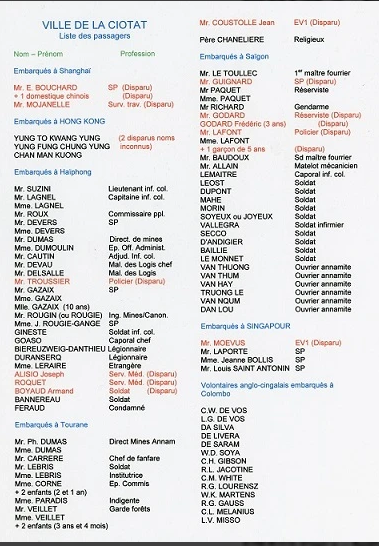
Page one of the doomed ship’s manifest
The Ville made its stately way across the seas, stopping at Djibouti on the Red Sea, Suez, Cairo and Port Said (all in Egypt) picking up and dropping off passengers (and cargo) before entering the Mediterranean Sea. There are no accounts of what the mood onboard ship was at this stage, but the date was December 24th, so we can imagine that a Christmas party was in progress — after all what group of young men off to war would miss a chance at carousing? Was the ship ‘blacked out’ as would be normal in wartime? We do not know, but since German submarine activity in that region, just to the south of Greece (a neutral country), was almost unknown, we can surmise that it was not.
Tragically, the hand of fate had decided that German submarine U-34 was waiting for just such a target that day. The Ville was struck by a torpedo at 10.15pm on Christmas Eve and sank almost immediately.
Records state than 35 passengers and 46 crew members died that night, while 208 people were rescued and brought to Malta. Among the dead were 14 (or 15 — again accounts differ) of the volunteers, with a further 21 being recorded as having survived.
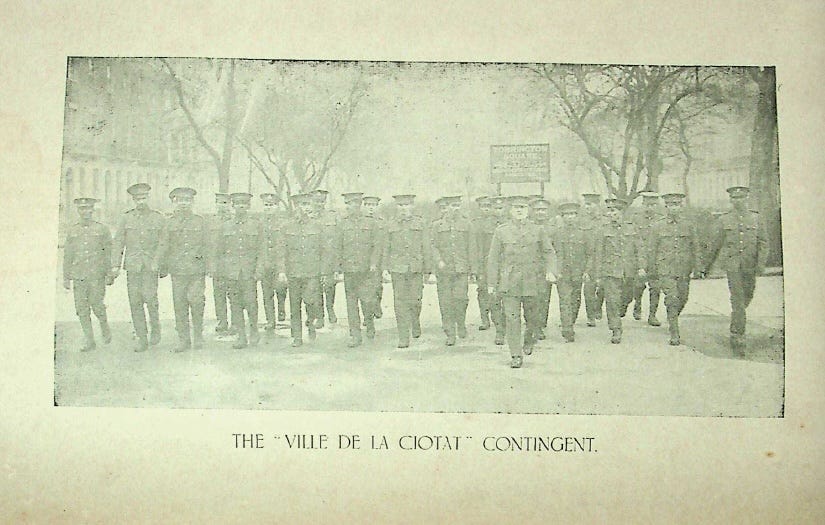
Photo Times of Ceylon archive
Those that did survive the sinking of their ship arrived in London as minor celebrities. There is a contemporary photograph, rather blurred, that shows them marching in London. In that photo we can count at least 30 young men, which roughly tallies with the original number of survivors on the manifest. A Pathé film clip shows the group marching in good order to ‘join up’.
Sadly at least four of those who survived death by drowning, would go on to be killed in battle. Aiyadurai, Mellonius, Lourenz and Jacotine did not survive the conflict, their luck having run out.
These four are honoured by the Commonwealth War Graves Commission (CWGC) as having made the supreme sacrifice. However, the CWGC, which is the official custodian of British war dead, does not recognize the boys who drowned as ‘war casualties’ as they had not officially enlisted at the time of their deaths.
Thankfully, these bureaucratic niceties were ignored by the Ceylonese community and all these brave young lads were acknowledged as war casualties. Their names are engraved on the Kanatte memorial. To the credit of the colonial government, they are also included in the ‘official’ War Cenotaph which is in Colombo, and numerous memorials in their hometowns throughout the island.
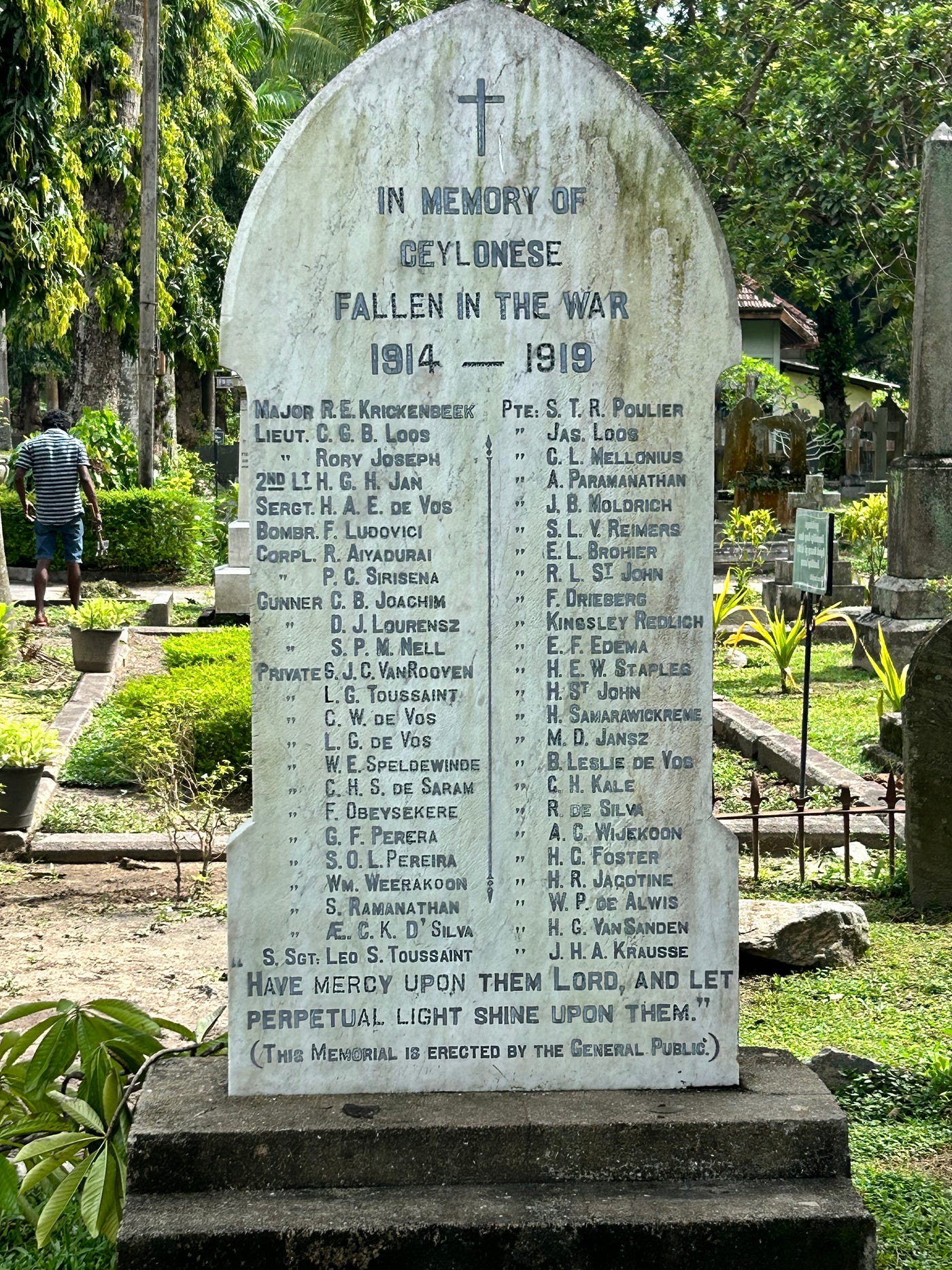
As this column, the last in the series is published, we will be approaching Armistice Day. November 11th, 1918, was when the warring parties agreed that hostilities would cease at 11:11am in Central Europe, allowing enough time for the rather primitive communication channels to get the message to all the men in the trenches.
The Cenotaph and the Commonwealth War Cemetery on Jawatta Road are usually the focus of sombre ceremonies on this day. It would be fitting if the ‘powers that be’ were to include the Kanatte memorial too, so that poignant tribute made by the public over a hundred years ago is not forgotten.
A shorter version of this article appears in the Sunday Times of 26th October 2025.
메타데이터
- post_id
- c72c4e6b6bb2
- slug
- sailing-off-to-war-c72c4e6b6bb2
- url
- https://medium.com/ceylon-and-the-great-war/sailing-off-to-war-c72c4e6b6bb2
- canonical_url
- https://medium.com/ceylon-and-the-great-war/sailing-off-to-war-c72c4e6b6bb2
- author_url
- https://medium.com/@suren-ratwatte
- status
- ok
- fetched_at
- 2026-06-15 20:49:13