The Rise of Microdrama Apps Is Reshaping the Future of Streaming
Why vertical storytelling and mobile-first entertainment are becoming impossible for the OTT industry to ignore
The Rise of Microdrama Apps Is Reshaping the Future of Streaming
Why vertical storytelling and mobile-first entertainment are becoming impossible for the OTT industry to ignore

The streaming industry may be entering its next major evolution — and it is happening vertically.
Platforms like ReelShort, DramaBox, ShortMax, and TikTok-backed PineDrama are rapidly attracting audiences through short episodic storytelling designed specifically for mobile viewing. What initially looked like another short-form content trend is now evolving into something much bigger: a new category of streaming ecosystem built around vertical video, AI-driven discovery, and mobile-first engagement.
At the same time, major streaming companies including Netflix, Prime Video, and Peacock are increasingly experimenting with vertical feeds, swipe-style discovery, and personalized mobile experiences. The distinction between OTT platforms and social media ecosystems is slowly beginning to blur.
Microdrama apps are emerging right at the center of this shift.
Streaming Platforms Are Adapting to Mobile-First Behavior
One of the clearest indicators of this transition is the way major streaming companies are redesigning discovery experiences.
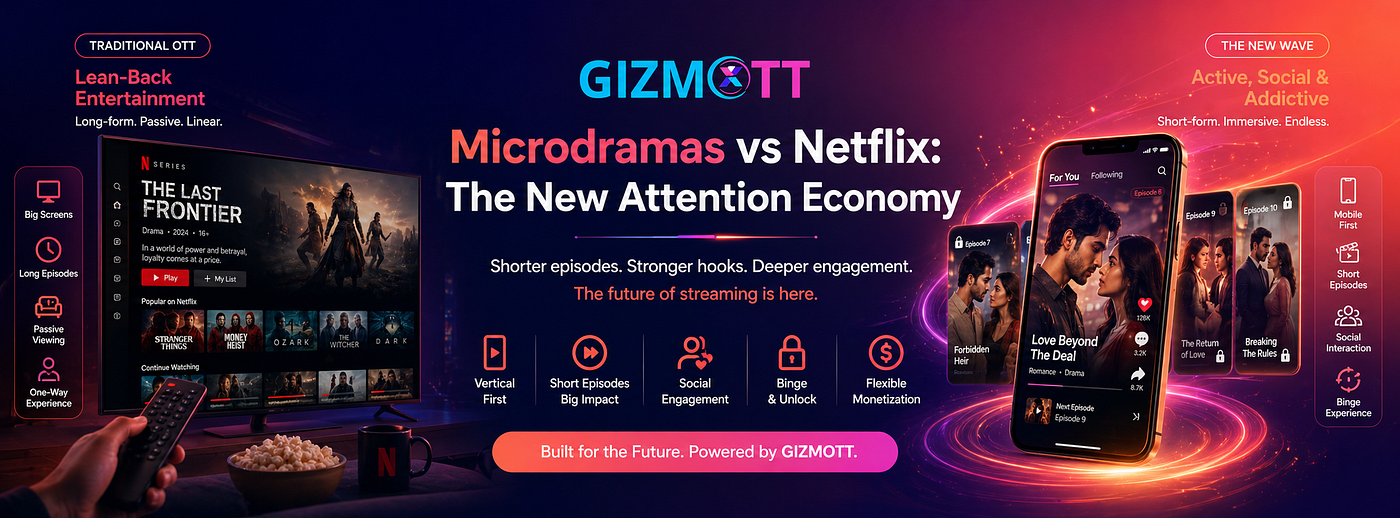
Netflix has experimented with vertical feeds and mobile-first recommendation interfaces. Prime Video recently introduced vertically scrollable “Clips” designed to improve engagement and content discovery. Peacock has explored AI-powered vertical viewing experiences tied to sports and personalized recommendations. Meanwhile, TikTok’s launch of PineDrama signaled a direct move into serialized streaming entertainment.
These developments are not isolated experiments. They reflect a much broader industry realization that audience expectations have fundamentally shifted.
Modern users increasingly consume entertainment in highly personalized, mobile-native environments shaped by algorithmic discovery. Platforms like TikTok, Instagram Reels, and YouTube Shorts have trained audiences to expect content to appear instantly, continuously, and frictionlessly.
Traditional OTT navigation models now feel comparatively slow.
The conventional streaming experience typically requires users to:
- browse categories manually,
- search for titles,
- evaluate thumbnails,
- choose content deliberately,
- and commit to longer viewing sessions.
Microdrama platforms remove much of this friction. Content is surfaced instantly through AI-driven recommendation systems optimized for continuous engagement, creating a much more dynamic and responsive entertainment experience.
This shift is becoming impossible for the streaming industry to ignore.
Microdramas Are Built for Modern Attention Patterns
Part of the appeal of microdrama content lies in how effectively it aligns with contemporary viewing behavior.
Episodes are usually only a few minutes long, vertically formatted, emotionally fast-paced, and intentionally structured around retention psychology. Storylines often rely on cliffhangers, emotional tension, rapid pacing, and highly serialized progression designed to encourage binge-style consumption.
Unlike traditional OTT content, which often requires dedicated viewing time, microdramas are designed for fragmented attention spans and mobile-first lifestyles.
Audiences now consume content:
- during commutes,
- between meetings,
- while multitasking,
- during short breaks,
- or while casually scrolling on mobile devices.
This flexibility is one of the biggest reasons microdrama apps are gaining traction globally.
However, the real industry significance lies beyond shorter episode durations. Microdrama ecosystems combine elements of streaming, social media engagement, algorithmic discovery, and serialized storytelling into a single platform experience.
That convergence is changing how entertainment platforms themselves are being designed.
TikTok’s PineDrama Launch Signals a Bigger Industry Shift
TikTok’s launch of PineDrama may ultimately become one of the most important moments in the evolution of mobile-first streaming.
TikTok already operates one of the world’s most advanced recommendation ecosystems. Its success has largely been built on behavioral intelligence, hyper-personalized discovery, and frictionless content delivery.
By entering the microdrama space, TikTok is effectively validating vertical storytelling as a legitimate streaming category rather than merely a social content trend.
This changes the conversation entirely.
For years, vertical video was viewed primarily as:
- creator content,
- influencer media,
- social engagement,
- casual entertainment,
- or user-generated short-form video.
Microdrama platforms are proving something very different. They are demonstrating that vertical storytelling can support premium serialized entertainment, long-term audience retention, scalable monetization, and highly engaged viewer ecosystems.
The implications are significant because younger audiences no longer separate “social content” and “OTT entertainment” in the same way previous generations did.
Users simply gravitate toward the experiences that feel:
- fastest,
- most personalized,
- easiest to consume,
- emotionally engaging,
- and frictionless.
Microdrama platforms are being designed precisely around those expectations.
AI Is Quietly Becoming the Core of Modern Streaming
Another major reason microdrama platforms are growing so quickly is because they rely heavily on AI-powered discovery systems.
Traditional OTT environments were designed around manual browsing and content libraries. Users searched for titles, navigated menus, explored genres, and made deliberate viewing choices. Microdrama ecosystems operate differently. Recommendation systems drive nearly the entire engagement experience.
AI systems continuously analyze:
- watch duration,
- scrolling patterns,
- completion rates,
- interaction behavior,
- content preferences,
- and engagement cycles
to personalize content feeds dynamically in real time.
This allows platforms to optimize discovery, retention, and engagement simultaneously.
The influence of TikTok’s algorithmic recommendation model is especially visible here. Microdrama apps increasingly behave less like traditional streaming libraries and more like intelligent entertainment feeds capable of adapting instantly to audience behavior.
This may ultimately become one of the most important shifts happening in OTT.
The future streaming battle may not revolve around who owns the largest content catalog. Instead, it may depend on who delivers the smartest recommendation environment and the most personalized viewing experience.
Vertical Video Is Becoming a Legitimate OTT Format
One of the biggest misconceptions about vertical entertainment is that it only belongs within social media ecosystems.
That assumption is rapidly changing.
Microdrama apps are proving that vertically formatted storytelling can support premium entertainment experiences with scalable monetization and strong audience engagement. As a result, the broader OTT industry is beginning to rethink how streaming platforms themselves should evolve.
The rise of vertical streaming reflects a deeper behavioral transformation in audience expectations. Mobile devices are no longer secondary viewing screens. For many younger viewers globally, smartphones have become the primary entertainment environment.
This transition affects nearly every layer of OTT infrastructure, including:
- content formatting,
- interface design,
- recommendation architecture,
- engagement systems,
- and monetization strategies.
Streaming companies are increasingly recognizing that future OTT ecosystems will likely need to support both traditional cinematic viewing experiences and highly personalized mobile-first engagement models simultaneously.
Microdrama platforms may simply be the first large-scale preview of what this hybrid future looks like.
Monetization Models Are Evolving Alongside the Format
Another interesting aspect of the microdrama trend is the way these platforms approach monetization.
Unlike traditional subscription-only streaming models, many microdrama ecosystems combine multiple monetization layers simultaneously. Some platforms rely on hybrid systems that blend subscriptions, ad-supported viewing, premium episode unlocking, microtransactions, and engagement-driven monetization.
This flexibility aligns closely with the broader direction of OTT economics globally.
The streaming industry is already moving toward:
- AVOD models,
- FAST channels,
- hybrid subscriptions,
- dynamic monetization,
- and personalized ad experiences.
Microdrama platforms are accelerating this experimentation because their audiences are already accustomed to highly interactive mobile ecosystems.
This creates new opportunities not only for streaming companies but also for creators, broadcasters, entertainment brands, and digital media businesses exploring alternative content distribution strategies.
Why This Matters for the Future of OTT Infrastructure
The rise of microdrama apps represents something much larger than a content trend.
It signals that streaming itself is evolving toward:
- mobile-first engagement,
- AI-driven discovery,
- frictionless viewing experiences,
- vertical storytelling,
- and continuously personalized entertainment ecosystems.
The next generation of OTT platforms may not look entirely like traditional streaming services or entirely like social media platforms. Instead, the future likely exists somewhere in between.
This transition also requires a very different type of infrastructure. Modern streaming ecosystems increasingly need:
- intelligent recommendation systems,
- advanced audience analytics,
- vertical video support,
- scalable engagement layers,
- and flexible monetization frameworks.
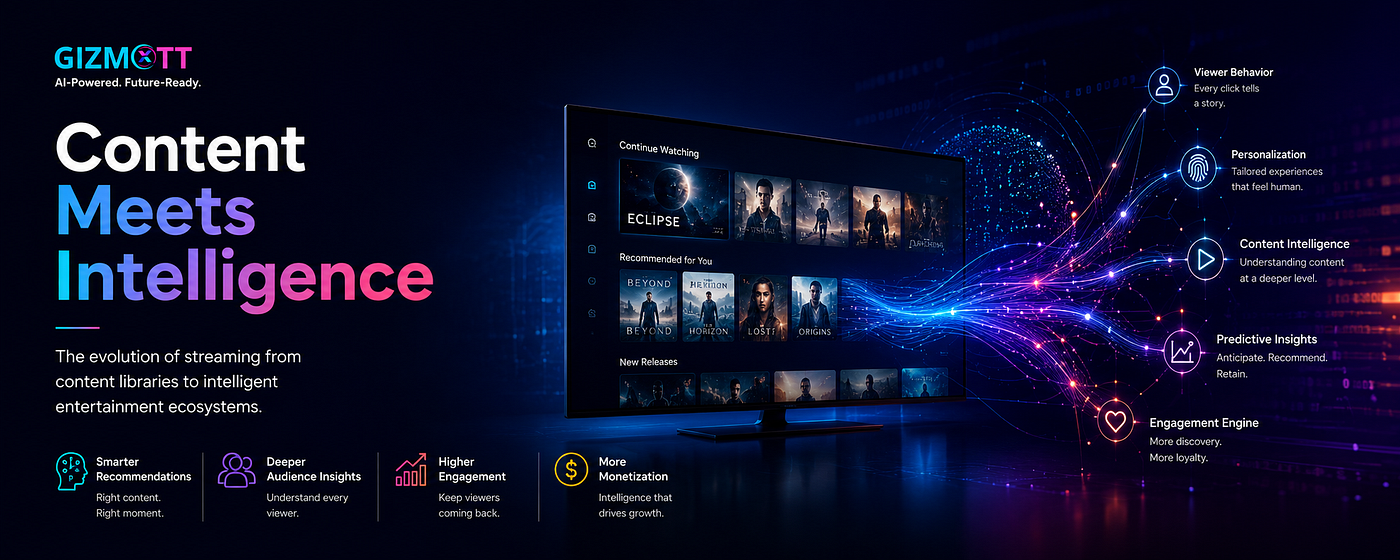
This shift strongly aligns with how we see the future of streaming evolving through GIZMOTT. As audience behaviour continues moving toward personalized and mobile-native entertainment experiences, platforms increasingly need the ability to support both traditional OTT formats and emerging vertical ecosystems within a unified streaming environment.
This includes capabilities such as:
- vertical video integration,
- microdrama app development,
- AI-powered recommendations,
- hybrid monetization,
- advanced OTT analytics,
- and scalable multi-platform streaming infrastructure.
The rise of microdrama platforms suggests that these capabilities are no longer experimental additions. They are rapidly becoming part of the future foundation of streaming itself.
The Future of Streaming May Look Very Different
The OTT industry originally evolved around the assumption that larger content libraries would dominate audience attention indefinitely.
But the rise of microdrama platforms suggests the future may depend less on scale alone and more on how intelligently platforms adapt to changing audience behavior.
Modern viewers increasingly expect:
- faster discovery,
- personalized recommendations,
- frictionless engagement,
- mobile-native viewing,
- and highly responsive content ecosystems.
Microdrama platforms are succeeding because they were designed specifically around those expectations from the beginning.
As streaming companies continue integrating AI-powered discovery systems, vertical engagement models, and mobile-first experiences, the boundaries between OTT and social entertainment will likely continue to disappear.
The future of streaming may not be defined purely by long-form television or short-form social media alone.
Instead, it may emerge as a hybrid entertainment ecosystem where storytelling, AI, personalization, and mobile engagement work together seamlessly.
And microdrama apps may be giving the industry its clearest preview yet of where that future is heading.
메타데이터
- post_id
- c7363ff33fec
- slug
- the-rise-of-microdrama-apps-is-reshaping-the-future-of-streaming-c7363ff33fec
- url
- https://medium.com/@Gizmott/the-rise-of-microdrama-apps-is-reshaping-the-future-of-streaming-c7363ff33fec
- canonical_url
- https://medium.com/@Gizmott/the-rise-of-microdrama-apps-is-reshaping-the-future-of-streaming-c7363ff33fec
- author_url
- https://medium.com/@Gizmott
- status
- ok
- fetched_at
- 2026-06-09 15:37:30