If on a Winter’s Night, Four Travelers
If on a Winter’s Night, Four Travelers is a short Point’n Click adventure game developed by Dead Idle Games. It can be played freely on…
If on a Winter’s Night, Four Travelers

If on a Winter’s Night, Four Travelers is a short Point’n Click adventure game developed by Dead Idle Games. It can be played freely on Steam. It has been created on Adventure Game Studio (a freeware used to create adventure games) mainly by two persons: Laura Hunt has essentially worked on the writing and the coding, while Thomas Möhring has principally designed the background and characters arts and animations.

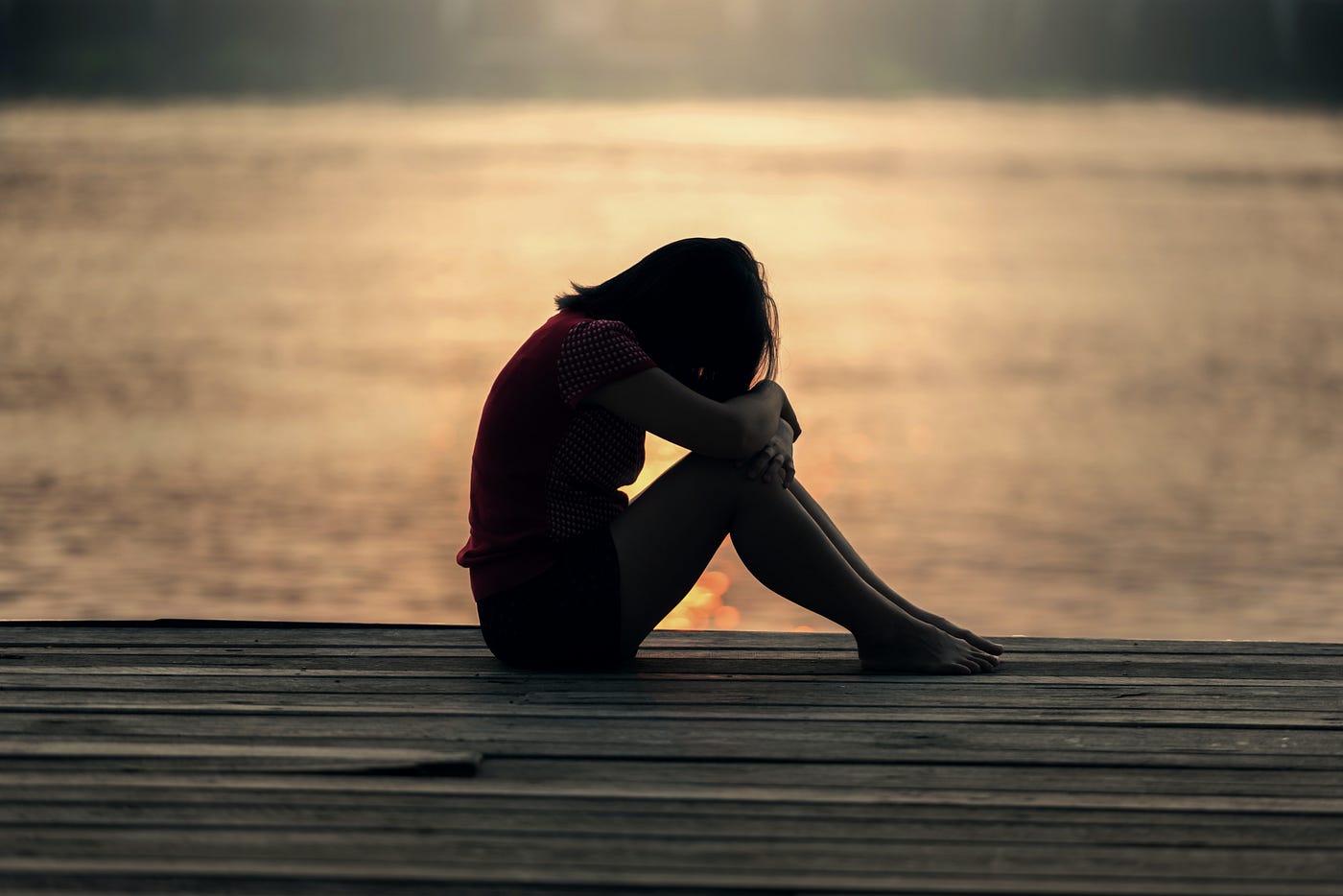
During a wintry night, a train temporally disturbs the quiet atmosphere of snow-covered plains with its bright lights and the lively music of its masked ball, while some of its passengers are wondering why they are in this strange place. Even though their social background and geographical origins are different, they all have lived during the 1920’s. Owing to their questionings, they all are encouraged by their host to relate in turn their personal story. A man is worried because his romantic relationship is forbidden in his country. An indolent aristocrat drowns her inconsolable sadness in laudanum. A physician who is humilated by his colleagues is seeking knowledge. An employee wants to brighten up her daily routine. Besides their underlying or obvious horrific aspects, the stories related by If on a Winter’s Night, Four Travelers bring up sensitive thematics, such as suicide, facism, homophobia, mental illness, addiction or racism, while the violent scenes are bluntly and graphically exposed.

In spite of its gloomy atmosphere and its harsh thematics, If on a Winter’s Night, Four Travelers displays gorgeous pixel arts, and its sceneries are full of visual details. If the character’s sprites are plainer, their detailed range of animations contribute to the narration. The narrative greatly rests on contrasts between sumptuous lighting effects and the oppressive opacity of darkness. The resulting dichotomy supports the events related by the characters’ stories or contributes to convey the protagonist’s state of mind. The first related story takes place in a hotel room which is disturbingly illuminated, as if this bright lighting were contrasting with the growing uneasiness felt by the protagonist and with the impending tragedy that concludes this chapter. Likewise, the second protagonist’s abode is illuminated by a radiant light and dazzling colours when she is consuming laudanum. These effects look so unreal that they seem to maintain the ephemeral illusion she is giving in to forget her suffering. As soon as this passing euphoria expires, she experiences a brutal return to her sad reality: precious items which must be sold are covered with white sheets, a grisly coldness is haunting her abode, while she desperatly searches to quiet her new anxiety attack with laudanum. The inner courtyard garden is bathed in a dazzling ray of sunshine: this almost blinding light seems supernatural, as if the purpose of this immaculate lighting was to distract us from the dreadful secrets this place is keeping, despite serving as a sanctuary for the protagonist. While the first two stories cleverly use the contrast between darkness and light, the third one is constantly sinking in an overtly oppressive atmosphere, because its locations are predominantly drowning in the darkness. The third story begins in an obscurity-bathed room, its insalubrity, tightness and lack of windows betraying its owner’s indigence. This protagonist must then find his way in the middle of an impenetrable darkness while lighting his surroundings with the flimsy glimmer of his lamp. This obscurity implies that the protagonist does not recognize the place he is exploring, and then reflects the apprehension and the fear he is feeling towards this unknown location. The light illuminating the following place seems artificial because of its discrepancy and unsuitability with the depicted environment, and creates a disturbing contrast with the gruesome scenes resulting from the protagonist’s worrying memories. Thus, the dichotomy between darkness and light is less distinct in If on a Winter’s Night, Four Travelers than in numerous other games. While the obscurity tends to represent a harsh and cold reality, the light is more insidious, because its radiant shine either warps reality in order to amplify the illusion in which the protagonist is wallowing, or hides past events from which he/her wants to turn away. Lastly, the musical atmosphere of If on a Winter’s Night, Four Travelers mainly rests on copyright-free tracks, such as the troubling “Gnossiennes”, composed by Éric Satie. The indescribable melancholy of this music echoes the nagging distress felt by the protagonist of the second story as soon as the effect of laudanum expires.

Due to its focus on narration, If on a Winter’s Night, Four Travelers presents a simple game design: a character’a actions, such as moving, interacting with an item or describing a background element, are made by clicking the left button of the mouse, and there is no inventory. Indeed, when a protagonist gets an item, he/she must immediately use it in his/her vicinities, and he/she can not store it in order to use it later. The scope of action of each puzzle is limited to one room, and rarely stretches on several locations. Thus, the puzzles mainly serve the narration and the story, in the same way as the writing, the musics, the atmosphere and the visited locations aesthetic. They are neither intricate nor difficult, while failures are never punished by a game over screen. The limited interaction of the puzzles can especially be seen through the first story, which essentially consists of realizing the actions the protagonist is mentioning during his interior monologues. Since each room is teeming with numerous visual details and there is no option to show all the elements with which you can interact, some puzzles can turn into pixel hunting, and then only consisting in randomly clicking on the background, hoping to find the decisive elements you have missed. This is especially true for one of the puzzle of the second story, which consists in executing a series of actions in the right order, and in starting it again with each mistake. However, If on a Winter’s Night, Four Travelers can also distort video games interactivity and tacit conventions in order to support its intentions. For example, during one of the ephemeral respite phases the protagonist of the second story undergoes after consuming laudanum, she suddenly slips from your control, and she then persists to read over and over a newspaper article about her, instead of going to the room in which you want her to go. Likewise, the protagonists walk slowly, and you can not ask them to run, nor double-click on their destination so that they instantly teleport to it (an option now offered by numerous adventure games). If these slow-paced rhythm can annoy the less patient gamers, this choice is also relevant, because it matches with the intentions of the game. Indeed, the protagonists of the four stories related by If on a Winter’s Night, Four Travelers are neither unerring heroes nor chosen ones fated to accomplish great feats. On the contrary, they are perfectible humans who are deeply affected by their respective life’s inconveniences. This idle mobility is especially consistent with the second protagonist’s atony: allowing her to run instead of laboriously limping would have been nonsensical and would have ruined the immersion and cohesion. Moreover, imposing a slow-paced rhythm contribute to the contemplative mood on which the narration relies to relate the protagonists’ stories or to express their vulnerability in the environments they are exploring. Starting from the third story, the puzzles If on a Winter’s Night, Four Travelers presents are more typically associated with the Point’n Click genre, whether they are steps to follow in order to complete a ritual, or simply items to search in the background. However, the progression is linear since it serves the narration: besides the scope of action of each puzzle being limited to one room, the actions needed to resolve them must be executed in a precise order. If on a Winter’s Night, Four Travelers is an especially short adventure game, since it can be beaten in less than two hours. This concision allows it to present a sustained rhythm which contributes to make each related story striking.

If on a Winter’s Night, Four Travelers is a narrative Point’n Click adventure game which cleverly uses each of its components to relate short but memorable horrific stories, its particularly short lifespan contributing to make each of them intense and striking. If on a Winter’s Night, Four Travelers is available freely on Steam, but if you want to support the developers, you can buy the “Supporter Pack” DLC, which includes an artbook and the game soundtrack.

Bibliography and sources
- https://www.mobygames.com/game/160552/if-on-a-winters-night-four-travelers/credits/windows/
- https://store.steampowered.com/app/1603980/If_On_A_Winters_Night_Four_Travelers/
- The artwork at the beginning of this article comes from the following webpage: https://laurahunt.itch.io/if-on-a-winters-night-four-travelers.
- The screenshots illustrating this article come from my gaming sessions on the game If on a Winter’s Night, Four Travelers.
메타데이터
- post_id
- c738bb2ef63c
- slug
- if-on-a-winters-night-four-travelers-c738bb2ef63c
- url
- https://medium.com/@mageicia_english/if-on-a-winters-night-four-travelers-c738bb2ef63c
- canonical_url
- https://medium.com/@mageicia_english/if-on-a-winters-night-four-travelers-c738bb2ef63c
- author_url
- https://medium.com/@mageicia_english
- status
- ok
- fetched_at
- 2026-07-20 22:28:24