The Role of Hospital Management Systems in Improving Patient Care
Delivering quality patient care requires more than experienced doctors and modern medical equipment. Hospitals and clinics also need…
The Role of Hospital Management Systems in Improving Patient Care
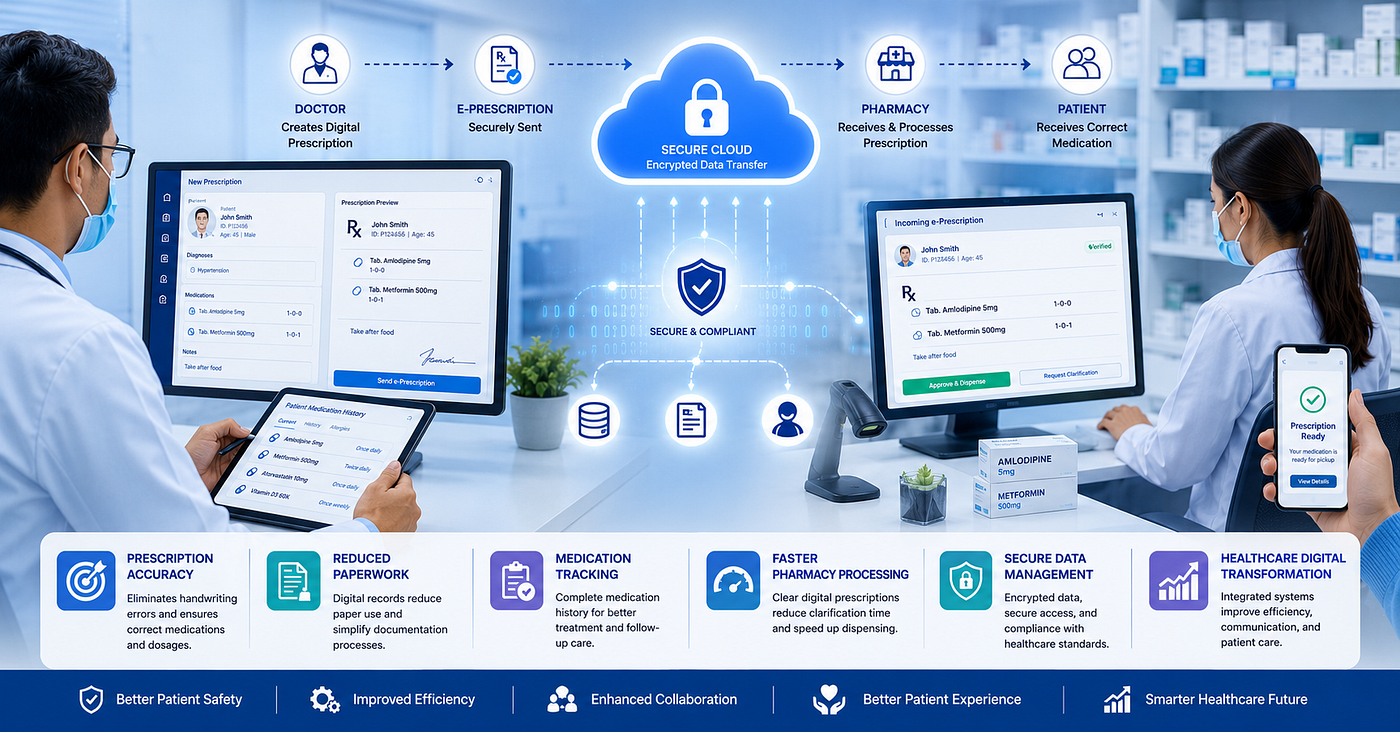
Delivering quality patient care requires more than experienced doctors and modern medical equipment. Hospitals and clinics also need efficient operations, accurate information flow, and smooth coordination across departments. This is where a Hospital Management System becomes an essential part of modern healthcare.

A Hospital Management System helps healthcare organizations automate daily operations, improve communication, and provide faster access to critical patient information — ultimately creating a better experience for both patients and healthcare teams.
Workflow Automation Improves Efficiency
Many hospitals still spend valuable time managing paperwork, manual records, appointment scheduling, and administrative processes. These repetitive tasks can slow down operations and increase the chances of human error.
A Hospital Management System automates key workflows such as:
- Patient registration
- Appointment scheduling
- Billing and invoicing
- Bed management
- Report generation
- Discharge processes
Automation reduces administrative workload and allows healthcare professionals to focus more on patient care instead of paperwork.
Healthcare providers using digital solutions from DR DM TECH can streamline operations and improve overall hospital performance.
Faster Access to Diagnosis and Medical Information
Quick access to patient data plays a major role in delivering timely treatment. Delays in finding reports or medical history can affect decision-making and patient outcomes.
A Hospital Management System centralizes patient information, allowing doctors and authorized staff to access:
- Diagnostic reports
- Medical history
- Lab results
- Prescription records
- Treatment plans
With digital access to clinical information, doctors can make informed decisions faster and reduce unnecessary delays in patient treatment.
Faster diagnosis access also supports better coordination during emergencies and critical care situations.
Better Communication Between Departments
Hospital departments often depend on continuous communication to maintain quality healthcare services. Manual communication methods can create delays, duplicate work, and information gaps.
A Hospital Management System connects departments through a unified platform, improving collaboration between:
- Reception and administration
- Doctors and nurses
- Laboratory and diagnostics teams
- Pharmacy departments
- Billing and finance teams
When information moves smoothly between departments, patient services become faster and more organized.
Improved Patient Experience
Patients expect healthcare services that are fast, transparent, and easy to access. Digital hospital systems improve the patient journey by reducing waiting times and making healthcare interactions more efficient.
Patients benefit through:
- Faster appointments
- Quick report availability
- Reduced administrative delays
- Better communication
- Improved treatment coordination
A positive patient experience often leads to stronger trust and long-term relationships with healthcare providers.
Better Data Accuracy and Security
Paper-based systems increase the risk of misplaced records and data duplication. A Hospital Management System stores healthcare data in a structured and secure environment.
Hospitals can maintain:
- Accurate patient records
- Secure document storage
- Controlled data access
- Organized operational reporting
Reliable healthcare data supports better planning and long-term operational improvements.
Supports Growth and Future Healthcare Needs
As hospitals and clinics expand, managing operations manually becomes increasingly difficult. Digital healthcare platforms provide scalability and support growing patient volumes without reducing service quality.
Organizations adopting a Hospital Management System can build a more connected and efficient healthcare environment.
Healthcare institutions can explore modern healthcare technology solutions through DR DM TECH to support digital healthcare transformation.
Conclusion
A Hospital Management System plays a critical role in improving patient care by automating workflows, providing faster diagnosis access, and strengthening communication across hospital departments.
By reducing operational complexity and improving information accessibility, hospitals and clinics can deliver faster, safer, and more patient-focused healthcare services.
메타데이터
- post_id
- c73a4c9b116b
- slug
- the-role-of-hospital-management-systems-in-improving-patient-care-c73a4c9b116b
- url
- https://medium.com/@sougato.official/the-role-of-hospital-management-systems-in-improving-patient-care-c73a4c9b116b
- canonical_url
- https://medium.com/@sougato.official/the-role-of-hospital-management-systems-in-improving-patient-care-c73a4c9b116b
- author_url
- https://medium.com/@sougato.official
- status
- ok
- fetched_at
- 2026-06-09 15:37:30