How Tax Optimization Shapes Investment Decisions in Caribbean Citizenship Programs
In an increasingly globalized world, high-net-worth individuals (HNWIs) and globally mobile families are looking for smart ways to…
How Tax Optimization Shapes Investment Decisions in Caribbean Citizenship Programs

In an increasingly globalized world, high-net-worth individuals (HNWIs) and globally mobile families are looking for smart ways to structure their wealth — balancing legal security, flexibility, and fiscal efficiency. Caribbean citizenship-by-investment (CBI) programs have emerged as powerful tools in this regard. Beyond the passport itself, one of the strongest appeals lies in their tax-optimization potential.
In this post, we’ll explore how tax considerations influence investment decisions in Caribbean citizenship programs, and how working with a trusted partner like **UNO Capital** can make all the difference.
1. Understanding Tax Optimization in Caribbean CBI
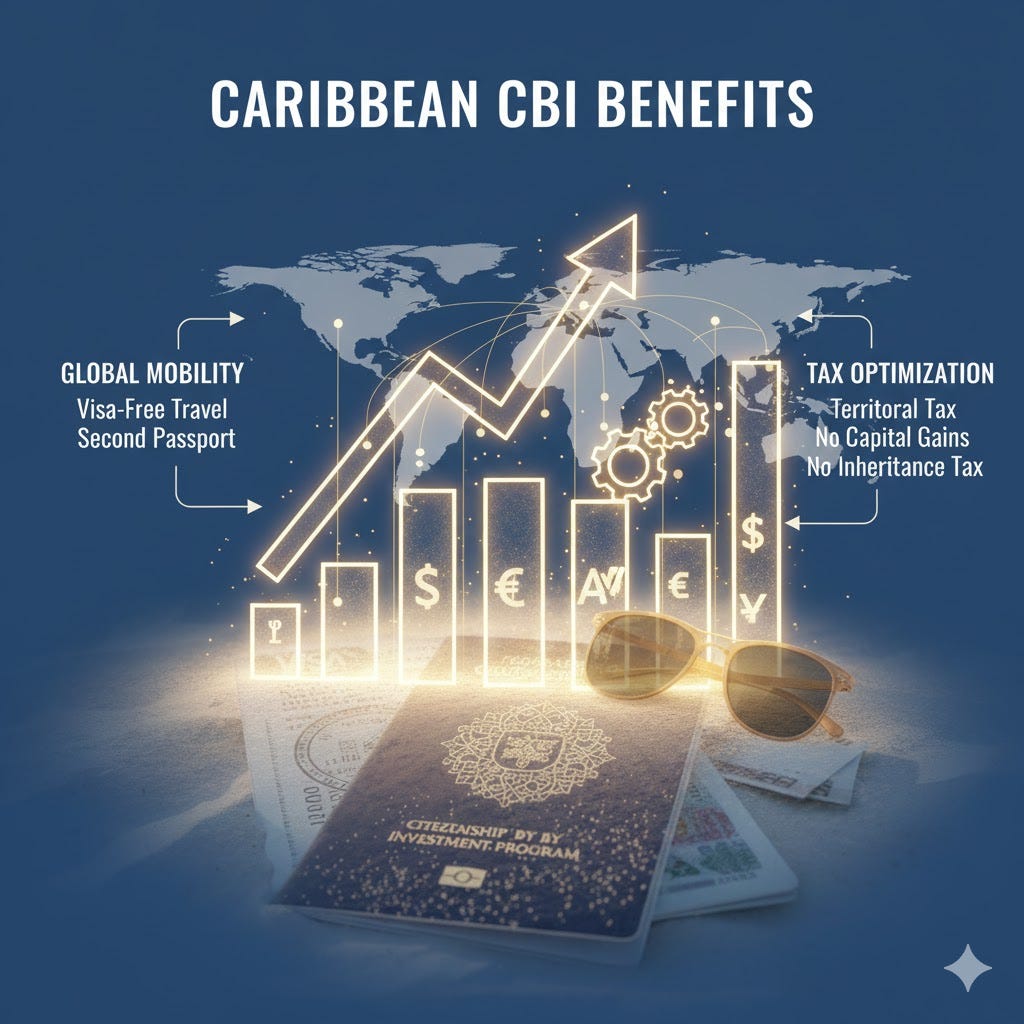
a) Distinction Between Citizenship and Tax Residency One of the most important clarifications: citizenship does not automatically mean tax residency. Many Caribbean CBI jurisdictions are deeply attractive because they offer favorable tax environments. However, as the Investment Migration Council has noted, citizenship alone does not guarantee tax residency — and in many cases, individuals remain liable to tax in their country of primary tax residence. In short, getting a second passport is not about escaping tax, but about choosing the right jurisdictional structure.
b) Tax Regimes in Key Caribbean Jurisdictions Many of the Caribbean CBI nations are tax-advantaged in very specific ways:
- No or minimal personal income tax: Some countries, like St. Kitts & Nevis, do not tax non-resident citizens on their global income.
- No capital gains, inheritance, or wealth taxes: Several CBI jurisdictions impose no capital gains tax, and also no inheritance or wealth tax, which is hugely attractive for estate planning and long-term wealth preservation.
- Territorial taxation: In countries where tax is only levied on locally generated income, foreign-source income may remain untaxed (for non-residents).
c) The Limits & Myths While the tax benefits are compelling, they are not a “get-out-of-tax-free” card:
- Some CBI programs still have local taxes on certain aspects, like property tax, VAT, or stamp duty.
- Global transparency is increasing. Under frameworks like the Common Reporting Standard (CRS), jurisdictions exchange financial information, reducing the risk of misuse.
- Moreover, the real benefit comes when a second citizenship is combined with careful tax residency planning, not simply obtaining the passport and ignoring other obligations.
2. Why Tax Optimization Influences Property Investment Decisions
For clients seeking to invest via CBI, real estate is one of the most common routes. Here’s how tax plays into that decision:
- Wealth Preservation and Estate Planning Without inheritance or wealth taxes, Caribbean real estate often serves as a legacy asset. Families can structure their affairs so that property remains within family structures without significant erosion through estate taxation.
- Diversification Across Jurisdictions Investors may already have holdings elsewhere. Investing in Caribbean real estate via a CBI program gives them an additional jurisdiction — not only for mobility, but for asset diversification in a tax-favorable environment.
- Liquidity & Exit Strategies Approved CBI real estate projects often come with holding periods, but after that, investors can exit — realizing both investment gains and citizenship value.
- Global Mobility + Business Opportunities Citizenship opens mobility; property gives substance. Combined, they offer a base in a country favorable for structuring wealth, while enabling seamless travel and business expansion.
3. Who Benefits Most: Investment Property Clients & Global Mobility Seekers
- High-net-worth individuals seeking to optimize their global tax burden while preserving and growing assets.
- Business owners and entrepreneurs who value a jurisdiction that enables them to run enterprises, invest, or relocate as needed.
- Families focused on legacy: With favorable inheritance structures and no forced exit, real estate in the Caribbean can be a cornerstone of multigenerational wealth preservation.
- Frequent travelers or globetrotters who want a powerful second passport that also aligns with their financial planning.
4. Risks & Compliance Considerations
Tax optimization is not risk-free, and prudent investors must recognize key challenges:
- Due Diligence: CBI programs have rigorous vetting. Investors must disclose their background, source of funds, and financial history.
- Regulatory Risk: Policies around CBI programs can change. Investment thresholds or tax laws may be updated.
- Tax Reporting: Even with a favorable Caribbean tax regime, investors remain accountable to their home country’s tax obligations. Mismanagement or misreporting can lead to penalties.
- Transparency: While some suspect CBI programs allow tax evasion, many jurisdictions now comply with international standards.
- Exit and Liquidity Risk: Not all real estate investments are equally liquid, and resale depends on market dynamics and program rules.
5. Why Partnering with UNO Capital Makes Sense
Given the complexity and nuance involved in making CBI investment decisions, working with a trusted, expert partner is crucial. **UNO Capital** stands out in several ways:
- Expertise in Citizenship by Investment: With deep experience guiding clients through Caribbean CBI programs, UNO Capital helps optimize not just the citizenship application but the overall financial structure around it.
- Holistic Advisory: They don’t just advise on real estate; they bring in tax structure, legacy planning, and global mobility strategy.
- Tailored Solutions: Every client’s situation is different. UNO Capital customizes the investment plan — whether the priority is tax efficiency, real estate value, or family planning.
- Robust Due Diligence and Compliance: With UNO Capital’s support, clients navigate the documentation, background checks, and regulatory complexities confidently.
- Long-Term Vision: Beyond obtaining a citizenship, UNO Capital helps clients envision and execute on a sustainable strategy — maximizing the benefit of the second passport over years and even generations.
6. Conclusion
For globally mobile investors, Caribbean citizenship by investment isn’t just about a second passport — it’s a strategic tool for tax optimization, wealth preservation, and mobility. The right structure can help you legally reduce tax exposure, diversify assets, and build a legacy. However, this is not a DIY game. Without expert guidance, it’s easy to misstep on tax residency, regulatory compliance, or investment strategy.
That’s where UNO Capital comes in — blending deep CBI experience with financial sophistication, they help clients turn the promise of Caribbean citizenship into a sustainable, tax-efficient reality.
메타데이터
- post_id
- c7a35d1403fd
- slug
- how-tax-optimization-shapes-investment-decisions-in-caribbean-citizenship-programs-c7a35d1403fd
- url
- https://medium.com/@dailybloggerr/how-tax-optimization-shapes-investment-decisions-in-caribbean-citizenship-programs-c7a35d1403fd
- canonical_url
- https://medium.com/@dailybloggerr/how-tax-optimization-shapes-investment-decisions-in-caribbean-citizenship-programs-c7a35d1403fd
- author_url
- https://medium.com/@dailybloggerr
- status
- ok
- fetched_at
- 2026-07-14 23:39:02