Why Poor White People Support Politicians Whose Policies Harm Them
The surprising connection between racism and economic self-sabotage
Why Poor White People Support Politicians Whose Policies Harm Them
The surprising connection between racism and economic self-sabotage

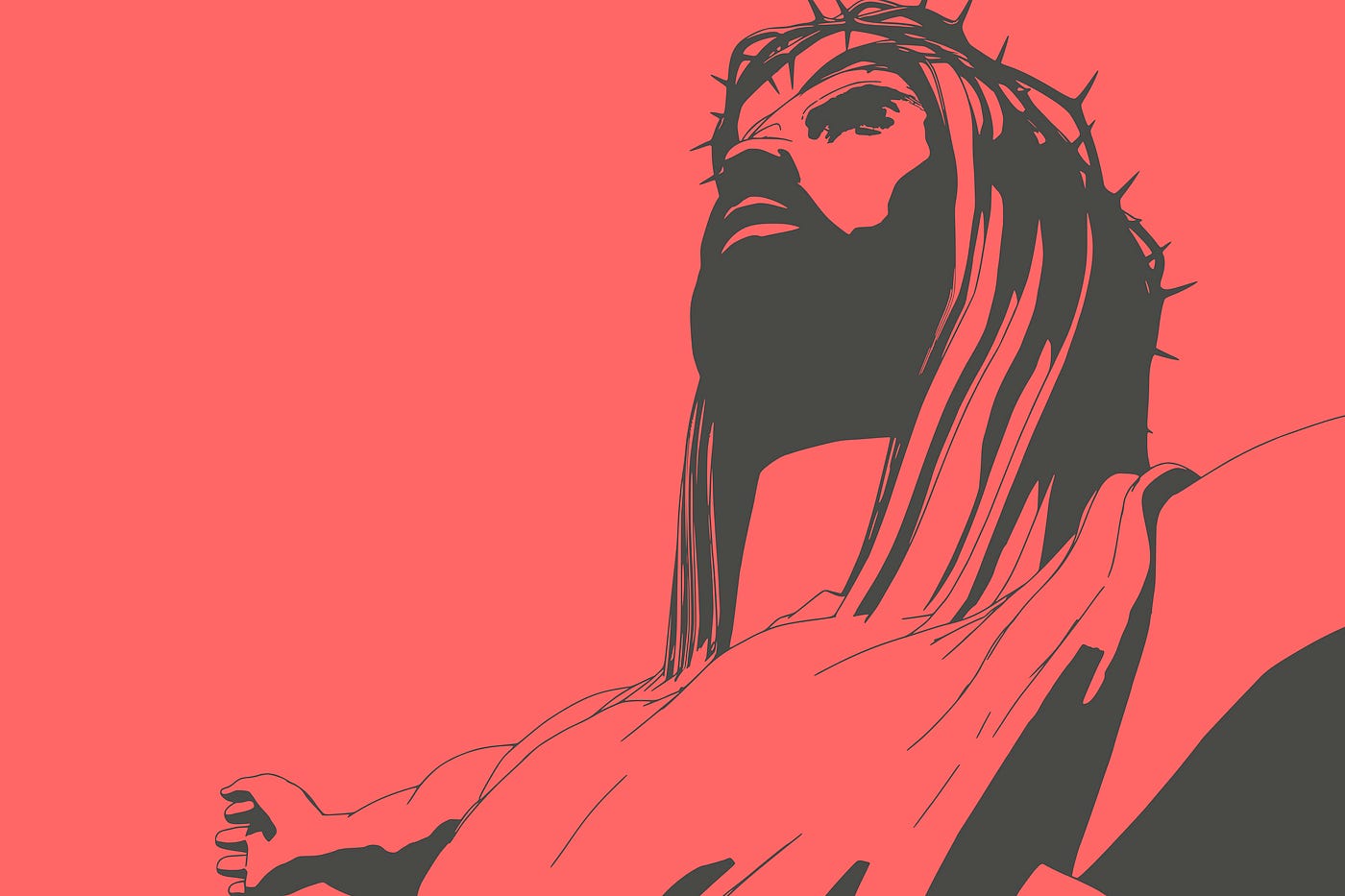
Image by Canva Pro created by TkKurikawa
“Thank God for Mississippi.”
Our teammate, Leo, who hailed from West Virginia, used to say this every now and then — not because of any particular fondness he harbored for the Magnolia State. He said this because West Virginia was often ranked 49th in such metrics as quality of education, economy, infrastructure, and healthcare…
Not great. But at least, not the absolute bottom.
That slight degree of difference, saving West Virginia from last place, made all the difference.
Our Desperate Need to Not Be Last
We’ve all been there, standing at the end of a long line — sullen, morose, languishing. And then, somebody steps in line behind us. For some reason, we feel slightly better. A bit brighter. Even if we are not any closer to the front, there’s just something strangely comforting about not being last.
It makes no sense. It doesn’t help us get served any quicker. And yet it’s a feature common to humanity.
Why is this?
Maybe it’s because the line we’re standing in reminds us of those other types of ranking, where last place denotes a definitive lack of merit.
Also, being last draws unwanted attention. It’s natural for our brains to note the first and the last, and discount everything in the middle.
We tend to feel scornful towards those at the end, and to regard those at the front with a mixture of admiration and envy.
When we occupy the very end of a queue of people, we then project that negativity onto ourselves. We must have missed a memo, or we forgot an important part of the instructions, and it’s our own fault that we are stuck back here, way back in the back. Where we don’t think we belong.
But when someone steps behind us, we start to feel better about ourselves. We happily bid good-bye to that dishonorable status of last place.
The Zero Sum Game: Choosing to Drain Community Pools Rather Than Integrate Them
When we think this way, it tips our hand that we have a zero sum mindset — and that we’re playing a zero sum game.
And it’s killing us.
Zero sum can be summarized as: “more for you means less for me.” Or “a better position for you means a worse position for me.”
Heather McGhee, in her book, The Sum of Us: What Racism Costs Everyone and How We Can Prosper Together, explains how this faulty obsession, this drive to not be last or lowest, has cost us. All of us.
McGhee’s nation-wide research turned up many accounts of how racism has robbed whites as well as Blacks, but the most cogent example she cites is that of public swimming pools. McGhee explains how in the face of racist opposition to integrated swimming pools, many municipalities chose to eliminate public pools altogether.
(Consistent with our friend Leo’s dubious expression of gratitude, Mississippi gets several mentions in McGhee’s account of how racism sinks the welfare of everyone.)
McGhee’s research started me thinking about the pool where I took swim lessons as a kid in the 1960s. I remember my “far from the Country Club set” school teacher parents squawking about paying a membership fee — wondering if they’d get their money’s worth.
After reading McGhee’s book, I’m getting a fuller picture of how this all came to be.
Sure enough, I don’t remember seeing any Black families at this “members only” pool. But I never gave that a thought at the time. My world was filled with only white people. That was my normal.
And that’s the problem.
Racism’s Tangled, Toxic, and Touchy Mess of a Legacy
America has not properly dealt with what some call “our original sin.” And so we continue to pay the price.
A small section of James Russell Lowell’s mid-19th century poem, The Present Crisis, — a poem that MLK frequently quoted from — puts it this way:
But the soul is still oracular; amid the market’s din, List the ominous stern whisper from the Delphic cave within, — “They enslave their children’s children who make compromise with sin.”
Along with $124 trillion, the ensuing generations stand to inherit the consequences of what preceding generations have refused to own, confess, lament, restore, repair, repent from. Instead, as a whole, our nation has made compromise with sin.
My parents inherited a legacy of white superiority, though they wouldn’t have thought to call it that. Who gets the blame for that?
Segregation and mob rule had ensured that white people would be protected from the “back of the line.” White people could rest easy that they would never have to occupy that space. Black people would be relegated to the back of the line.
But in 1954 Brown v Board, the Supreme Court upset the rules of who could be where in line. White people were afraid. It was of utmost importance that we never be at the back of the line. No matter what the cost.
And so, even though I was born after Brown v Board, I grew up in the largely segregated world that my parents did, instead of the “I Have A Dream” world that could have been well under way, had white Americans recognized our captivity to our fears, our zero-sum thinking.
As President Lyndon Johnson said to aide and journalist Bill Moyers:
“If you can convince the lowest white man he’s better than the best colored man, he won’t notice you’re picking his pocket. Hell, give him somebody to look down on, and he’ll empty his pockets for you.”
Sixty years later, we’re still falling for this. We’re still lining up, ready to empty our pockets, as long as we can be first in line.
This is what we have to wise up to. When we buy into zero-sum thinking, we’re playing into the hands of this Southern political strategy. We’re paying dearly for the illusion of racial superiority. This is way worse than that “swamp land in Florida” deal.
For Christians, this should be especially troubling. The entire Christian story is a rejection of status anxiety and zero-sum thinking. Yet the Church has often been just as susceptible to the temptation to rank people, divide people, and preserve its place near the front of the line.
It’s ironic when the Church embraces this zero-sum way of thinking, because this is the absolute opposite of what Jesus taught, lived, and preached.
First of all, in the incarnation, Jesus willingly entered the world at the very back of the line. And then, throughout his life, He hung out with those at the back of the line. Some front-of-the-liners were amazed by this. Others were disgusted.
The thing is, back-of-the-line folks began to not care about their status. There was a sort of new community mindset that developed, where rank didn’t matter. That was extremely attractive. That’s what grew the church:
One of the earliest observations by an outsider about Christians that we have is, “See how these Christians love one another.” Integral to this mutual regard was a total absence of social barriers; it was a discipleship of equals. Here were men and women who not only said that everyone was equal in the sight of God but who lived as though they meant it. The conventional barriers of race, gender, and status meant nothing to them, for in Christ there was neither Jew nor Gentile, male nor female, slave nor free. As a consequence, in spite of differences in function or social position, their fellowship was marked by a sense of genuine equality.¹
The bottom line is that to the degree that any of us are consumed with jockeying to get to the front of the line, to that degree we are duped. We cause other people to lose out, and we lose out ourselves.
Can we break free from this compulsion and trust this pattern of giving up, giving in, giving out, finding that the result is greater health, happiness, and joy for all?
And maybe a few more public swimming pools opening up?
¹Huston Smith, The Soul of Christianity: Restoring the Great Tradition (HarperOne, 2009), 76, 78–79.
For more articles on life, faith, politics, and spirituality, Sign-up for my newsletter.
메타데이터
- post_id
- c7a59a76234c
- slug
- why-poor-white-people-support-politicians-whose-policies-harm-them-c7a59a76234c
- url
- https://medium.com/backyard-theology/why-poor-white-people-support-politicians-whose-policies-harm-them-c7a59a76234c
- canonical_url
- https://medium.com/backyard-theology/why-poor-white-people-support-politicians-whose-policies-harm-them-c7a59a76234c
- author_url
- https://medium.com/@2ndhalfoflife
- status
- ok
- fetched_at
- 2026-06-20 20:29:01