The Shepherd’s Covenant: How Himalayan Herds Preserve What We Call “Wilderness”
I watched a shepherd named Mohan move his flock across the Naggar ridge on a June morning.
The Shepherd’s Covenant: How Himalayan Herds Preserve What We Call “Wilderness”
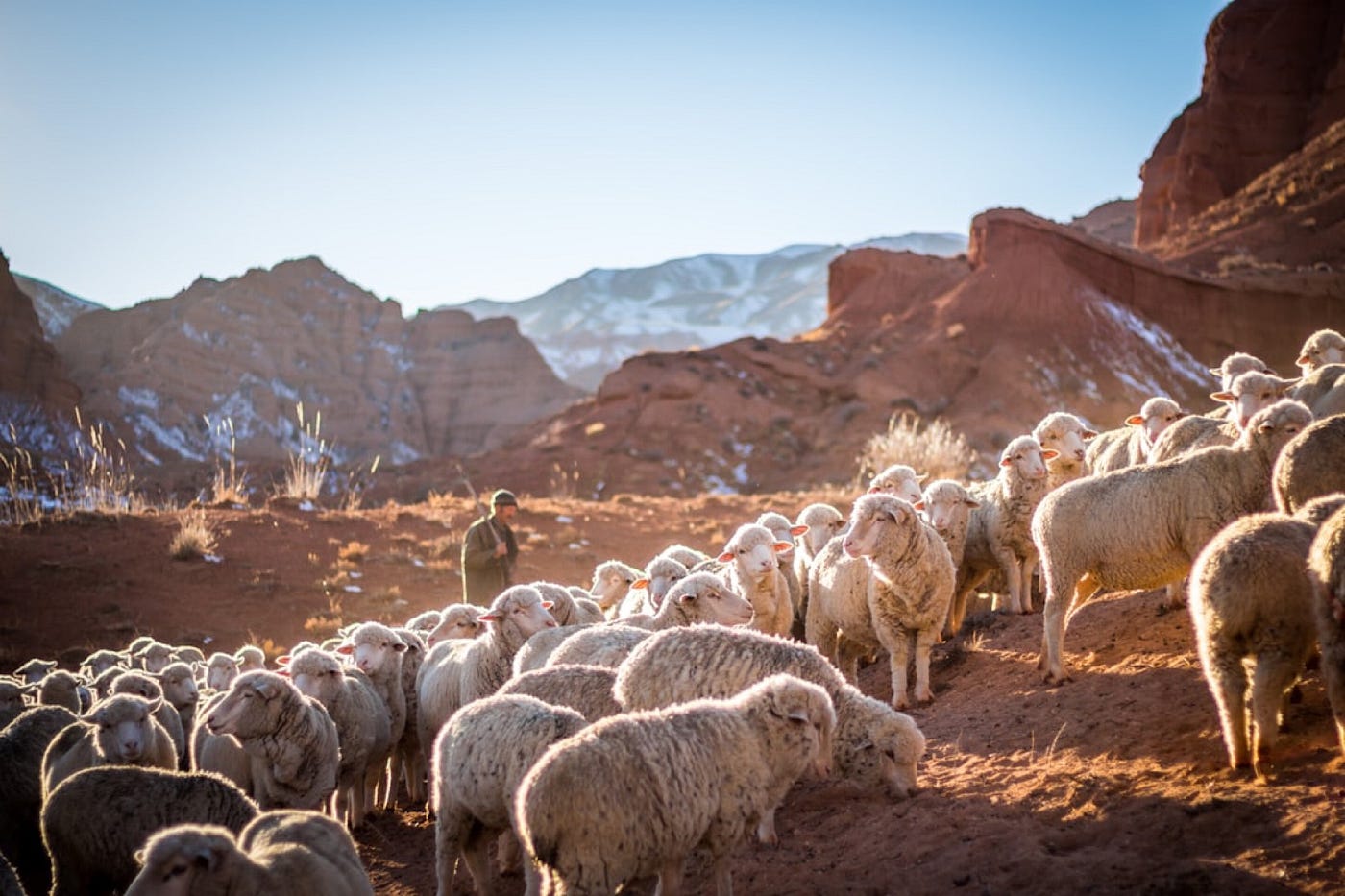
Photo by Patrick Schneider on Unsplash
I watched a shepherd named Mohan move his flock across the Naggar ridge on a June morning.
Forty sheep. Three dogs. A walking stick worn smooth by decades of hands.
He wasn’t moving toward the greenest patch of grass. He was heading toward a specific slope where the snow had retreated only weeks earlier. Later, I learned that he judged this timing not through maps or weather apps, but through something far older: the angle of the sun, the moisture beneath his feet, and a lifetime of watching these mountains breathe through the seasons.
No GPS.
No grazing plan.
Just knowledge inherited through generations and carried in muscle memory.
As the flock spread across the meadow, I noticed something unexpected.
The grass beneath them wasn’t simply being eaten.
It was being shaped.
The sheep grazed some plants completely while ignoring others. Their movement seemed random until I watched long enough to recognize a pattern. Their hooves pressed into the earth, breaking hardened surfaces and opening tiny channels. At one point, Mohan called the flock away from a section of the meadow.
I asked why.
“That plant needs two more weeks,” he said.
“The roots aren’t ready.”
In that moment, I realized something modern conservation rarely acknowledges:
The Himalayan meadow I was standing in – the one most visitors would describe as pristine wilderness – needed this shepherd to exist at all.
Not despite him.
Because of him.
⸻
The Conservation Paradox

Photo by DINESH BOCHARE on Unsplash
For decades, conservation policy across much of the Himalayas has operated on a simple assumption:
People damage ecosystems.
Shepherds overgraze.
Livestock degrade vegetation.
Human activity threatens fragile landscapes.
Therefore, the best way to protect nature is to remove people from it.
The reality is far more complicated.
The alpine meadows of the Himalayas – the thach – did not evolve in isolation from human activity. For thousands of years, they developed alongside seasonal pastoralism practiced by communities such as the Gaddis, Gujjars, and Kinnauri shepherds.
These landscapes are not untouched wilderness.
They are living cultural ecosystems.
And when the shepherds disappear, the ecosystem does not simply remain frozen in time.
It changes.
⸻
What Happens When Grazing Stops?
The answer surprises many people.
Meadows Slowly Become Shrublands
Without seasonal grazing pressure, woody vegetation begins expanding into open grasslands.
Rhododendron and other shrubs gradually colonize alpine meadows.
Over time, the open habitat that supports a unique range of grasses, flowers, insects, and birds starts disappearing.
Forest cover may increase.
Biodiversity often does not.
Invasive Species Gain Ground
Traditional grazing exerts a selective pressure on vegetation.
When that pressure disappears, hardy and often unpalatable species can spread unchecked.
Diverse meadows slowly become dominated by fewer species, reducing ecological resilience.
Fire Risk Increases
Ungrazed landscapes accumulate large amounts of dry biomass.
This creates fuel.
As Himalayan wildfires become more frequent and intense, the absence of grazing animals removes one of the most effective natural mechanisms for reducing fire loads.
Soil Health Declines
At high altitudes, nutrient cycling is slow.
Livestock manure plays an important ecological role by returning nutrients to the soil.
Without this process, many meadows gradually become less fertile and less productive.
The assumption that removing shepherds automatically improves ecological health simply does not hold true everywhere.
In many Himalayan grasslands, grazing is not a disturbance to the system.
It is part of the system.
⸻
The Ecology of Hooves
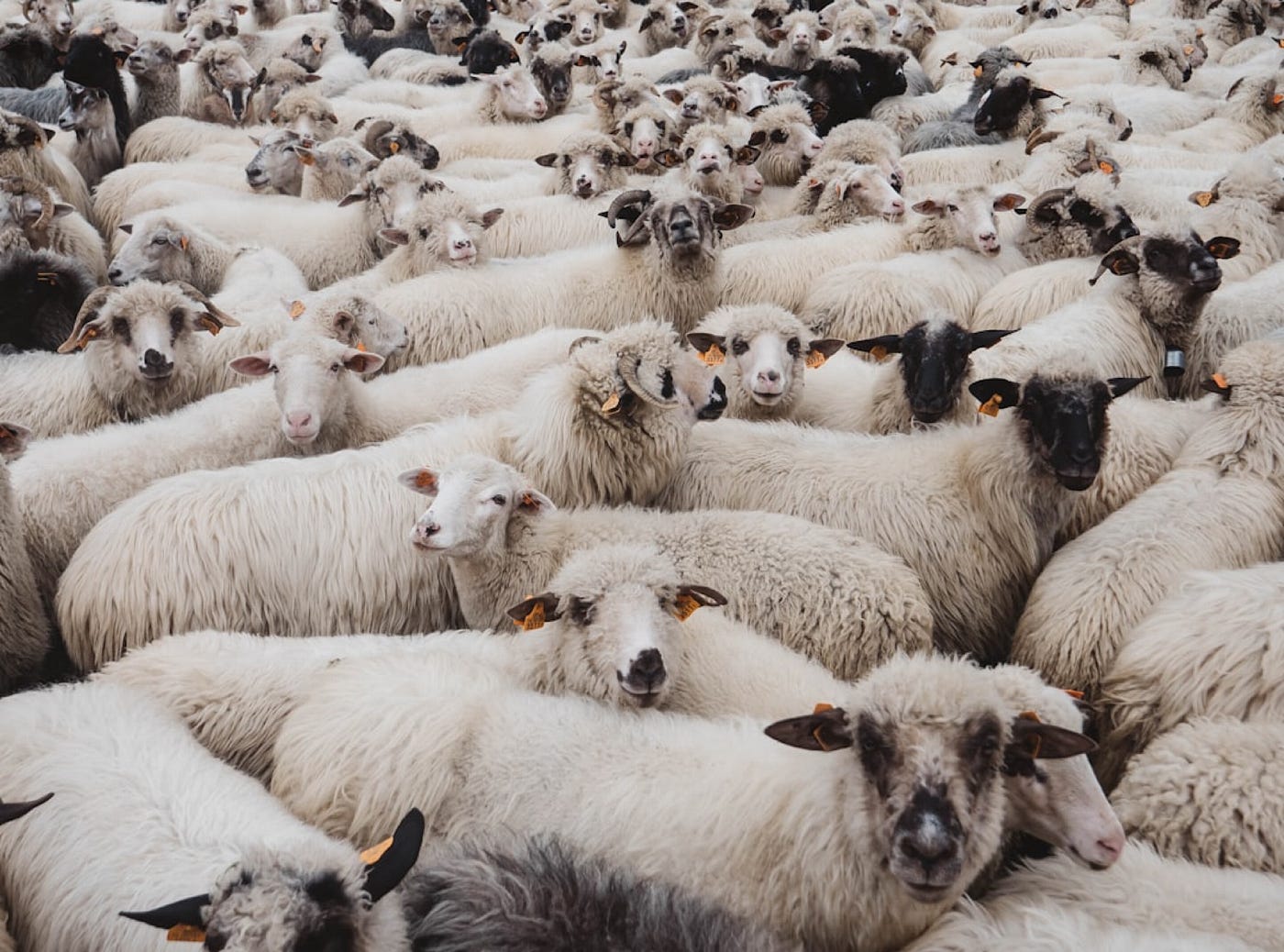
Photo by Krzysztof Kowalik on Unsplash
To understand this, we need to stop thinking like park managers and start thinking like landscapes.
Every flock performs ecological work.
As animals move, their hooves break hardened soil surfaces and create tiny pockets that improve water infiltration.
On steep Himalayan slopes, where erosion and water management are constant challenges, these small disturbances matter.
The dung deposited along migration routes contributes nutrients to soils where decomposition occurs slowly.
The combined effect strengthens plant communities, supports root development, and improves the land’s ability to retain moisture.
What appears to be a simple flock crossing a hillside is actually a complex ecological process unfolding in real time.
The shepherd may not describe it in scientific language.
But the mountains understand it.
⸻
A Living Knowledge System

Photo by Shashank Sahay on Unsplash
When Mohan told me a plant needed two more weeks, he wasn’t guessing.
He was drawing from a knowledge system refined through generations of observation.
He knew which slopes recover quickly after grazing.
He knew which meadows are vulnerable to erosion.
He knew when to move animals based on subtle changes in vegetation, weather, and soil conditions.
This knowledge cannot be fully captured by satellite imagery.
It cannot be replicated by a management plan drafted hundreds of kilometers away.
It exists in practice.
It exists in relationship.
And it exists because people have remained connected to these landscapes long enough to learn their rhythms.
When shepherding traditions disappear, we do not merely lose a livelihood.
We lose an entire way of understanding the mountains.
⸻
The Wilderness We Imagine
The idea of wilderness often rests on a romantic assumption:
That nature is healthiest when humans are absent.
But many Himalayan landscapes challenge this idea.
The meadows we admire, photograph, and trek through are often the result of centuries of interaction between people, animals, weather, and terrain.
They are not untouched.
They are carefully maintained through movement, restraint, and inherited ecological knowledge.
The shepherd is not outside the ecosystem.
He is part of it.
Perhaps that is the lesson modern conservation still struggles to accept.
⸻
The Shepherd’s Covenant
Early in the morning, if you spend enough time in the Himalayas, you’ll hear the bells before you see the flock.
A line of sheep emerges along a ridge.
Dogs move silently at the edges.
A shepherd follows behind, guiding them toward meadows that exist because generations before him did exactly the same thing.
It may look like a scene from the past.
It is not.
It is one of the oldest and most enduring forms of ecological stewardship still alive in these mountains.
The moment we stop seeing shepherds as part of conservation, we risk losing both.
The culture.
And the landscape it helped create.
⸻
If you’re travelling through the Kullu Valley, wake up early at least once. Listen for the bells. Watch the movement of a flock across a hillside. What appears to be an ordinary morning may actually be one of the Himalayas’ most important ecological relationships unfolding before your eyes.
At Akari Inn, these encounters are still part of everyday mountain life – a reminder that the Himalayas are not merely landscapes to visit, but living systems shaped by generations of people who learned how to belong to them.
Tags: #Himalayas #Ecology #Conservation #Transhumance #SustainableTourism #MountainCulture #Sociology
:
📖 This story is published under The Rabbit Note. Have a story to share? Join our community and let your words be heard. Write for us.
[embed]*The Rabbit Note *Where every voice matters medium.com
**🧵 Be *part of “Unfinished — A Writing Challenge,”* an invitation to sit with what was left incomplete — in love, in loss, in the quiet corners of a life still being lived. Submit your story for this challenge.
🐰 Got a story about building something? Come out of your burrow and join “Entrepreneur — A Writing Challenge” on The Rabbit Note. What would you sell, build, or risk everything for? Tell us. 💡
메타데이터
- post_id
- c7aff8f1b75a
- slug
- the-shepherds-covenant-how-himalayan-herds-preserve-what-we-call-wilderness-c7aff8f1b75a
- url
- https://medium.com/the-rabbit-note/the-shepherds-covenant-how-himalayan-herds-preserve-what-we-call-wilderness-c7aff8f1b75a
- canonical_url
- https://medium.com/the-rabbit-note/the-shepherds-covenant-how-himalayan-herds-preserve-what-we-call-wilderness-c7aff8f1b75a
- author_url
- https://medium.com/@ishan_77892
- status
- ok
- fetched_at
- 2026-06-20 20:29:01