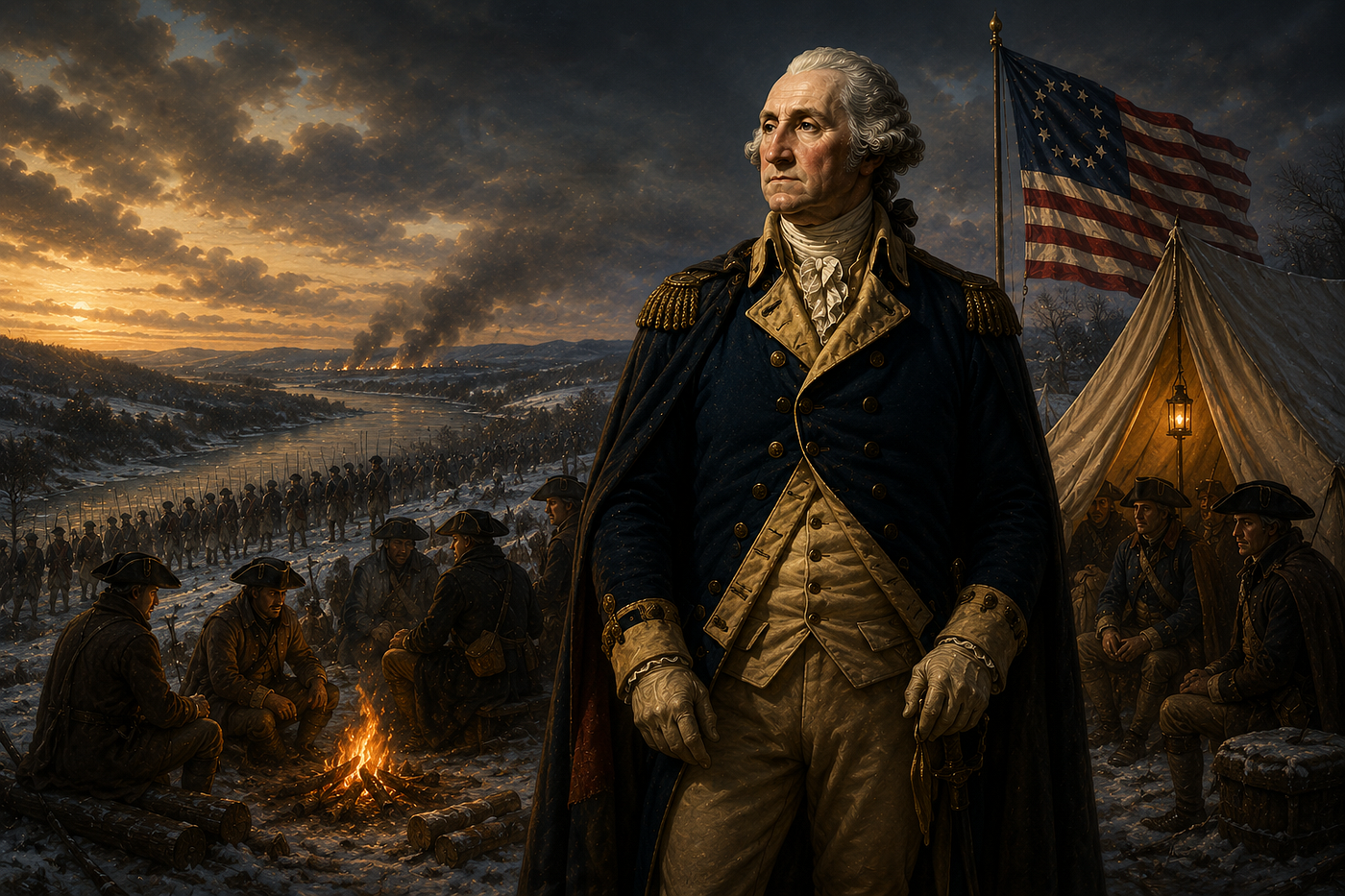
You’ve Heard of Paul Revere.
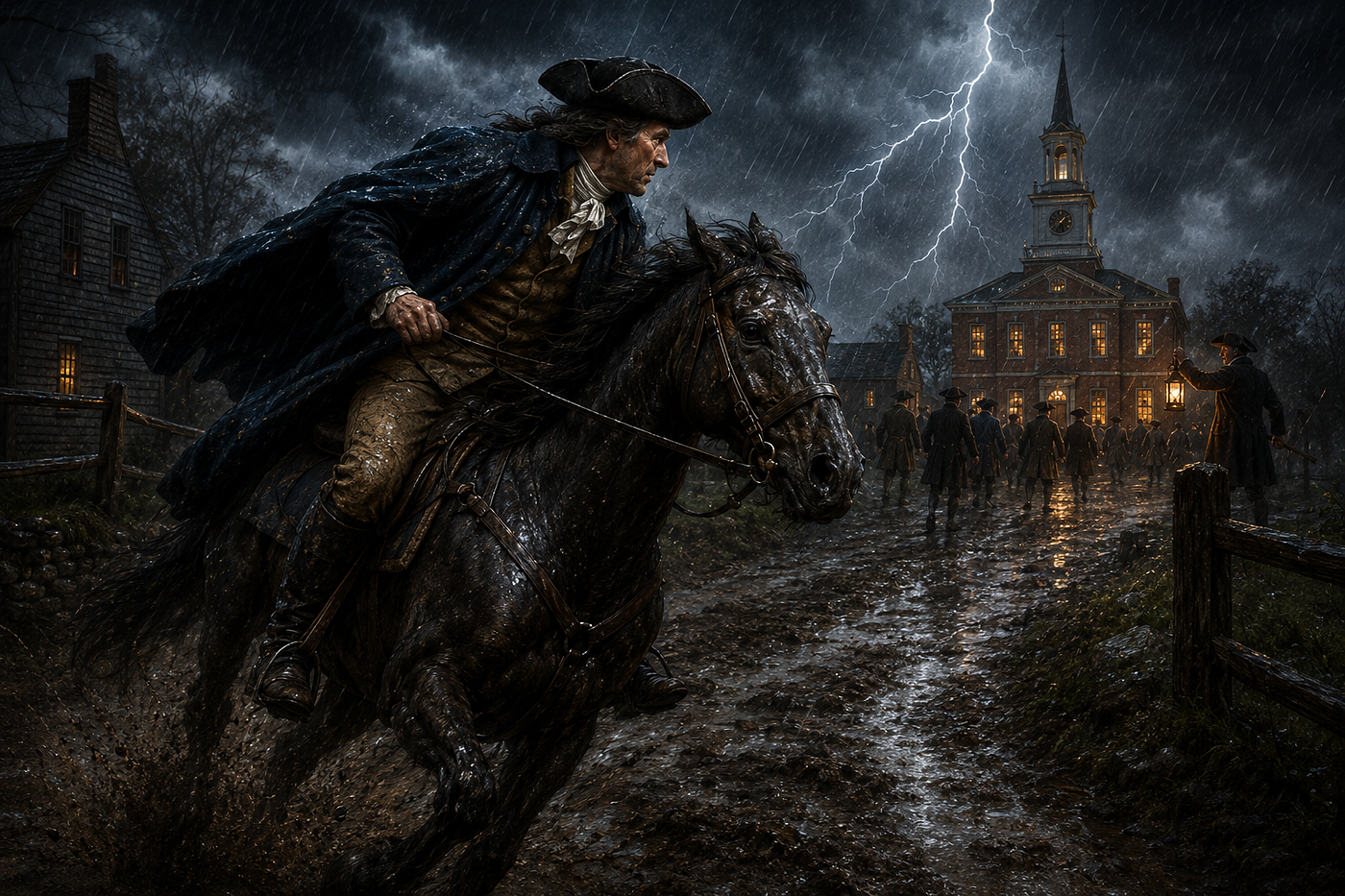
He was seriously ill. It was the middle of the night. He rode eighty miles through a thunderstorm to cast a single vote. Without it, the…
You’ve Heard of Paul Revere. You’ve Never Heard of the Man Whose Ride Actually Decided the Revolution.
He was seriously ill. It was the middle of the night. He rode eighty miles through a thunderstorm to cast a single vote. Without it, the Declaration of Independence might never have passed.
“We hold these truths to be self-evident, that all men are created equal.” Abolitionists quoted it. The suffrage movement quoted it. Martin Luther King Jr. quoted it on the steps of a memorial built to honor the man who wrote it. Across nearly two and a half centuries, it has been the single most reliably invoked sentence in American political writing for any movement seeking to expand who actually counts within “all men.”
The man who wrote it was thirty-three years old, one of the youngest delegates in Philadelphia. This article follows the rest of his long, consequential public life.
A Young Lawyer’s Reputation
Thomas Jefferson was born April 13, 1743, at Shadwell, his family’s Albemarle County, Virginia plantation, to Peter Jefferson, a surveyor and planter, and Jane Randolph Jefferson, of one of Virginia’s most prominent families. He received an excellent education for the period, attending the College of William and Mary, where he developed the wide-ranging intellectual curiosity — architecture, science, linguistics, agriculture — that would define him for the rest of his life.
He trained and practiced as a lawyer, served in Virginia’s colonial government, and by his early thirties had built enough of a reputation that the Virginia legislature appointed him to the Second Continental Congress in spring 1775.
Seventeen Days
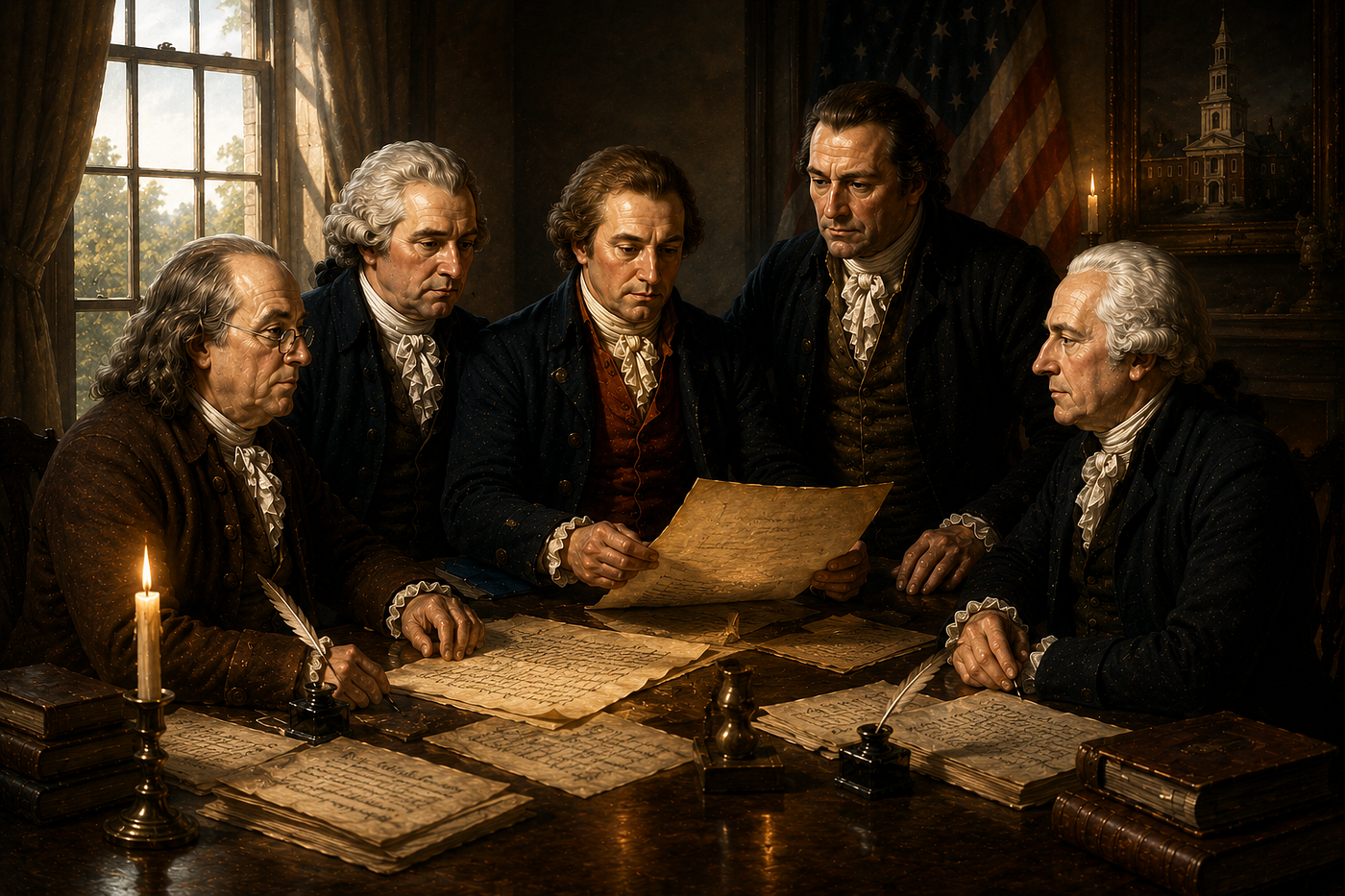
By June 1776, at thirty-three, Jefferson was one of the younger delegates assigned to the Committee of Five — chosen to draft the Declaration not for seniority, but, according to John Adams’s later account, for his skill with a pen. That full story is one this series already told in detail two days ago.
“All men are created equal” was never a description of 1776 colonial reality. It was a deliberately aspirational claim, asserted as universal truth independent of existing law or practice. That framing is exactly what gave it lasting power: because it claimed universality rather than description, it became available to anyone arguing that existing reality fell short and needed to change.
The Public Career
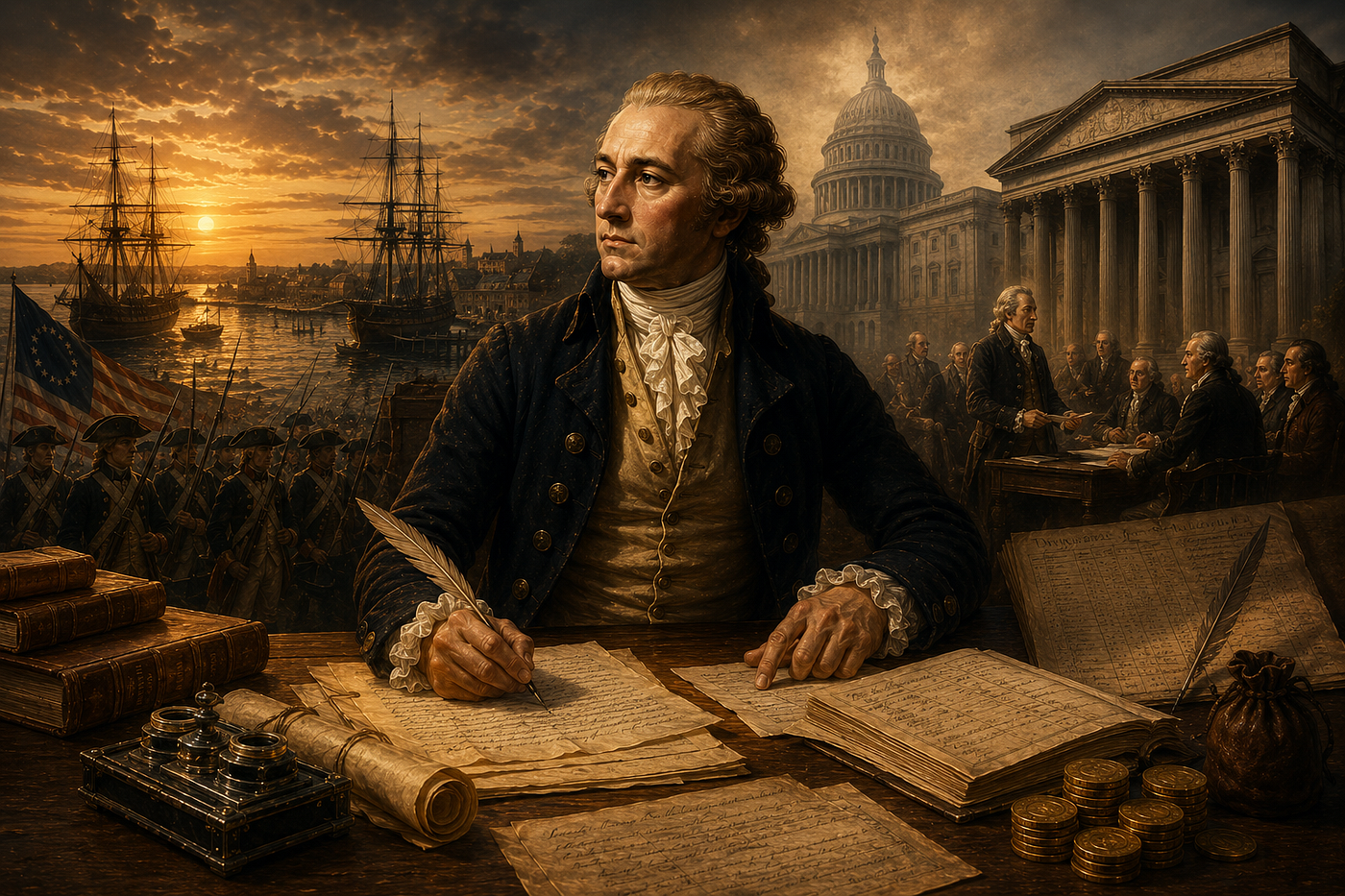
Jefferson served as the first U.S. Secretary of State (1789–1793) and second Vice President under John Adams (1797–1801), running directly against Adams in the bitterly contested 1800 election, ultimately decided by the House of Representatives.
As third President (1801–1809), his most consequential act was the 1803 Louisiana Purchase — roughly 828,000 square miles acquired from France, doubling the nation’s size and enabling the westward expansion that would define the following century. He commissioned the Lewis and Clark Expedition, launched in 1804.
His presidency also confronted the Barbary War in North Africa — a conflict this publication has covered in extensive detail in its own dedicated series.
Monticello and a University
After leaving office in 1809, Jefferson retired to Monticello, maintaining an extensive correspondence including a remarkable late-life reconciliation with John Adams. He also devoted enormous personal energy to founding the University of Virginia, chartered in 1819 and opening in 1825. This was not a ceremonial project — Jefferson personally designed the university’s architecture, planned its curriculum, recruited its early faculty, and oversaw construction of what he called his “academical village,” a genuinely hands-on achievement that occupied the final years of an already extraordinary public life.
A Necessary Note
An honest account of Jefferson’s life can’t fully pass over the fact that he enslaved more than six hundred people across his lifetime, including a documented, decades-long relationship with Sally Hemings that produced children he never publicly acknowledged. This publication examined that history, and the broader history of slavery in early America, in considerable depth in a separate, dedicated series completed just before this one began, and intends to return to it again in future standalone work. It isn’t the focus of this particular series, and this article isn’t relitigating it here. It belongs in any complete account of who Jefferson was, and it sits there honestly, alongside everything else covered above.
Debt and a Library
Jefferson’s final years were marked by severe financial distress, driven by decades of spending beyond his means and underperforming agricultural ventures. He sold his personal library to the federal government to address part of the crisis — a collection that became the foundational core of the Library of Congress, one of his most lasting and least-celebrated institutional contributions.
July 4, 1826
Jefferson died at Monticello on July 4, 1826, at eighty-three — the precise fiftieth anniversary of the Declaration’s adoption. John Adams died the same day, hours later, several hundred miles away in Massachusetts — a coincidence historians have documented extensively without ever fully explaining beyond noting its remarkable nature.
Jefferson chose his own epitaph in advance, naming none of his political offices: “Here was buried Thomas Jefferson, Author of the Declaration of American Independence, of the Statute of Virginia for religious freedom, and Father of the University of Virginia.” Three achievements about liberty and the life of the mind, deliberately selected by the man himself.
File 47: Investigative History — opening the cases that the official account left closed. This is Day 5 of The Unfinished Founding, a special daily series running through July for America’s 250th anniversary.
메타데이터
- post_id
- c7eea84b4909
- slug
- youve-heard-of-paul-revere-c7eea84b4909
- url
- https://medium.com/file-47/youve-heard-of-paul-revere-c7eea84b4909
- canonical_url
- https://medium.com/file-47/youve-heard-of-paul-revere-c7eea84b4909
- author_url
- https://medium.com/@mb661054
- status
- ok
- fetched_at
- 2026-07-08 20:12:56