Inside the $RAWR Raise: How a Fossil Company With No Fossils Pulled $15 Million in Demand
For two months, Futardio looked like a launchpad that had peaked in its first week.
Inside the $RAWR Raise: How a Fossil Company With No Fossils Pulled $15 Million in Demand
For two months, Futardio looked like a launchpad that had peaked in its first week.
MetaDAO’s permissionless ICO platform went live in early March 2026 and opened loud. Superclaw, an AI agent infrastructure project, pulled $6.0 million against a $50,000 goal. Futardio cult, a self-described futarchy-governed meme coin, did $11.4 million against the same $50,000 target. Inside a few weeks the platform had facilitated around $33.5 million across roughly ten projects. It looked like the start of something.
Then it went quiet. The launch-week spikes were not followed by a second wave. On a permissionless venue, where no one curates the projects and the market alone decides what gets funded, a long silence is not neutral. It is a verdict. The model works when capital shows up. For weeks, at scale, it mostly did not.

Jurassic Finance ICO Listing Page as Shown on Futardio
On May 8, a project called Jurassic Finance opened a raise with a $200,000 target. Seven days later, 906 wallets had committed $15,287,173.30 to it, 7,644% of the goal. It became the largest raise the platform had produced and the one that proved the first week was not a fluke. This is the story of why that raise, and not the dozens between it and March, was the one that worked.
What was being funded
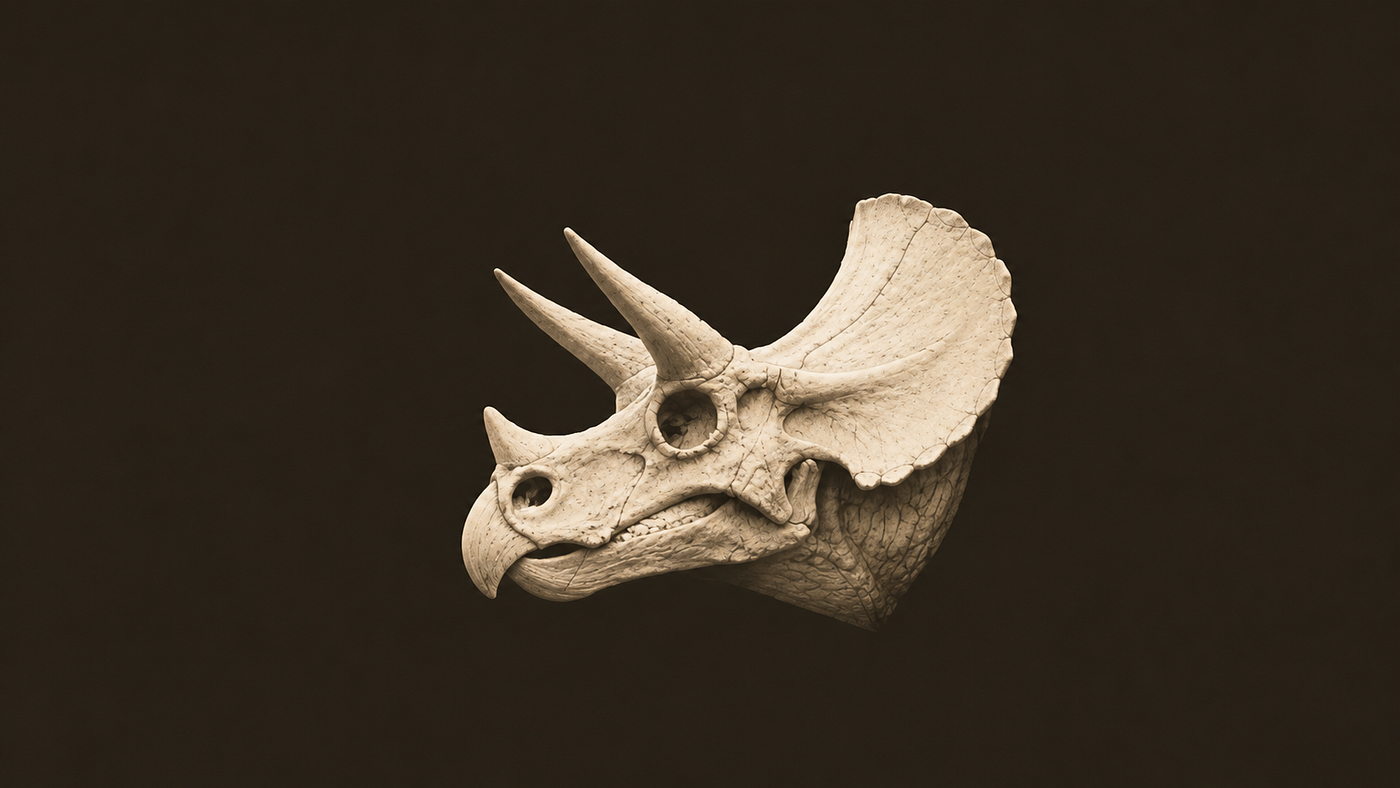
Jurassic Finance is an onchain Solana based business that plans to buy authenticated, museum-grade dinosaur fossils, place each one inside its own Cayman Islands legal vehicle, and issue a token representing legally enforceable fractional ownership of that specimen. The token sold in this raise, $RAWR, is not a claim on any fossil. It is the governance and ownership token of Jurassic Finance Labs, the entity that will source the fossils, structure the vehicles, and run the platform. A $RAWR position carries governance rights across every SPV the Labs entity launches, not just the operating treasury.
On the day the raise opened, none of it existed yet. No fossil. No SPV. No revenue. Zero days of operating history. By every reflex crypto investors have built over the last eight years, this is the kind of raise where the public arrives last and pays for everyone who came earlier.
It did not play out that way, and the reasons sort into three: the structure of the token, the people running it, and the business itself. The size of the number was the headline. These three are why the number happened.
One: the token was built so the team could not be the risk
The first reason is structural, and it does the most work.
$RAWR launched at a fixed $0.02 on a fixed supply of 25.8 million tokens that does not inflate. That implied a $516,000 valuation for the entire company. Ten million tokens, 38.8% of supply, were sold to the public at that price and unlocked immediately. There were no prior SAFTs, SAFEs, convertible notes, or private placements. No venture allocation bought in lower months earlier. The public sale was the cap table.
That single decision removes the most reliable way retail gets extracted in a token launch. Normally the public is the last buyer, purchasing from insiders who priced the company privately and are now exiting into retail demand. Here there was no one in front of the public. The first money in was public money, at the company’s first and lowest valuation.
The founder allocation looks alarming until you read the lock. The team holds 12.9 million tokens, 50% of supply, as a price-based performance premine. None of it moves for an 18-month cliff. After that, it unlocks in five 20% tranches, and each tranche releases only if the price holds at 2x, 4x, 8x, 16x, and 32x the launch price, each measured over a three-month time-weighted average so a single engineered candle does not qualify. Locked tokens cannot even vote until they unlock. The founders reach a large outcome only if the market stays convinced for years. The launch-pump-and-disappear pattern is not discouraged here. It is structurally impossible.
The treasury is fenced the same way. The team can spend $8,000 a month at its own discretion. Anything larger does not move through a team controlled multisig. It goes to a futarchy decision market, where holders trade conditional outcome tokens and a proposal passes or fails on its market-determined price impact. Rigging a normal governance vote just takes tokens. Moving a decision market means continually buying out informed traders at worsening prices. The raised capital was pre-committed before a dollar arrived: 50% to twelve months of runway, 12.5% to legal and Cayman SPV setup, 37.5% to a strategic reserve for buybacks and seeding the first fossil vehicle.
This is what an ownership coin is, and it is the only theory the piece needs. For most of crypto’s history, holding a token felt like owning a company but legally was not, because the treasury, the IP, and the revenue lived in entities the token did not control. An ownership coin inverts that: governed treasury, performance-locked founders, value by rule, decisions priced by a market that is expensive to manipulate.
And the proof that this structure was the draw, rather than the dinosaurs, is in who paid for it. This was not a meme crowd. The top three wallets committed exactly $500,000 each, 3.3% of the entire raise apiece. The book stays heavy well past them: $480K, $470K, $400K, $300K, $278K, $263K, $257K, then a long wall of quarter-million and $200,000 commitments. The twentieth-largest contributor still put in $200,000, the entire original target, alone. These were not tourists who found fossils on Twitter. Cross-referenced against other launches, the wallets anchoring this raise were the same addresses that had funded the earlier ownership coin projects on the platform as shown on 01Resolved. A returning capital base that had bought this exact structure before recognized it again and competed to get back in. The $15.29 million is not enthusiasm for paleontology. It is the revealed judgment of investors who have run this play repeatedly, deciding a $516,000 valuation on a correctly built ownership coin was worth fighting 906 wallets for a sliver of.

Jurassic Finance ICO Contribution Data as shown on 01Resolved
Two: the people were not strangers
Structure alone does not raise $15 million. Someone has to be trusted to execute inside it, and this is the second reason.
Jurassic Finance is a Blockformer project. Blockformer is a Solana creative studio founded by the co-founder Vukan, and its client list, stated on the raise page itself, includes MetaDAO, Streamflow, Jupiter, and Solflare. The people evaluating this raise had, in many cases, watched Blockformer’s work ship across the ecosystem for years. The team had a public, creditable delivery record before it ever asked for money.
The other co-founder, Sora, is what de-risked the actual thesis. Before Jurassic, Sora was COO at Blockformer and spent three years in marketing at LandX, an Ethereum project tokenizing farmland commodities. That is not adjacent experience. It is the exact playbook this company is running: take an illiquid physical real-world asset, wrap it legally, fractionalize ownership onchain. Sora had already run the model on another asset class. The novel-sounding dinosaur thesis was, to anyone who looked, a known pattern applied to a new asset by someone who had done it before.
This matters precisely because of where the raise happened. On a curated launchpad an investor can lean on the platform having vetted the team. Futardio vets nothing. The only diligence is the market’s own, which makes a legible, verifiable team the substitute for the gatekeeper that does not exist. Solana’s “ship visible work first, then raise” culture is exactly what Jurassic had done, which is why the trust was already in place before the raise opened. A 3,300-person waitlist and public endorsements from operators across the Solana Foundation, Jupiter, and Umbra did not create that trust. They confirmed it.
Three: there was a real investible business
The third reason is the one most crypto raises cannot make: a clear path to revenue and no competition standing in it.
The model is not “hold a token and hope.” Jurassic Finance Labs earns origination fees and ongoing platform fees from each fossil SPV, takes an allocation of each SPV’s supply, and plans a lending market against fossil-backed tokens in Q4 2026 that scales with TVL. Revenue compounds with the number of specimens brought onchain. The team’s own framing is deliberately un-crypto about it: not a 100x venture outcome, but a real business with a path to a $20 to $50 million operating entity over three to five years, fundable on its actual probability of success rather than a tail-risk lottery.
The asset is the strongest part of the case. Authenticated museum-grade fossils are scarce, finite, and provenance-verifiable, and they are the only major collectible class with no fractional infrastructure at all. Web2 platforms like Rally and Masterworks proved the demand exists, with hundreds of thousands of users wanting access to collectibles they cannot buy outright, but they offer no onchain ownership, no secondary liquidity, and no value accrual while you hold. There is no onchain incumbent tokenizing fossils with legal structure and market governance. Whatever the execution risk, the category-level competitive risk is close to zero, because the category does not yet have anyone else in it.
The open question: did they raise too little?
There is a real criticism buried in the celebration, and it deserves a straight answer rather than a victory lap.
The raise was capped at $200,000 and drew $15.29 million in commitments, distributed pro rata, which means roughly 98 to 99% of committed capital was refunded rather than retained. A company that has to source physical fossils, fund Cayman structuring, and seed a separate roughly $1 million SPV in Q3 2026 deliberately took a small fraction of the capital being pushed at it. The straightforward critique writes itself: with that much demand on the table, a higher cap would have put real working capital on the balance sheet for an unavoidably capital-intensive business, and refusing it was a mistake.
The counterargument is that the cap was the product. A small target on a structurally clean ownership coin is exactly what produces a 7,644% oversubscription, and that oversubscription became the event. The number is the marketing. The refunded $15 million is the proof-of-demand that put Jurassic Finance on every Solana feed and broke a two-month silence on the platform in a single week. A larger raise means a higher valuation, a heavier expectation, and a softer signal. The team also designed the economics around not needing the money: the first SPV is a separate raise by design, the monthly burn is capped at $8,000, and the entire pitch is that the model works at outcomes far short of unicorn territory. A low cap that prints a demand number buys credibility far more efficiently than a large treasury buys runway.
Both readings can be true at once. The defensible position is that the small cap was correct for this raise, whose only job was to manufacture trust and demand for a company no one had transacted with, and that the real test of the decision arrives at the Q3 SPV raise. If a company that waved off roughly $15 million of demand cannot comfortably fund a $1 million fossil acquisition when it counts, the discipline was vanity. If it can, the cap was the single smartest move it made, because it converted a fundraising round into the marketing event that woke the whole platform up.

Jurassic Finance Financial Overview as Shown on 01Resolved
What the raise actually proved
Jurassic Finance still owns no fossils, but their treasury now sits at $200K. The first vehicle, a Triceratops head trading as $TRCH1, is slated for roughly Q3 2026 with its own separate raise. The honest test is still ahead: when that token sells, whether hundreds of new wallets buy it or the same $RAWR holders simply rotate forward.
But the raise answered the question a raise can answer, and it answered it for the whole platform. For two months Futardio looked like a venue that had spent its credibility in week one. Then a pre-product fossil company with a $200,000 target drew $15 million in committed demand, not because the founders were trusted on faith, not because a platform vouched, but because the structure made trust unnecessary, the team made execution credible, and the business made the whole thing worth funding. The dinosaurs got the headlines. The three reasons under them are why the launchpad is awake again.
메타데이터
- post_id
- c7f38a3a3cd3
- slug
- inside-the-rawr-raise-how-a-fossil-company-with-no-fossils-pulled-15-million-in-demand-c7f38a3a3cd3
- url
- https://medium.com/@tsunamimeta/inside-the-rawr-raise-how-a-fossil-company-with-no-fossils-pulled-15-million-in-demand-c7f38a3a3cd3
- canonical_url
- https://medium.com/@tsunamimeta/inside-the-rawr-raise-how-a-fossil-company-with-no-fossils-pulled-15-million-in-demand-c7f38a3a3cd3
- author_url
- https://medium.com/@tsunamimeta
- status
- ok
- fetched_at
- 2026-07-13 06:23:13