South Florida Building Code Requirements You Need to Know in 2026
South Florida Building Code Requirements You Need to Know in 2026
South Florida Building Code Requirements You Need to Know in 2026
South Florida’s building codes in 2026 are among the most rigorous in the United States — and for good reason. The region faces hurricanes, flooding, coastal erosion, and intense heat, all of which demand construction standards that go well beyond the national baseline. Whether you’re a homeowner planning a renovation or a developer breaking ground on a new project, understanding these requirements is essential before work begins.
Why South Florida Building Codes Matter
Building codes aren’t just bureaucratic checkpoints. In South Florida, they represent decades of hard-won lessons from storm seasons, flooding events, and structural failures. They establish minimum standards for safety, energy use, and environmental resilience.
Following these codes protects occupants, reduces insurance risk, and ensures that structures hold their value over time. Failing to comply can result in costly fines, mandatory demolition, or the inability to sell or insure a property.
Hurricane-Resistant Construction: A Non-Negotiable Standard
No aspect of South Florida construction gets more attention than hurricane preparedness. The Florida Building Code requires that structures be designed to withstand sustained high winds, and local amendments tighten those standards even further in many counties.
Key requirements include:
- Impact-resistant windows and doors — Standard glass is not acceptable in high-wind zones. Products must meet specific impact ratings.
- Reinforced roofing systems — Roof-to-wall connections, decking attachments, and underlayment all face strict specifications.
- Continuous load path design — Forces from wind must be transferred from the roof down through the walls and into the foundation without interruption.
- Reinforced concrete and masonry — These materials remain preferred in high-velocity hurricane zones for their structural durability.
Contractors working in South Florida must be familiar with wind speed maps and the applicable design pressure requirements for each specific location and building type.
Coastal Construction Requirements
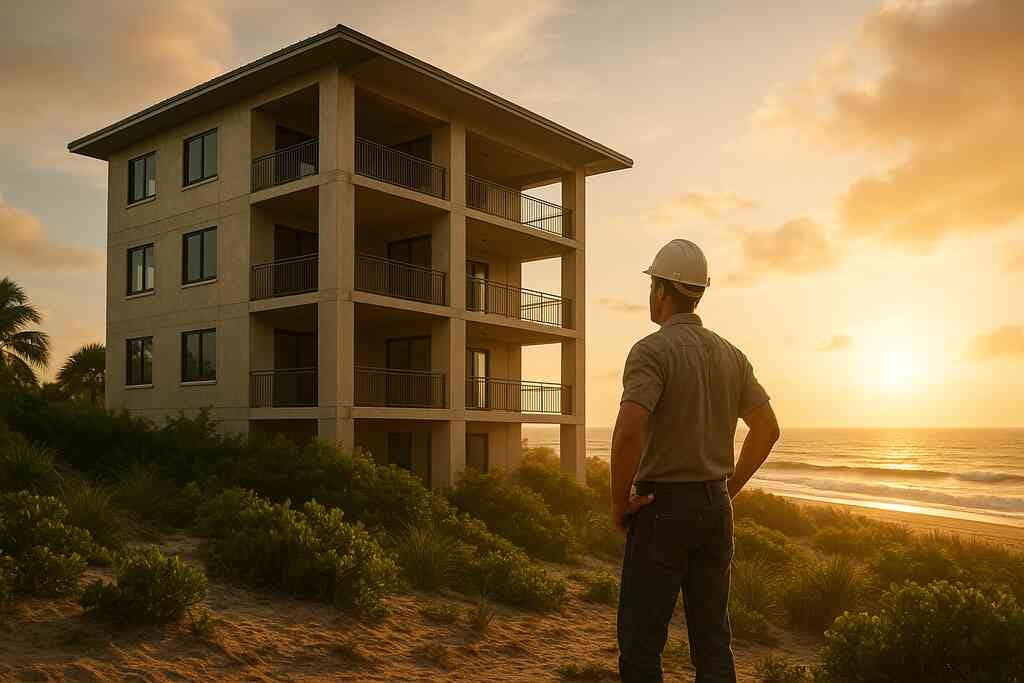
Building near the coast introduces additional layers of regulation. Structures in coastal zones must account for storm surge, saltwater corrosion, and shifting soils.
Common coastal mandates include:
- Elevated foundations — Homes in flood zones must be built above the Base Flood Elevation (BFE), often requiring piers, pilings, or stem walls.
- Corrosion-resistant materials — Hardware, fasteners, and structural connectors must be rated for coastal exposure.
- Setback requirements — Structures must be placed a minimum distance from the shoreline to account for erosion and surge risk.
- Flood-resistant construction methods — Lower enclosed areas must be designed to allow floodwaters to pass through or be built with flood-resistant materials.
Violating coastal construction rules can result in loss of flood insurance eligibility, which makes financing and ownership significantly more difficult.
Wind Load Calculations and Structural Engineering
Every new structure in South Florida requires detailed wind load calculations as part of the permitting process. Engineers must determine how much lateral and uplift force a building will experience during a design-level storm and confirm that the structure can handle it.
This involves:
- Calculating exposure category based on site surroundings
- Determining design wind speed for the specific location
- Specifying connection hardware, sheathing types, and framing schedules accordingly
These calculations aren’t optional — they must be stamped by a licensed engineer and submitted with building plans before permits are issued.
Energy Efficiency Standards
South Florida’s energy code requirements have grown more demanding in recent years. In 2026, new construction must meet updated standards for thermal performance, lighting efficiency, and mechanical systems.
Practical requirements include:
- Insulation values — Walls, roofs, and slabs must meet minimum R-value standards suited to Florida’s climate zone.
- HVAC efficiency ratings — Systems must meet minimum SEER ratings, and duct systems must be sealed and tested.
- Lighting controls — Residential and commercial buildings must include energy-saving controls and meet watt-per-square-foot limits.
- Building envelope testing — Many jurisdictions require blower door tests to confirm air sealing meets code minimums.
These standards reduce long-term operating costs and contribute to broader sustainability goals across the region.
Sustainable and Green Building Considerations
Beyond the minimum code requirements, many South Florida projects are voluntarily pursuing green building certifications. These programs encourage water-efficient landscaping, reduced heat island effects, solar-ready construction, and low-VOC building materials.
While certification isn’t always required, green building practices often align with code minimums and can qualify projects for incentives or expedited permitting in some municipalities.
Working With a Qualified South Florida Contractor
Code compliance in South Florida is complex. Requirements vary by county, municipality, and flood zone designation. Mistakes during design or construction can be expensive to correct after the fact.
Working with a licensed contractor who has direct experience navigating South Florida’s specific regulatory environment is one of the most effective ways to avoid delays and costly errors. Directories of vetted local contractors can help you identify professionals who are already familiar with the applicable codes for your project type and location.
Final Thoughts
South Florida’s building code requirements in 2026 reflect the region’s unique vulnerabilities and its commitment to resilient, efficient construction. From hurricane straps to flood-elevated foundations to energy-rated HVAC systems, these standards touch every phase of a project.
Understanding what’s required — and working with professionals who know how to meet those requirements — sets the foundation for a safer, more durable, and more compliant build.
메타데이터
- post_id
- c7f7576ee680
- slug
- south-florida-building-code-requirements-you-need-to-know-in-2026-c7f7576ee680
- url
- https://medium.com/@SouthFloridaContractors/south-florida-building-code-requirements-you-need-to-know-in-2026-c7f7576ee680
- canonical_url
- https://medium.com/@SouthFloridaContractors/south-florida-building-code-requirements-you-need-to-know-in-2026-c7f7576ee680
- author_url
- https://medium.com/@SouthFloridaContractors
- status
- ok
- fetched_at
- 2026-06-23 03:48:11