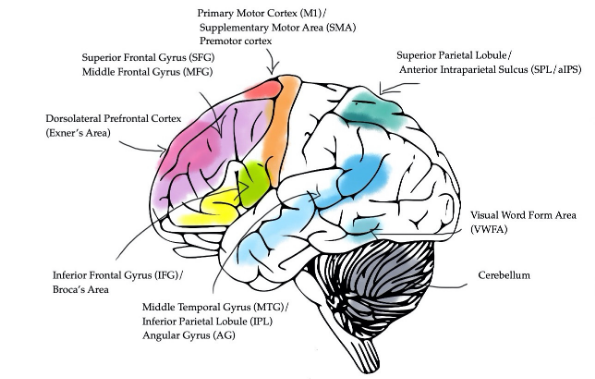
What is Optogenetics?
Using light to control neural activity in the brain
What is Optogenetics?
Using light to control neural activity in the brain
Our brain is the control unit of our bodies. All of our emotions, behaviors, memories, and even disease occur in our brains. So if we understand our brains better and take control over them, we can solve almost every mystery of our bodies and psychology. But can we understand our brains better?
Introducing Optogenetics:
Optogenetics is a technique that allows scientists to control the activity of specific neurons in the brain using light. It involves introducing genes for light-sensitive proteins called opsins into neurons through gene transfer and then using light to activate or inhibit these neurons. This technique has become an important tool for studying brain function and for developing treatments for neurological and psychiatric disorders. It was first proposed in the early 2000s by a group of researchers at the Max Planck Institute for Biophysics in Germany and has since been used to study a wide range of behaviors and to partially restore visual function in a blind patient. Optogenetics has the potential to revolutionize our understanding of the brain and to provide new treatments for a variety of disorders. This concept will not only help scientists to understand the brain better, but also to cure many diseases.
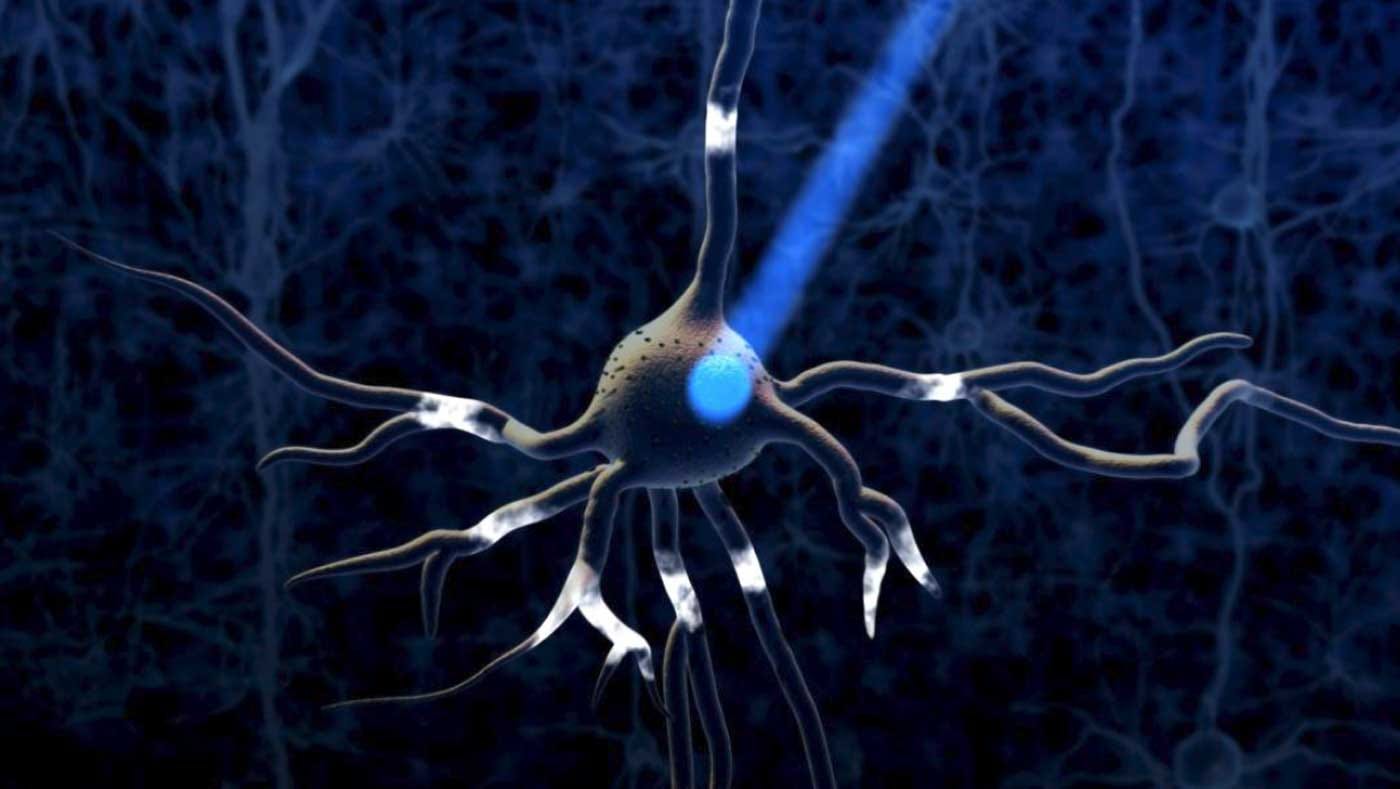
image by https://www.dana.org/article/optogenetics/ of a neuron being activated by light
The technique involves the use of light to control cells in living tissue, typically neurons, which have been genetically modified to express light-sensitive proteins called opsins. The brain is made of neurons that use electricity to activate and send signals. When a mistake occurs in the brain, neural diseases occur. Before optogenetics, scientists used (and are still using because optogenetics is not yet practiced in humans) electricity to control brain systems. However, when using electricity all neurons get affected. On the other hand, if using light to turn on or off a selected circuit of the brain by injecting genes and using light, scientists can get much more accurate results. Optogenetics is basically injecting light-sensitive proteins into the brain to activate or deactivate selected neurons when light is shown. Scientists get these proteins(opsins) from nature(such as algae) and put them into a brain by gene editing(or gene transfer). This procedure helps them to analyze how chosen cells contribute to living things’ behaviors or cause neural disease.
How did the idea of optogenetics first come up?
The idea of using light to control cells dates back to the 1960s when researchers first developed the technique of photolysis, which involves using lasers to selectively break chemical bonds in molecules. However, the concept of optogenetics as we know it today was first proposed in the early 2000s by a group of researchers led by Dr. Ernst Bamberg and Dr. Georg Nagel at the Max Planck Institute for Biophysics in Germany.
The researchers were interested in studying the function of specific neurons in the brain and how they were involved in certain behaviors. They realized that they could use opsins, which are light-sensitive proteins found in certain types of bacteria and algae, to selectively activate or inhibit the activity of specific neurons in the brain. To do this, they used a technique called gene transfer to introduce the genes for opsins into the neurons they wanted to study. They could then use light to control the activity of these neurons, allowing them to study their function in a more precise and controlled way. This marked the beginning of the field of optogenetics, which has since become an important tool for studying brain function and for developing treatments for a wide range of neurological and psychiatric disorders. Yet scientists used optogenetics to treat blindness partially. The article “Partial recovery of visual function in a blind patient after optogenetics therapy” published in Nature Medicine magazine, shows how optogenetics can help cure or treat neural disorders.
To understand optogenetics, first, we should understand the brain.
How do neurons fire?
In a neuron, there are electrically charged ions inside and outside the cell. These ions have different charges and this creates an electrical gradient. When a neuron sends a signal an “action potential” occurs. An action potential is when a channel opens and ions flow across the plasma membrane, which changes the electrical charge inside the neuron. When the charge inside the neuron changes, the action potential goes all across the axon of a neuron and sends an electrical signal to another neuron. In this process, optogenetics controls when the action potential happens by controlling the channels. In other words, optogenetics helps us to control the action potential energy.
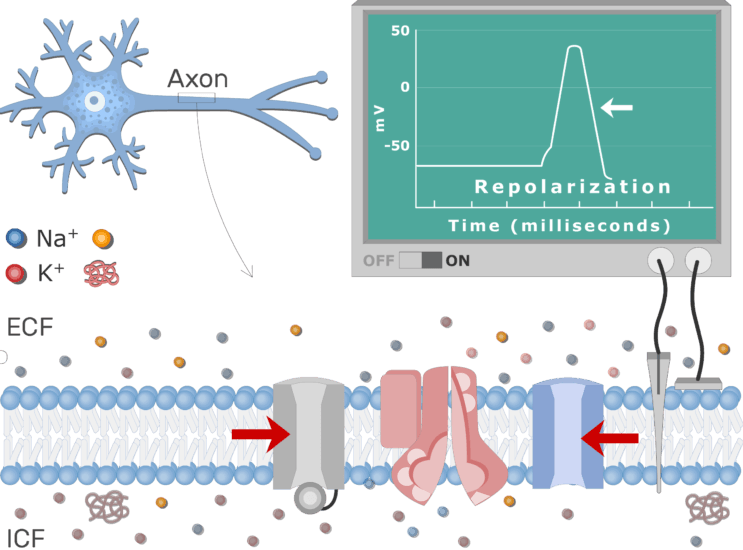
Action potential of a neuron. https://www.getbodysmart.com/nervous-system/action-potential-events/
In its resting state, the inside of the neuron is more negative. The entrance of positive ions through channels, like Sodium, causes the neuron to become more positive until it reaches a threshold. This creates an action potential when the positive charge is moved down to the synapse causing signaling to the next cell.
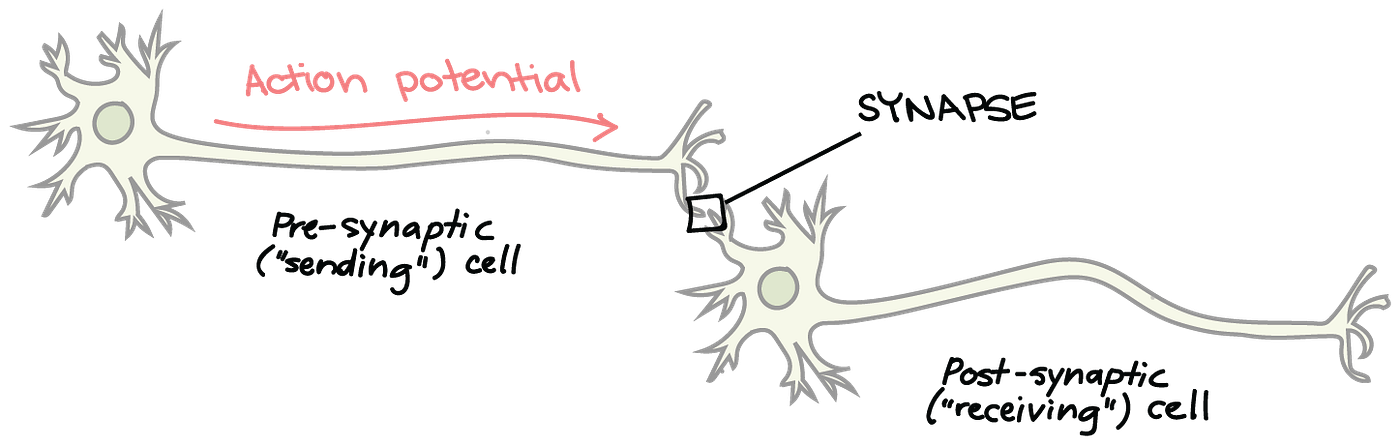
Negative ions inside the neuron have the opposite effect, making the relative charge inside the neuron more negative, inhibiting firing.
How do scientists control channels?
To control the activation of a neuron scientists have to control when an ion enters our neuron.“Opsins” which are light-activated proteins control the movement of ions. They are proteins that are found in a variety of organisms, including algae, bacteria, and animals. When opsins are exposed to light, they undergo a chemical reaction that causes them to change shape. This change in shape allows opsins to interact with ions, such as sodium, potassium, and chloride, and to control their movement across cell membranes. These can make the inside of the neuron more positive and set off action potential and fire the neuron. Also, they can be used to make the neuron more negative, by bringing Chloride ions in, or sending positive ions like protons out. This blocks action potential and inhabits firing. Through this process, opsins convert light into electrical gradients and effectively act as light-evoked on or off switches for neuron firing. Scientists can inject these genes into our neurons. Opsins help optogenetics to be fast and precise. Opsins can respond to light by using sensing Chromophores, such as “retinal”.
Retinal
Retinal is a pigment molecule that is bound to opsins, and it is responsible for their light sensitivity. When opsins are exposed to light, the retinal molecule changes shape, which triggers a conformational change in the opsin protein. This conformational change allows opsins to interact with ion channels in the cell membrane and to control the movement of ions across the membrane.
Opsins and retinas are used to control the activation of neurons. By injecting opsin genes into neurons, researchers can create neurons that are sensitive to light. When these light-sensitive neurons are exposed to specific wavelengths of light, the opsins will change shape and interact with ion channels in the cell membrane. This can cause the neurons to become more or less electrically active, depending on the type of opsin used. By using different types of opsins and different wavelengths of light, researchers can precisely control the activation of neurons and study the effects on behavior and disease.
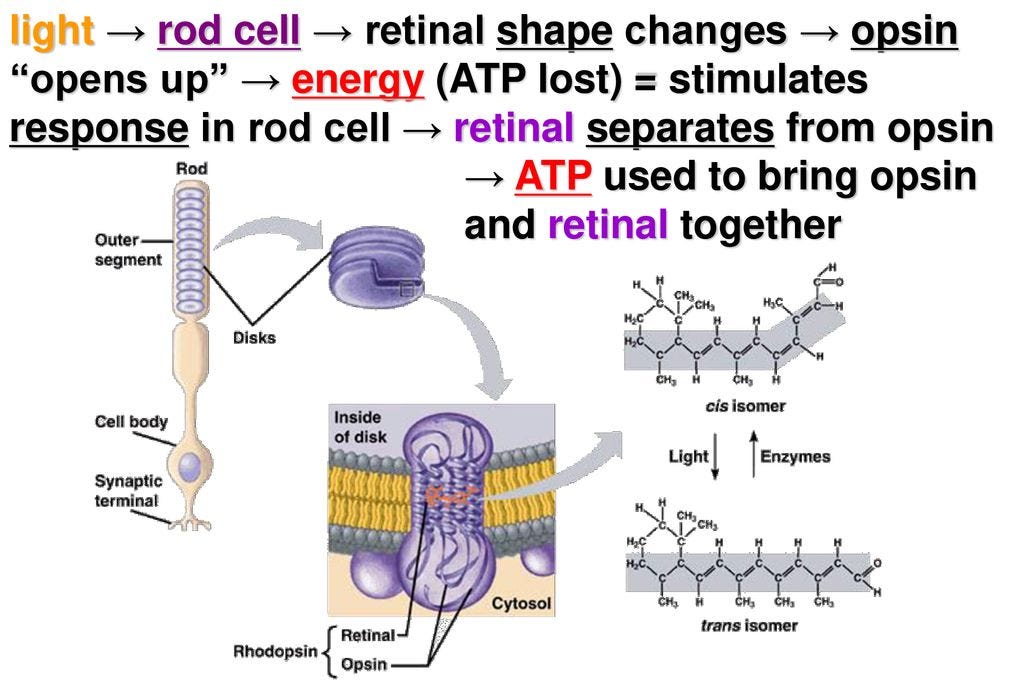
When exposed to the correct wavelength of light(which affects the color of light) retinal changes from 11-cis to all trans, and causes the opsin to activate and shut the ions across the membrane.
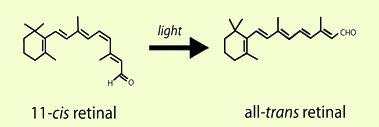
11-cis retinal to all-trans after light http://photobiology.info/Crouch.html
In nature, opsins are found in microorganisms like the algae volvox, allowing them to move toward light and improve photosynthesis.
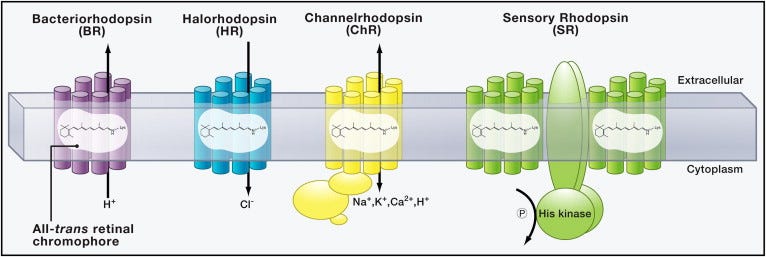
https://www.cell.com/fulltext/S0092-8674(11)01502-9
These are the three common opsins in the order:
Name → activate with which light → type of stimulation → neural effect → type → specificity
ChR2(Channelrhodopsin 2) → blue light → activation → depolarization → channel → Cations(non-selective)
This channel opens in response to the light allowing the algae to sense the direction of a light source, like the sun.
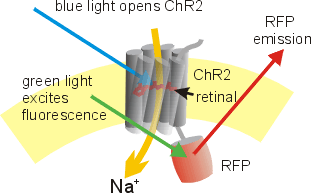
HR (Halorhodopsin) → green or yellow light → inhibition → hyperpolarization → pump → chloride ions
Arch (Archaerhodopsin) → green or yellow light → inhibition → hyperpolarization → pump → protons
Overall, opsins and retinal are key components of optogenetics, and their ability to respond to light and control ion channels allow us to manipulate the activity of neurons in precise and selective ways.
Opsin Delivery
To perform optogenetics, scientists have to introduce opsin proteins to our bodies. There are different ways to introduce these genes like viral delivery with AAV(Adeno-associated virus) or electroporation. To target specific neurons, scientists use tissue-specific promoters, AAV serotypes, and recombined systems. These techniques make it possible to target brain regions, neuron types, or even neuron cell bodies or projectors.
Past Experiment
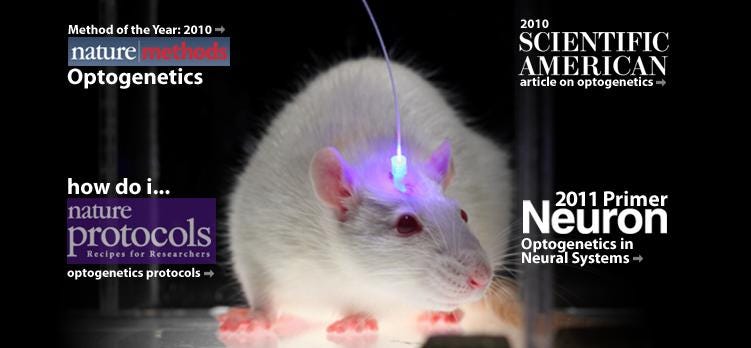
In 2004, scientists were able to use a virus to insert the ChR2 gene into mice neurons. So that the mice started to express these light-sensitive proteins naturally. Then they insert tiny LED lights or optic fibers into different brain regions to examine different reactions in different parts of the brain. This helped them to control a mouse’s neurons in milliseconds. It required a single gene to create the opsin protein. This experiment helped them to target a circuit in the amygdala which controls “fear”. They were able to target aggressive behaviors and fear when they activated different parts of the brain.
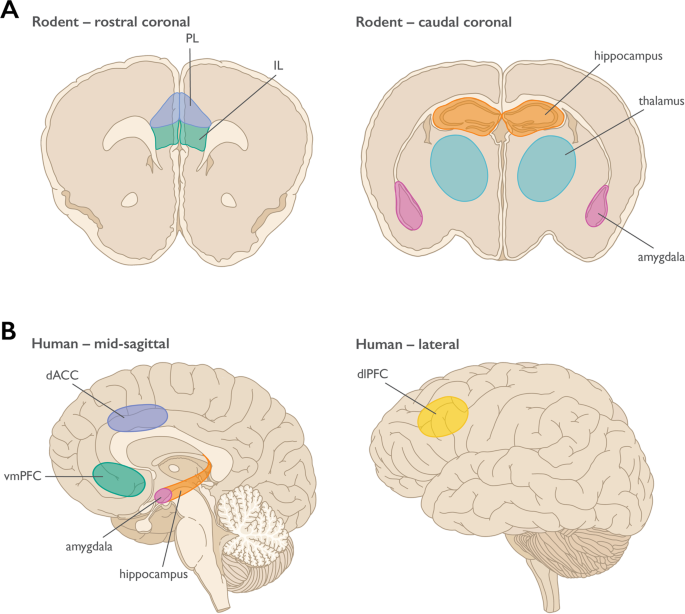
In part A you can see the rodent’s brain, the part shaded with pink shows the amygdala. In part B you can see a human brain, the amygdala is again shaded in pink.
What is optogenetics for?
Optogenetics is currently used for experimenting with which part of the brain controls which actions. However, with optogenetics, we will have limitless opportunities. We will also be able to control neural disease by controlling the electrical disorders in the brain and even produce more effective drugs. Currently, most drugs target molecules to cure illnesses, however, these molecules are found in the brain and many cells throughout the nervous system. This causes the drugs to have side effects and not to be so efficient. On the other hand, if we target circuits in the brain, we might produce much more specific drugs.
What are the challenges in optogenetics?
Currently, there are some technical limitations, ethical concerns, and potential risks to optogenetics.
One of the main technical challenges in optogenetics is the need for precise, targeted delivery of opsin genes to specific neurons. This can be difficult to achieve, and it requires specialized techniques and equipment. Also, the light-sensitive proteins used in optogenetics are not always stable, and they can be degraded or inactivated over time, which can limit their effectiveness.
Another problem is that optogenetics contains the potential for unintended effects on the brain and behavior. Because optogenetics allows researchers to manipulate the activity of specific neurons, there is a risk that these manipulations could have unintended consequences, such as altering brain function or behavior in unexpected ways. This can be a particular concern when optogenetics is used in living animals or humans, as it raises ethical questions about the potential risks and benefits of the technology.
So there is the challenge of translating the findings from optogenetics research into real-world applications. While optogenetics has shown great promise in basic research, it is not yet clear how it can be used to develop effective treatments for neural disorders in humans. This will require further research and development to overcome the technical and ethical challenges associated with optogenetics.
Limitations
Optogenetics is a promising technique that has the potential to revolutionize our understanding of the brain and to provide new treatments for a variety of disorders. However, there are also many challenges and limitations to its use. One major challenge is the delivery of opsins to the specific neurons that need to be targeted. This requires the use of viruses or other gene delivery methods, which can be difficult to control and can have unintended side effects. Another challenge is the long-term safety and effectiveness of the technique. It is not yet clear how optogenetics will affect the brain over the long term, and there is a risk of unwanted side effects or unintended consequences. Finally, optogenetics is still a relatively new field, and there is much that we do not yet understand about its potential and limitations. As a result, much more research is needed before optogenetics can be widely used in humans.
Works Cited:
- Bedbrook, Claire N et al. “Machine learning-guided channelrhodopsin engineering enables minimally invasive optogenetics.” Nature methods vol. 16,11 (2019): 1176–1184. doi:10.1038/s41592–019–0583–8
- Shemesh, O.A., Tanese, D., Zampini, V. et al. Temporally precise single-cell-resolution optogenetics. Nat Neurosci 20, 1796–1806 (2017). https://doi.org/10.1038/s41593-017-0018-8
- Halloran, M. C. (2018). Optimization of optogenetic proteins and protein-focused deep learning algorithms. UC San Diego. ProQuest ID: Halloran_ucsd_0033D_17178. Merritt ID: ark:/13030/m58q0wtm. Retrieved from https://escholarship.org/uc/item/6d59d468
- Sahel, JA., Boulanger-Scemama, E., Pagot, C. et al. Partial recovery of visual function in a blind patient after optogenetic therapy. Nat Med 27, 1223–1229 (2021). https://doi.org/10.1038/s41591-021-01351-4
메타데이터
- post_id
- c7f7ae296494
- slug
- what-is-optogenetics-c7f7ae296494
- url
- https://medium.com/merging-synapses/what-is-optogenetics-c7f7ae296494
- canonical_url
- https://medium.com/merging-synapses/what-is-optogenetics-c7f7ae296494
- author_url
- https://medium.com/@handenazkavas
- status
- ok
- fetched_at
- 2026-06-13 09:42:26