The Mind-Body Lock-In
How Focus, Fear, and Inner Belief Shape Every Performance
The Mind-Body Lock-In
How Focus, Fear, and Inner Belief Shape Every Performance
Part 5 of 6 in the Fitfty Series: “Psychology of Sports and Exercise”
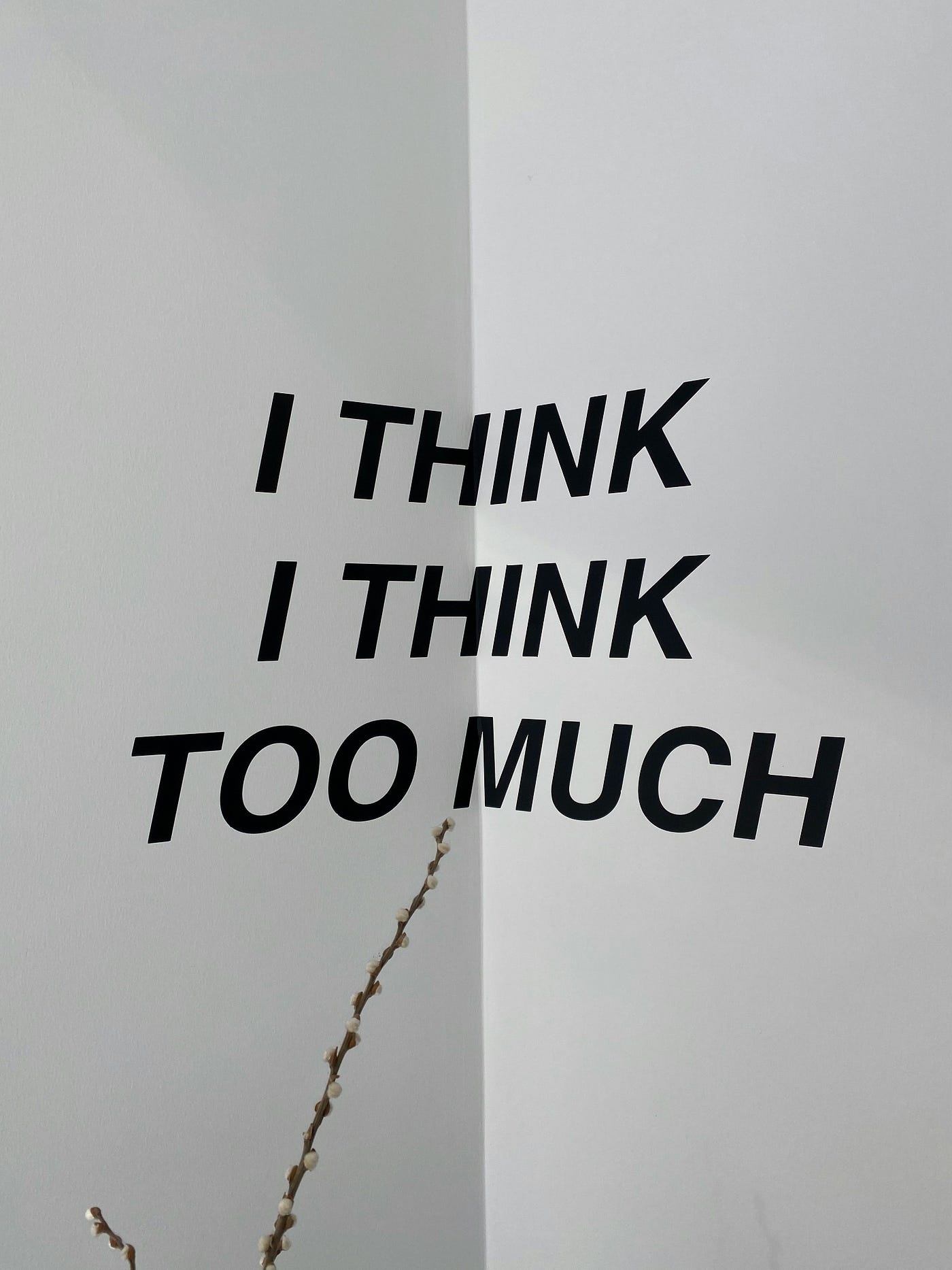
Overthinking blurs instinct. In high-pressure moments, clarity comes not from thinking more — but from trusting the preparation already done.
It’s a stadium moment. A penalty shootout. A deafening crowd. A single player on the line. Her muscles are warm, reflexes trained, timing perfected over thousands of hours. And yet — right now — none of that matters without the one thing no stopwatch can measure: mental focus. The mind, in this moment, will decide what the body does next.
Sport isn’t just physical. It never was. Performance flows from the complex dance between mind and body — neither leading, neither following. Just locked in. ⚖️
🧠 The Brain Trains Too
A common misconception in sport is that the brain serves only as the control tower: sending signals, issuing commands, analysing. But neuroscience tells us something far more intimate. The brain doesn’t just guide performance — it participates in it, just as actively as muscles, tendons, and lungs.
Elite athletes spend hours training without ever moving a limb. Visualisation — also known as motor imagery — is not just a technique used by sports psychologists; it’s a cornerstone of high performance. Studies using fMRI have consistently shown that mentally rehearsing a movement activates many of the same brain areas as physically performing it: the motor cortex, cerebellum, basal ganglia, and supplementary motor area (Guillot & Collet, 2005).
What this means is startling: your brain can practise a skill without your body. And that practice can lead to measurable improvements in precision, coordination, and confidence.
One well-known study (Zhang et al., 2014) split basketball players into three groups: physical practice only, mental visualisation only, and a combination. The group using both visualisation and practice outperformed the others significantly in free-throw accuracy. The brain, when used right, boosts the body.
🎯 Case Study: Jessica Ennis-Hill and The Power of Pre-Play
Before any major competition, Jessica Ennis-Hill would isolate herself from distraction and mentally rehearse each event of the heptathlon. Not just the ideal version, but variations: different weather, a stumble, a slow start, a missed cue. She wasn’t visualising perfection. She was rehearsing recovery.
This is mental preparation at its most powerful — because performance is rarely flawless. It’s shaped by pressure, mistakes, fatigue. Athletes like Ennis-Hill succeed not because they avoid the unexpected, but because they’ve prepared their minds to respond when it arrives.
😖 When the Mind Turns Against the Body
But what about when visualisation backfires? When the inner voice isn’t a coach — but a critic?
Mental imagery is a tool, not a guarantee. If an athlete is replaying failure, injury, or humiliation, the same brain mechanisms activate — but now they reinforce anxiety, hesitation, or fear.
Take the case of Simone Biles at the Tokyo Olympics. A gymnast considered the best of her generation, Biles shocked the world when she pulled out mid-competition citing a mental block known as the “twisties” — a dissociative condition where spatial awareness vanishes mid-air. Her physical body hadn’t failed her. Her brain had lost its connection to it.
Neuroscientists have documented this phenomenon: under pressure, stress can dysregulate the default mode network (DMN), which governs internal thought and focus. When the DMN becomes overactive, attention fragments. The athlete is no longer in the moment — but observing it, judging it, fearing it.
The result? Underperformance. Or in Biles’ case, self-preservation.
💬 The Impact of External Criticism
Criticism has power. Whether it’s shouted from the stands or whispered in a locker room, negative feedback can infiltrate an athlete’s internal narrative. Especially in younger or more vulnerable individuals.
One study from the Journal of Applied Sport Psychology (2009) found that athletes who perceived their coaches as overly critical displayed increased levels of self-doubt, lowered motivation, and reduced enjoyment. Another study (Nordin-Bates et al., 2014) focused on adolescent dancers, revealing that high levels of performance anxiety were directly correlated with harsh criticism and comparison.
Words matter.
That said, not all feedback is harmful. Constructive critique, framed within a supportive and trusting environment, can drive adaptation. The key isn’t to avoid hard truths — but to deliver them with clarity, care, and a path forward.
⚡️ The Role of Emotion in Performance
In 2018, tennis star Naomi Osaka won the US Open — but left the court in tears. Not because of her play, but because the match had descended into controversy, audience jeering, and emotional overload.
It was a stark reminder: emotional climate affects performance. The limbic system — the brain’s emotional centre — interacts directly with the motor system. When emotions overwhelm, fine motor control, decision-making, and reaction time can suffer.
This holds across age groups. In youth athletes, emotional regulation is still developing. In older athletes, cumulative stress or identity-related pressure can undermine resilience.
But when emotional energy is channelled — through breathwork, mindfulness, cognitive reframing — it becomes a fuel. Think Serena Williams channelling rage into dominance. Or Muhammad Ali dancing through insults and expectation with unmatched grace.
👶🧓 Performance Under Pressure: Age Matters
Age plays a subtle but meaningful role in how athletes handle psychological pressure. Research shows that:
- Young athletes (under 18) are more susceptible to peer evaluation and social pressure. Their prefrontal cortex — the seat of judgement and planning — is still developing. This makes coaching language and peer dynamics critical during formative years.
- Prime-age athletes (20s–30s) often show the greatest mental robustness, having experienced failure, recovery, and competition. Their capacity for focus and mental regulation peaks here.
- Older athletes (40+) may face a different challenge: identity. The pressure to prove they “still have it” can affect risk-taking and joy. Yet, many show higher levels of emotional intelligence, patience, and resilience — hallmarks of experienced performers.
One interesting example is the case of Tom Brady, who, well into his 40s, continued to perform at an elite level in the NFL. Not by out-muscling younger athletes, but by leveraging mental precision, calm under pressure, and decades of pattern recognition.
🧘🏼♂️ Training the Mind: The Tools of Focus
So how does one train the mind to lock in?
Here are five evidence-backed methods that athletes of any level can use:
- Visualisation (Motor Imagery)
Practise the skill mentally in vivid detail. Include all senses: the feel of the racquet, the sound of the crowd, the sightline of the goal. Repetition builds neural efficiency.
2. Breath Regulation
Slow, intentional breathing activates the vagus nerve and reduces cortisol levels. Navy SEALs use “box breathing” (inhale 4s, hold 4s, exhale 4s, hold 4s) to manage acute stress.
3. Mindfulness & Present-Centred Awareness
A 2016 meta-analysis in Psychology of Sport and Exercise found that mindfulness-based interventions improved focus, anxiety levels, and performance in athletes from fencing to football.
4. Cognitive Restructuring
Learning to challenge internal doubts (“I always mess this up”) and reframe them (“I’ve trained for this. I’ve recovered before”) is a powerful step in regaining control.
5. Simulation Training
Replicating pressure environments — crowd noise, time pressure, public visibility — helps normalise anxiety. Goalkeepers training with speakers blasting abuse isn’t masochistic. It’s preparation.
🧍🏽♀️🧍🏽 Real People, Real Pressure
In 2021, England’s Marcus Rashford, Jadon Sancho, and Bukayo Saka missed penalties in the Euro final. The backlash was swift, and in many corners, shameful. But what followed mattered more: a national conversation about race, mental health, and expectation.
What few discussed was what it takes to step up. These were three young men — some barely out of their teens — facing the ultimate pressure. The margin between a goal and a miss? Millimetres. Fractions of a second. But the mind? It amplifies everything.
Missing a penalty is not weakness. It’s human. And bouncing back? That’s courage.
All three players returned. They kept playing. And they kept scoring.
🤝 Coaches, Parents, and the Psychology of Support
Support networks aren’t accessories — they are part of the mental equation.
Positive reinforcement, realistic goal-setting, emotional availability — these aren’t soft concepts. They are scientifically supported performance enhancers. A 2015 study in the Journal of Youth Sports found that perceived parental support significantly predicted motivation and enjoyment in adolescent athletes — more than win-loss record or playing time.
Coaches, too, must walk the line between standards and support. The old “break them down to build them up” mantra is fading. The new model? Train them with precision. Challenge them with care. Build them with trust.
🧭 Final Thoughts: Finding the Lock-In
The mind-body lock-in isn’t a switch. It’s not something that “just happens” in elite athletes or during magical moments. It’s a skill — a teachable, trainable, and powerful part of preparation.
Whether you’re 15 or 55, in a local league or a national spotlight, your mind shapes your body’s output. Learn to direct it. Learn to recover from its misfires. And most importantly, learn to treat it with respect.
Because in the end, the loudest crowd… the hardest opponent… the tightest race…
…is often inside your own head.
And when you learn to meet it with breath, focus, and belief — you unlock performance you didn’t know you had. 🔐
Proof of Authorship:
This article was signed by the author using Keybase.
View the signed proof here
📌 Coming Next in the Series: Final Reflections: Where Psychology Is Headed Next
From mental toughness to emotional fluency, the field of sports psychology is evolving fast. In the final chapter of our series, we’ll explore what’s changing, what still holds true, and how athletes of all ages can prepare their minds for the future — on and off the field.
🗂️ Article Menu — Series: Psychology of Sports and Exercise
➡️ *The Inner Game Never Ends*
➡️ *From Locker Room to Boardroom*
➡️ Mental Muscles: What Makes an Athlete Tick
➡️ *Group Gains: How Teams Build (and Break) Performance*
➡️ The Mind-Body Lock-In
➡️ Final Reflections: Where Psychology Is Headed Next
📚 References
- Guillot, A., & Collet, C. (2005). Duration of mentally simulated movement: A review. Journal of Motor Behavior, 37(1), 10–20.
- Zhang, C. Q., et al. (2014). The effects of imagery on sport performance: A meta-analysis. International Review of Sport and Exercise Psychology, 7(1), 144–161.
- Mesagno, C., & Marchant, D. (2013). Characteristics of polar opposites: An exploratory investigation of choking-resistant and choking-susceptible athletes. Journal of Applied Sport Psychology, 25(1), 72–91.
- Raab, M., et al. (2009). Action effects in perception and action: The influence of anticipated action effects on visual perception and motor behaviour in sports. Journal of Sport and Exercise Psychology, 31(2), 184–203.
- Conroy, D. E., & Coatsworth, J. D. (2007). The effects of coach behavior on young athletes’ perceptions of competence and sport anxiety. Journal of Sport & Exercise Psychology, 29(1), 170–182.
- Nordin-Bates, S. M., et al. (2014). The relationship between perfectionism and self-presentation in dancers. Psychology of Sport and Exercise, 15(3), 255–262.
- Birrer, D., Röthlin, P., & Morgan, G. (2012). Mindfulness to enhance athletic performance: Theoretical considerations and possible impact mechanisms. Mindfulness, 3(3), 235–246.
- Thompson, R. W., Kaufman, K. A., De Petrillo, L. A., Glass, C. R., & Arnkoff, D. B. (2011). Mindfulness and performance. Journal of Clinical Sport Psychology, 5(2), 134–156.
- Wilson, V. E., & Kerr, G. A. (1999). Affective responses to success and failure: A study of winning and losing in competitive sport. International Journal of Sport Psychology, 30(2), 105–124.
- Tenenbaum, G., et al. (2002). Decision-making and coping under stress: A sport-specific test of individual differences in performance under pressure. Journal of Sport Behavior, 25(3), 217–237.
메타데이터
- post_id
- c7fb9226763d
- slug
- the-mind-body-lock-in-c7fb9226763d
- url
- https://medium.com/@fitfty/the-mind-body-lock-in-c7fb9226763d
- canonical_url
- https://medium.com/@fitfty/the-mind-body-lock-in-c7fb9226763d
- author_url
- https://medium.com/@fitfty
- status
- ok
- fetched_at
- 2026-07-18 23:42:34