Why Your Pantry Snacks Are Quietly Becoming a $44 Billion Global Obsession
Think about the last time you tore open a bag of freeze-dried mango or tossed a spoonful of dried onion flakes into a curry. You probably…
Why Your Pantry Snacks Are Quietly Becoming a $44 Billion Global Obsession
Think about the last time you tore open a bag of freeze-dried mango or tossed a spoonful of dried onion flakes into a curry. You probably didn’t think twice about it. But somewhere behind that crunchy, chewy, oddly addictive snack is one of the most stealthily booming categories in the entire food industry — and honestly, once you start looking into it, it’s hard to stop noticing dehydrated produce everywhere: in your trail mix, your instant noodles, your protein bars, even your camping gear.
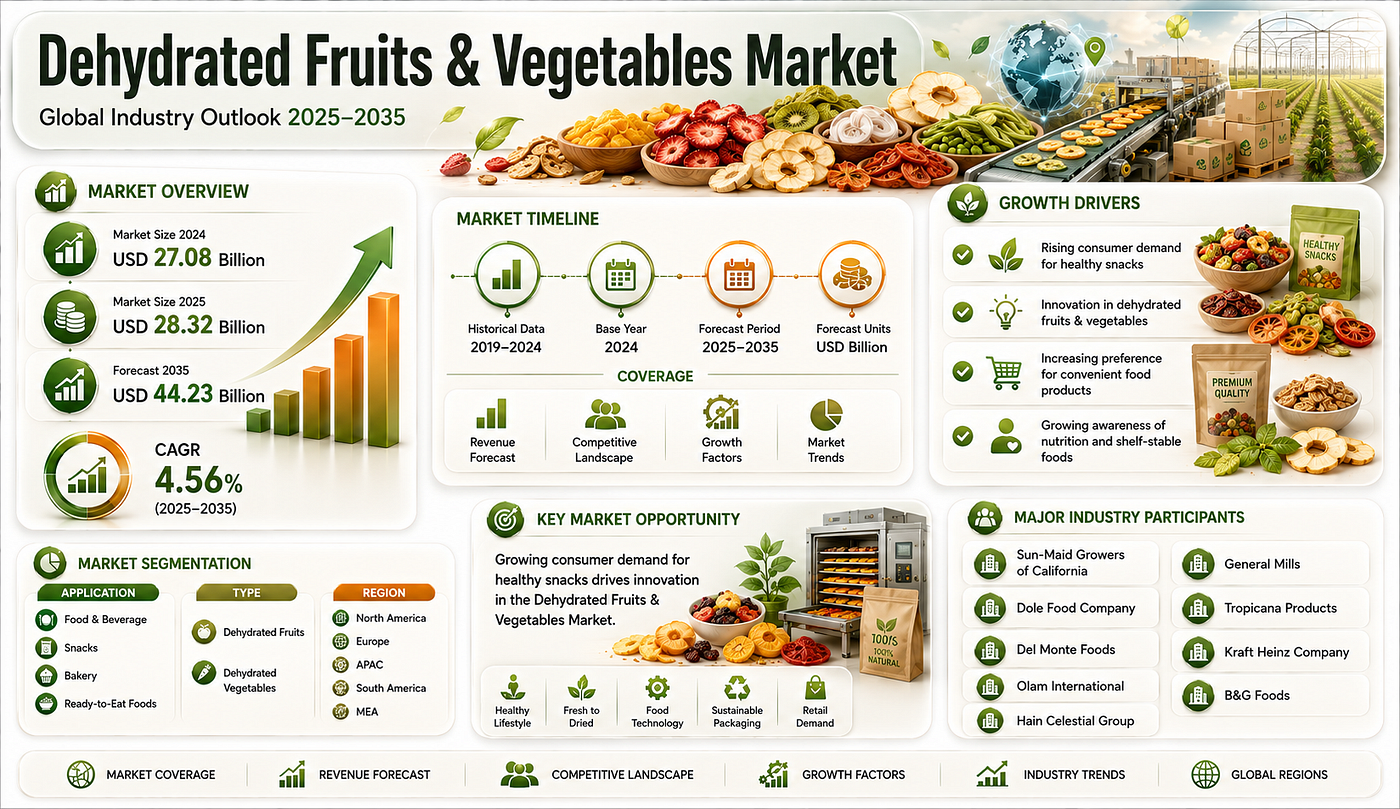
Here’s the number that stopped me mid-scroll: the global dehydrated fruits and vegetables market was valued at USD 27.08 billion in 2024, and it’s expected to climb to USD 28.32 billion in 2025 before nearly doubling to USD 44.23 billion by 2035. That’s a steady 4.56% CAGR over the decade — not explosive, but the kind of quiet, compounding growth that turns into a very different-looking industry a decade from now.
So why is dried food suddenly cool again?
Dehydration isn’t new — humans have been drying food since before refrigeration existed. But what’s changed is why people are buying it. It used to be about survival and shelf life. Now it’s about lifestyle. Busy professionals want protein-and-produce snacks they can throw in a bag. Gen Z shoppers are obsessed with “clean label” ingredients and hate food waste. Parents want something better than chips for lunchboxes. And the wellness crowd has basically adopted dried fruit as a personality trait.
That demand is dragging innovation along with it. Companies aren’t just air-drying apple slices anymore — they’re using vacuum drying, freeze-drying, and spray-drying to lock in color, texture, and nutrients that used to get destroyed in the old sun-drying days. Freeze-drying in particular has become the premium darling of the category: it costs more to produce, but it preserves flavor and nutrition so well that brands can charge a real premium for it, especially in the snacking aisle.
The big names quietly building empires here
This isn’t a niche corner of the food world run by small artisanal brands. Heavy hitters like Sun-Maid Growers of California, Dole Food Company, Del Monte Foods, Olam International, Hain Celestial Group, General Mills, Tropicana Products, Kraft Heinz, and B&G Foods are all deeply invested in this space, competing across product type, drying technology, and application — everything from direct snacking to bakery inclusions to soup bases.
And the moves keep coming. Ingredient giant Sensient Technologies posted double-digit revenue growth in its first quarter of 2026, a signal that flavor and dehydrated-ingredient demand is translating directly into balance-sheet performance, with Sensient Technologies Corporation announcing 11.1% revenue growth in its first-quarter 2026 financial results. Meanwhile, Olam Food Ingredients and Jain Farm Fresh Foods have been expanding integrated farm-to-factory dehydration networks specifically for onion, garlic, and capsicum, aiming to insulate themselves from raw material price swings caused by unpredictable weather, implementing high-throughput dehydration strategies and expanding integrated farm-to-factory networks to secure year-round supply for industrial seasoning and foodservice sectors. Even flavor house Kerry Group used its 2026 Taste Charts to call out a trend it’s calling “Category Crossovers” — savory dehydrated vegetable notes turning up in functional supplements and energy bars, blurring the line between snack food and nutraceutical. It’s a small sign of a bigger story: dehydrated produce is escaping the snack aisle and infiltrating categories nobody would have predicted five years ago.The uncomfortable backdrop nobody puts in the brochure
Here’s the part that doesn’t make it into most glossy market reports but absolutely shapes what happens on the ground: ongoing geopolitical conflict has been quietly reshaping the economics of this entire industry. Wars in Eastern Europe and the Middle East have driven up energy prices, and dehydration is an energy-hungry process by nature — every kilowatt spent running industrial dryers gets passed down the chain. Add in disrupted shipping routes, fertilizer shortages, and volatile raw vegetable pricing caused by conflict-driven agricultural disruption, and you get manufacturers who’ve had to rethink everything from where they source onions to how they hedge against another price shock. It’s pushed the smarter players toward diversified sourcing, regional processing hubs, and long-term supplier contracts — essentially building shock absorbers into a business that used to run lean and reactive.
Where the growth is actually happening
North America still leads on pure market size, propped up by a health-and-wellness culture that treats a bag of dried mango like a lifestyle statement. But Asia-Pacific is the one to watch — rapid urbanization, shifting diets, and a growing appetite for convenience foods are turning it into the fastest-growing region on the map. Supermarkets and hypermarkets still dominate distribution, but e-commerce is sprinting to catch up, especially among younger buyers who’d rather order a subscription box of dried snacks than browse a supermarket aisle.
Sustainability is the other quiet engine here. Dehydration is, at its core, a food-waste-fighting technology — it takes produce that would otherwise spoil and locks in years of shelf life. As food waste becomes a bigger political and environmental talking point globally, that “waste-reduction” story is becoming as much a selling point as taste or convenience.
So next time you’re absentmindedly snacking on dried strawberries or tossing dehydrated veggies into a soup mix, know that you’re participating in a genuinely fascinating global shift — one where old-world preservation technique meets modern wellness culture, corporate strategy, and geopolitics, all inside a crunchy little bag.
메타데이터
- post_id
- c8189cff2d57
- slug
- why-your-pantry-snacks-are-quietly-becoming-a-44-billion-global-obsession-c8189cff2d57
- url
- https://medium.com/@gill.nrd18/why-your-pantry-snacks-are-quietly-becoming-a-44-billion-global-obsession-c8189cff2d57
- canonical_url
- https://medium.com/@gill.nrd18/why-your-pantry-snacks-are-quietly-becoming-a-44-billion-global-obsession-c8189cff2d57
- author_url
- https://medium.com/@gill.nrd18
- status
- ok
- fetched_at
- 2026-07-22 03:20:27