Recombinant Proteins Market Size, Share & Growth Forecast 2034
The Global Recombinant Proteins Market is witnessing remarkable growth due to increasing advancements in biotechnology, rising investments…
Recombinant Proteins Market Size, Share & Growth Forecast 2034
Recombinant Proteins Market
The Global Recombinant Proteins Market is witnessing remarkable growth due to increasing advancements in biotechnology, rising investments in pharmaceutical research, and expanding applications in therapeutics, diagnostics, and drug discovery. Recombinant proteins have become an essential component in modern healthcare and life sciences because they enable the development of targeted therapies, vaccines, and innovative biologics. As healthcare systems across the world focus on precision medicine and advanced treatment solutions, the demand for recombinant proteins continues to surge significantly.
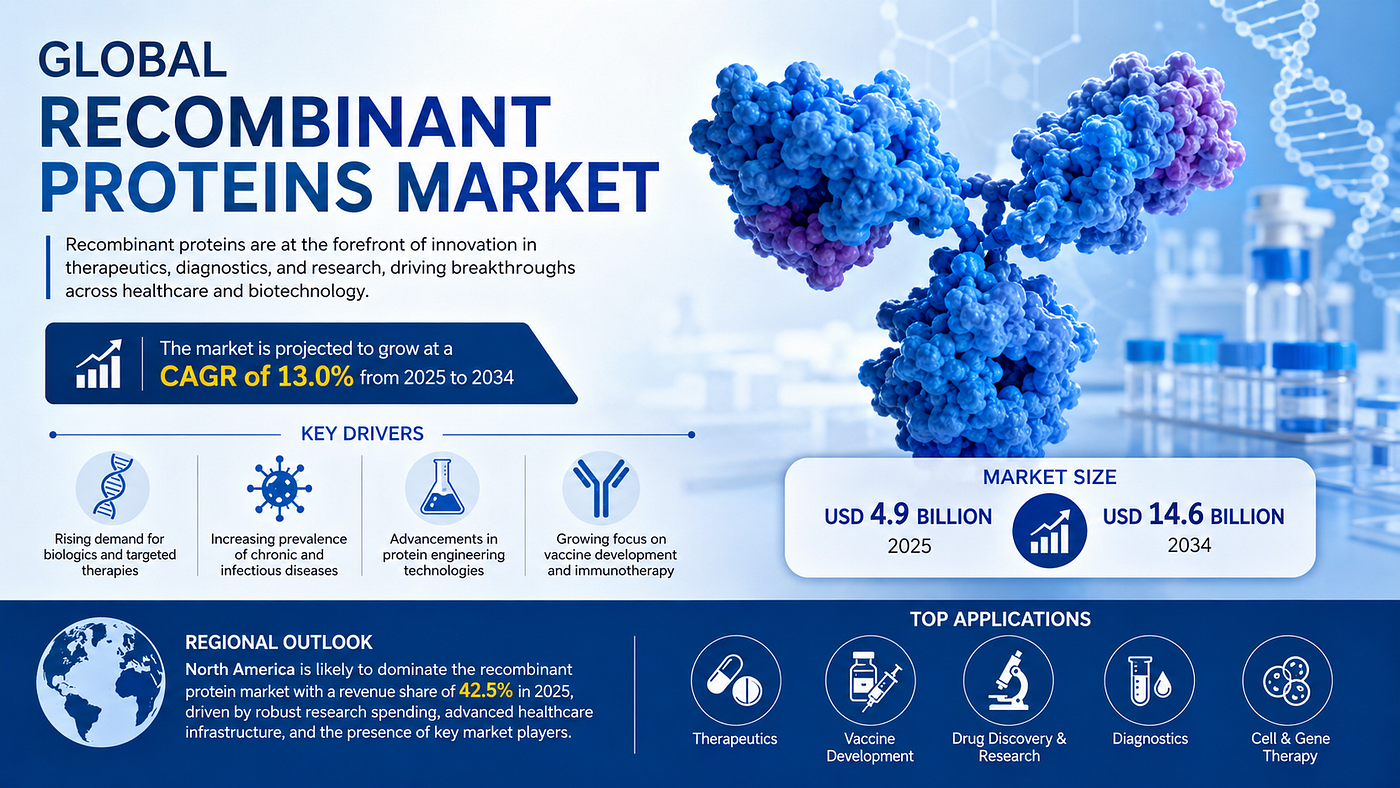
The market size is estimated at USD 4.9 billion in 2025 and is projected to reach USD 14.6 billion by 2034, expanding at a CAGR of 13.0% during the forecast period from 2025 to 2034. The rapid growth is largely supported by technological improvements in protein expression systems, increased prevalence of chronic diseases, and rising demand for biologic drugs. In addition, recombinant proteins are increasingly being used in stem cell research, regenerative medicine, and vaccine production, further strengthening market expansion.
Another important factor driving the market is the growing adoption of recombinant proteins in academic and clinical research. Biotechnology companies and research institutions are heavily investing in innovative protein engineering techniques to improve therapeutic outcomes and reduce treatment costs. Furthermore, increasing collaborations between pharmaceutical manufacturers and biotechnology firms are accelerating the commercialization of recombinant protein-based products worldwide.
Understanding Recombinant Proteins
Recombinant proteins are proteins produced through recombinant DNA technology, where genes encoding specific proteins are inserted into host cells such as bacteria, yeast, mammalian cells, or insect cells. These host systems then produce large quantities of the desired protein for medical, industrial, or research purposes.
These proteins play a critical role in several applications, including:
- Therapeutic drug development
- Vaccine manufacturing
- Cell and gene therapy
- Diagnostic testing
- Tissue engineering
- Biomedical research
Because of their high specificity and efficiency, recombinant proteins have become indispensable in modern biotechnology and pharmaceutical industries.
Key Market Drivers
Rising Demand for Biologics
The growing popularity of biologic drugs is one of the strongest growth drivers for the recombinant proteins market. Biologics offer targeted treatment approaches with improved efficacy and fewer side effects compared to traditional small-molecule drugs. Recombinant proteins are fundamental components in biologic therapies used to treat cancer, autoimmune disorders, diabetes, and rare diseases.
As pharmaceutical companies continue developing advanced biologic drugs, the need for high-quality recombinant proteins is increasing rapidly.
Growth in Chronic Diseases
The global increase in chronic and infectious diseases is creating substantial demand for recombinant protein-based therapies. Diseases such as cancer, diabetes, cardiovascular disorders, and autoimmune conditions require advanced treatment options that can effectively target disease mechanisms.
Recombinant proteins are extensively used in therapies for:
- Oncology
- Immunology
- Hematology
- Endocrinology
- Infectious diseases
The rising disease burden worldwide continues to create long-term opportunities for market expansion.
Advancements in Protein Engineering
Continuous innovation in protein engineering technologies is improving protein stability, functionality, and production efficiency. Advanced expression systems and purification technologies are enabling manufacturers to produce recombinant proteins with enhanced yield and reduced production costs.
Modern technologies such as:
- CRISPR gene editing
- Synthetic biology
- AI-driven protein modeling
- Cell-free protein synthesis
are significantly transforming the recombinant proteins industry.
Expanding Vaccine Development Activities
The increasing focus on vaccine development is another major factor contributing to market growth. Recombinant proteins are widely used in the production of vaccines for infectious diseases because they offer improved safety and efficacy profiles.
The global emphasis on pandemic preparedness and immunization programs has accelerated investments in recombinant protein technologies, creating favorable growth opportunities for manufacturers.
Market Challenges
High Production Costs
Despite strong growth potential, recombinant protein manufacturing remains expensive. Production processes require sophisticated technologies, specialized infrastructure, and strict quality control measures. These factors can increase operational expenses and limit accessibility in developing economies.
Complex Regulatory Requirements
The approval process for recombinant protein-based products is highly regulated due to concerns related to safety, efficacy, and manufacturing consistency. Regulatory compliance can extend product development timelines and increase overall costs for market participants.
Protein Stability Issues
Maintaining protein stability during manufacturing, storage, and transportation remains a significant challenge. Proteins are highly sensitive to environmental conditions such as temperature and pH changes, which can impact product quality and effectiveness.
Emerging Opportunities in the Recombinant Proteins Market
Personalized Medicine
The increasing adoption of personalized medicine is creating substantial demand for recombinant proteins. Precision therapies require customized biologic solutions that target individual patient profiles, driving innovation in recombinant protein development.
Growth in Regenerative Medicine
Regenerative medicine and stem cell therapy applications are expanding rapidly. Recombinant proteins are essential for controlling cell differentiation, tissue regeneration, and cellular growth processes. As regenerative medicine advances, the need for recombinant proteins is expected to increase significantly.
Expansion in Emerging Economies
Emerging markets are witnessing increasing investments in biotechnology infrastructure and healthcare modernization. Countries in Asia-Pacific, Latin America, and the Middle East are experiencing rising pharmaceutical production activities, which is expected to create new growth opportunities for recombinant protein manufacturers.
Increasing Research Collaborations
Strategic collaborations among biotechnology firms, academic institutions, and pharmaceutical companies are accelerating innovation in recombinant protein technologies. These partnerships support product development, clinical research, and commercialization efforts.
Market Segmentation Analysis
By Product Type
Growth Factors
Growth factors represent a major segment within the recombinant proteins market. These proteins are widely used in cell culture, tissue engineering, and regenerative medicine applications. Increasing stem cell research activities are driving demand for recombinant growth factors globally.
By Therapeutic Protein
Therapeutic recombinant proteins are extensively used in treating chronic diseases. Products such as insulin, interferons, erythropoietin, and monoclonal antibodies continue to witness high demand in clinical applications.
By Cytokines and Chemokines
Cytokines and chemokines are increasingly utilized in immunotherapy and inflammation research. Rising cancer immunotherapy research is supporting the expansion of this segment.
By Expression System
Mammalian Cell Expression Systems
Mammalian cells are commonly used for producing complex recombinant proteins due to their ability to perform post-translational modifications similar to human cells.
Bacterial Expression Systems
Bacterial systems, particularly E. coli, remain widely adopted because of their cost-effectiveness and rapid protein production capabilities.
Yeast and Insect Cell Systems
Yeast and insect cells are gaining popularity due to their ability to balance production efficiency and protein quality.
Download a Complimentary PDF Sample Report: https://dimensionmarketresearch.com/request-sample/recombinant-proteins-market/
Applications of Recombinant Proteins
Drug Discovery and Development
Recombinant proteins are essential in drug screening and target identification processes. Pharmaceutical companies use these proteins to evaluate therapeutic responses and accelerate new drug development.
Clinical Diagnostics
Diagnostic laboratories use recombinant proteins in assays and testing kits to detect diseases accurately and efficiently.
Research Applications
Academic and biotechnology research institutions rely heavily on recombinant proteins for molecular biology, genomics, and proteomics studies.
Biopharmaceutical Manufacturing
Biopharmaceutical manufacturers extensively use recombinant proteins in biologic production and vaccine manufacturing processes.
Competitive Landscape
The recombinant proteins market is highly competitive, characterized by continuous innovation and strategic partnerships. Companies are focusing on:
- Product portfolio expansion
- Advanced manufacturing technologies
- Strategic acquisitions
- Research collaborations
- Geographic expansion
Manufacturers are also investing heavily in scalable production platforms and high-purity protein development to strengthen market competitiveness.
Technological Advancements Transforming the Market
AI in Protein Design
Artificial intelligence is increasingly being used to predict protein structures and optimize recombinant protein production. AI-driven platforms help reduce research timelines and improve protein engineering efficiency.
Cell-Free Protein Synthesis
Cell-free systems are emerging as a promising alternative to conventional expression methods. These systems enable faster protein production and improved flexibility for research applications.
CRISPR-Based Technologies
CRISPR gene-editing tools are improving recombinant protein engineering capabilities by enabling precise genetic modifications and enhanced protein functionality.
Future Market Trends
Increased Focus on Biosimilars
The growing biosimilars industry is expected to significantly boost demand for recombinant proteins. Biosimilars provide cost-effective alternatives to expensive biologic therapies, increasing patient accessibility.
Sustainable Manufacturing Practices
Manufacturers are increasingly adopting sustainable production methods to reduce environmental impact and improve operational efficiency.
Integration of Automation
Automation technologies are streamlining recombinant protein manufacturing processes, improving productivity and reducing human error.
Regional Analysis
North America
North America is likely to dominate the recombinant protein market with a revenue share of 42.5% in 2025. The region benefits from robust research spending, advanced healthcare infrastructure, and the strong presence of biotechnology and pharmaceutical companies.
Well-established healthcare systems and significant investments in research and development support continuous advancements in proteomics and genomics. In addition, rising biologics demand and favorable regulatory support continue to strengthen the regional market.
Europe
Europe represents a significant market due to increasing biotechnology research initiatives and growing demand for biologic therapies. Countries across the region are investing in healthcare innovation and expanding pharmaceutical manufacturing capabilities.
Asia-Pacific
Asia-Pacific is expected to witness the fastest growth during the forecast period. Rapid healthcare infrastructure development, increasing pharmaceutical investments, and rising government support for biotechnology research are driving market expansion.
Countries such as China, India, Japan, and South Korea are becoming important manufacturing and research hubs for recombinant proteins.
Latin America
Latin America is experiencing steady growth due to improving healthcare access and increasing awareness regarding advanced biologic therapies.
Middle East & Africa
The Middle East & Africa region is gradually adopting recombinant protein technologies as healthcare modernization initiatives continue to expand.
FAQs About the Recombinant Proteins Market
1. What are recombinant proteins?
Recombinant proteins are proteins produced using recombinant DNA technology, where specific genes are inserted into host cells to manufacture desired proteins for medical, industrial, or research purposes.
2. What is driving the growth of the recombinant proteins market?
Key growth drivers include rising biologics demand, increasing chronic diseases, advancements in protein engineering, and expanding vaccine development activities.
3. Which region dominates the recombinant proteins market?
North America currently dominates the market due to advanced healthcare infrastructure, strong R&D spending, and the presence of major biotechnology companies.
4. What are the major applications of recombinant proteins?
Major applications include drug development, vaccine production, diagnostics, regenerative medicine, and biomedical research.
5. What is the projected market size by 2034?
The market is projected to reach USD 14.6 billion by 2034, growing at a CAGR of 13.0% from 2025 to 2034.
Summary of Key Insights
The Global Recombinant Proteins Market is entering a phase of substantial growth fueled by rising demand for biologics, increasing chronic disease prevalence, and rapid advancements in biotechnology. The market is expected to grow from USD 4.9 billion in 2025 to USD 14.6 billion by 2034, reflecting strong long-term opportunities across healthcare and life sciences industries.
Technological innovations in protein engineering, AI-driven protein design, and cell-free synthesis are reshaping the industry landscape. North America continues to lead the market due to strong R&D infrastructure, while Asia-Pacific is emerging as the fastest-growing region.
As recombinant proteins become increasingly important in therapeutics, diagnostics, regenerative medicine, and vaccine production, the market is expected to remain a critical pillar of the global biotechnology sector throughout the forecast period.
Purchase the report for comprehensive details: https://dimensionmarketresearch.com/checkout/recombinant-proteins-market/
메타데이터
- post_id
- c8389bed083c
- slug
- recombinant-proteins-market-size-share-growth-forecast-2034-c8389bed083c
- url
- https://medium.com/@seodmr63/recombinant-proteins-market-size-share-growth-forecast-2034-c8389bed083c
- canonical_url
- https://medium.com/@seodmr63/recombinant-proteins-market-size-share-growth-forecast-2034-c8389bed083c
- author_url
- https://medium.com/@seodmr63
- status
- ok
- fetched_at
- 2026-06-09 15:37:30