A Digital Agony Aunt or “just listening” as an open educational practice
A dialogical approach to digital skill development
A Digital Agony Aunt — listening as an open educational practice
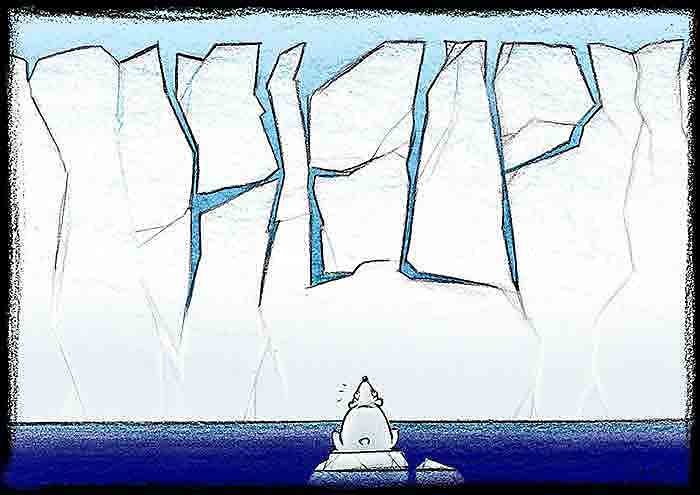
Giacomo Cardelli — source
Details of submission
Authors: Mariana Funes and Alan Levine Submission for OER23 — accepted with changes Submitted under themes: Open Education, creative practice in relation to openness Criteria: 500 words, 3–6 references in Harvard Reflective Practice in OER23: a contribution towards the practice of open education, case study, descriptive account, a reflective and a critical component.
Authors Keywords
dialogical pedagogy, post pandemic recovery, DS106, student engagement
Abstract (edited August 2023)
People from the UK are familiar with the term “Agony Aunt” as a newspaper advice columnist (Wiktionary, 2022) with different names elsewhere (e.g. Dear Abby in the US). This session will show how a dialogical approach is used to provide open ended support to students in a Higher Education Institution in Scotland, and how the process of answering their questions can inform our educational technology practice.
This is an account of an educational technologist arriving to a new institutional context and finding that the file titled “Work that went nowhere’ was growing daily; and seeking support from her open online education mentors to enable her to bring the kind of learning she knows open practices make possible into her new context (e.g. Lockridge, Levine, and Funes, 2014). The first person account that follows was written by the first author.
“Newly employed as a Learning Technologist within an IT department, I had to rediscover the value of my teaching practice working within a post-pandemic reality: fewer and more remote students, post-event shock, a lack of basic computer skills, computer use fatigue, and an organisational climate which rewarded safety over creative risk-taking after a serious cyber-incident during lockdown (Easthope, 2022). I started with a qualitative needs analysis project which then evolved in the setting up of various experiments to formulate an approach that would meet these challenges. We launching the Learn Tech Lab this August — as a safe campus space where students can drop in, co-learn, and have access to 121 digital coaching as needed. We frame its aims simply: “Just pop in to say hello, bring your devices. We can work through your apps and make sure they are supporting your studies in the best way possible.” The Lab embodies the idea of using what works in an organisation (Clouder and King, 2015) and was set up as an extension of an already successful physical student support space on campus which supported students through the pandemic and continues to do so.
After the qualitative needs analysis and related experiments we created a confidential space for dialogue about digital learning needs, in the shape of digital coaching referrals, to address a key student need: speaking about lacking basic skills in an open IT setting was a challenge, students did not feel safe enough to disclose learning needs. In a confidential digital coaching setting I synthesise my experience in dialogical approaches to online teaching, cognitive psychology, and good old fashioned self-efficacy skill development to support the learning of basic computer skills in a self-managed experiential manner. I decided to name the intervention: the Learning Technology Coaching Services to highlight that it was intended as confidential 121 and a service to students. In reality, I am the only learning technologist in a college teaching over 6000 students.
In this paper we offer vignettes of some users’ requests and offer examples of how the requests are addressed with open educational resources: The Digital Learning Mag Medium (Funes, 2022), TikTok audio memes for quick instructional videos, Lumen 5 for quick video guides, Thinglink for basic IT Guides, and ‘custom web pages’ for each user of the service on Wakelet (Funes, 2022). What all these resources have in common is all were developed in response to a question and dialogue with a user of the coaching service.
Now when I am asked what my job entails, I say I am a technology agony aunt, I offer a space for students’ IT troubles to be heard and handled with a view to generating the joy of learning that I know open online education can bring.”
We will discuss issues of sustainability, feedback from users, and implications for open education in a closed institutional setting. This will include the challenges of using open platforms to develop educational resources in a risk-averse context. We will conclude with a wider discussion on the feasibility of using open practices in a closed setting.
References
Clouder, L. and King, V., 2015. What works? A critique of appreciative inquiry as a research method/ology. In Theory and method in higher education research. Emerald Group Publishing Limited.
Easthope, L., 2022. When the dust settles: stories of love, loss and hope from an expert in disaster. London: Hodder & Stoughton.
Funes, M., 2022. The Digital Learning Mag — Medium. [online] Available at: https://medium.com/the-digital-learning-mag [Accessed 10 Jan. 2023].
Funes M., 2022. [online] Available at: https://wakelet.com/@mdvfunes [Accessed 10 Jan. 2023].
Lockridge, R.L., Levine, A. and Funes, M., 2014. A DS106 Thing Happened on the Way to the 3M Tech Forum. Journal of Interactive Media in Education, 2014(2), p.Art. 6. DOI: http://doi.org/10.5334/jime.ag
Wiktionary, 2022. Agony Aunt. [online] Available at: https://en.wiktionary.org/wiki/agony_aunt [Accessed 10 Jan. 2023].
Key reviewers’ comments
It is unclear how open practice underpins this proposal outside of the brief mention of mentorship from an open practitioner and the production (or is it use?) of open resources to support students. It clearly demonstrates strong values of care and empathy, but it would be worth clarifying how this work is truly ‘open’. It is also unclear how participants will engage with the session. It would be in line with the conference themes to highlight how this work has impacted students in the institution.
It is a good proposal reflecting on post-recovery, however, it doesn’t explain the specific objectives on how it can inform other OE practices in the future.
The paper was accepted for presentation at the OER23 Conference: Advancing Open Education Practices but I had to withdraw for personal reasons. I am publishing the details here as I plan to write the full paper, addressing the reviewers’ comments and submit to the Journal of Interactive Media in Education for publication.
메타데이터
- post_id
- c839abca0e8a
- slug
- a-digital-agony-aunt-or-just-listening-as-an-open-educational-practice-c839abca0e8a
- url
- https://medium.com/@mdvfunes/a-digital-agony-aunt-or-just-listening-as-an-open-educational-practice-c839abca0e8a
- canonical_url
- https://medium.com/@mdvfunes/a-digital-agony-aunt-or-just-listening-as-an-open-educational-practice-c839abca0e8a
- author_url
- https://medium.com/@mdvfunes
- status
- ok
- fetched_at
- 2026-07-25 09:32:35