We Don’t Do That Here, and Other Actions for Allies
Better allyship starts here. Each week, Karen Catlin shares five simple actions to create a workplace where everyone can thrive.
We Don’t Do That Here, and Other Actions for Allies
Better allyship starts here. Each week, Karen Catlin shares five simple actions to create a workplace where everyone can thrive.

Happy Pride Month! In today’s newsletter, I’m sharing five suggestions for how to be better allies for our LGBTQ+ coworkers. 🌈
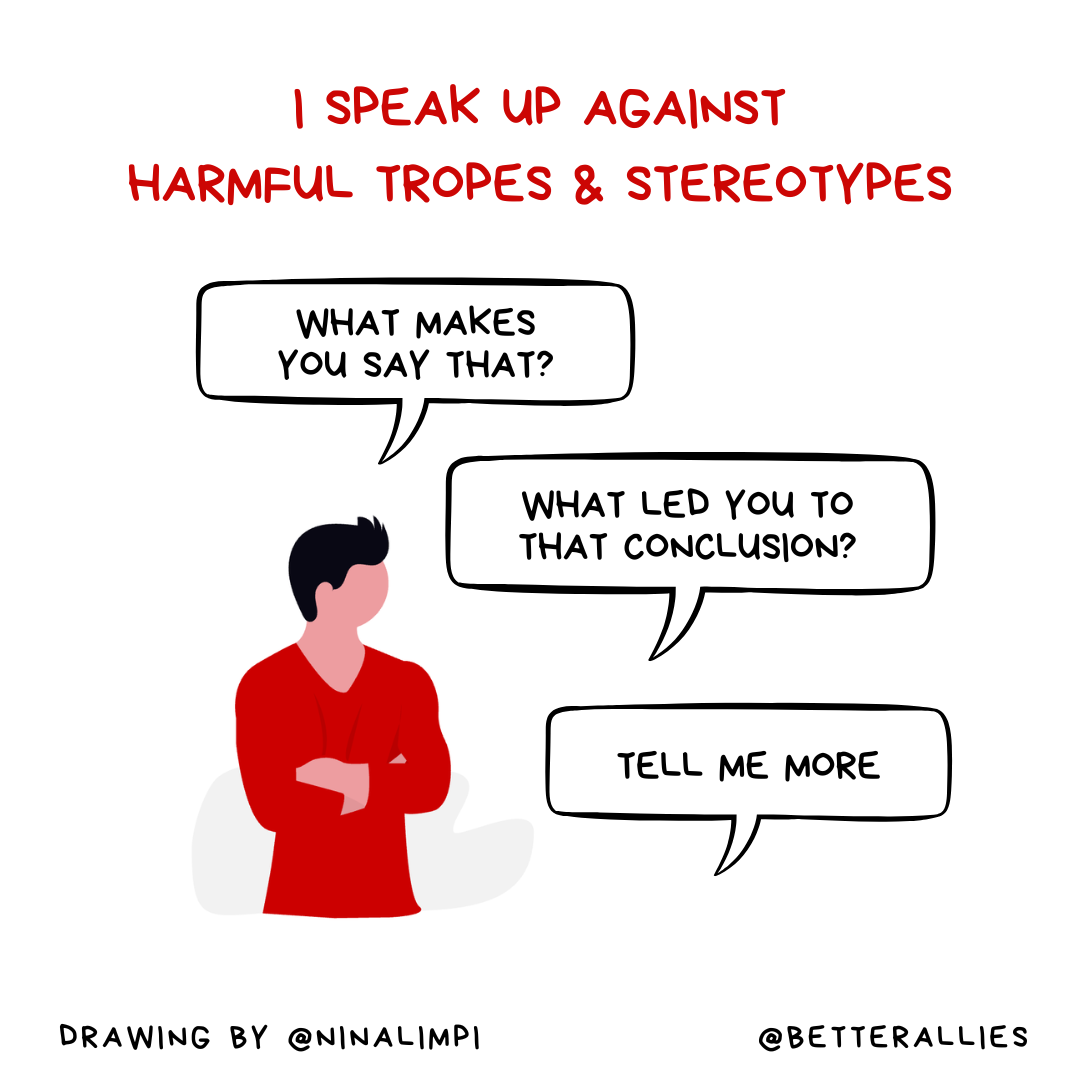
1. Say “We don’t do that here”
A few years back, Aja Hammerly, a developer advocate at Google, wrote a blog post with the following story:
“The college I attended was small and very LGBT friendly. One day someone came to visit and used the word ‘gay’ as a pejorative, as was common in the early 2000s. A current student looked at the visitor and flatly said, ‘we don’t do that here.’ The guest started getting defensive and explaining that they weren’t homophobic and didn’t mean anything by it. The student replied, ‘I’m sure that’s true, but all you need to know is we don’t do that here.’”
Hammerly noted,
We don’t do that here was a polite but firm way to educate the newcomer about our culture.
Consider using this phrase the next time you hear someone making a disparaging comment or joke about someone in the LGBTQ+ community.
Share on Instagram, LinkedIn, or YouTube.
2. Thank someone when they come out to you
One of the myriad things I’ve learned from Jeannie Gainsburg’s excellent book The Savvy Ally: A Guide for Becoming a Skilled LGBTQ+ Advocate is how to respond when someone comes out to you.
Gainsburg says to thank them, perhaps with a “Thank you for trusting me enough to let me know.”
Then listen, and let them take the lead on anything they want to discuss.
If there’s an awkward silence, she recommends throwing in one of these comments:
- “Congratulations! I’m so happy for you.”
- “I’m here for you.”
- “This calls for a celebration!”
Doing so can help make someone feel seen, supported, and accepted.
3. Apologize without making it all about yourself
In I Am Neither, Kathia Ramos shared what it was like to let people know that their pronouns were now they/them.
Their manager at the time was very understanding, yet mistakenly used Ramos’ old pronouns. The first time wasn’t a big deal. She apologized and moved on. Then it happened again.
As Ramos wrote,
“I didn’t expect the apologizing to escalate to an explanation of how she was trying to use the correct pronoun. Time stood still while she apologized, and I could feel everyone’s eyes on me. What appeared to be an effort to make herself feel better, actually made me feel worse.”
If we use the wrong pronouns for a coworker, let’s simply correct ourselves. Without launching into an explanation of how hard we’re trying to use the right pronouns. Without making it all about us.
4. Use stock photos of LGBTQ people in professional settings
Did you know that tech company Mapbox created “Queer in Tech,” a free collection of stock photos?
As explained in their announcement:
“We created this photo set to promote the visibility of queer and gender-nonconforming (GNC) people in technology, who are often under-represented as workers powering the creative, technical, and business leadership of groundbreaking tech companies and products.”
There’s also “The Gender Spectrum Collection,” which is free for non-commercial purposes. Their recommended usage guidelines state:
“Images of trans and nonbinary people can be used to illustrate any topic, not just stories related directly to those communities. Consider using these photos for stories on topics like beauty, work, education, relationships, or wellness. Including transgender and non-binary people in stories not explicitly about gender identity paints a more accurate depiction of the world we live in today.”
Representation matters. Join me in bookmarking these sites for future stock photography needs.
p.s. I’ve curated a longer list of sites specializing in stock photos and illustrations featuring people from underrepresented groups. Some are free, and some for a fee. Find the list at betterallies.com.
5. Avoid compliments or advice based on stereotypes
In Supporting the Transgender People in Your Life: A Guide to Being a Good Ally, Advocates for Trans Equality recommends several ways to support transgender coworkers. Here’s just one:
Avoid compliments or advice based on stereotypes about transgender people, or how men and women should look or act. The article explains,
“People sometimes intend to be supportive but unintentionally hurt transgender people by focusing on their looks or whether they conform to gender stereotypes. Here are some examples of what to avoid, as they often feel like backhanded compliments:
• You look like a real woman! I never would have known that you’re trans.
• You would look less trans if you just got a wig/shaved better/wore more makeup/etc.
• No real man would wear clothing like that. You should change if you don’t want people to know you’re transgender.
• I’d date him, even though he’s transgender.”
That’s all for this week. I’m glad you’re on this journey with me,
Karen Catlin (she/her), Author of the Better Allies® book series
Copyright © 2026 Karen Catlin. All rights reserved.
Together, we can make a difference with the Better Allies® approach.
- Say thanks to Karen and buy her a coffee ☕ (Need a receipt for educational reimbursement? Reply to this email, and we’ll take care of it.)
- Sponsor an edition of this newsletter
- Follow @BetterAllies on Instagram, Medium, or YouTube. Or follow Karen Catlin on LinkedIn
- Read the Better Allies books
- Tell someone about these resources

메타데이터
- post_id
- c849a3c5c64b
- slug
- we-dont-do-that-here-and-other-actions-for-allies-c849a3c5c64b
- url
- https://code.likeagirl.io/we-dont-do-that-here-and-other-actions-for-allies-c849a3c5c64b
- canonical_url
- https://code.likeagirl.io/we-dont-do-that-here-and-other-actions-for-allies-c849a3c5c64b
- author_url
- https://medium.com/@betterallies
- status
- ok
- fetched_at
- 2026-06-09 15:37:30