The Economics of Maintenance
The importance of maintenance is difficult to overstate. All the equipment that is in use right now, on which modern society runs, will…
The Economics of Maintenance
The importance of maintenance is difficult to overstate. All the equipment that is in use right now, on which modern society runs, will eventually break. The electricity that comes to our homes, the water that sustains us, the equipment that helps farm our food, the machines in factories; all will eventually break. It is therefore vital to our standard of living to keep all these machines in good order.
That maintenance is important to our economies is well understood by economists as failure of machines is a fundamental part of modern economic models. One commonly used model in economics is the Solow-Swan growth model. This model captures a relationship between total economic output and the capital and labour of a country. This is to say that capital; which includes machines, land, infrastructure etc., is combined with labour; people doing work to with the capital, to produce goods and services. For example, when someone buys a truck they have acquired some captial asset. The owner can then get to work and drive their new truck, i.e. perform labour, to serve their customers. In doing so they are contributing to the total economic output and also earning an income for themselves. This combination of driver and his truck to produce a service is a concrete example of what economic models try and capture when they combine capital and labour to estimate economic output.
The amount of capital in the Solow-Swan model changes over time due to two reasons; these are ‘savings’ and ‘depreciation.’ Savings is when we use some of the output of economic activity to buy more capital. Continuing the truck example, the driver might save some of the money earned from his work and accrue enough money to buy a bigger, or an additional, truck. In this way some of his output has been saved to increase his capital stock. With more capital stock he can accomplish more work which in turn increases the total output he can achieve.
However, his truck will wear out and eventually fail. To account for this economists use ‘depreciation’ to capture the concept that the value of something will slowly decrease over time. In economics terms, the total pool of capital will decrease over time if there is no saving. So our truck driver will need to have some savings to be ready for when his truck fails. What is key in economics is how quickly this depreciation occurs, if there is a lower depreciation rate this means that less savings are needed to grow, or sustain, the accumulation of capital. The higher the depreciation rate, the faster capital is lost. Maintenance is captured in these economic models by the rate of capital depreciation.
Depreciation can be caused by things other than equipment failure, things can become obsolete or can simply be demanded less and reduce in value. For example, a typewriter will become less valuable over time due to computers, so it becomes obsolete. The typewriter still exists but it’s value has dropped as people no longer need it. Additionally, a dress on a retailer’s shelf may also lose value since fashions have changed and the dress is no longer as valuable as it was when it was fashionable. No one is demanding that style of dress, hence it has much less value. Although obsolescence and demand are important, clearly the wear and tear of things is also vital.
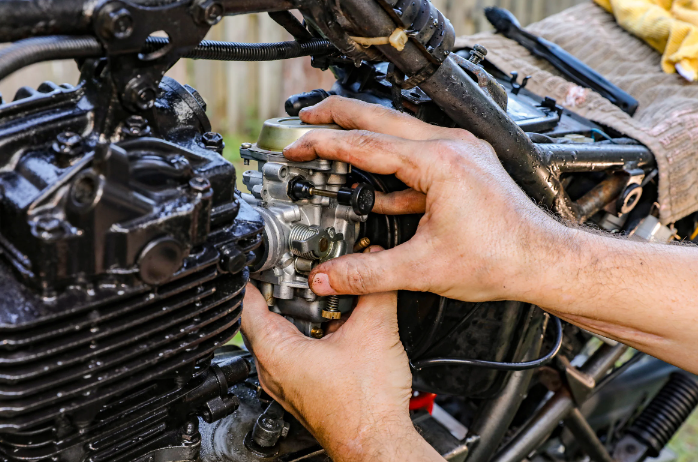
Maintenance is vital to economics since without sufficient maintenance the rate of capital depreciation would be much higher than if there were poor, or no, maintenance at all. If our truck driver-operator failed to properly maintain his truck, he didn’t check the tire wear, tire pressure, oils, or address strange noises, it would fail far sooner than if he did care for it and the total life of his investment would therefore be shorter. If however he properly cared for his asset will last much longer which allows him to save less to sustain his business growth and allowing him to contribute more to the economy.
Now consider the impact of not only a single truck driver, but every truck driver, and every building’s air conditioning, and all the cars, and all the planes. It is easy to see how quickly the entire economy would come crashing down but for the necessary care of all our capital.
It is estimated that up to 60% of all electricity is consumed by electric motors. This is up to 70% of all electricity for industrial use; a staggering amount of power consumed by a single type of equipment. Every single one of these motors will eventually fail. Failure rates for motors can be between 1% for extremely well maintained motors, to 9% for poorly maintained motors. If all electric motors were maintained poorly we could expect that after 5 years 40% of all motors would have failed. This would be nearly 30% of all industrial electrical consumption being no longer demanded. The loss of valuable output would be staggering.
What would no longer work if 30% of industrial activity was lost? 30% fewer office spaces as their is no heating or elevators, maybe not too bad. It might be 30% fewer food processing facilities, maybe fewer available trains; we might be able to make do. What about 30% of a countries water pumping infrastructure, which 30% should go without water? The impact of poor maintenance on just electric motors would be staggering. Maintenance is vital to ensure these critical functions continue. Further, the more effective the maintenance the less we need to save to sustain our current capital and the more we can invest in improving living conditions.
The importance of maintenance from an economic perspective is enormous and this importance is captured as a vital element of modern economic theories. Poor maintenance, as these models show, would lead to the rapid loss of much of the invested capital we (probably) take for granted. The upside is that good maintenance allows the economies of the world to continue their productive and growing outputs to be put to good use to improve the living conditions of all.
메타데이터
- post_id
- c85174d2dd66
- slug
- the-economics-of-maintenance-c85174d2dd66
- url
- https://medium.com/@reliafy/the-economics-of-maintenance-c85174d2dd66
- canonical_url
- https://medium.com/@reliafy/the-economics-of-maintenance-c85174d2dd66
- author_url
- https://medium.com/@reliafy
- status
- ok
- fetched_at
- 2026-06-20 20:29:01