Your Gas Range Is Trying To Tell You Something
Ignoring these five warning signs could cost you more than a repair bill.
Your Gas Range Is Trying To Tell You Something
Ignoring these five warning signs could cost you more than a repair bill.
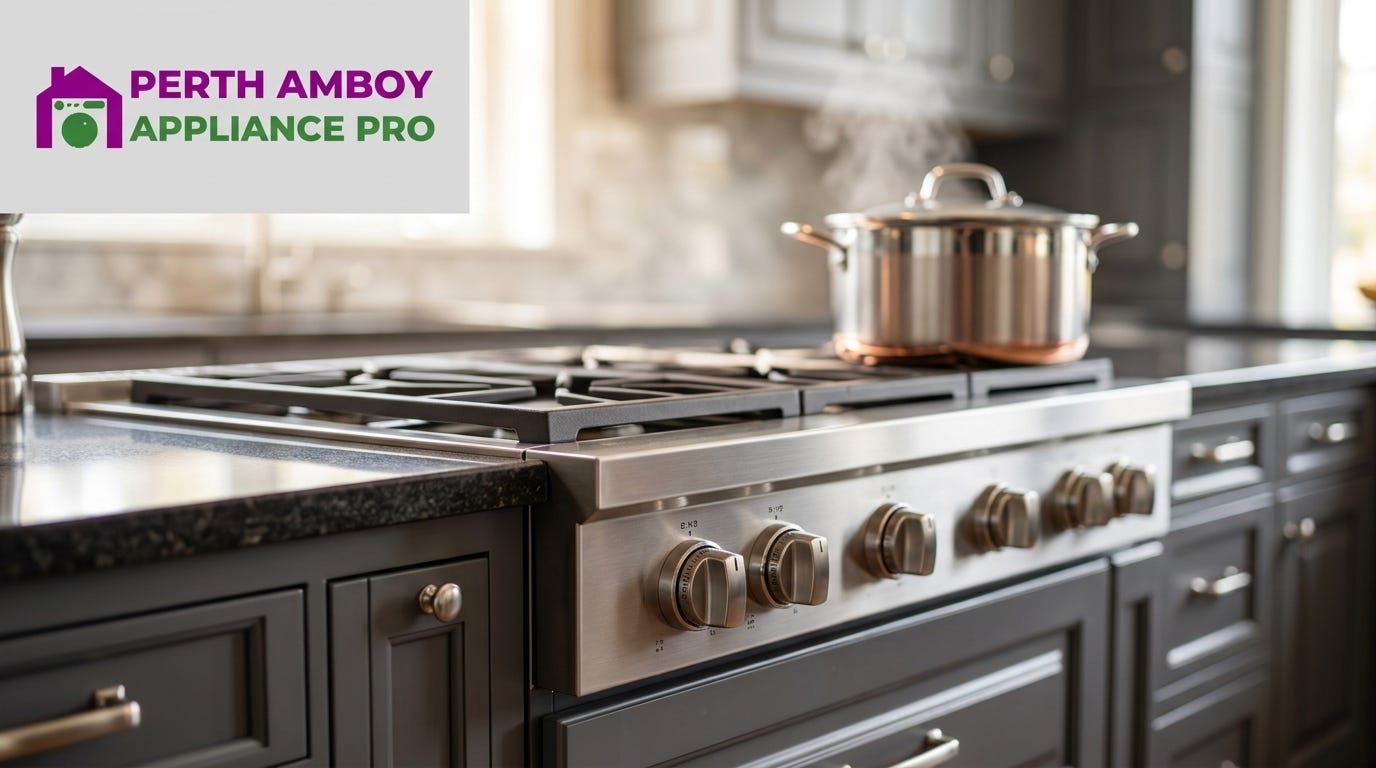
I’ve been in and out of kitchens across Middlesex County for over a decade, and if there’s one appliance homeowners underestimate, it’s the gas range. People will replace a dishwasher the second it stops draining, but a gas range that clicks a little too long or burns with an uneven flame? That gets ignored for months. Sometimes years.
That’s the appliance I worry about most. Not because gas ranges are fragile, they’re actually built to last, but because the failure signs are quiet and the consequences aren’t.
Why Gas Ranges Deserve More Respect Than They Get
A gas range isn’t just cooking equipment. It’s a controlled combustion appliance sitting in the middle of your kitchen, connected to a live gas line, usually surrounded by cabinets, countertops, and in a lot of Perth Amboy homes, an undersized ventilation setup from a renovation done decades ago.
When everything’s calibrated right, you don’t think about any of that. When it’s not, small problems compound fast. I’ve walked into homes where a two-year-old ignition issue turned into a full burner assembly replacement, simply because nobody called it in early.
The Warning Signs You Shouldn’t Wait On
Uneven or Yellow Flames
A healthy gas burner produces a tight, even blue flame. If you’re seeing yellow, orange, or flickering flames that lean to one side, that’s not a cosmetic issue. It usually points to a dirty burner cap, a partial obstruction, or an air-to-gas mixture that’s off, and any of those can lead to incomplete combustion, which produces carbon monoxide.
Clicking Igniters That Won’t Quit
A quick click-click before the burner lights is normal. An igniter that clicks continuously, or clicks without ever lighting, is a different story. That’s often a sign of a failing igniter switch, moisture in the components, or a spark module that’s on its way out. Left alone, it can also mean unburned gas is building up before ignition finally catches, which is exactly the kind of thing you want a professional to look at, not troubleshoot yourself.
Any Gas Odor at All
This one isn’t up for debate. If you smell gas near your range, even faintly, that’s not a “keep an eye on it” situation. Turn off the burners, don’t flip any switches, ventilate the space, and get it inspected immediately. I’d rather get a call for a false alarm than hear about a near-miss after the fact.
Slow-to-Light or Delayed Ignition
If there’s a noticeable delay between the click and the flame catching, gas is accumulating in that window before it ignites. That delayed “whoomph” you might be brushing off as normal is actually a symptom worth having checked.
Soot Buildup or Discoloration Around Burners
Black soot marks on your cookware or around the burner heads usually mean incomplete combustion. It’s not just a cleaning issue, it’s a sign the burner isn’t operating the way it was designed to.
If any of this sounds familiar, it’s worth having a licensed technician take a real look rather than guessing. I put together more detail on diagnosis and repair over on the gas range repair page, including what a proper inspection actually covers.
Why I Care So Much About Installation, Not Just Repair
Here’s the part most repair conversations skip. A huge percentage of the “range problems” I get called out for aren’t failures of the appliance itself. They’re failures of the original installation.
Wrong clearance behind the unit. Gas line connections that were never pressure-tested properly. Anti-tip brackets that were skipped to save ten minutes. I’ve seen it all, and it’s why I push clients toward proper setup from day one instead of chasing symptoms later.
This matters even more when a range sits near a dishwasher or refrigerator line, which is common in galley-style kitchens throughout Perth Amboy’s older housing stock. When water supply lines and gas connections are crowded into the same cabinet run, a small leak from one appliance can create a much bigger headache for the appliance next to it.
Flood Prevention Valves Aren’t Optional, They’re Cheap Insurance
This is where my background in built-in installations really overlaps with range safety. Any time I’m setting up a dishwasher line or a water-fed appliance near a gas range, I install a flood-prevention valve. It’s a small part, it takes minutes to install, and it’s one of the few upgrades I genuinely tell every client to get.
Here’s why it matters. A slow, undetected water leak near a gas appliance doesn’t just risk water damage, it risks corrosion around gas fittings and electrical connections over time, which is exactly the kind of slow-building hazard that turns into an expensive emergency. The EPA’s WaterSense program has found that the average home wastes thousands of gallons of water a year from leaks that often go undetected until real damage is already done, which is exactly the scenario a shutoff valve is built to prevent.
If your kitchen was renovated more than five years ago and nobody mentioned a flood-prevention valve, it’s worth asking about. It’s a cheap fix now compared to what it prevents later.
What Proper Service Actually Looks Like
When I or my team get called out for a range issue, the visit isn’t just “swap the part and go.” A real inspection covers:
- Gas pressure and connection integrity
- Burner alignment and flame pattern across every burner
- Igniter and spark module function
- Ventilation clearance and airflow
- Anti-tip bracket presence and condition
- Proximity checks for nearby water lines and shutoff access
That last one gets skipped by a lot of repair outfits, and it shouldn’t. A range doesn’t exist in isolation in your kitchen. It’s part of a system, and treating it that way is how you avoid repeat service calls.
When To Stop Troubleshooting And Call Someone
I get it, YouTube makes everything look fixable with a screwdriver and twenty minutes. And for some things, sure. But gas appliances aren’t the place to guess. If you’re dealing with any combination of odd flames, persistent clicking, delayed ignition, or any hint of gas smell, that’s your cue to stop and call a professional.
You can reach out directly through the Perth Amboy Appliance Pro contact page, or just pick up the phone and call (732) 633–0480. We’ll walk you through what to check immediately for safety, then get someone out to look at it properly.
For anyone who wants to browse our full range of services beyond gas range work, our homepage has the rundown of what we handle across Perth Amboy and the surrounding area.
The Bottom Line
Gas ranges are reliable appliances, but they’re not appliances you troubleshoot on instinct. Uneven flames, stubborn igniters, and any trace of gas odor are your range asking for attention before a small issue becomes a safety event. Pair that with proper installation, correct clearances, and a flood-prevention valve on nearby water lines, and you’ve got a kitchen setup built to last instead of one waiting to surprise you.
About the Author
George Costanza is a licensed installation contractor specializing in built-in refrigerators, dishwasher line integrations, and range hood ventilation setups. Over his 12-year career, George has managed hundreds of kitchen delivery and retrofit projects, sharing clear advice on cabinet clearance measurements, electrical compliance, and flood-prevention valves.
메타데이터
- post_id
- c88e29cc90ed
- slug
- your-gas-range-is-trying-to-tell-you-something-c88e29cc90ed
- url
- https://medium.com/@Greg_Costanza/your-gas-range-is-trying-to-tell-you-something-c88e29cc90ed
- canonical_url
- https://medium.com/@Greg_Costanza/your-gas-range-is-trying-to-tell-you-something-c88e29cc90ed
- author_url
- https://medium.com/@Greg_Costanza
- status
- ok
- fetched_at
- 2026-08-16 11:04:48

