The DDR5 Tax: Why 2026 PC Upgrades Might Bring Back Old Platforms on Purpose
PC upgrades used to be simple: new CPU, new motherboard if you had to, and you’d move on.
The DDR5 Tax: Why 2026 PC Upgrades Might Bring Back Old Platforms on Purpose
PC upgrades used to be simple: new CPU, new motherboard if you had to, and you’d move on.
In 2026, upgrades are getting weird — because memory prices are turning the platform transition into a tax.
When DRAM gets expensive, the upgrade equation changes. It’s no longer “Is the new CPU faster?” It becomes “Do I really want to pay for a new CPU, a new board, and pricey DDR5 just to get a meaningful improvement?”
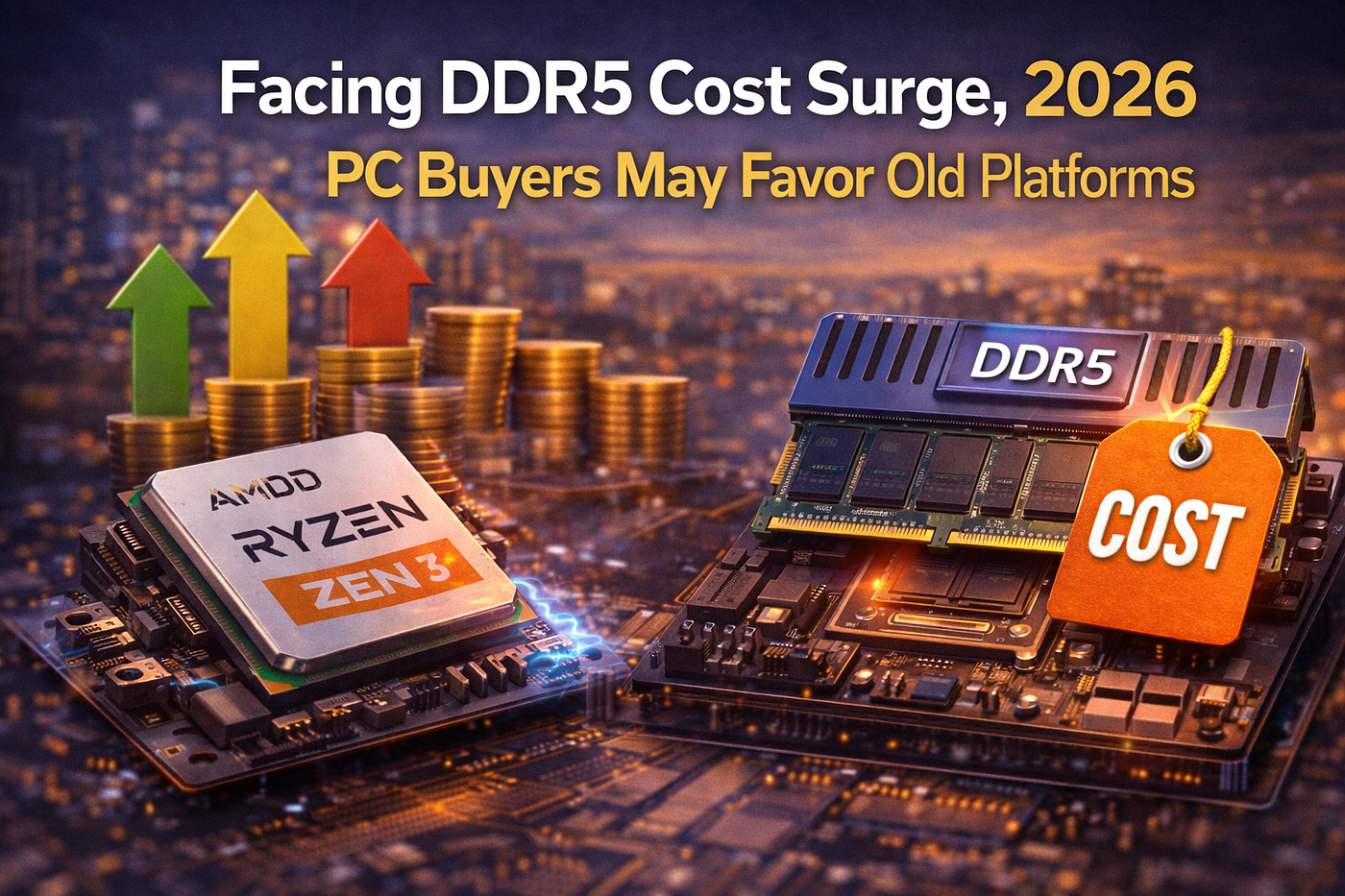
That’s why one of the most interesting rumors this week isn’t about a new architecture at all. It’s that AMD may lean back into older Zen 3-era products to serve customers who want performance without paying the full “new platform” bill. If that sounds backwards, it’s actually a very rational response to a market where the cost of moving forward suddenly feels punitive.
How we got here: servers and AI get the first pick Memory makers follow margin. In a world where AI and cloud providers lock in capacity, the supply chain shifts toward the highest-value customers.
TrendForce’s recent commentary has been blunt: server-oriented demand is driving broad price increases, with conventional DRAM and NAND contract prices forecast to rise sharply into 1Q26. That trickles down fast. Even if consumer demand is soft, consumers still end up paying higher prices because supply is being pulled toward the customers who can pay more.
This is the part people miss: consumer markets don’t need to be “booming” for prices to rise. They just need to be the second priority.
Why OEMs are reacting like this is real When memory costs surge, laptop makers do what they always do: they try to pass it on.
TrendForce has tracked notebook price hikes and the “domino effect” across retail channels. That’s a strong signal that this isn’t a short, gentle fluctuation. It’s pricing pressure that executives are willing to explain publicly — which usually means it’s already visible in procurement and forward contracts.
And once OEMs raise prices, PC demand becomes fragile. Not because people don’t want new laptops, but because a big chunk of the market is value-sensitive. The moment a mainstream machine creeps upward, buyers start stretching replacement cycles.
The real pain point: the platform bundle DDR5 isn’t just “a part.” It’s a commitment.
Moving to a modern platform often means:
- DDR5 instead of DDR4
- a new motherboard socket
- sometimes a new cooling strategy
- and a full rebuild for anyone upgrading from an older system
So the platform upgrade cost becomes the story, not the CPU.
That’s why the idea of AMD reviving older platform options isn’t nostalgia — it’s pricing strategy. A lot of gamers and DIY builders don’t want to rebuild their entire machine. They want the one upgrade that changes the experience. If you can give them a credible performance jump without forcing DDR5 and a new board, you remove the friction that’s killing upgrades.
What this means for the industry in 2026
- “Old” platforms become budget heroes again Not because they’re cutting-edge, but because they’re affordable and already installed everywhere.
- PC roadmaps start responding to memory economics When memory is cheap, the industry pushes everyone forward. When memory is expensive, platform transitions slow down and vendors get creative.
- AI’s ripple reaches consumers in unexpected ways You might not care about cloud procurement, but you’ll feel it when your RAM kit costs more than it should and your “simple upgrade” turns into a full rebuild.
The takeaway The DDR5 era was supposed to be a clean forward march. Instead, 2026 is reminding us that semiconductor transitions aren’t only technical. They’re economic.
When memory pricing spikes, it changes consumer behavior, OEM pricing, and even CPU vendor strategy. And sometimes the smartest move isn’t launching something new.
It’s making the “last generation” feel like a good deal again.
References
- TrendForce — “AMD Reportedly Weighs Reviving Older Zen 3 Chips as DDR5 Prices Push Up PC Upgrade Costs” — January 7, 2026
- TrendForce — “Memory Makers Prioritize Server Applications, Driving Across-the-Board Price Increases in 1Q26” — January 5, 2026
- TrendForce — “ASUS’s Reported 15–20% Price Hike Triggers Domino Effect as Taiwan Retailers Raise Rivals’ Prices” — January 5, 2026
- TrendForce — “ASUS to Raise Prices on Selected PC Lines from Jan. 5 Amid Memory Cost Surge, Following Dell” — December 31, 2025
메타데이터
- post_id
- c898f241a487
- slug
- the-ddr5-tax-why-2026-pc-upgrades-might-bring-back-old-platforms-on-purpose-c898f241a487
- url
- https://medium.com/@pasrar/the-ddr5-tax-why-2026-pc-upgrades-might-bring-back-old-platforms-on-purpose-c898f241a487
- canonical_url
- https://medium.com/@pasrar/the-ddr5-tax-why-2026-pc-upgrades-might-bring-back-old-platforms-on-purpose-c898f241a487
- author_url
- https://medium.com/@pasrar
- status
- ok
- fetched_at
- 2026-06-15 20:49:13