Moving on From Supply-Side Subsidies: How Developers and Advocates can Leverage Dynamic Retail…
By: 2025 Virtual CT Fellow Connor Kilday
Moving on From Supply-Side Subsidies: How Developers and Advocates can Leverage Dynamic Retail Tariffs to Create a More Suitable Market Environment for Renewables in the Absence of the ITC/PTC
By: 2025 Virtual CT Fellow Connor Kilday
In the months following the phase-out of the ITC and PTC, developers have largely been caught flat-footed. The safety net of the ITC/PTC provided a litany of incentives to developers, investors, and utilities to quickly bring online cheap, deployable assets. What it failed to do, however, was fundamentally create a marketplace environment that could support continued renewable deployment going forward, following the planned sunset of the tax credit. Despite its obvious benefits of investor certainty and price suppression, the PTC and ITC have unquestionably distorted both the planning of, and operation of renewable assets. Investor comfort has created a cash backdrop for developers to flood interconnection queues with projects meeting only the minimum of site readiness requirements, choking out realistic ready-to-build projects by distorting estimated network upgrades. In high-renewable markets such as SPP, the PTC has created nightmarish real-time pricing scenarios, driving prices negative for extended periods, disincentivizing further development in those regions. Developers must move on from the warm blanket of supply-side incentives in the form of tax credits and their adders; instead, they must work with utilities, PUCs, and communities on the demand-side to create a rate environment that more fundamentally supports the deployment and consumption of renewable-majority power.
To assume that modifying the ratemaking environment will in fact lead to a more fundamentally sound market profile for renewables, three things must be true:
- Dynamic pricing and time-of-use rates do in fact modify consumer behavior
- Ratepayers that have opted in to TOU tariffs are saving money
- Renewable output is maximized at current non-peak hours and is being produced cheaper than fossil alternatives
Utilities have piloted the use of TOU schemes on-and-off since the late 80s (Hardick, 2024), and we’ve been able to gather data on their implementation and outcomes in recent years as they’ve more recently begun gaining traction. If assumption 1 fails to prove correct — the ability to leverage TOU rates or dynamic pricing schemes is null and void. Studies indicate a clear causal relationship between implementation of TOU rates and a change in consumer behavior (Enrich, Li, Mizrahi, Reguant 2024) with consumers reducing electricity usage at peak load hours by up to 9%. Differences of this magnitude should send clear signals to utilities that TOU pricing is effective, and its implementation is urgent.
Assumption 2 is subjective: Ratepayers that opt in to TOU pricing can save money, if the program is implemented correctly. Ratepayers with inflexible schedules or the inability to load shift would see increased pricing for the same consumption behavior under TOU schemes. For the sake of this argument, we will lean on assumption 1 that implementation of the pricing scheme did in fact shift behavior and did in fact save ratepayers money.
Assumption 3 is true: Renewables in the form of wind and solar are producing at their maximum capacity as complements to one another, both in the midday hours and overnight as seen in exhibit 1. The pricing assumption is also true: even on an unsubsidized basis, wind and solar are producing power more cheaply on average than their fossil fuel counterparts. A new utility scale solar PV facility is selling for $38 to $78 per MWh, wind from $37 to $86 per MWh, natural gas combined cycle for $48 to $109 per MW, and coal from $71 to $173 per MWh (Lazard, 2025).
Despite clear alignment of renewable output and load redistribution through TOU schemes, implementation of these programs has been lagging. As of 2019, only 14% of residential utilities offered TOU tariffs for their customers. Even worse, where these programs are offered, only 3% of customers are enrolled (Faruqui, Hledik, Sergci 2019). The time is well passed for local IOUs and residential utilities to pick up the slack in creating market environments that support renewable integration. Furthermore, in addition to leveraging TOU tariffs for residential customers, utilities should also implement opt-out bases for all residential customers, assuming that the default will be a TOU tariff. Ratepayers looking to support the renewable buildout should petition their Public Utilities Commissions to pressure local utilities to research and implement dynamic pricing programs and TOU tariffs. Ratepayers should involve themselves in state-level and local politics, focusing on electing allied candidates to public utilities commissions.
The loss of the ITC and PTC is a devastating blow to a machine that had made steady and unprecedented progress in advancing the energy transition. It is unquestionable, however, that we have not done nearly enough work on creating a demand-side marketplace to feel hopeless about a renewable future.
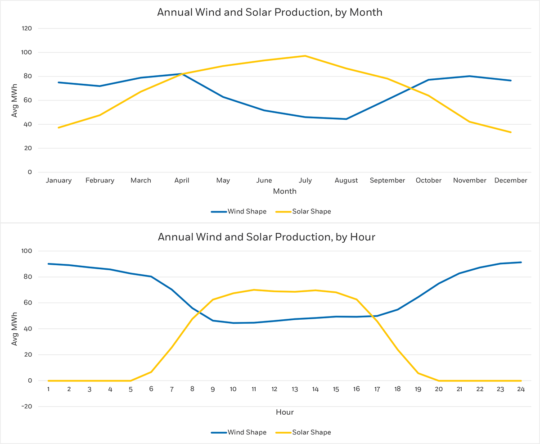
Exhibit 1
About the Author
*Connor Kilday is a Denver, Colorado-based Development Manager at National Renewable Solutions. His experience in the deployment of utility-scale wind, solar, and battery storage projects spans multiple regions including ERCOT, SPP, WECC, and the NYISO. He is passionate about working with America’s farmers, ranchers, and large landowners to ensure that the energy transition happens with them, not to them.*
메타데이터
- post_id
- c89a1ff7c8d2
- slug
- moving-on-from-supply-side-subsidies-how-developers-and-advocates-can-leverage-dynamic-retail-c89a1ff7c8d2
- url
- https://medium.com/@celions/moving-on-from-supply-side-subsidies-how-developers-and-advocates-can-leverage-dynamic-retail-c89a1ff7c8d2
- canonical_url
- https://medium.com/@celions/moving-on-from-supply-side-subsidies-how-developers-and-advocates-can-leverage-dynamic-retail-c89a1ff7c8d2
- author_url
- https://medium.com/@celions
- status
- ok
- fetched_at
- 2026-06-13 00:08:42