How White Label Partnerships Work: An Overview
Are you looking for a way to expand your product or service offerings without the hefty costs of development and infrastructure?
How White Label Partnerships Work: An Overview
Are you looking for a way to expand your product or service offerings without the hefty costs of development and infrastructure?
Do you want to keep up with the rising demand for innovative solutions like AI technology without investing in in-house development? A White Label Partnership might be just what you need.
What is a White Label Partnership?

Image Source: inTandem — vCita
A White Label Partnership is a business arrangement where one company manufactures a product or develops a service, but another company sells it under its own brand name.
This setup allows both parties to benefit. The manufacturer or service provider focuses on creating the product, while the reseller or vendor focuses on marketing and selling it under their own brand. This can apply to both physical products and digital services.
How Does a White Label Partnership Work?
In a White Label Partnership, two main players are involved:
- Manufacturer/Provider: This is the company that creates the product or service. They handle everything from production to rebranding the product for the vendor.
- Vendor/Reseller: This is the company that purchases the product or service from the manufacturer and sells it under their own brand. The vendor focuses on marketing, sales, and customer support.
Here’s a breakdown of the roles:
- Clients (Customers of the Vendor): They purchase the rebranded product from the vendor and rely on the vendor for support.
- End Users: They use the product as it’s branded by the vendor, often without knowing about the manufacturer behind it.
This structure allows businesses to leverage each other’s strengths, leading to mutual growth.
Types of White Label Partnerships

White Label Partnerships come in various forms, each offering unique benefits depending on the nature of the product or service. Here are some common types:
1. Product-Based White Label Partnerships
These involve physical or digital products.
- Physical Products: The vendor sells rebranded physical goods like electronics, clothing, or beauty products. This allows the vendor to offer a wider range of products without needing to manufacture them.
- Digital Products: Vendors can offer rebranded digital solutions such as software, apps, or online tools. This is a quick way for businesses to provide advanced digital products to their customers without the need for development.
Suggested Reading: 10 Key Factors for Selecting the Best Whitelabel AI Chatbot
2. Service-Based White Label Partnerships
Here, services created by one company are rebranded and offered by another.
- Marketing Services: Agencies can offer a full suite of marketing solutions, including SEO, content creation, and social media management, under their own brand without having to develop these services in-house.
- IT Services: Vendors can sell IT solutions like cloud services, cybersecurity, or technical support as their own, giving clients a comprehensive range of services without building the infrastructure themselves.
3. Software as a Service (SaaS) White Label Partnerships

These focus on software platforms that are rebranded and sold under a different name.
- **White Label Software**: Vendors rebrand software platforms, offering customizable solutions like project management tools or accounting software without the high costs of development.
- White Label Apps: Mobile and web applications can be rebranded and sold by vendors to meet specific business needs, enabling companies to quickly provide tailored app solutions to their clients.
4. Platform-Based White Label Partnerships

Source: Bitby Soft
These involve entire platforms being rebranded and sold.
- E-commerce Platforms: Vendors can offer rebranded e-commerce solutions, allowing clients to run online stores under their own brand without the need for custom development.
- CRM Platforms: Vendors provide customer relationship management systems tailored to their clients’ needs, enhancing their service offerings without investing heavily in development.
Each type of White Label Partnership allows businesses to quickly enter the market, expand their brand, and reduce costs and development time.
Who can Benefit from White Label Partnerships?

White Label Partnerships are ideal for businesses looking to expand their offerings without significant investment. Here are some of the primary target audiences:
- Small to Medium-Sized Businesses: They can quickly add new products and services to their portfolio, making them more competitive.
- Web Design Companies: These businesses can offer comprehensive web design and development services under their own brand without starting from scratch.
- Marketing Agencies: They can provide a full suite of digital marketing solutions, including SEO and social media management, by rebranding existing services.
- Design Agencies: By rebranding design tools and services, these agencies can expand their offerings without developing new tools themselves.
- Individual Startups: Startups can enter the market quickly by rebranding and selling established products, reducing risk and investment.
Suggested Reading: Top 9 White Label Software for Reselling in 2024
Why are White Label Partnerships Important?

White Label Partnerships offer several benefits:
- Cost Savings: Businesses save money by avoiding the need to develop products or services from scratch, significantly reducing overhead costs.
- Access to Expertise: White-label partnerships provide access to experienced professionals and advanced tools that the reseller might not possess, ensuring high-quality offerings.
- Brand Expansion: Vendors can expand their product or service portfolio quickly under their own brand, enhancing market presence without extensive investment.
- Scalability: Businesses can easily scale by adding new products or services to meet market demand without needing additional resources or infrastructure.
- Focus on Core Competencies: By leveraging white-label solutions, resellers can concentrate on their core business strengths while the white-label provider handles product development and maintenance.
- Faster Time-to-Market: Resellers can offer new products or services more quickly, responding promptly to market trends and client needs without lengthy development times.
- Enhanced Client Relationships: Since the partnership is often confidential, resellers maintain direct relationships with their clients, building trust and loyalty.
- Reduced Risk: Relying on proven solutions and expertise from a white-label provider reduces the risk associated with product development and market entry.
Suggested Reading: Level up your business game by reselling whitelabel chatbots
Tips for Choosing the Right White Label Partner
If you’re considering investing in a White Label Partnership, here are some tips to help you make the right choice:
- Align Goals: The white-label provider should align with your agency’s goals. If they’re more focused on selling services than delivering results, they might not be the right fit.
- Evaluate Services: Before choosing a partner, review all the services they provide. Make sure they can meet your business needs.
- Check Reputation: While it’s tempting to choose a partner based on their reputation, it’s essential to dig deeper. Look at Google reviews, client testimonials, and portfolios.
- Prioritize Customer Support: Good customer service is crucial. Ensure your partner offers a hands-on approach to addressing client queries and technical issues.
- Request Detailed Reports: A good white-label partner should provide detailed reports and analysis tools. This helps you evaluate their performance and align their services with your needs.
- Test the Waters: Look for partners who offer free trials or detailed insights into their services. This allows you to assess their quality and compatibility with your business before making a commitment.
Conclusion
Choosing the right White Label Partner is a critical decision that can significantly impact your business.
By selecting a partner who meets your needs and aligns with your goals, you can expand your offerings, enhance your brand, and achieve growth without taking on unnecessary risks.
The tips shared in this article can guide you in making an informed choice, ensuring a successful and beneficial partnership.
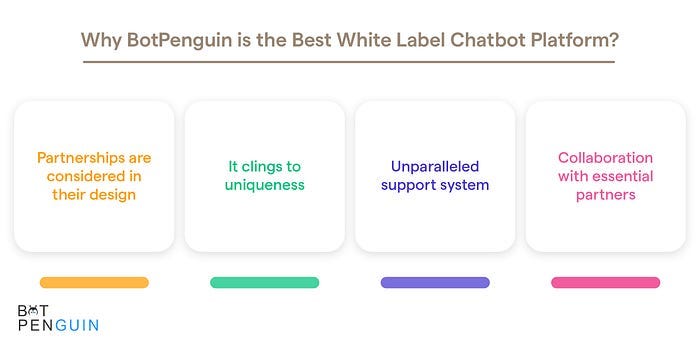
Suggested Reading: Why BotPenguin is the Best White Label Chatbot Platform for you?
Frequently Asked Questions (FAQs)
What is a white label partnership?
A white label partnership is a business arrangement where one company creates a product or service, and another company rebrands it to sell as its own.
This allows the partner to offer new products without the need to invest in the development process.
Which is the best white label partner program for chatbot solutions?
One of the top choices for a white label chatbot solution is the BotPenguin White Label Partner Program.
It provides comprehensive features, cutting-edge technology, and excellent support, making it an attractive option for businesses looking to rebrand and sell chatbot services under their own name.
What are the advantages of a white label partnership?
White label partnerships offer several advantages, including quicker entry into the market, lower development costs, access to specialized expertise, and the opportunity to leverage an already established brand.
Who can benefit from a white label partnership?
A variety of businesses can benefit from a white label partnership. Startups can offer complete solutions without heavy investment in development, small businesses can rapidly expand their product lines, and established companies can explore new markets or diversify their offerings.
How much does it cost to become a white label chatbot reseller?
BotPenguin offers flexible and cost-effective pricing plans tailored to businesses interested in becoming a white label chatbot reseller. The exact cost depends on your specific business needs.
You can contact us to learn more about our pricing options and how we can help you successfully launch your branded chatbot services.
How can a white label partnership enhance branding?
A white label partnership allows resellers to build their brand by offering high-quality products or services developed by another company.
This approach helps in establishing a strong brand presence without starting from scratch, aligning the offerings with the reseller’s brand image.
How can a white label partnership drive business growth?
A white label partnership can fuel business growth by enabling companies to quickly and efficiently expand their product or service offerings.
By leveraging the expertise and resources of the producing company, resellers can attract new customers, generate additional revenue streams, and solidify their market position.
What role does customer support play in a white label partnership?
Customer support is vital in a white label partnership, as it ensures that customers are satisfied and loyal.
Both the producing company and the reseller should work together to establish clear communication channels, provide timely support, and address customer inquiries and issues promptly.
메타데이터
- post_id
- c8a116c6b6dc
- slug
- how-white-label-partnerships-work-an-overview-c8a116c6b6dc
- url
- https://medium.com/@botpenguin/how-white-label-partnerships-work-an-overview-c8a116c6b6dc
- canonical_url
- https://medium.com/@botpenguin/how-white-label-partnerships-work-an-overview-c8a116c6b6dc
- author_url
- https://medium.com/@botpenguin
- status
- ok
- fetched_at
- 2026-08-08 03:03:39