Samyama-Friendly Sattvic SAMBAR (Vegan, Positive Pranic)
This recipe is specifically designed for the Samyama preparation phase, strictly avoiding all negative pranic ingredients (such as onion…
Wiki topics:
🍳 · Food & Cooking
Samyama-Friendly Sattvic SAMBAR (Vegan, Positive Pranic)
This recipe is specifically designed for the Samyama preparation phase, strictly avoiding all negative pranic ingredients (such as onion, garlic, chili, and asafoetida) while retaining the rich, complex flavors of South Indian Sambar.

Ingredients


Instructions
Step 1: Prepare the Dal Base
- Rinse the 1 cup of Toor Dal and soak for 4 hours.
- Cook the Toor Dal with 3 cups of water and a pinch of turmeric until it is very soft and fully cooked (in a pressure cooker or pot).
- Once cooked, mash the dal lightly to achieve a creamy consistency, then set aside.
Step 2: Prepare the Fresh Masala Paste
- Heat 1 Tablespoon of Coconut Oil in a small pan over medium heat.
- Add the 1 teaspoon of Fenugreek Seeds and roast until they turn light golden brown (do not burn them, or the masala will become bitter).
- Add the Grated Coconut, Coriander Seeds, Raw Toor Dal, Urad Dal, and Cumin (if using).
- Roast this mixture over low-to-medium heat, stirring continuously until the coconut turns a rich golden-brown color and the entire mixture is very aromatic.
- Remove from heat and let the mixture cool completely.
- Transfer the mixture to a blender jar. Add a little water (3–4 tbsp) and grind into a very smooth, thick paste. Add more water only if necessary. Set the paste aside.
Step 3: Cook the Sambar Vegetables
- In the main cooking pot, combine the Mashed Dal and the other prepared Sambar Vegetables (carrots, pumpkin, etc.). Add water as needed to reach your desired sambar consistency.
- Add salt to taste. Bring the mixture to a boil and then reduce the heat to a simmer.
- Cook until all the vegetables are tender but still hold their shape (about 10–15 minutes).
Step 4: Combine Flavors
- Stir in the Fresh Masala Paste you prepared in Step 2. Mix well to ensure there are no lumps.
- Add the Tamarind Paste (or tamarind extract).
- Optionally, you may add a pinch of sugar or jaggery. The sweetness usually balances the heat of chilli powder and the sourness of tamarind. So this is not necessary. You may still add the sweet touch if you like it.
- Bring the entire Sambar to a strong boil, then reduce the heat and let it simmer for 3–5 minutes. This allows the fresh masala to cook completely and integrate its flavor.
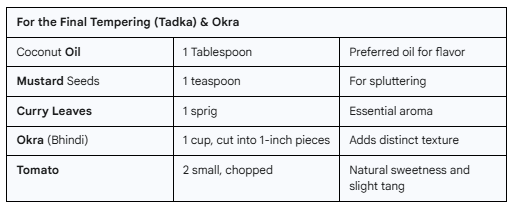
Step 5: Final Tempering and Okra
- In a separate small pan, heat the remaining 1 Tablespoon of Coconut Oil over medium heat.
- Add Mustard Seeds and wait for them to splutter/pop.
- Quickly add the Curry Leaves.
- Add the Okra pieces and sauté until they are slightly golden or lose their slimy texture. We do not cook okra with the other vegetables since they might break down.
- Add the chopped Tomatoes and sauté until they soften slightly. If you did not use turmeric powder in the dal, you can add 1 tsp now and quickly stir it into the oil before adding the okra. Adding turmeric to oil brings out the golden color better.
- Pour the entire contents of the tempering pan (oil, mustard, curry leaves, okra, and tomatoes) into the main Sambar pot.
- Stir gently and let the sambar simmer for 1–2 minutes, then turn off the heat.
Serve hot with rice, millet rice, idlis, or dosa. Enjoy this highly pranic and nourishing meal!
메타데이터
- post_id
- c8b50ac7d8ac
- slug
- samyama-friendly-sattvic-sambar-vegan-positive-pranic-c8b50ac7d8ac
- url
- https://medium.com/@parvathij084/samyama-friendly-sattvic-sambar-vegan-positive-pranic-c8b50ac7d8ac
- canonical_url
- https://medium.com/@parvathij084/samyama-friendly-sattvic-sambar-vegan-positive-pranic-c8b50ac7d8ac
- author_url
- https://medium.com/@parvathij084
- status
- ok
- fetched_at
- 2026-08-09 11:12:38